
Córdoba, Spain
A Day in Córdoba: Arches, Alleys, and the Soul of Andalusia
There is a certain magic to the Andalusian rail. Charles and I boarded the AVE high-speed train in Seville, and in a mere 45 minutes – barely enough time to watch the olive groves blur into a silver-green haze – we stepped off in Córdoba.
Our hotel in Seville had arranged for a private guide, the delightful Marisol, who met us at the station with a warmth that rivaled the Spanish sun. As we strolled down the lush, park-lined Avenida de la República Argentina toward the historic center, Marisol painted a picture of Córdoba’s storied past. Once the largest city in Roman Spain and later the heart of the Islamic Caliphate, it was a global beacon of culture, science, and religious coexistence during the Middle Ages.
The Mezquita-Catedral: A Forest of Stone and Light
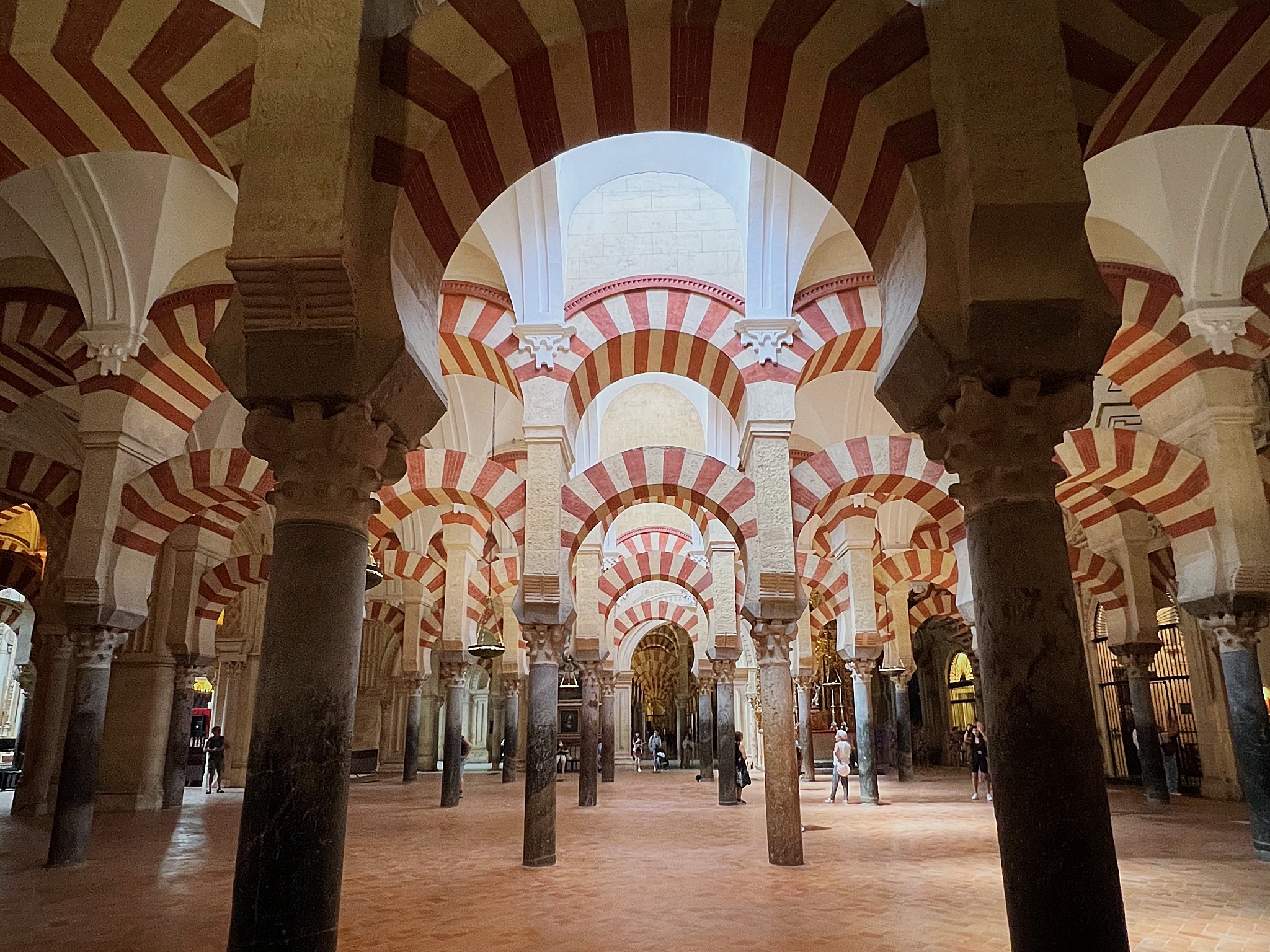
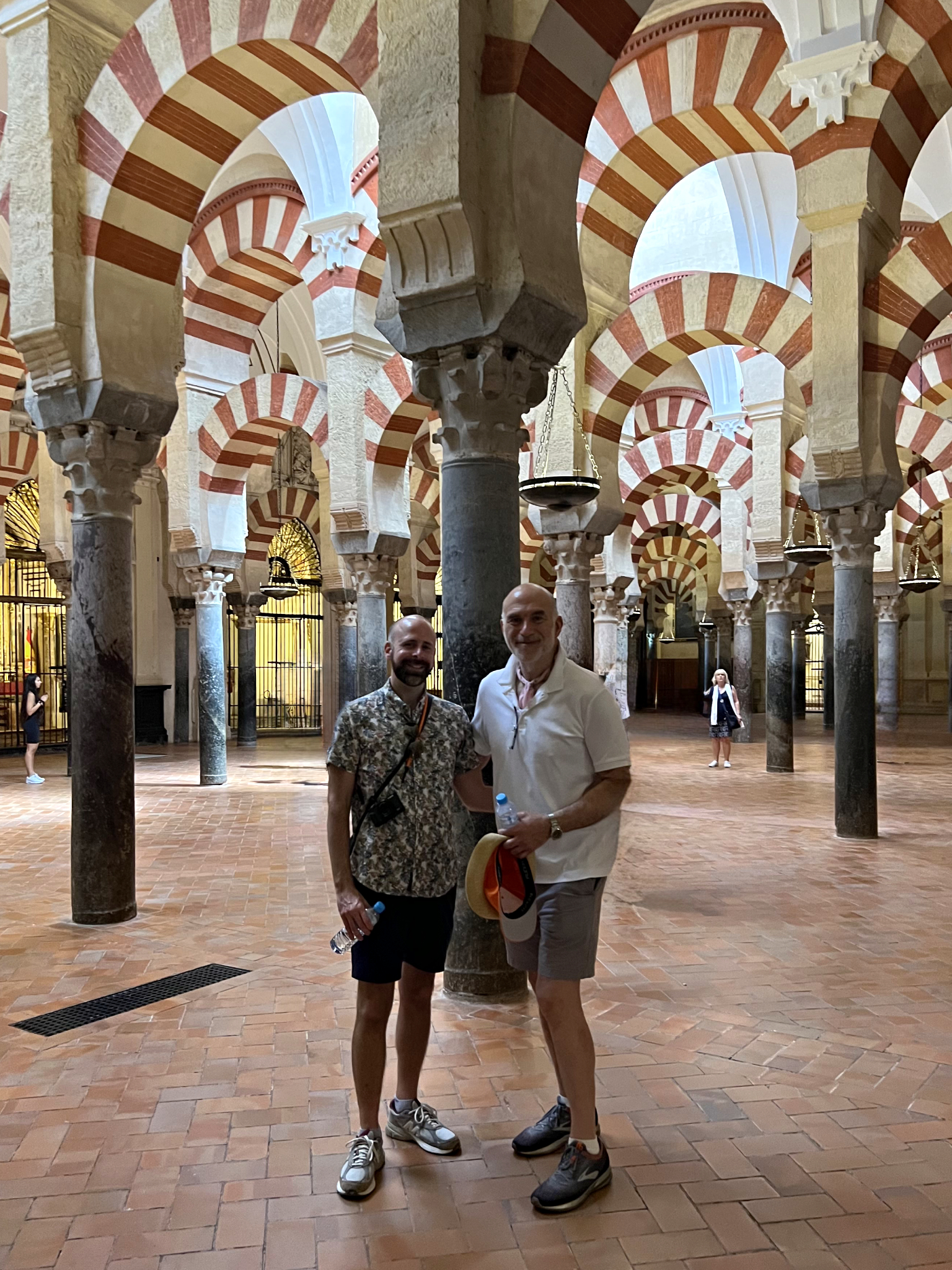
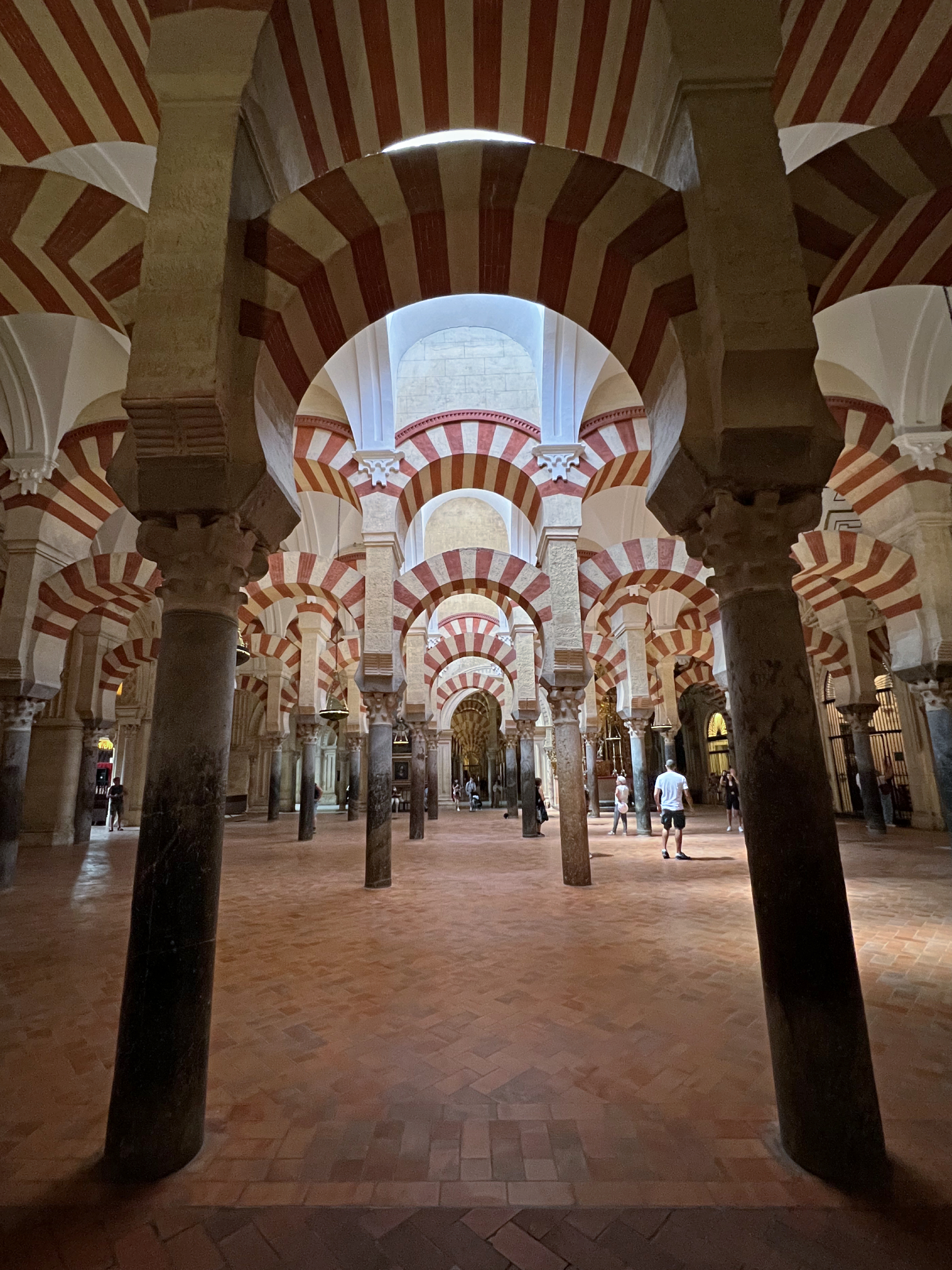
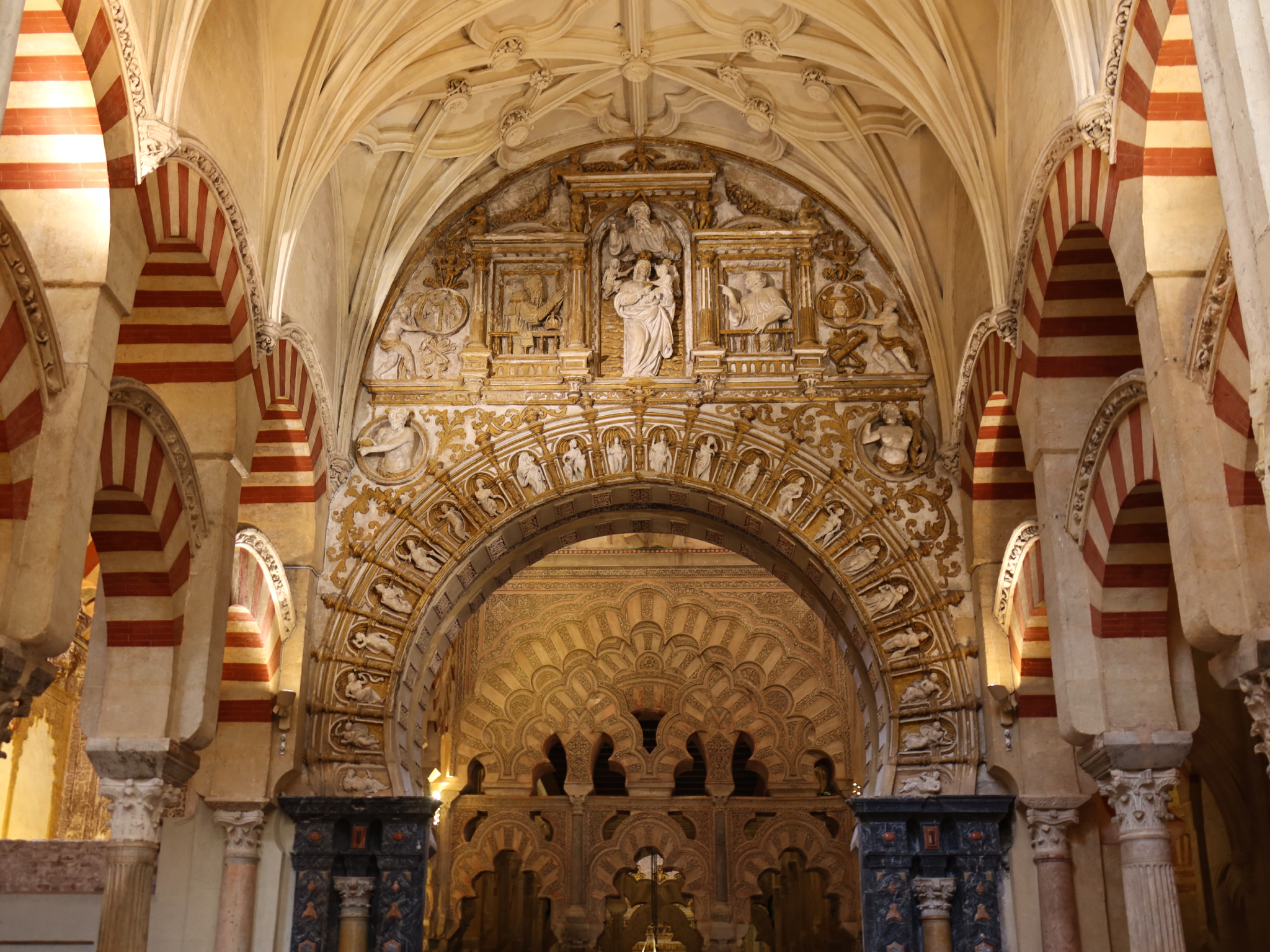
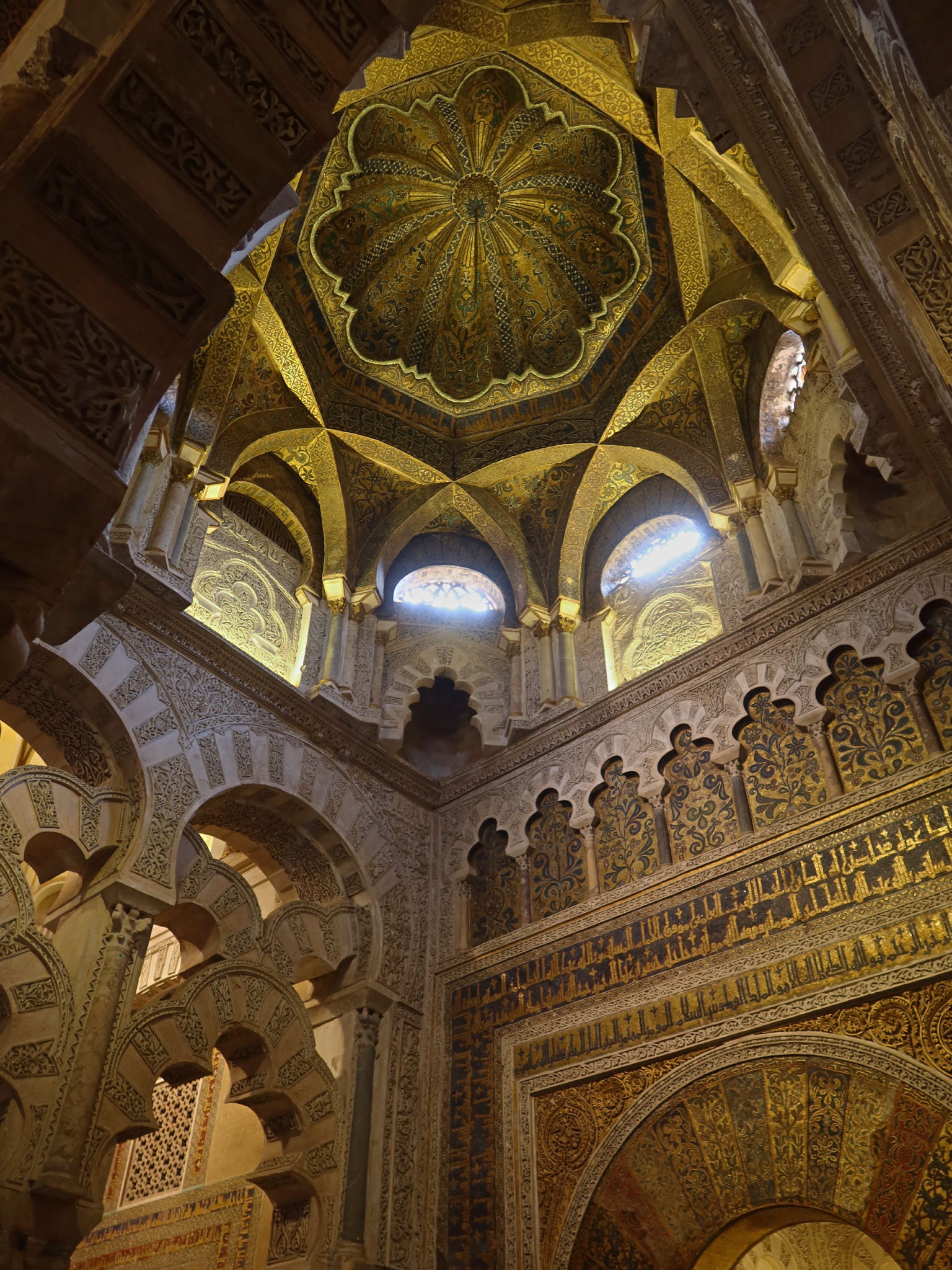
We began at the crown jewel: the Mezquita-Catedral de Córdoba. Walking inside is a disorienting, breathtaking experience. Originally a 6th-century Visigothic church, it was transformed into a grand mosque in the 8th century and later had a Renaissance cathedral nave built right into its center.
The defining feature is the “forest” of over 850 columns topped with iconic red-and-white striped double arches. These arches weren’t just for aesthetics; the design provided structural stability and allowed for higher ceilings, creating a rhythmic, infinite perspective that feels like a sacred labyrinth.
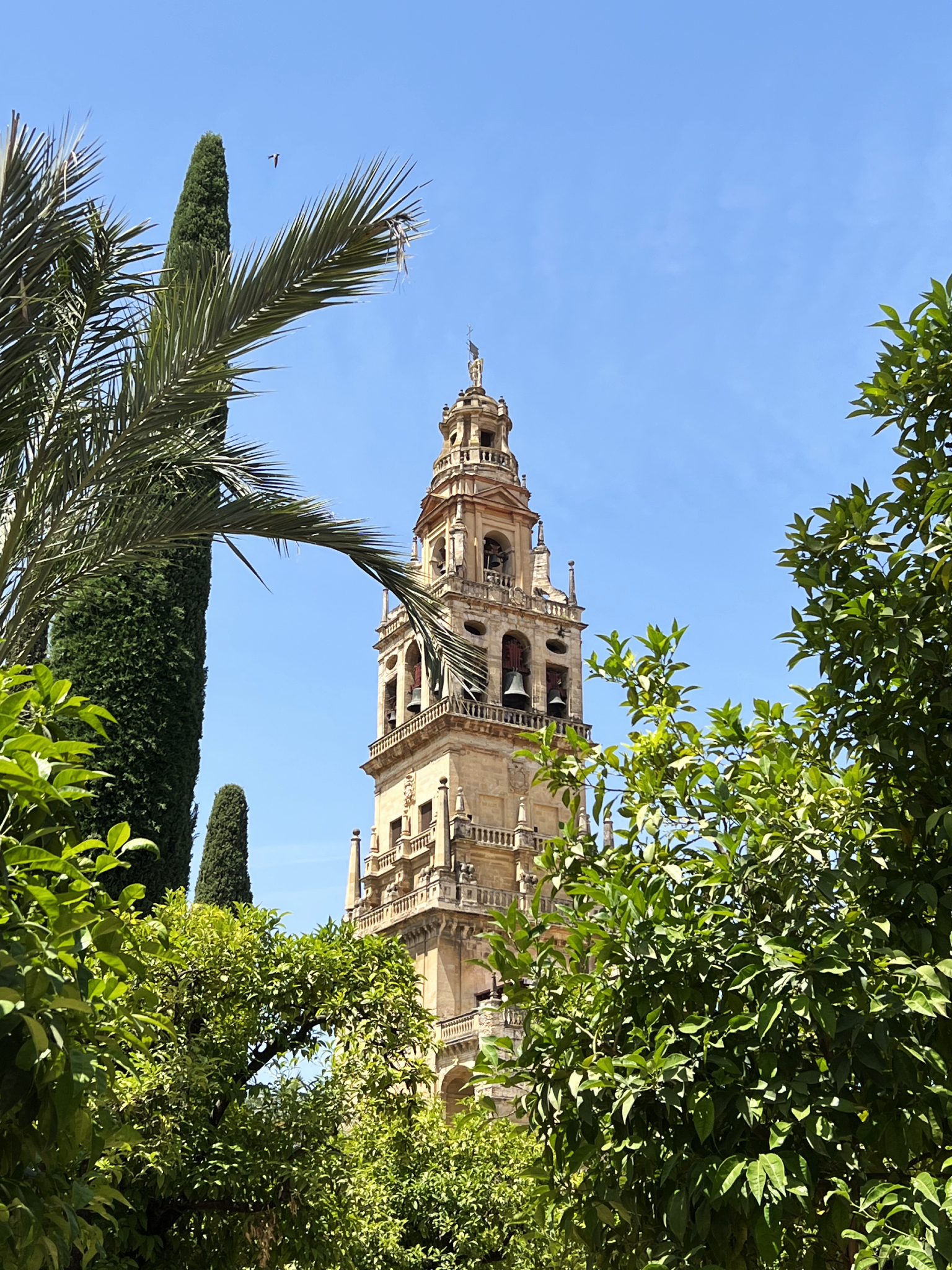
To escape the midday heat, we retreated to the Mezquita’s Patio de los Naranjos (Court of the Oranges). Being there in May, the famous blossoms had already passed, but the trees were heavy with vibrant, ripening fruit. Standing in the courtyard, you are dwarfed by the magnificent Torre Campanario – the bell tower that was formerly the mosque’s minaret – standing sentinel over the orange grove.
Crossing the Centuries on the Roman Bridge
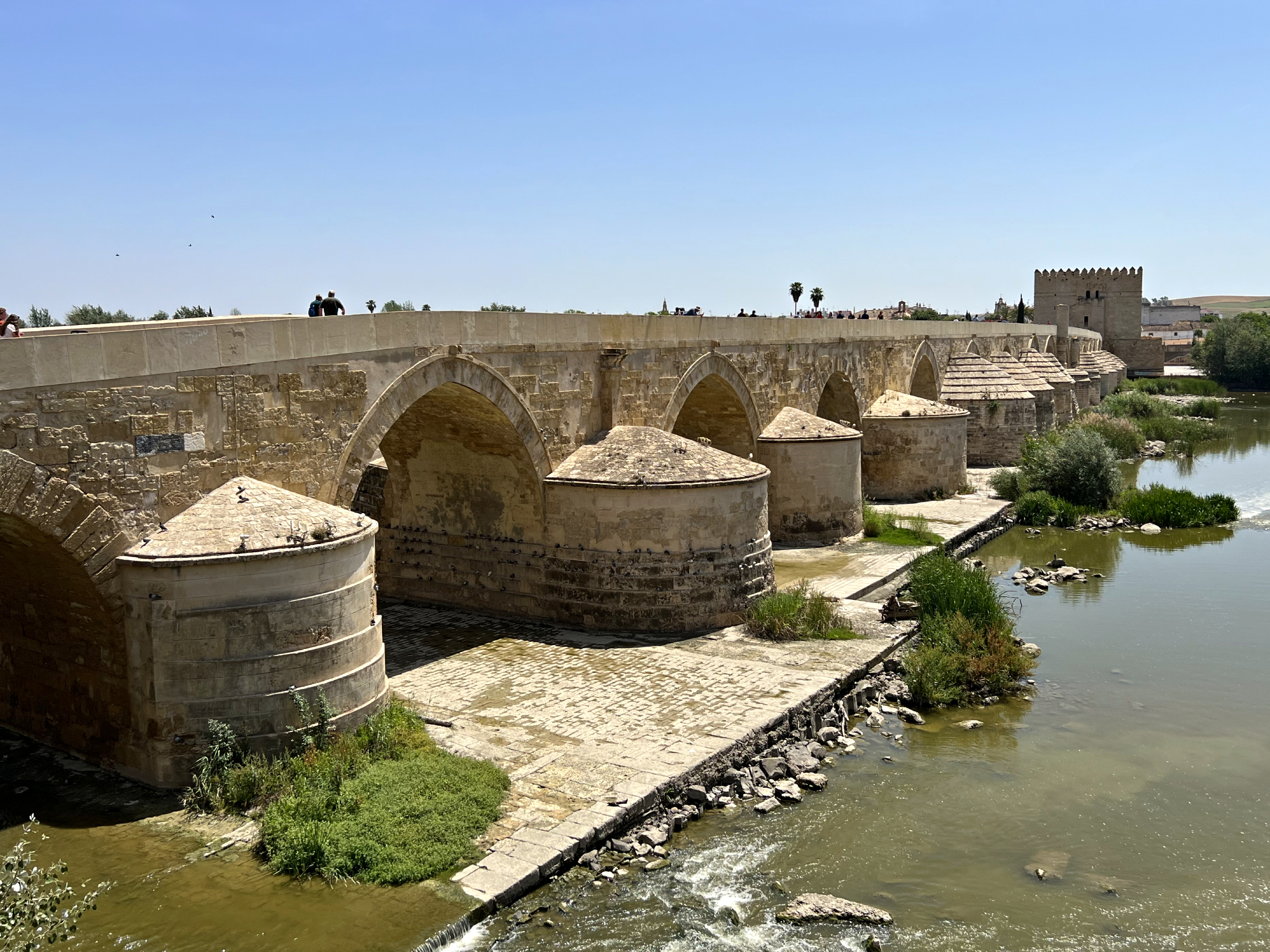
From the mosque, we walked toward the water to cross the Roman Bridge of Córdoba (El Puente Romano). Spanning the wide, murky waters of the Guadalquivir River, this bridge is a staggering testament to imperial longevity. Originally constructed in the early 1st century BC, it served as a vital link on the Via Augusta, connecting Rome to Cádiz. Walking across its sixteen sturdy arches, you can feel the layers of time; while the Islamic era and medieval repairs have altered its face, the foundations remain a marvel of Roman engineering, guarded at the southern end by the formidable Torre de la Calahorra.
The Hidden Paradises of San Basilio
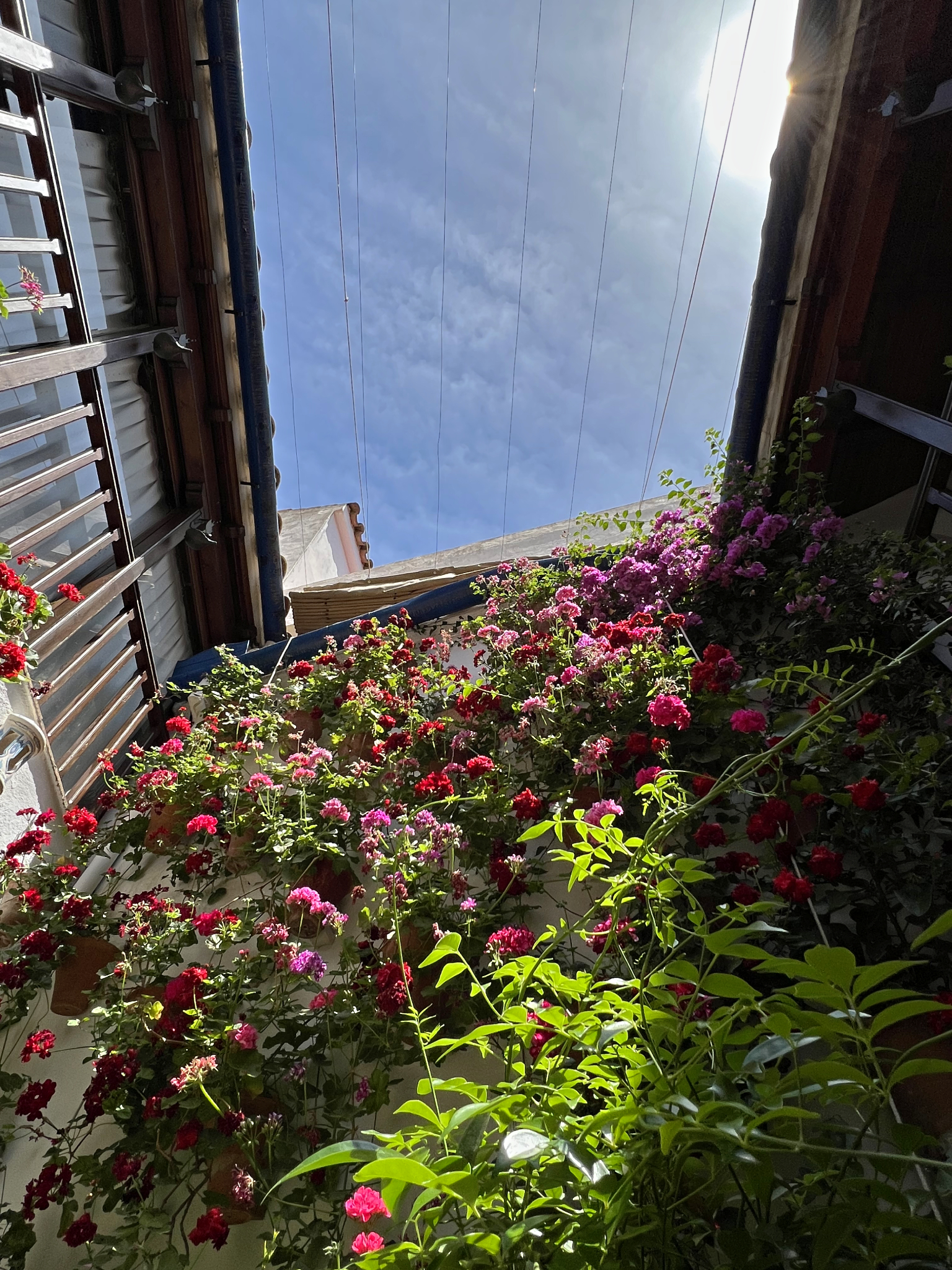
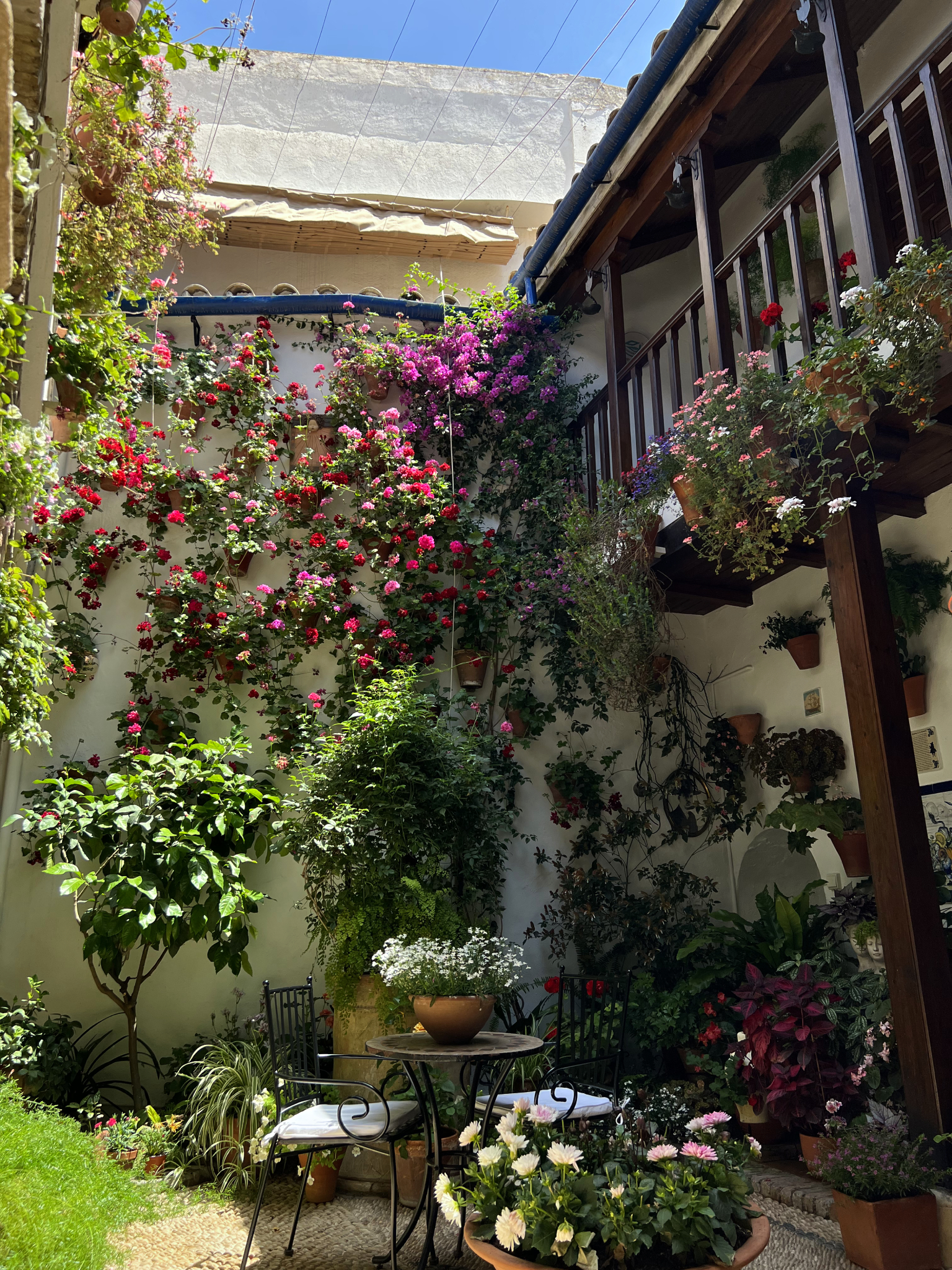
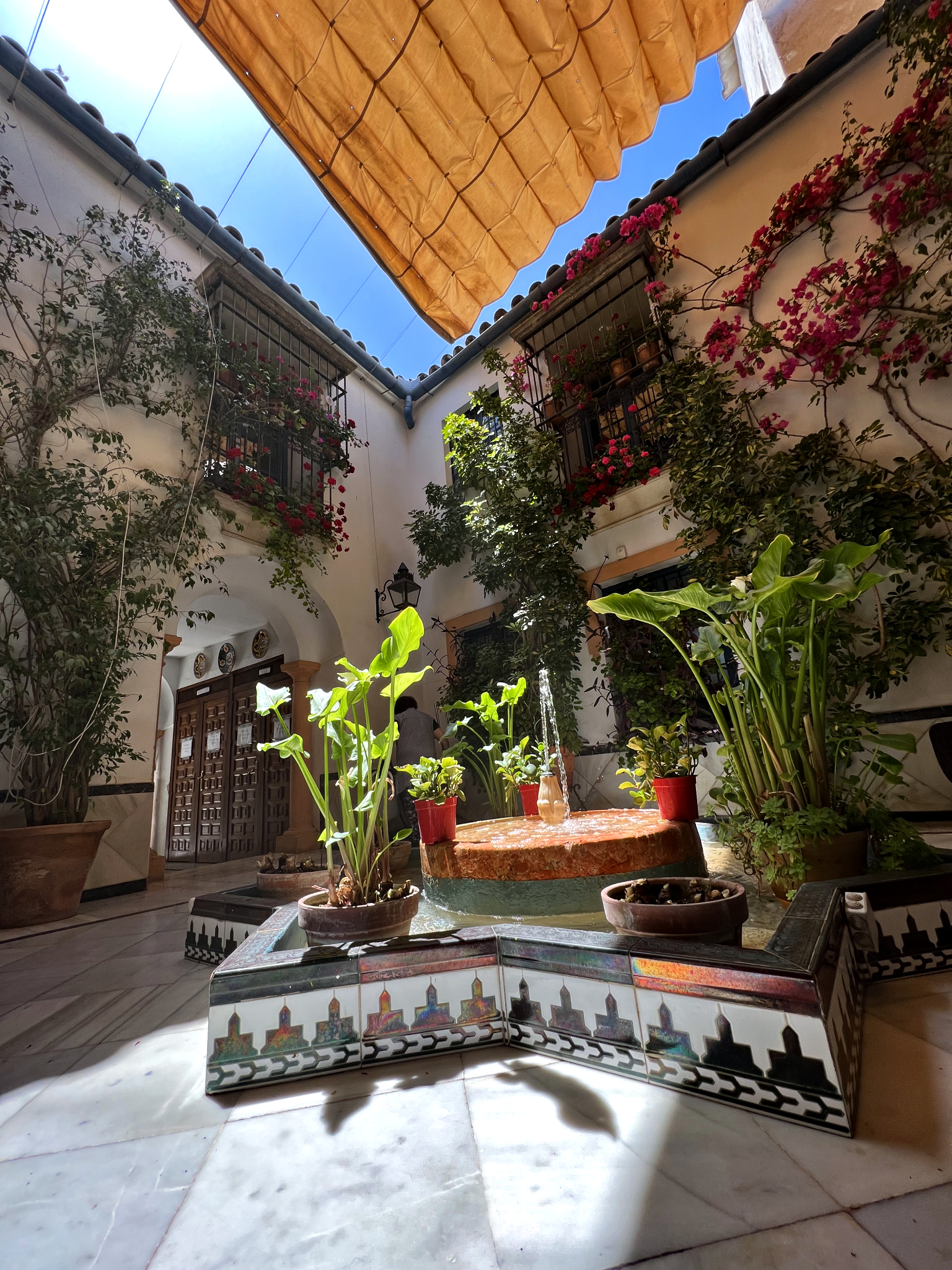
From the river, we wandered into the neighborhood of San Basilio to witness the city’s illustrious patios. These courtyards are a direct legacy of Córdoba’s Roman and Arab roots. Because of the dry, scorching climate, homes were designed with an unassuming, plain exterior that hides a lush, open-aired sanctuary inside, centered around a cooling fountain or garden.
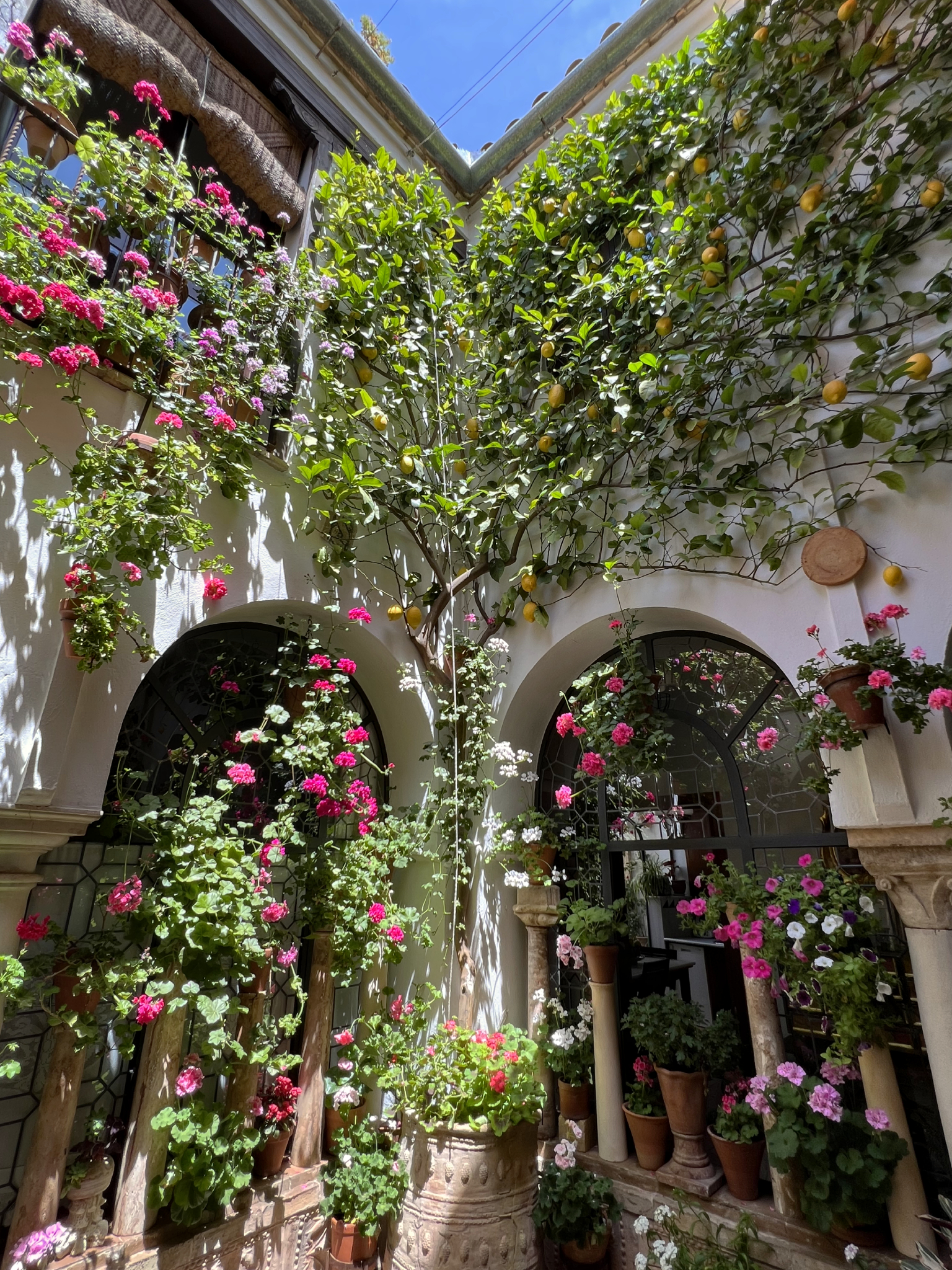
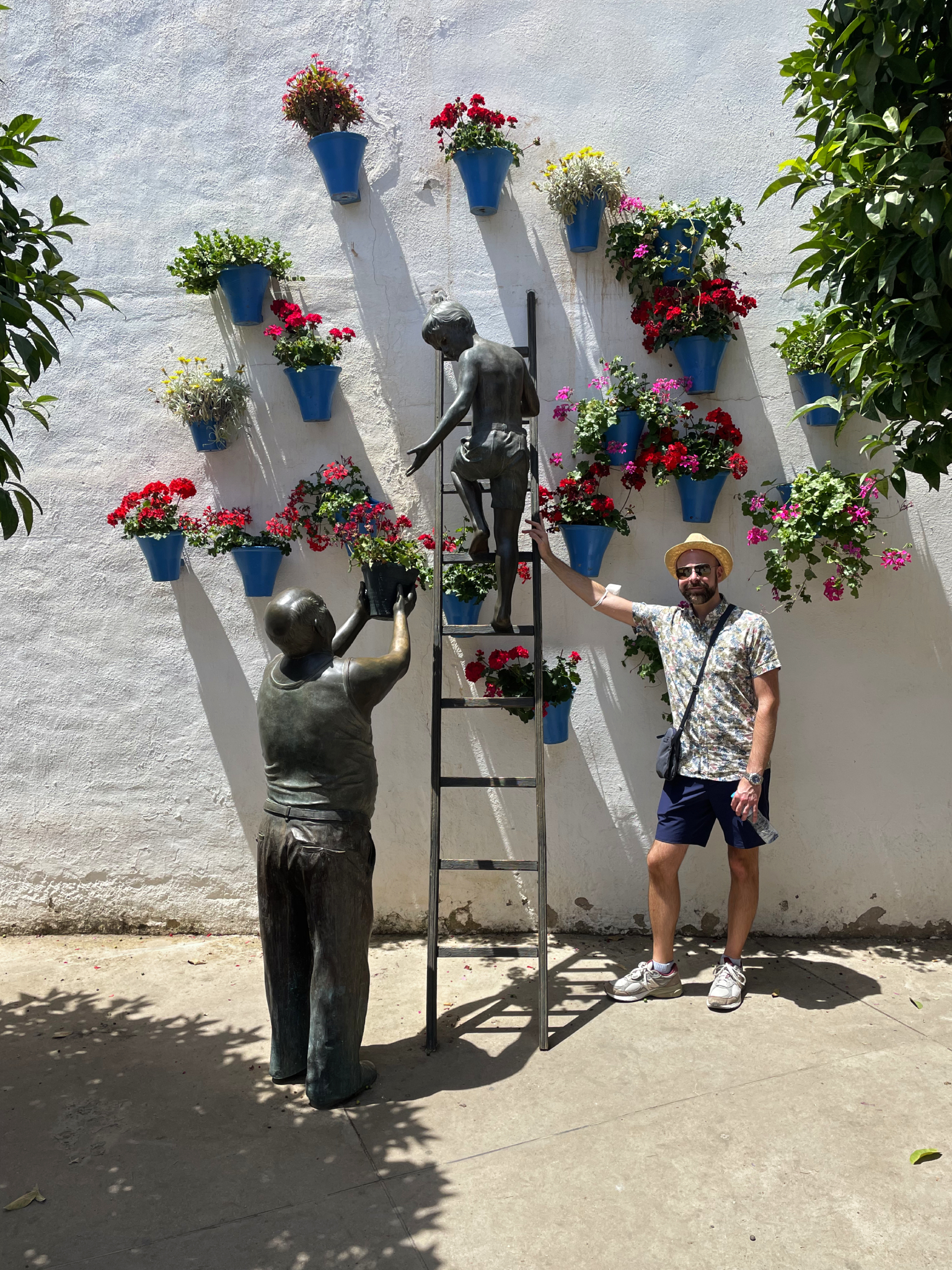
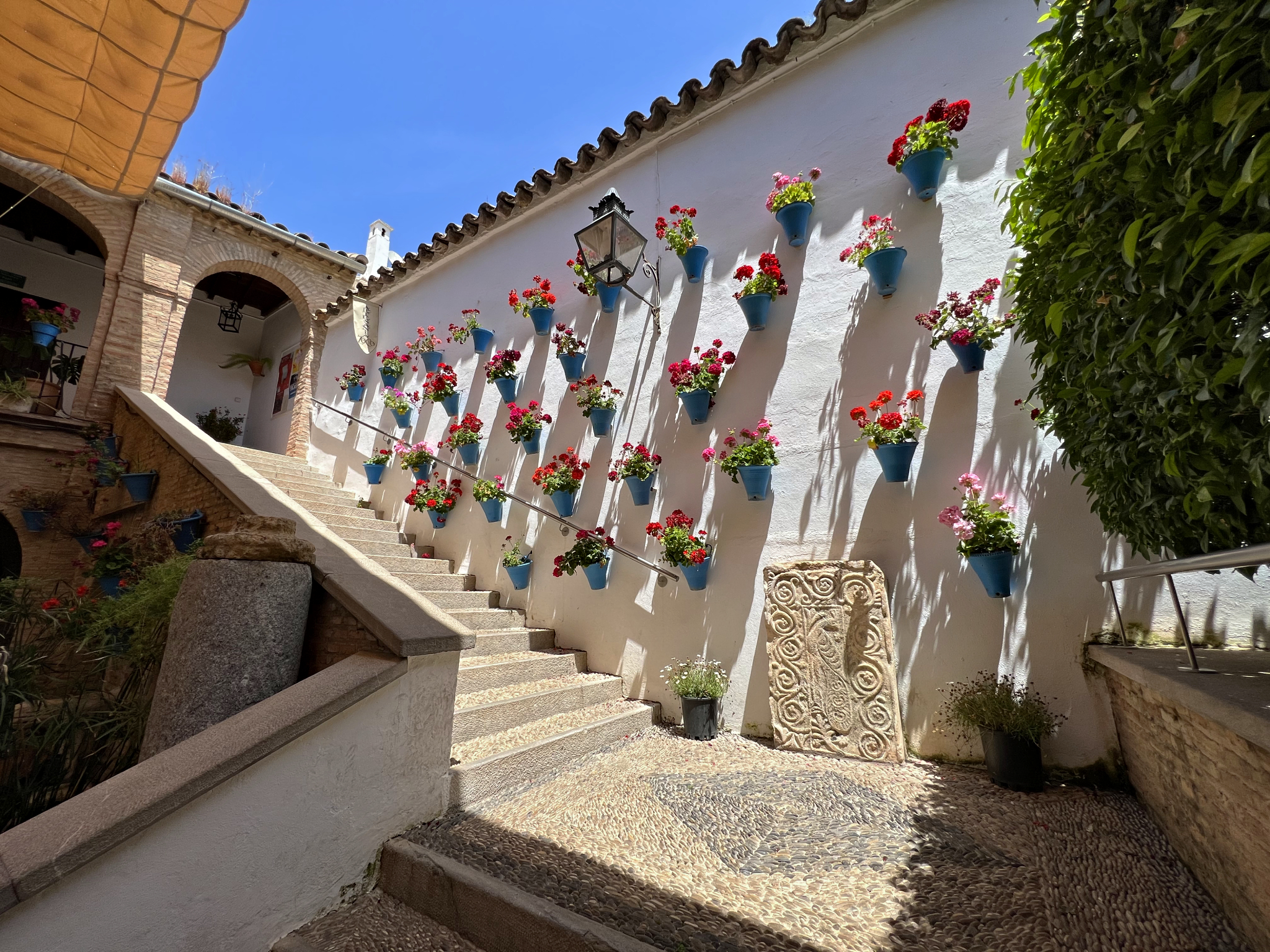
One patio, in particular, was a masterclass in Andalusian gardening. Vibrant geraniums spilled like waterfalls from the balconies, and a lemon tree had been meticulously trained to grow flush against a white-washed wall – its branches laden with bright, sun-kissed citrus to boot. I’ll admit, I was so inspired that I spent the following summer trying to recreate that floral explosion of geraniums in my own gardens back home.
The Artistry of La Judería
Our journey continued into La Judería, the historic Jewish Quarter. This labyrinth of whitewashed lanes was the intellectual and spiritual heart of the city between the 10th and 15th centuries, famously serving as the home of the great philosopher Maimonides. As we walked, Marisol explained how this neighborhood remains one of the best-preserved medieval Jewish quarters in Europe, a testament to the “Convivencia” – the period when Muslims, Christians, and Jews lived in relative harmony.
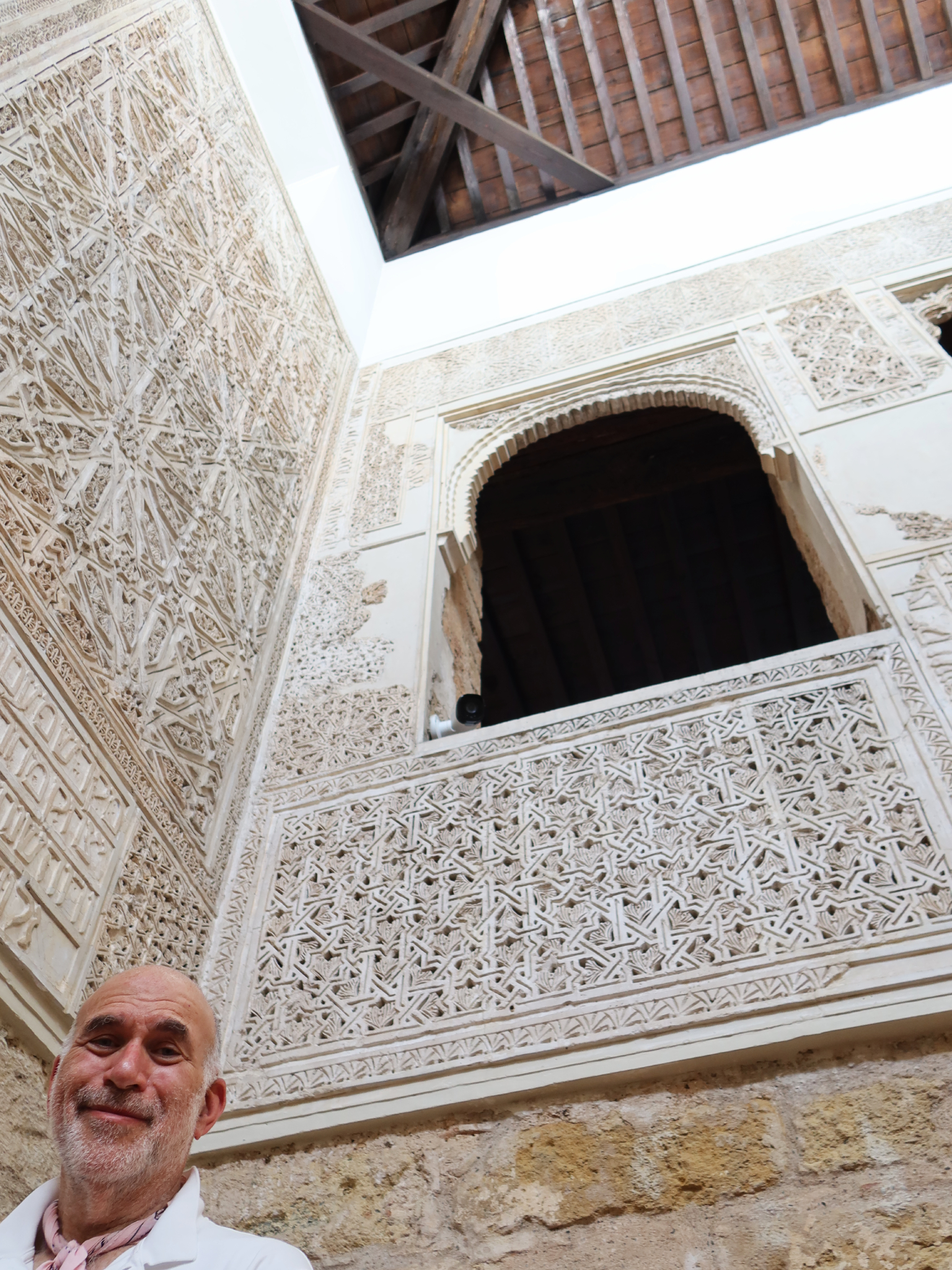
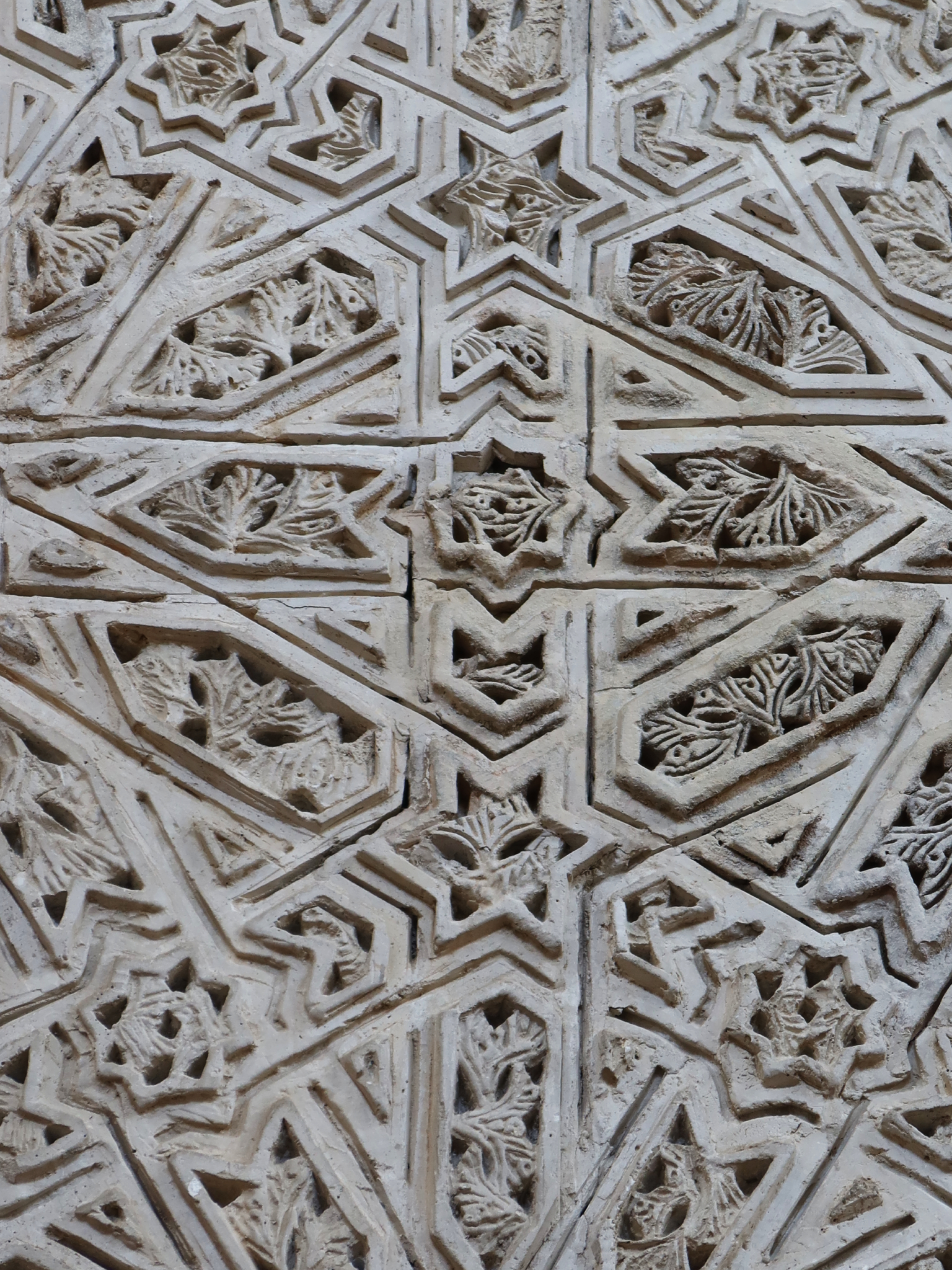
We visited the Córdoba Synagogue, famous for being one of only three original synagogues remaining in Spain from the medieval period. Built in 1315, it survived the expulsion of the Jewish population by being repurposed as a hospital and later a chapel. The interior is adorned with exquisite Mudéjar stucco work, featuring intricate Hebrew inscriptions and geometric patterns that look like lace carved into stone.
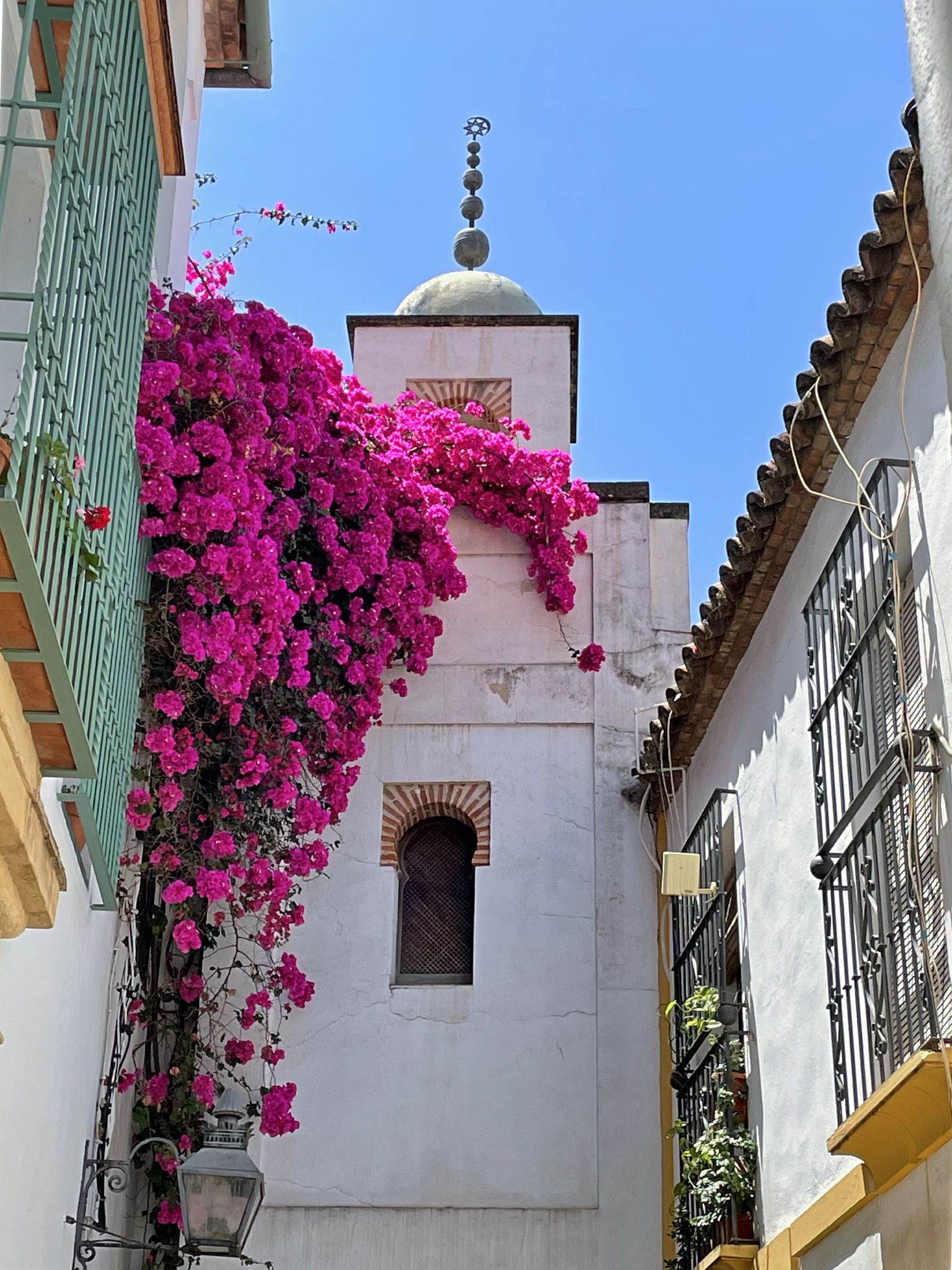
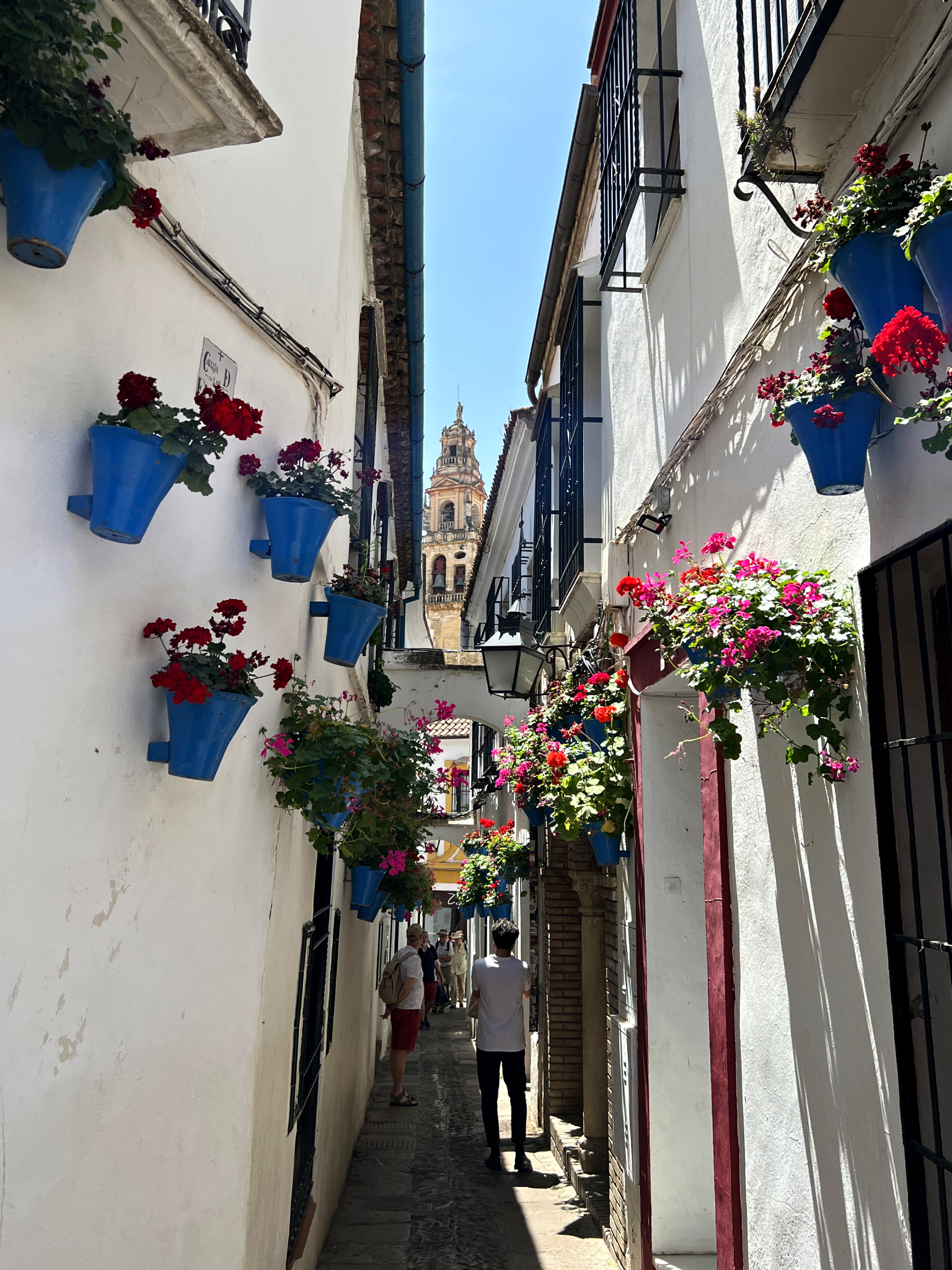
Marisol then led us through a maze of narrow alleyways, each turn revealing a hidden plaza or a wall draped in cascading blossoms. We ended the walk at Calleja de las Flores. This narrow lane is perhaps the most photographed spot in the city, and for good reason – it perfectly frames the Torre Campanario between white walls and, you guessed it, more brilliant geraniums.
A Taste of Córdoba: Berenjenas con Miel
For lunch, Charles and I snagged a table at Taberna El Abanico. We sat in a courtyard blooming with – yup, more geraniums – to enjoy what became one of our favorite meals of the entire trip.
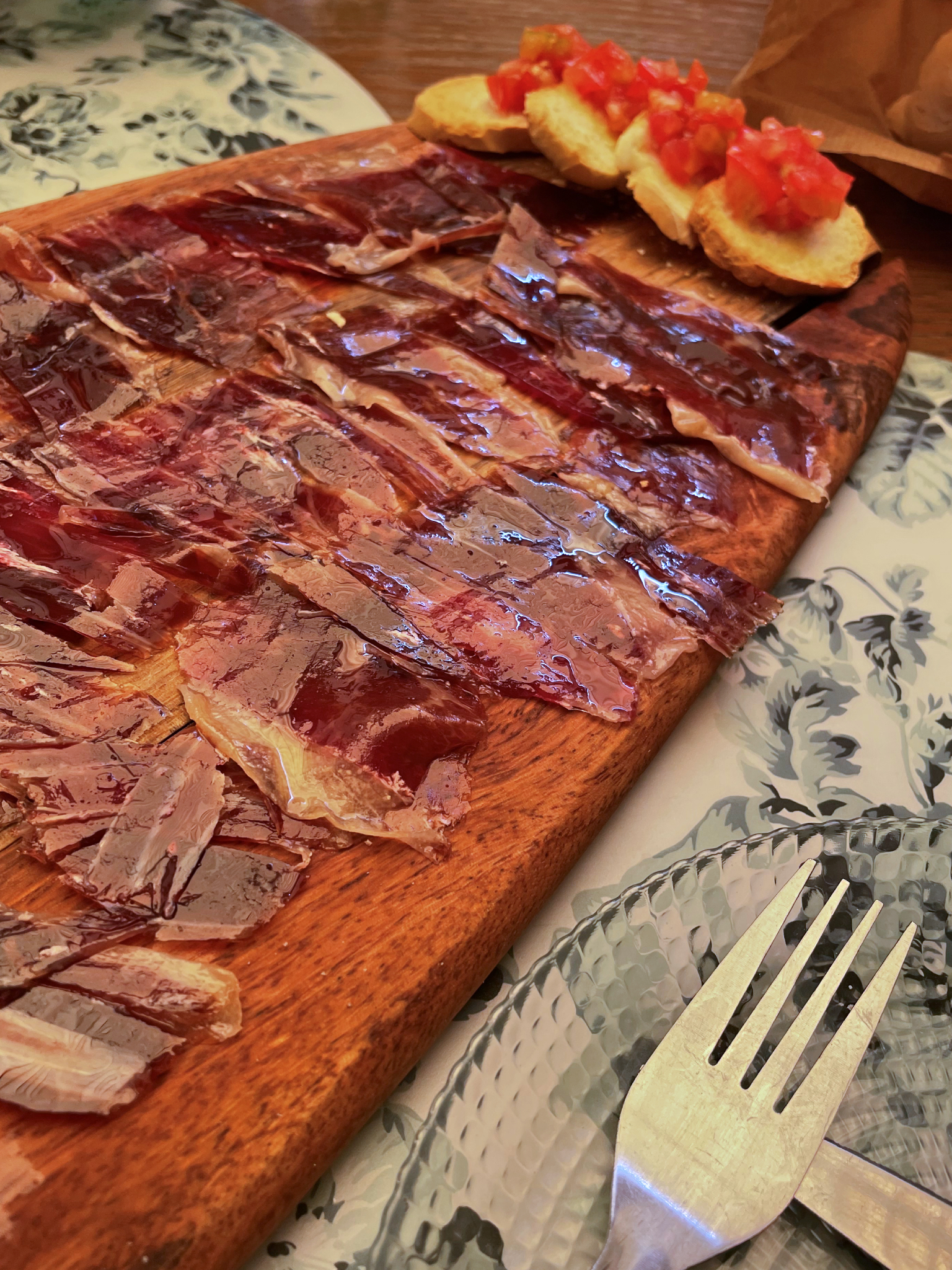
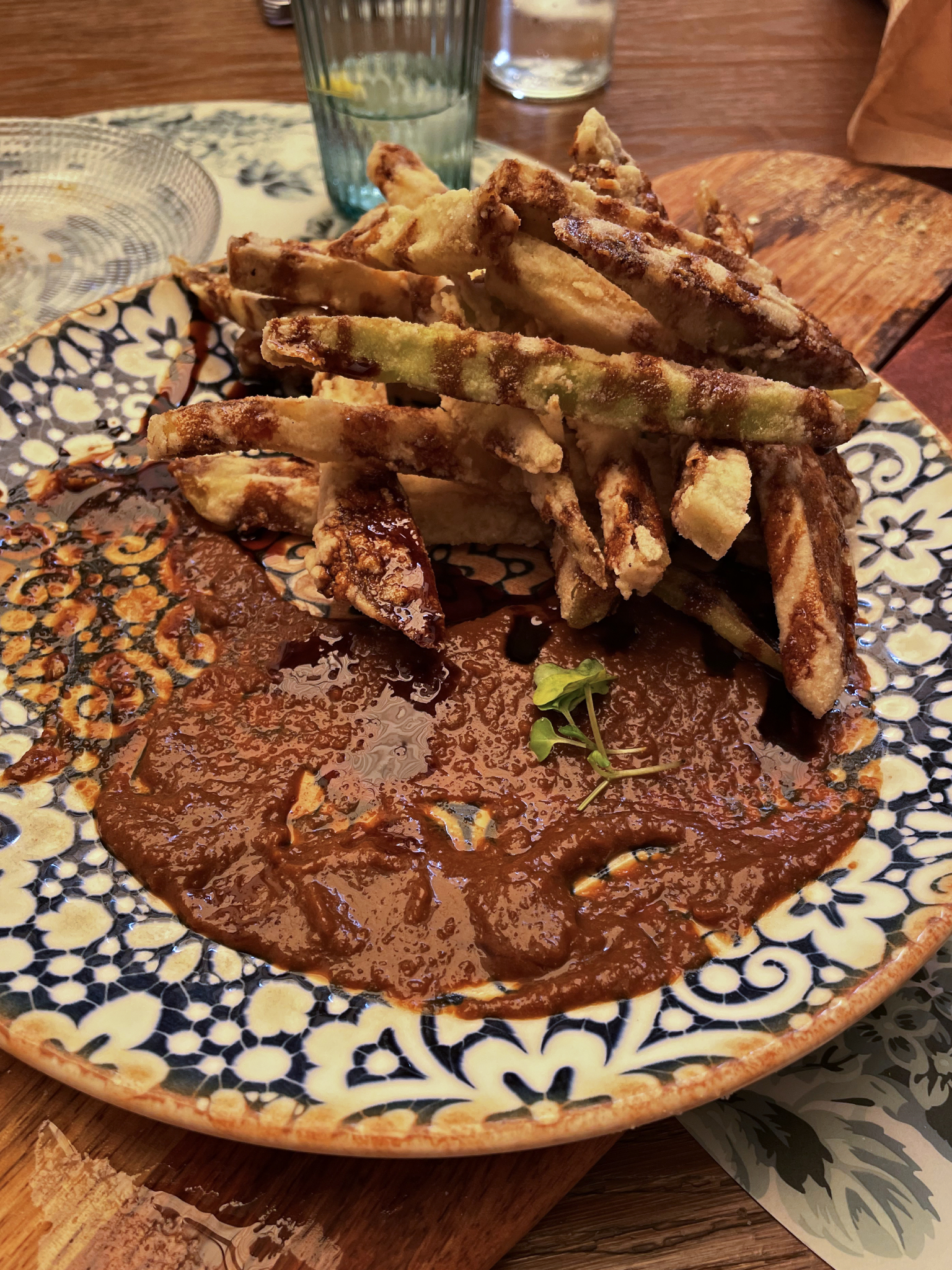
We began with a platter of Jamón Ibérico, the fat so perfectly translucent it practically melted on the tongue. But the star of the show was a local specialty: Berenjenas con Miel de Caña. These are crispy, fried eggplant strips served with a creamy hummus sweetened with cane syrup and a generous drizzle of honey. The balance of salty, savory, and sweet was utterly addictive.
Final Reflections on a City in Bloom
A final wander down the bustling Calle del Foro Romano provided a sharp, modern contrast to the medieval labyrinth we had spent the day exploring. As we settled into our seats for the quick rail journey back to Seville, I couldn’t help but reflect on Córdoba’s quiet confidence – it doesn’t shout its beauty; it invites you in to discover it. I left with a newfound appreciation for Andalusian architecture, a stomach full of berenjenas, and a very specific plan to transform my own garden into a geranium-filled sanctuary.
Last visited in May, 2022