
Venice, Italy
Rediscovering the Serene Republic: A Magical October in Venice
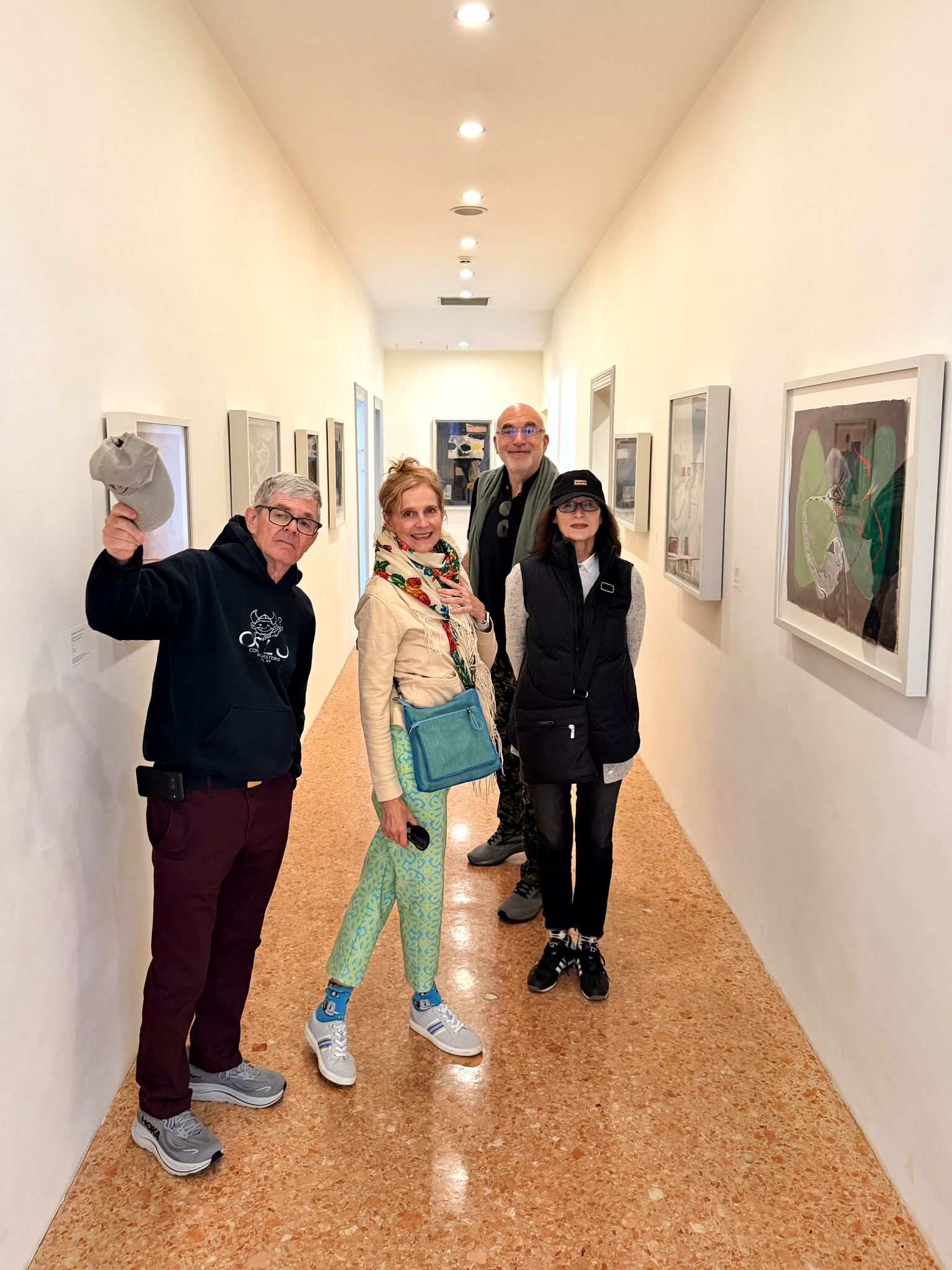
There is a specific kind of alchemy that occurs when you revisit a favorite city through the eyes of first-time travelers. This past October, Charles and I returned to the floating city of Venice—my third visit and his second. Joining us were our dear friends from Charles’s college days, Karen and Richie, along with Richie’s wife, Tricia.
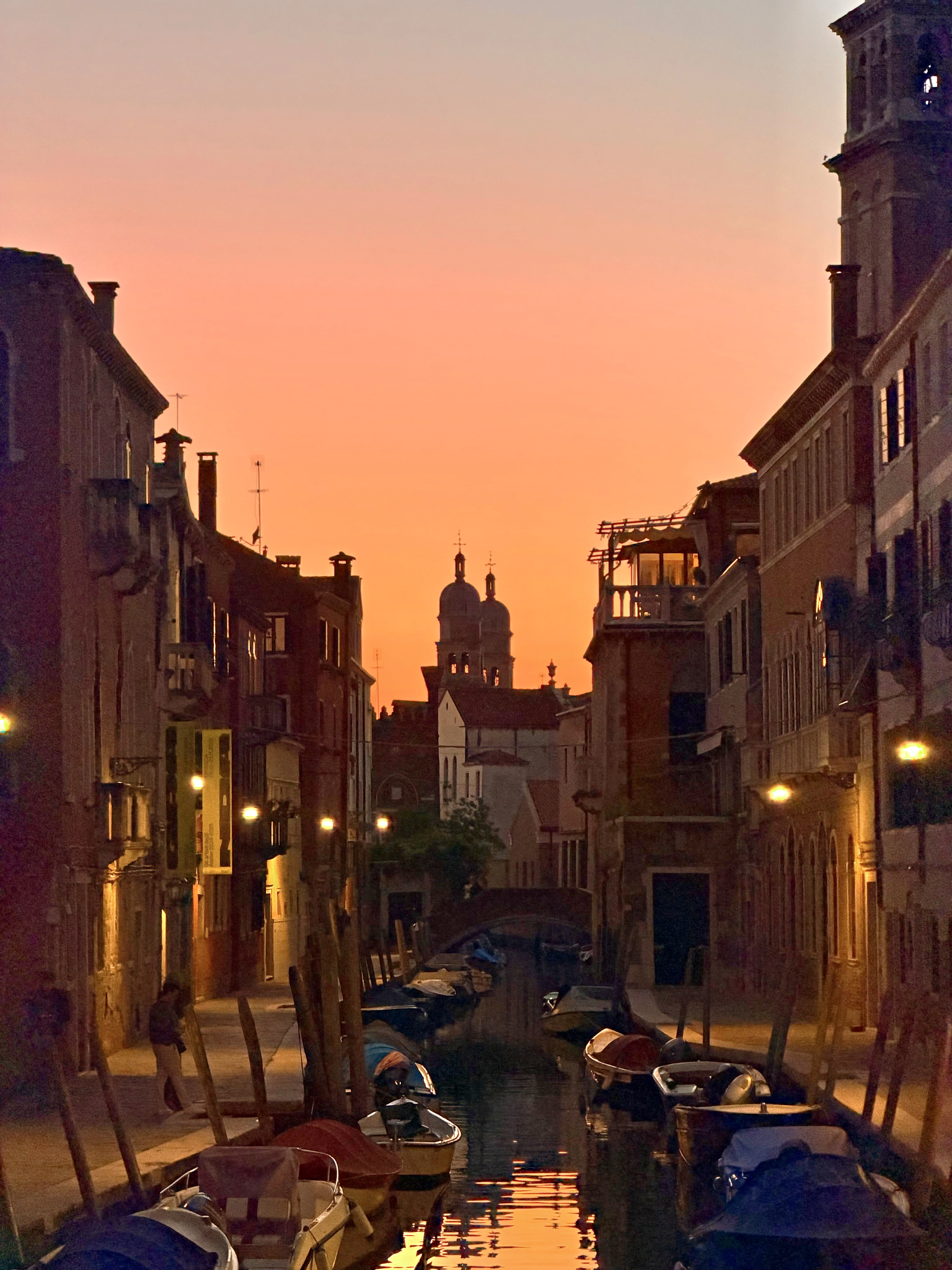
Despite the passage of centuries, Venice remains stubbornly, gloriously unchanged. It retains a magic that defies the modern world, looking almost exactly as it did 600 years ago. Watching our friends process the sheer impossibility of the Grand Canal for the first time was a highlight of the trip.
A Grand Arrival at Palazzetto MyVenice in Dorsoduro
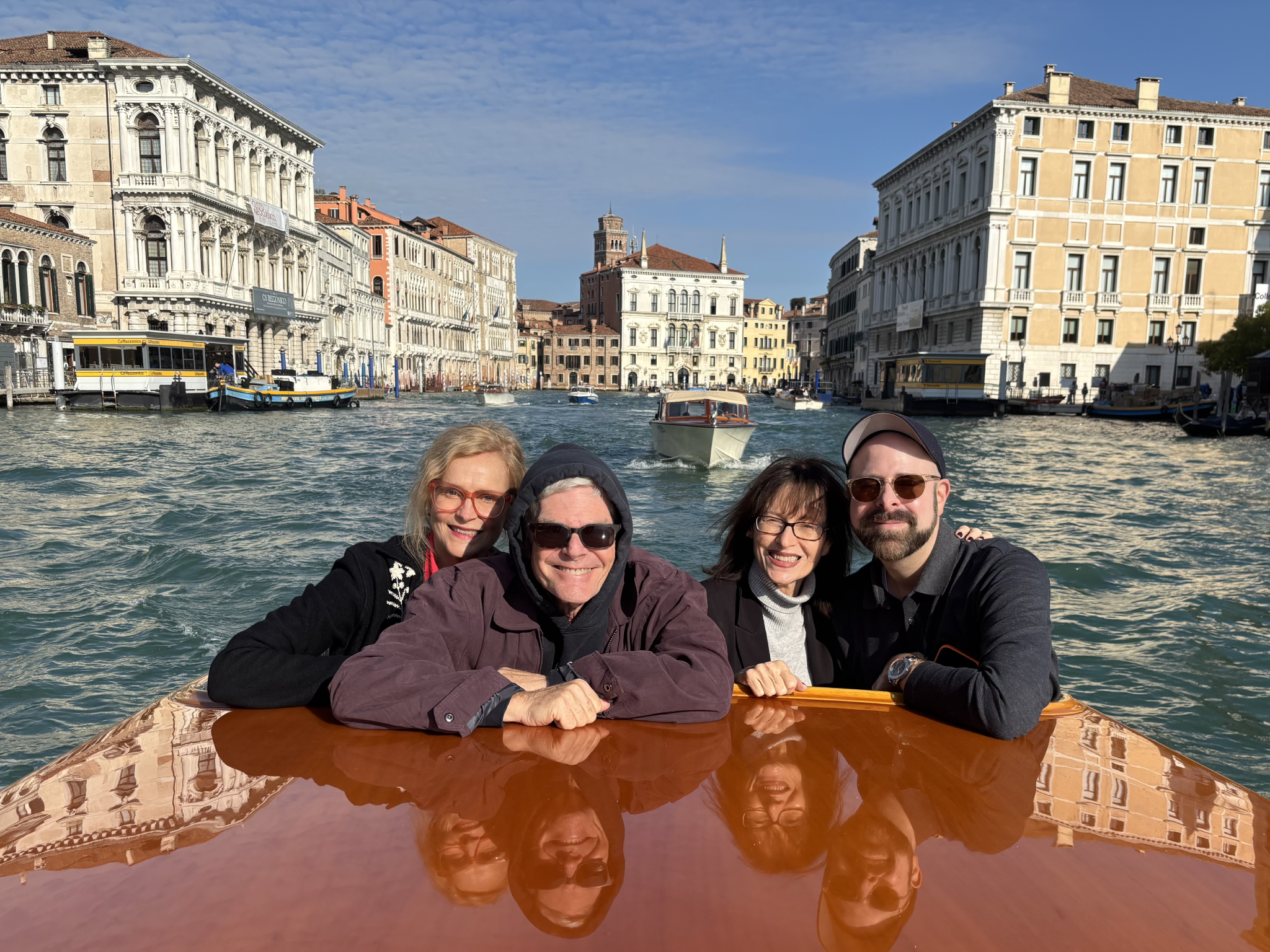
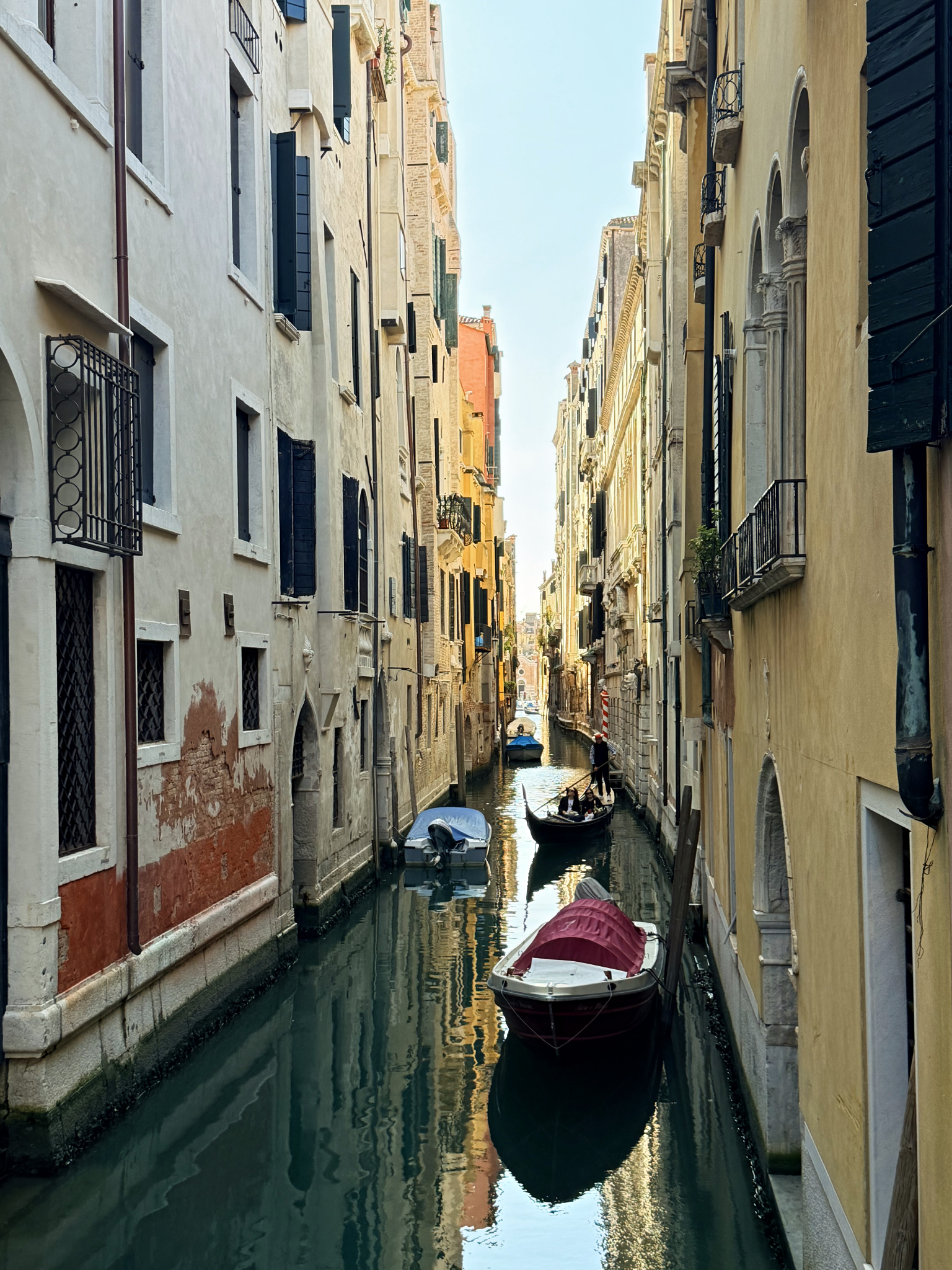
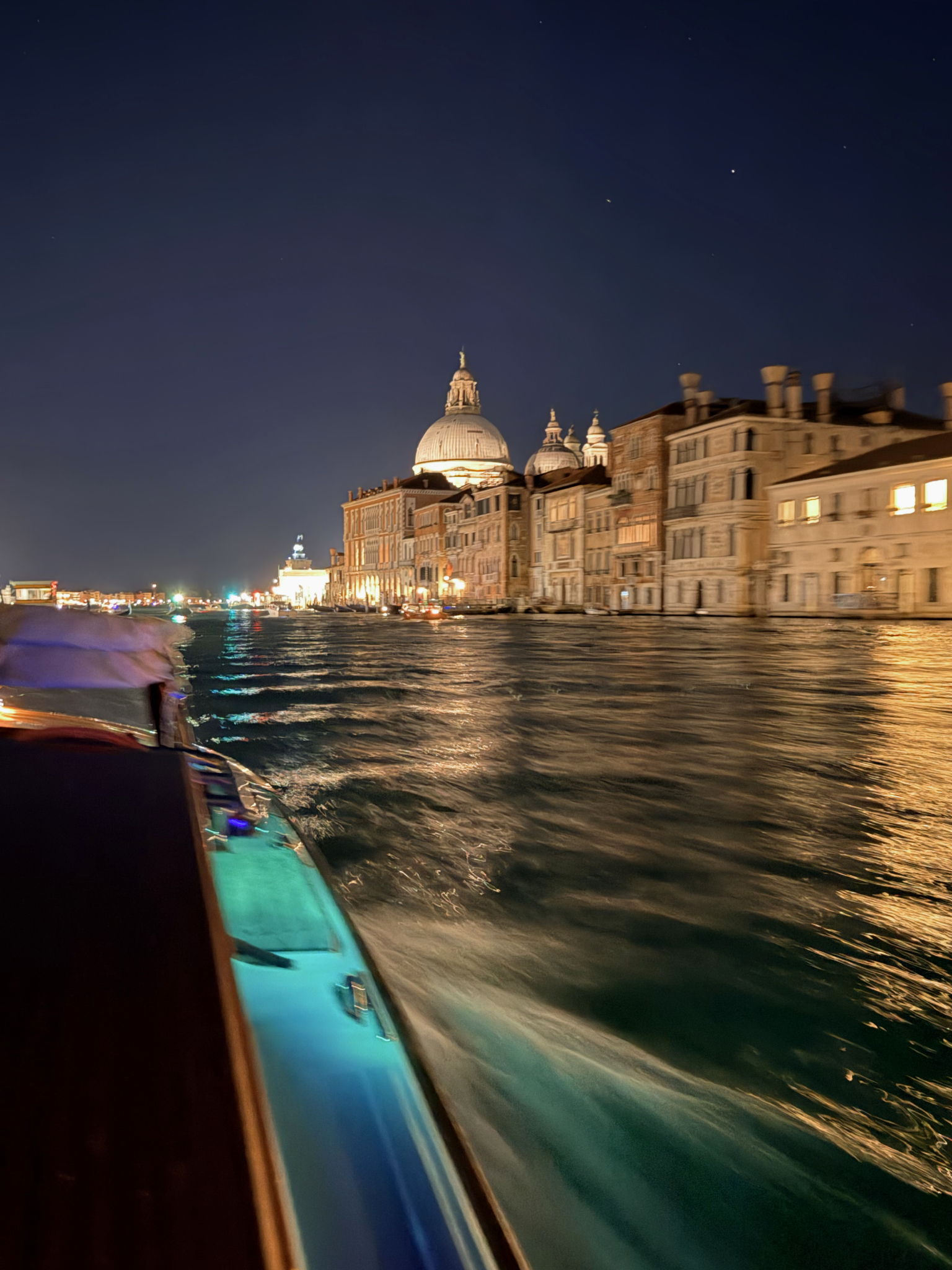
We bypassed the crowded vaporettos and opted for a motoscafo (private water taxi) directly to our hotel. There is truly no better way to enter the city; the thrill of salt spray and the sight of crumbling palazzos is intoxicating.
We stayed at Palazzetto MyVenice, an intimate gem tucked away in the sophisticated Dorsoduro district. Dorsoduro is often cited as the “artsy” neighborhood, home to prestigious galleries and a slightly quieter, more residential hum compared to the frenzy of San Marco.
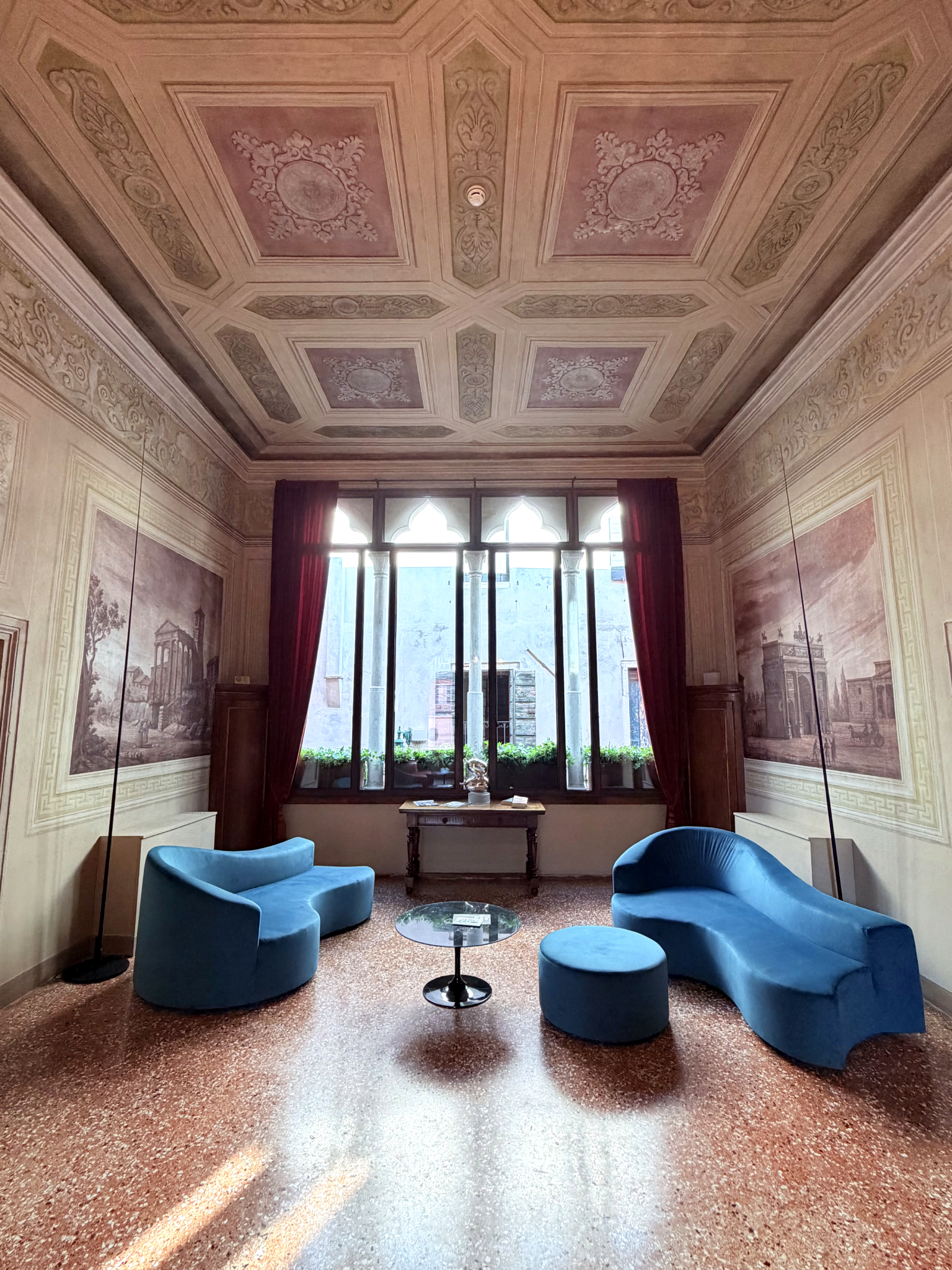
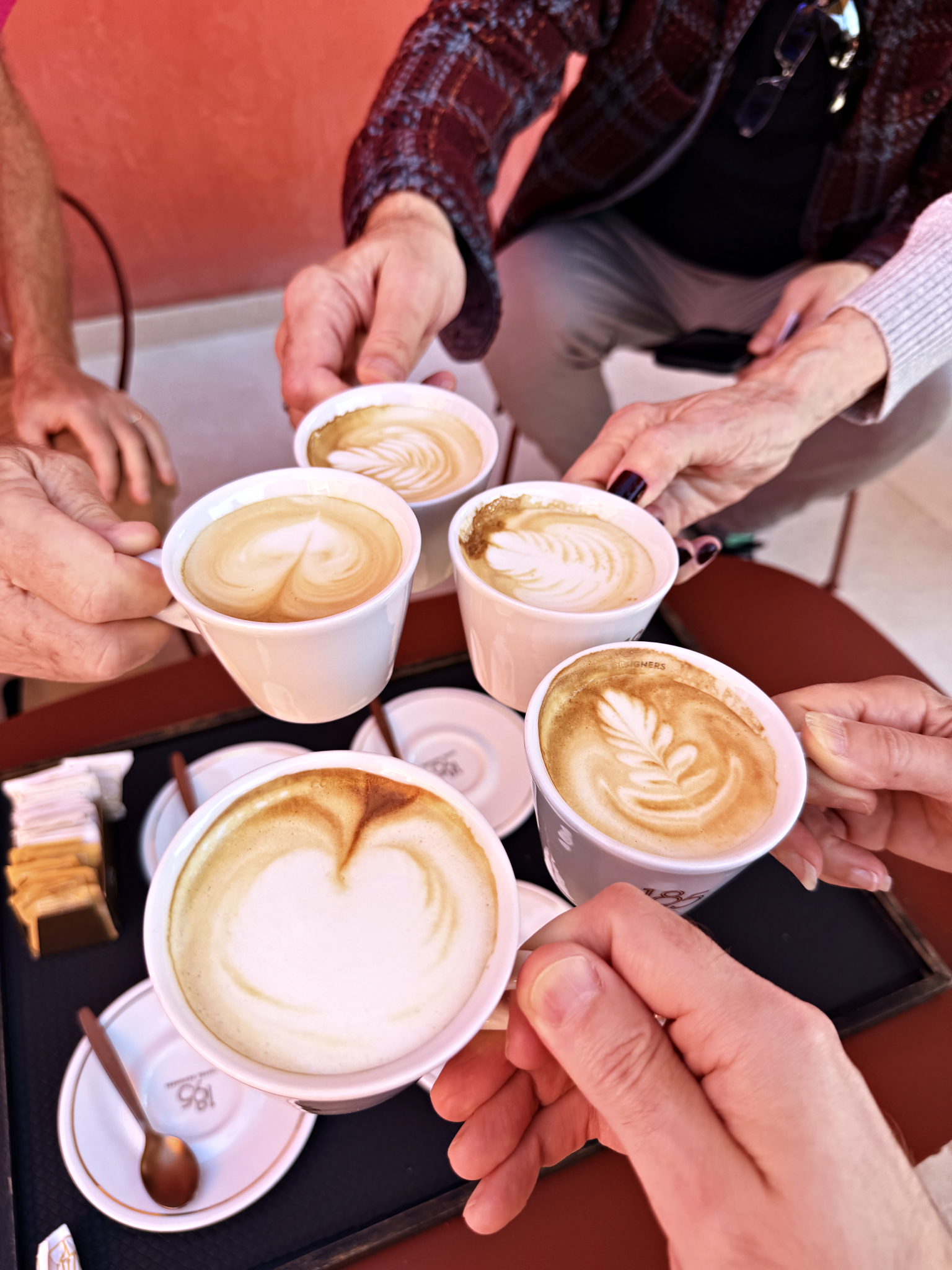
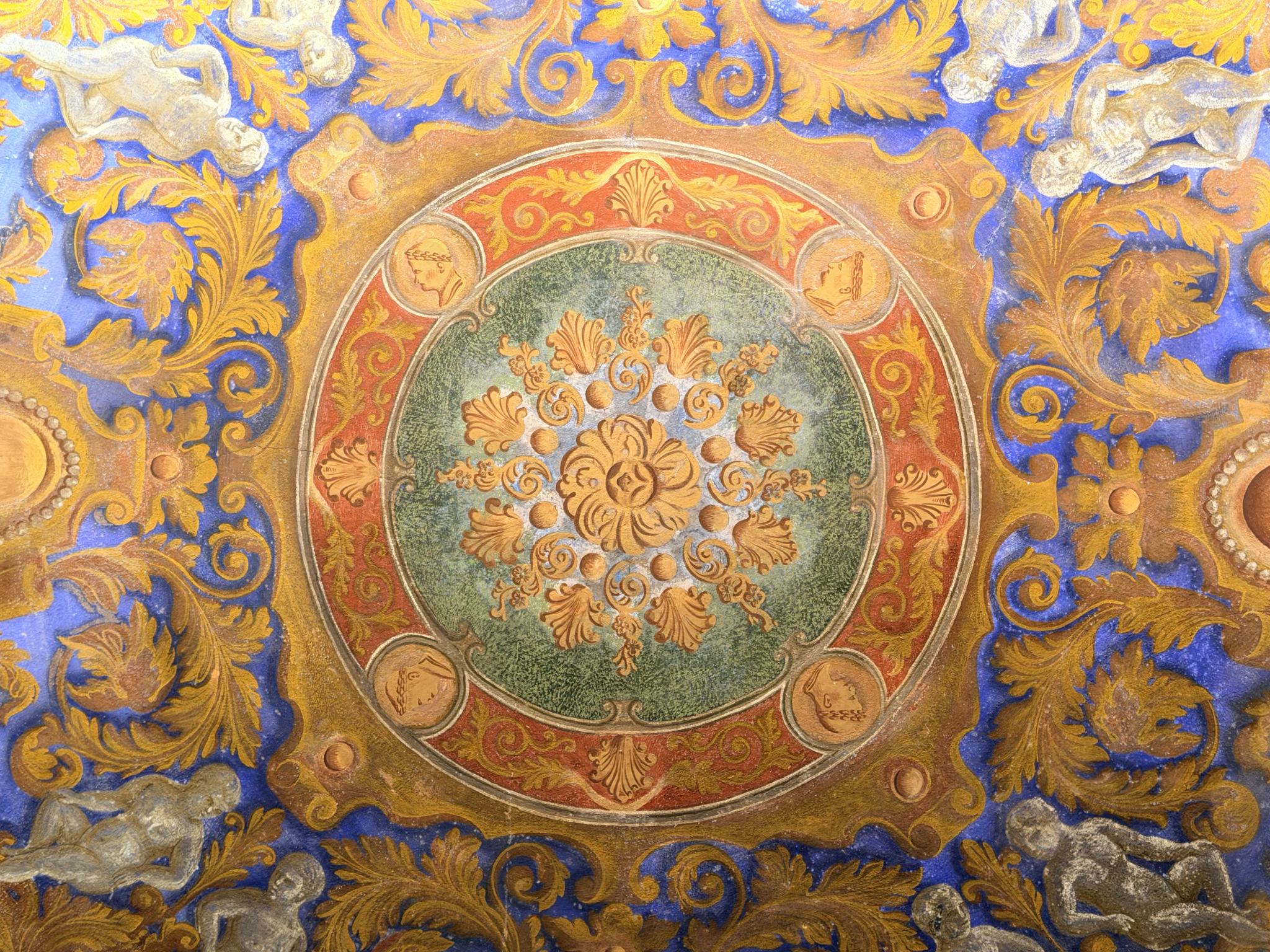
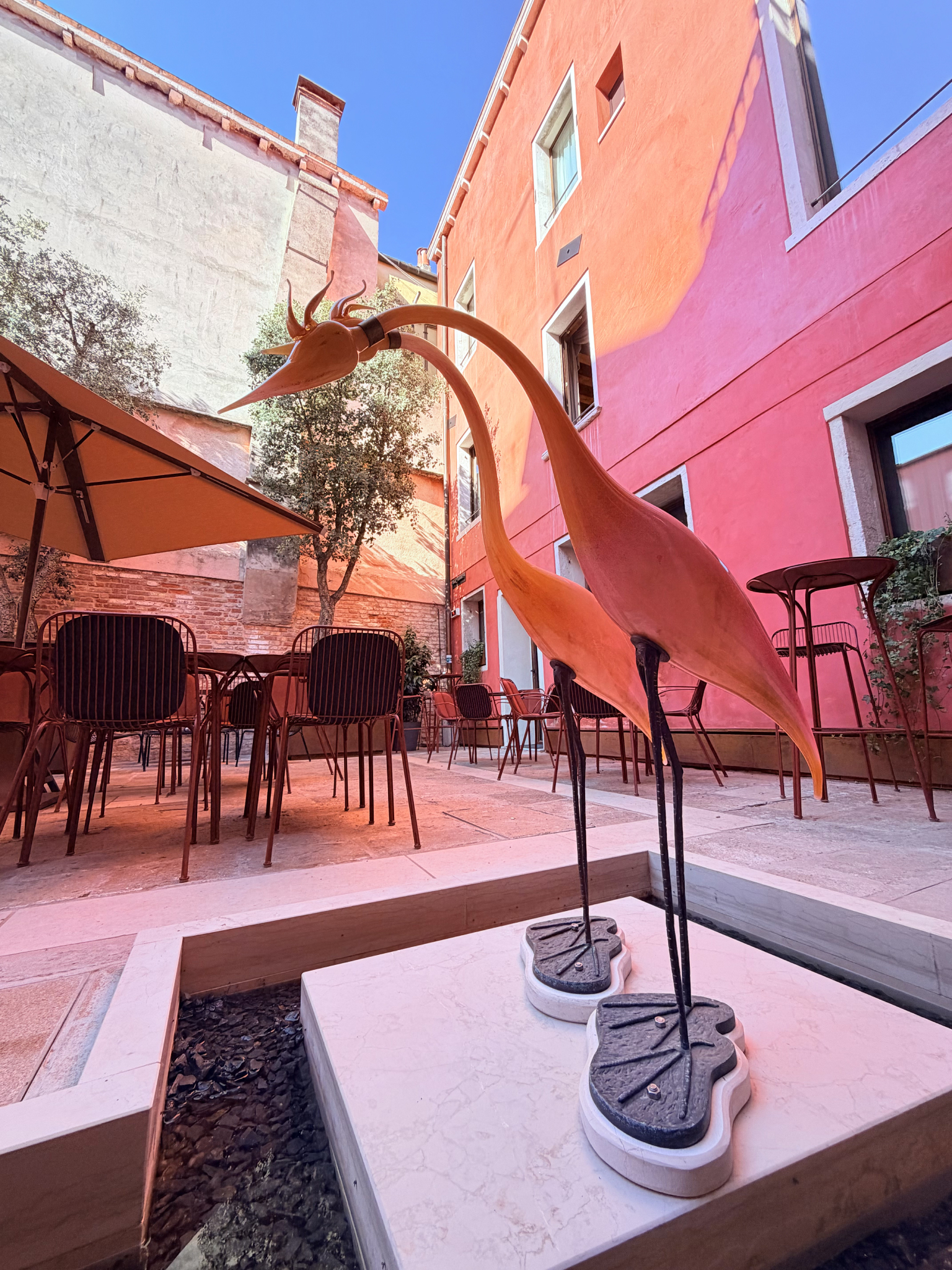
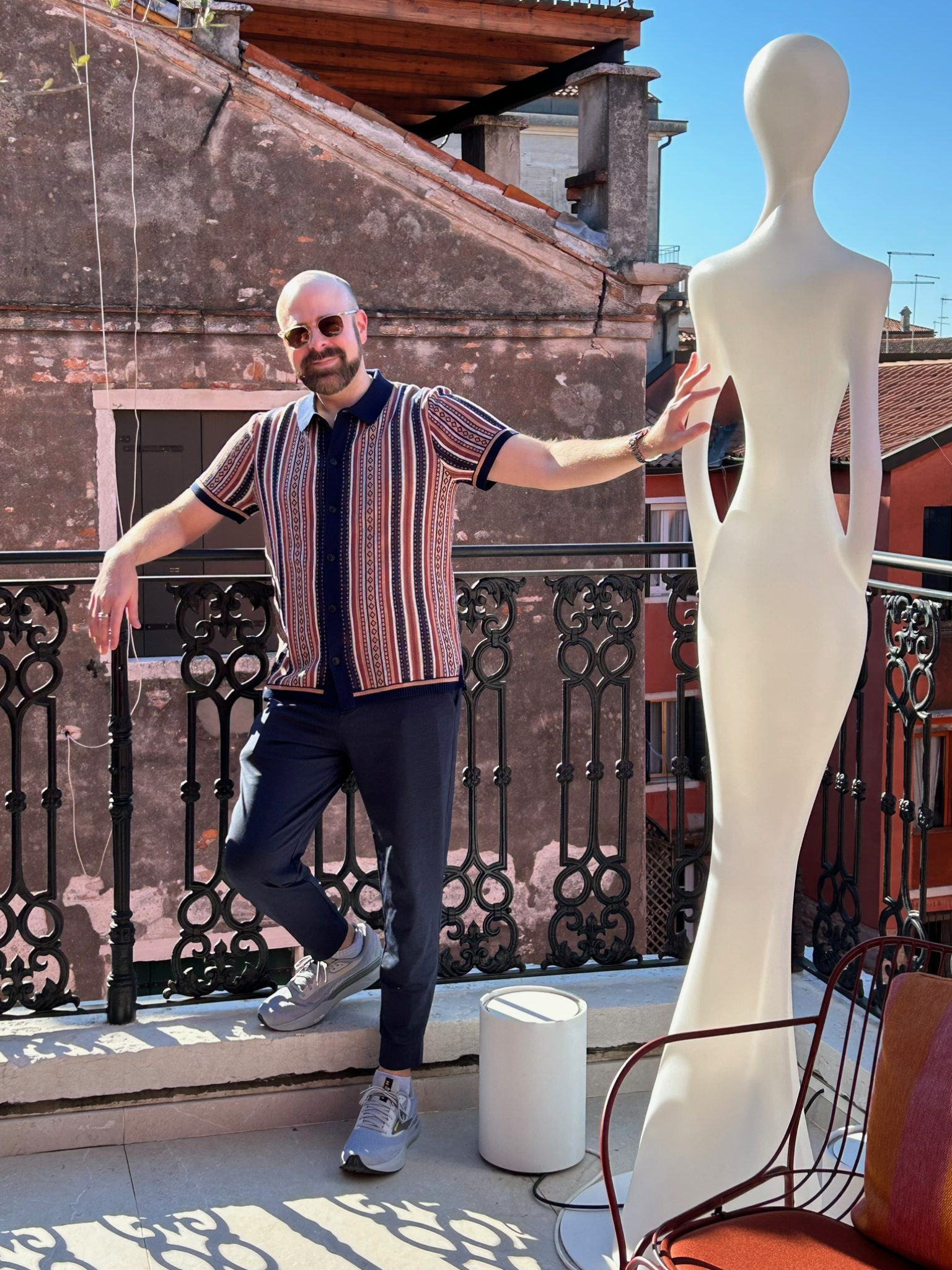
Our accommodations were nothing short of spectacular, centered around a sumptuous Junior Suite that felt like a love letter to Venetian history with its double-height ceilings featuring an original, intricate fresco and authentic terrazzo floors that gleamed under the light. The room was anchored by a grand canopy bed and a massive hamam-style walk-in shower and soaking tub, providing a regal sanctuary. Before diving into the labyrinth of streets, we gathered on the upstairs terrace, sipping cappuccinos and watching the gondolas navigate the canal below, soaking in the quintessential charm of Dorsoduro.
Navigating the Icons: From San Marco to the Rialto
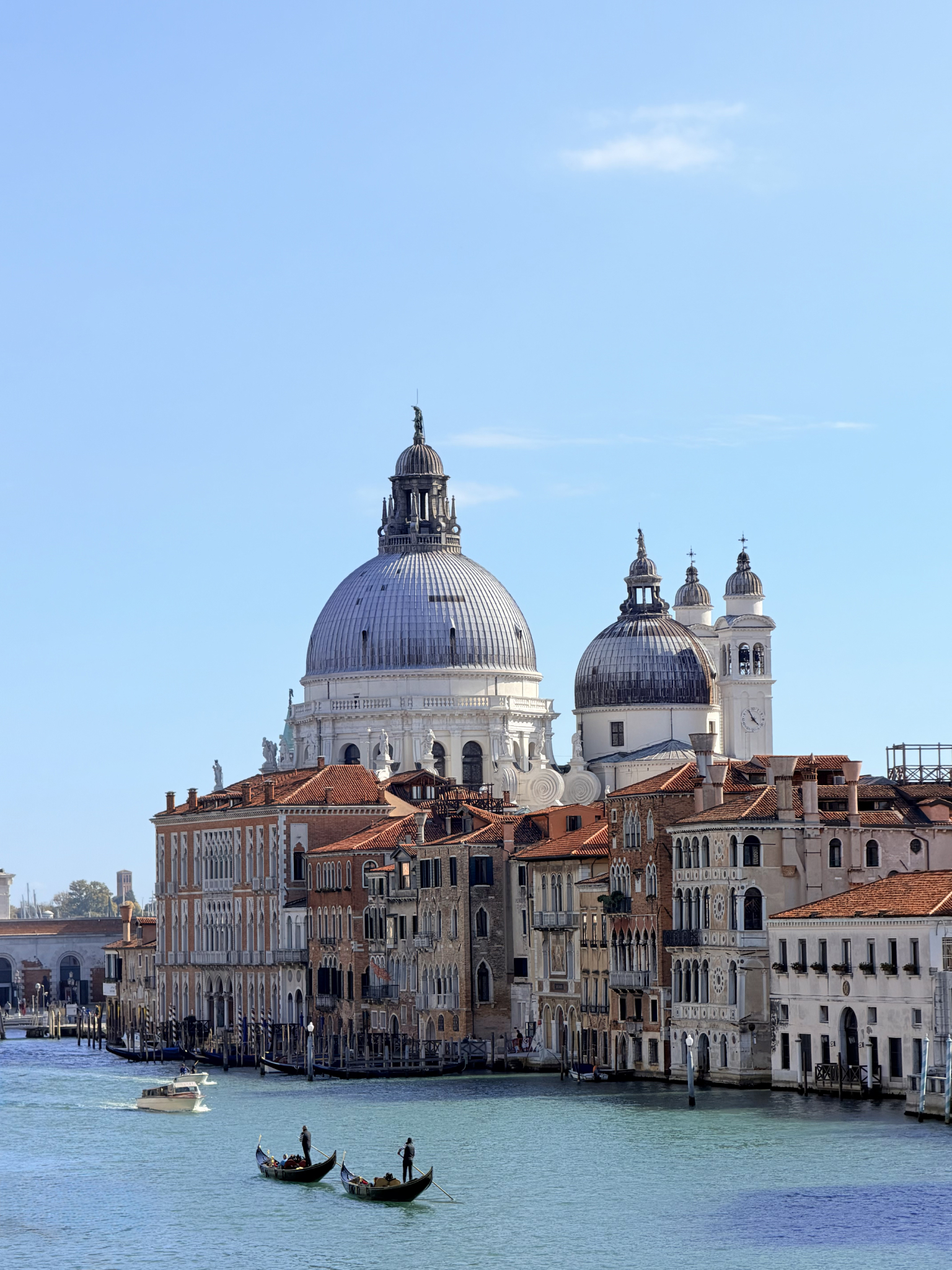
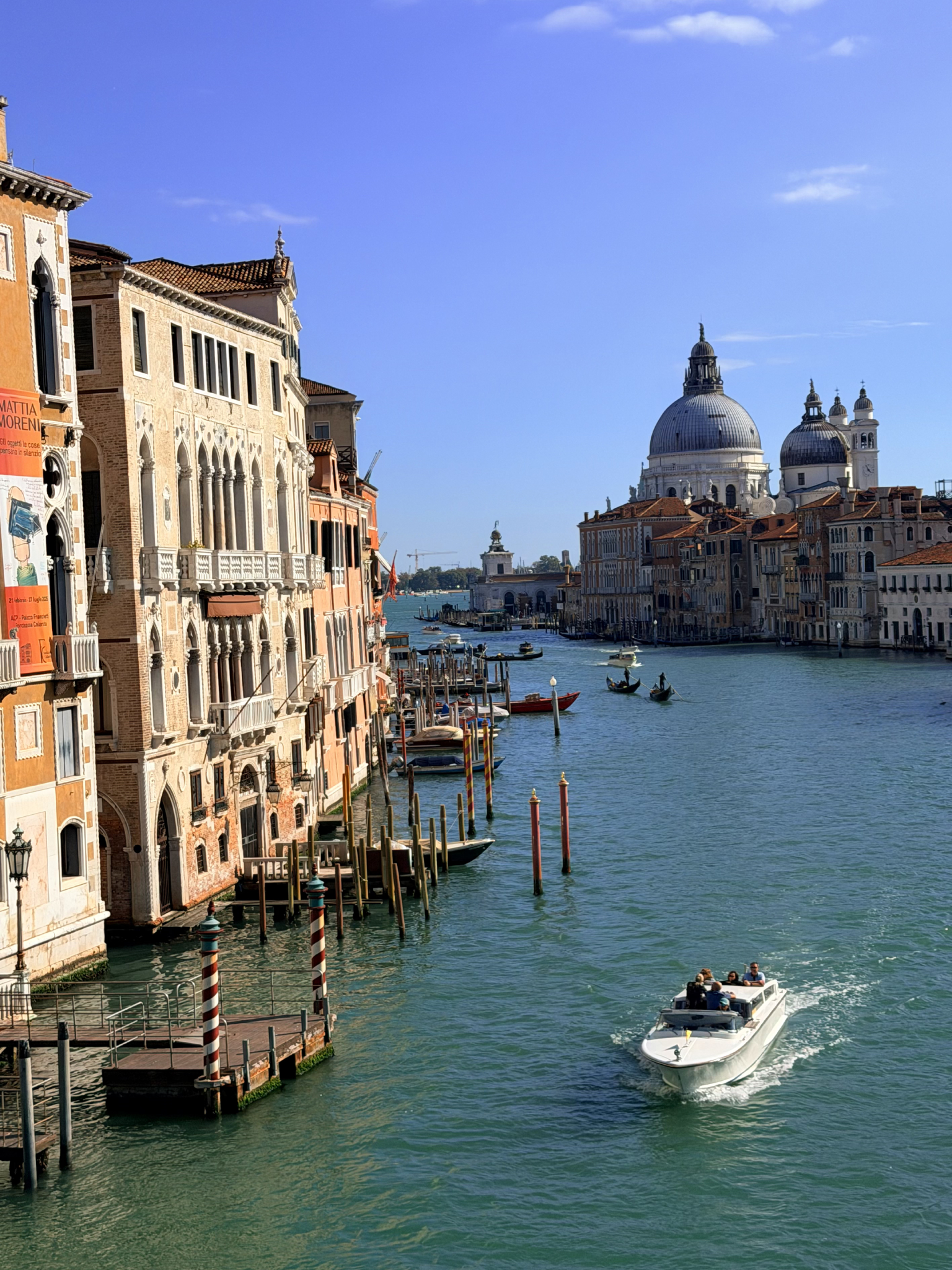
Knowing that Piazza San Marco would be a “zoo,” we decided to tackle the tourist epicenter on our first day. We crossed the Grand Canal via the wooden Ponte dell’Accademia, pausing to ogle the iconic view of the milky green waters framed by the Basilica di Santa Maria della Salute in the distance.
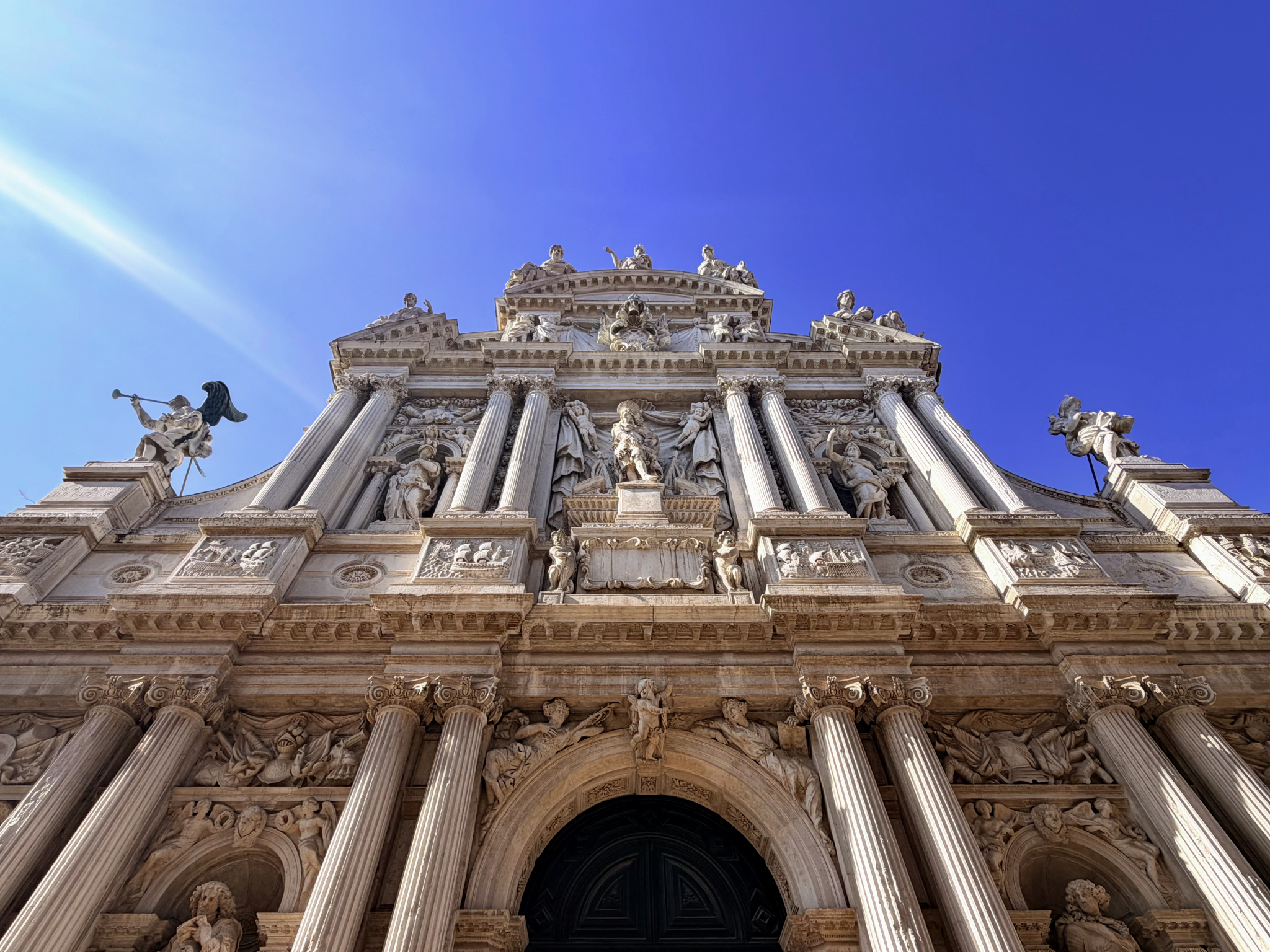
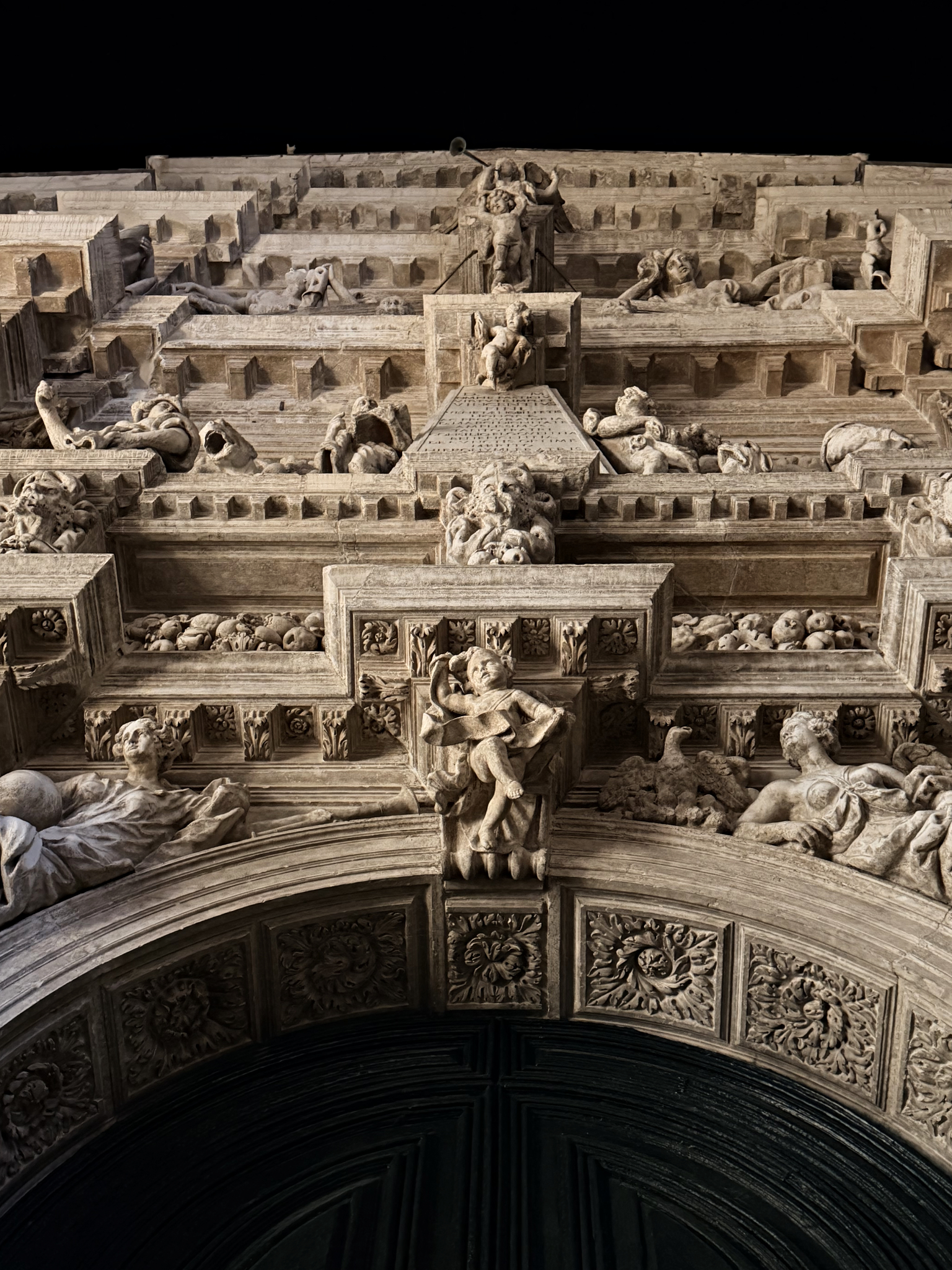
Our walk took us through Campo San Maurizio and Campello Santa Maria Zobenigo. We stopped to marvel at the Baroque facade of Chiesa di Santa Maria del Giglio, rebuilt in 1681. The statues and friezes are so densely packed and ornate that you find yourself wondering how 17th-century masons managed to assemble such a stone tapestry.
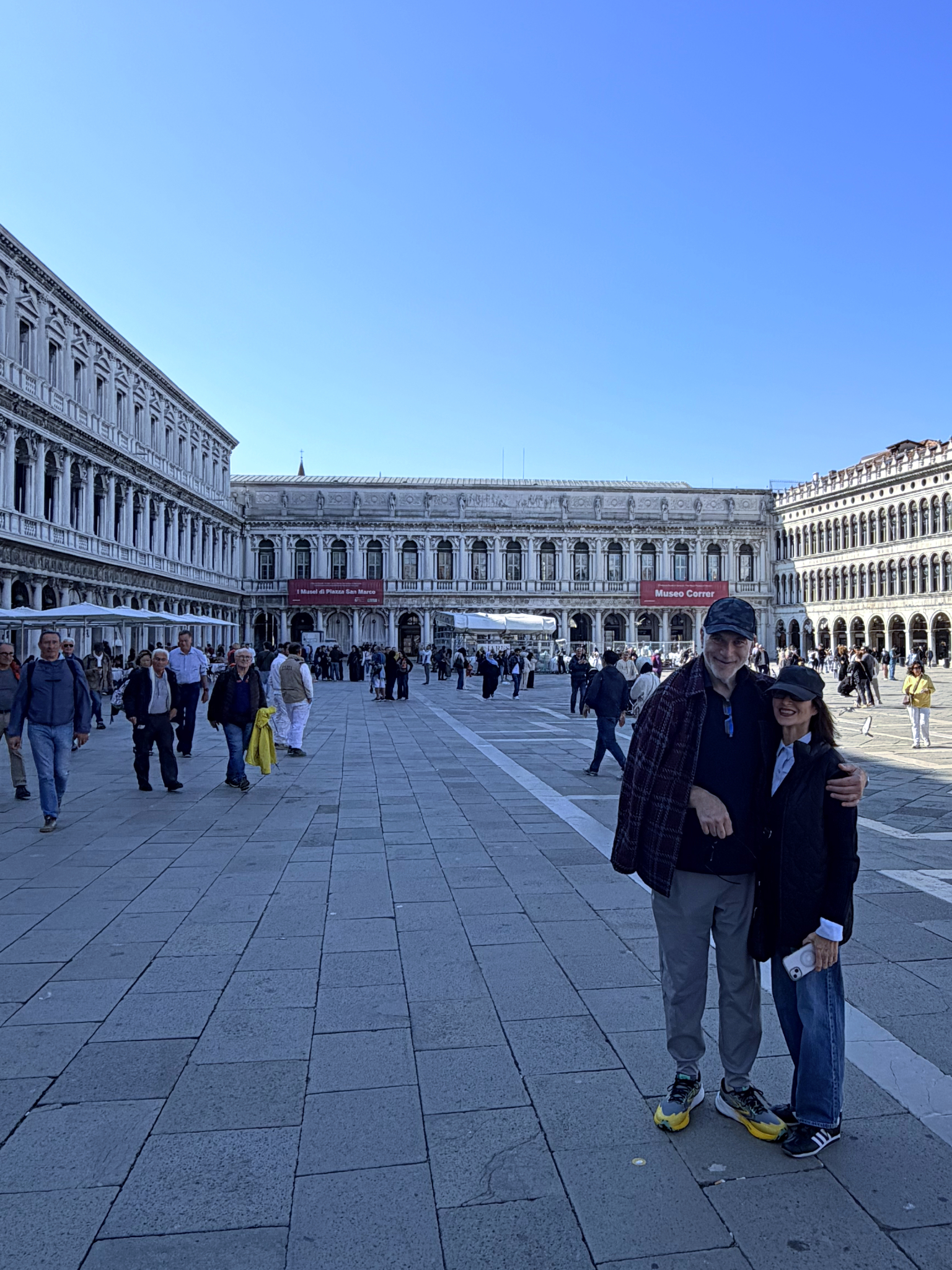
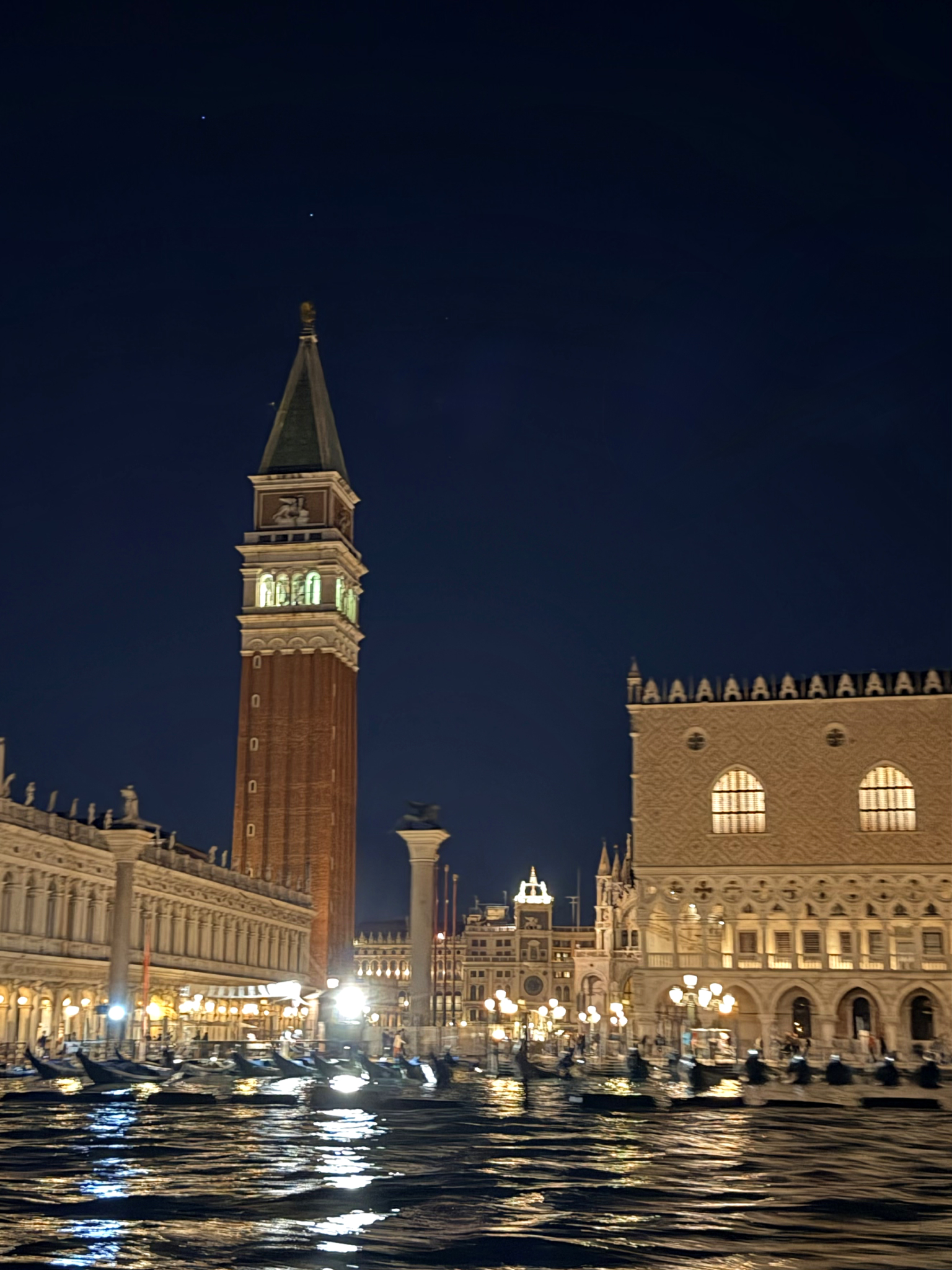
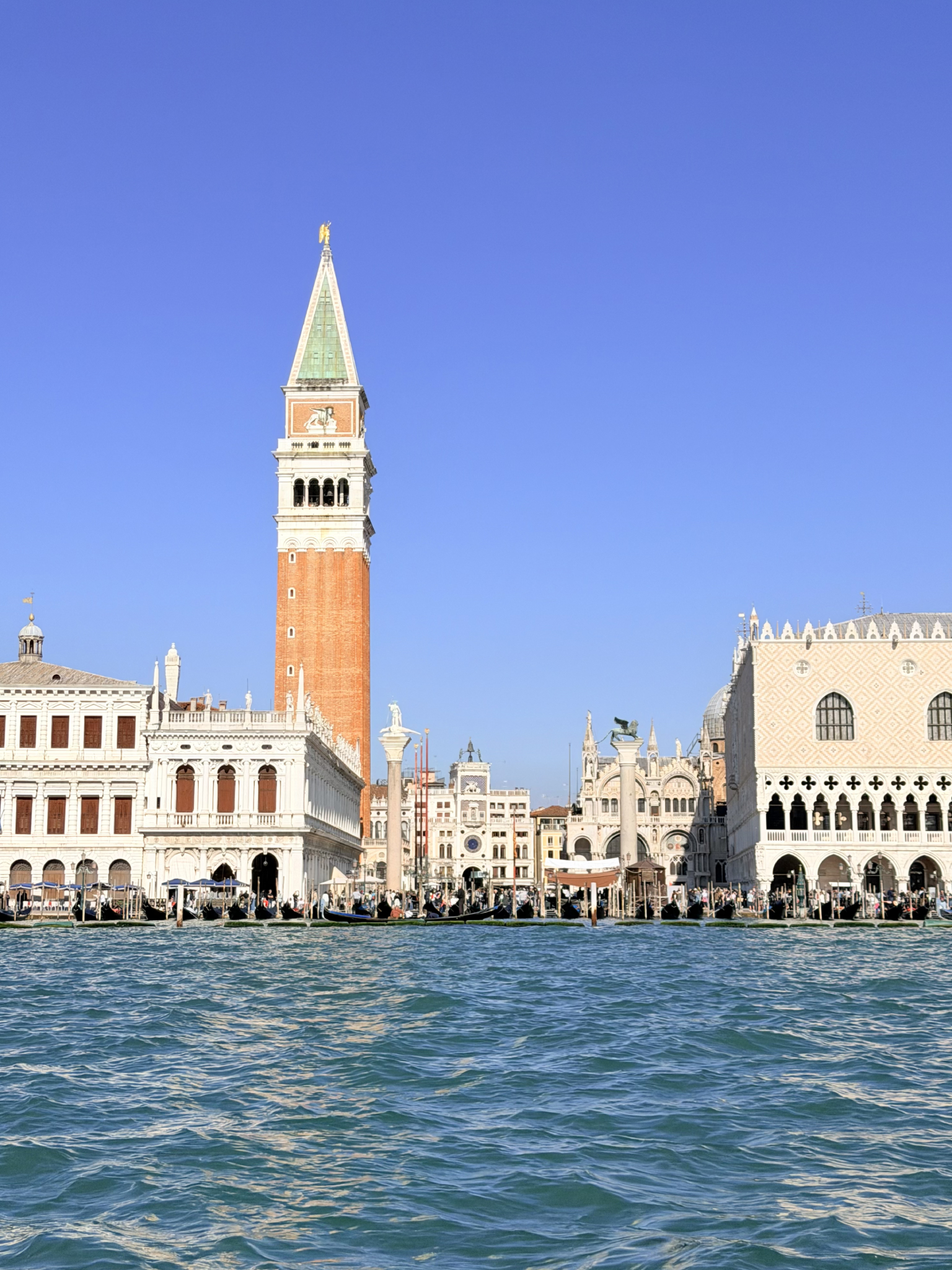
Passing through the arcades into Piazza San Marco, the crowds were indeed teeming. Yet, the square—Napoleon’s “finest drawing room in Europe”—still commands absolute awe. We stood before the Basilica di San Marco, a masterpiece of Italo-Byzantine architecture with its shimmering gold mosaics, flanked by the Gothic Palazzo Ducale and the towering Campanile.
Fragrance and History
After a quick lunch of pizzas and salads at Ristorante La Piazza, we made a pilgrimage to the flagship store of The Merchant of Venice. This perfumery is housed in an ancient pharmacy and is a sensory overload. We stocked up on Venetian Blue, a sophisticated fragrance Charles and I first fell in love with in Milan back in 2018.
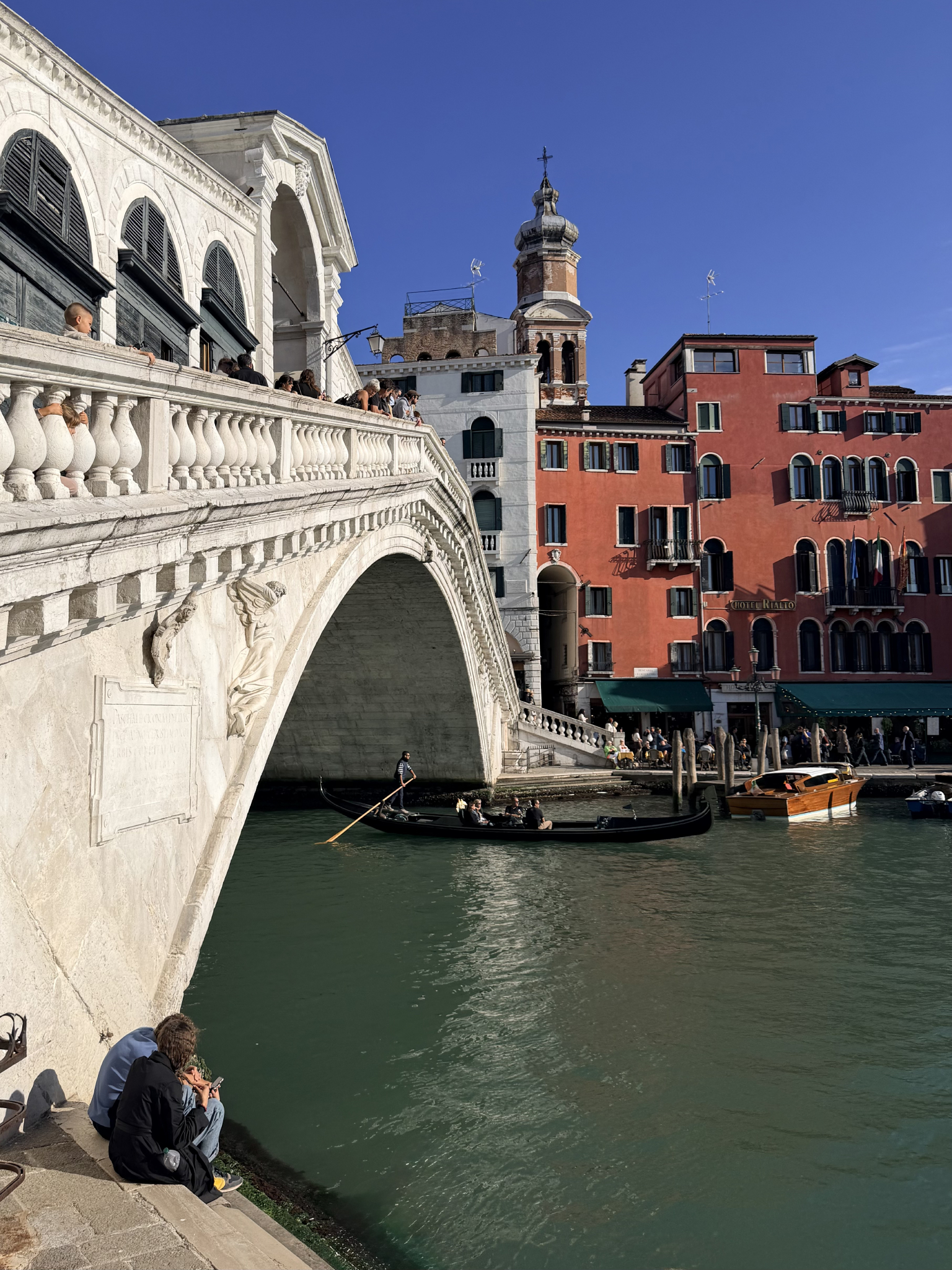
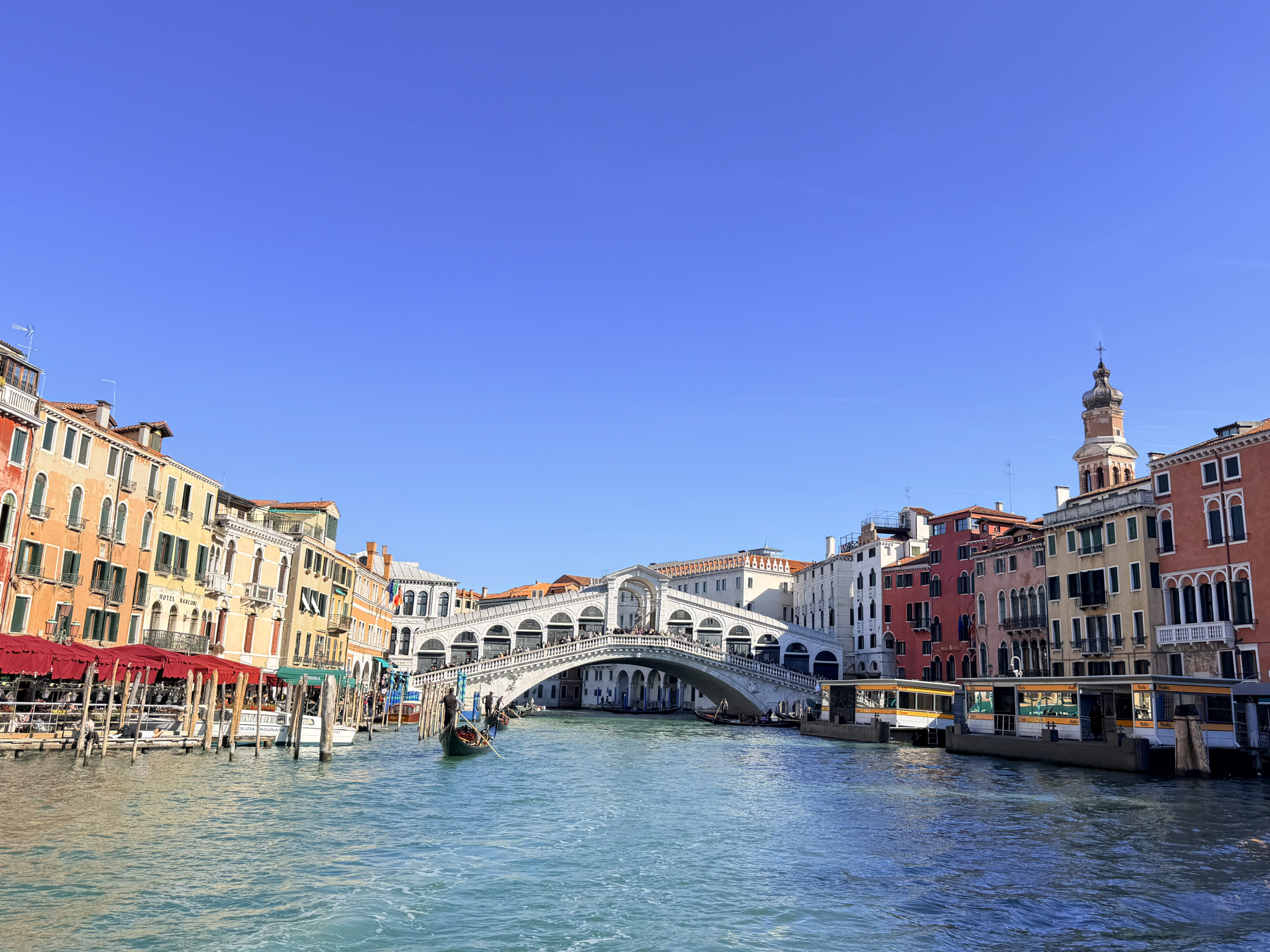
We eventually wound our way to the Ponte di Rialto. Completed in 1591, it is the oldest of the four bridges spanning the Grand Canal. Despite the swarms of tourists, we cleared a small patch of railing to soak in the mid-afternoon October sun before retreating to the quieter lanes of Dorsoduro.
High Art and Low-Key Luxury: Ca’ Rezzonico and Ristorante Riviera
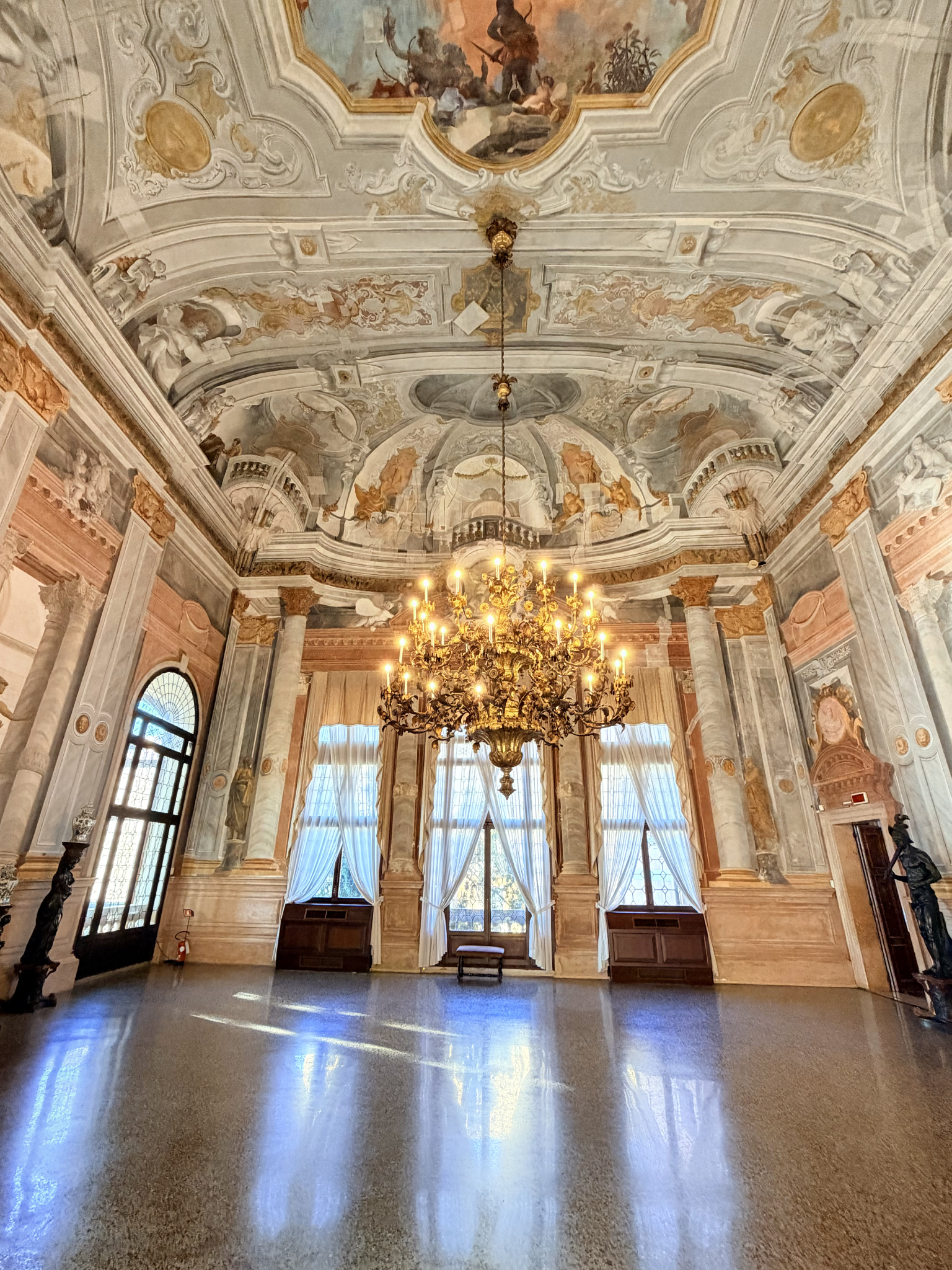
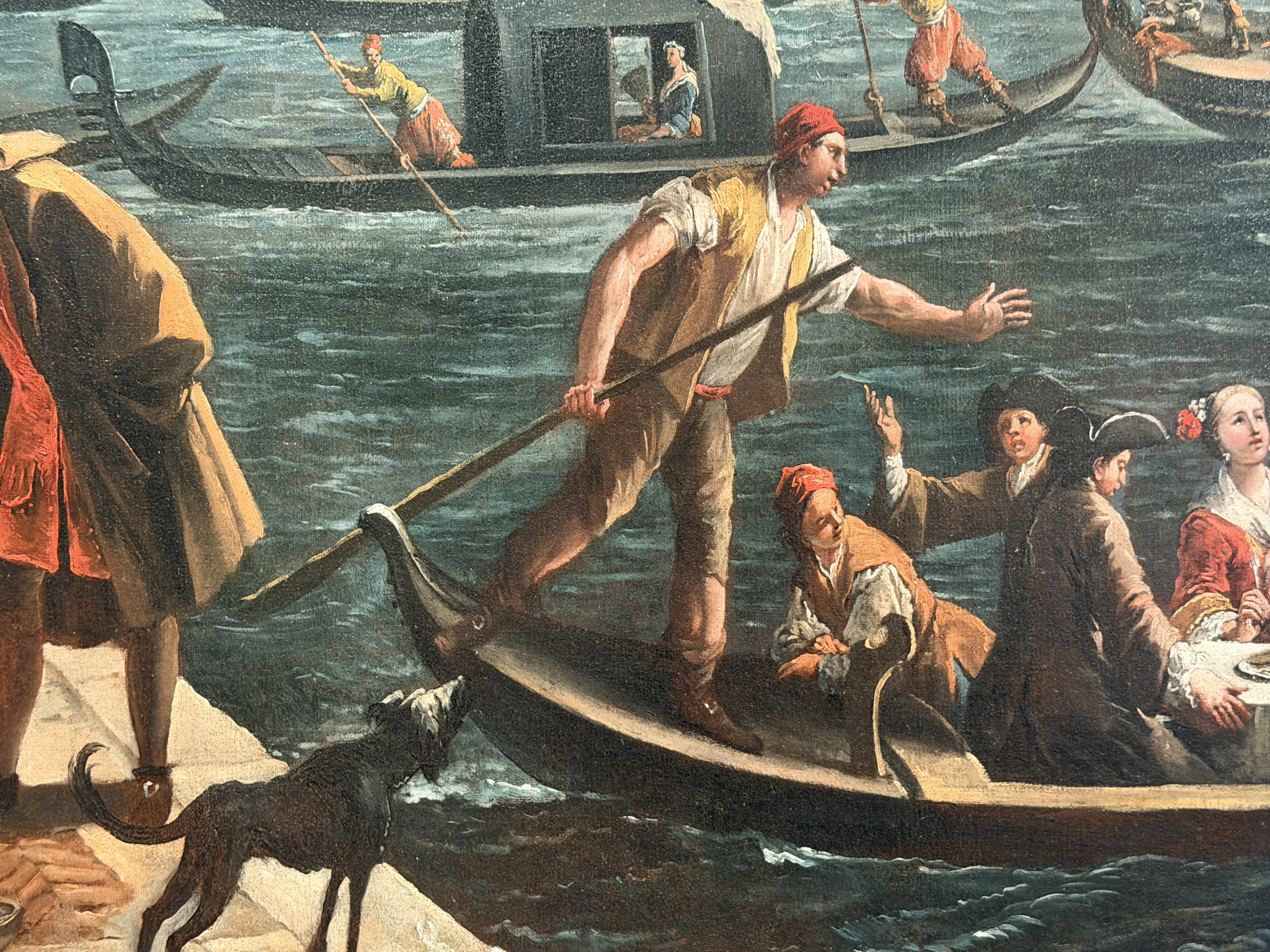
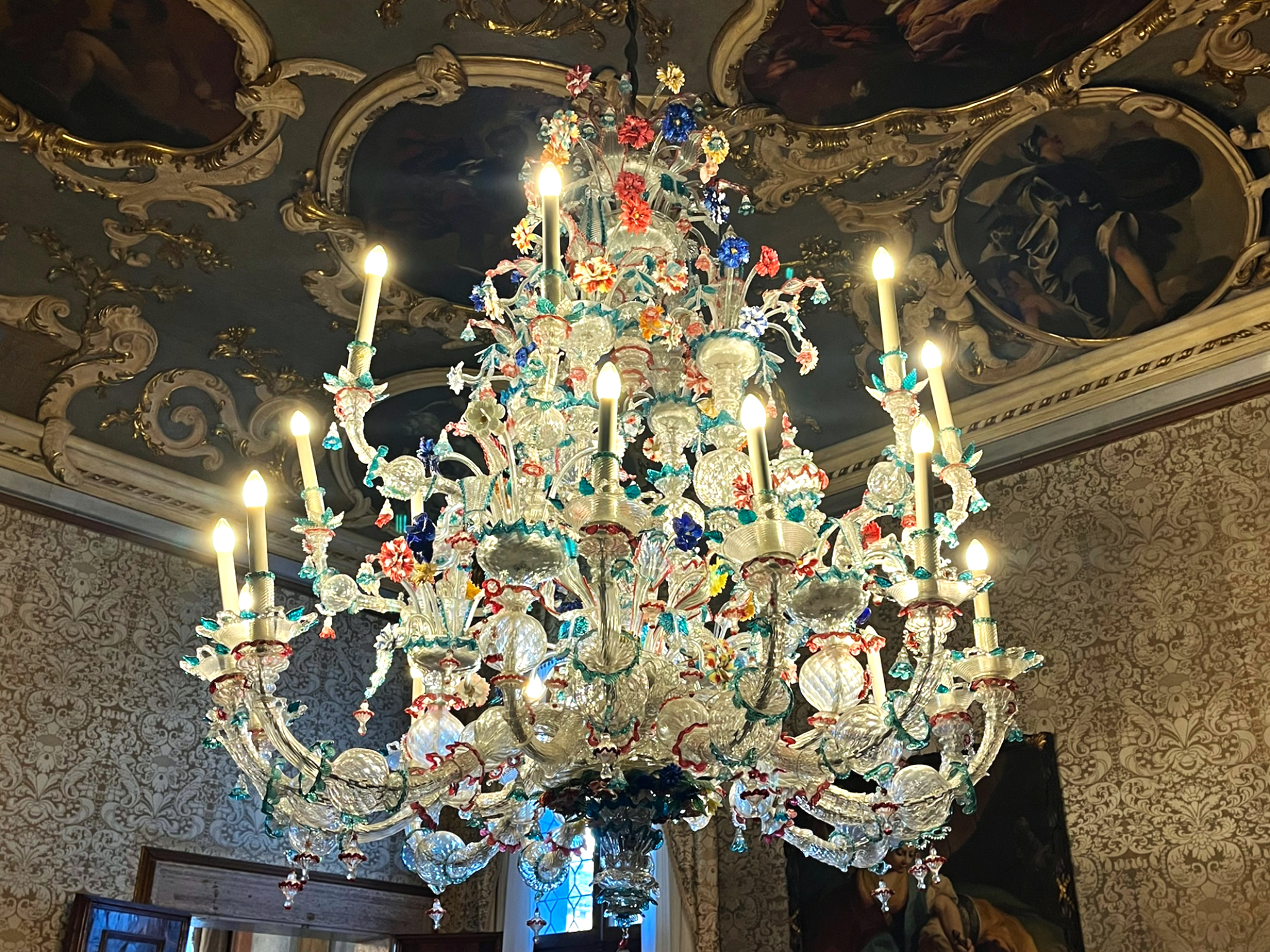
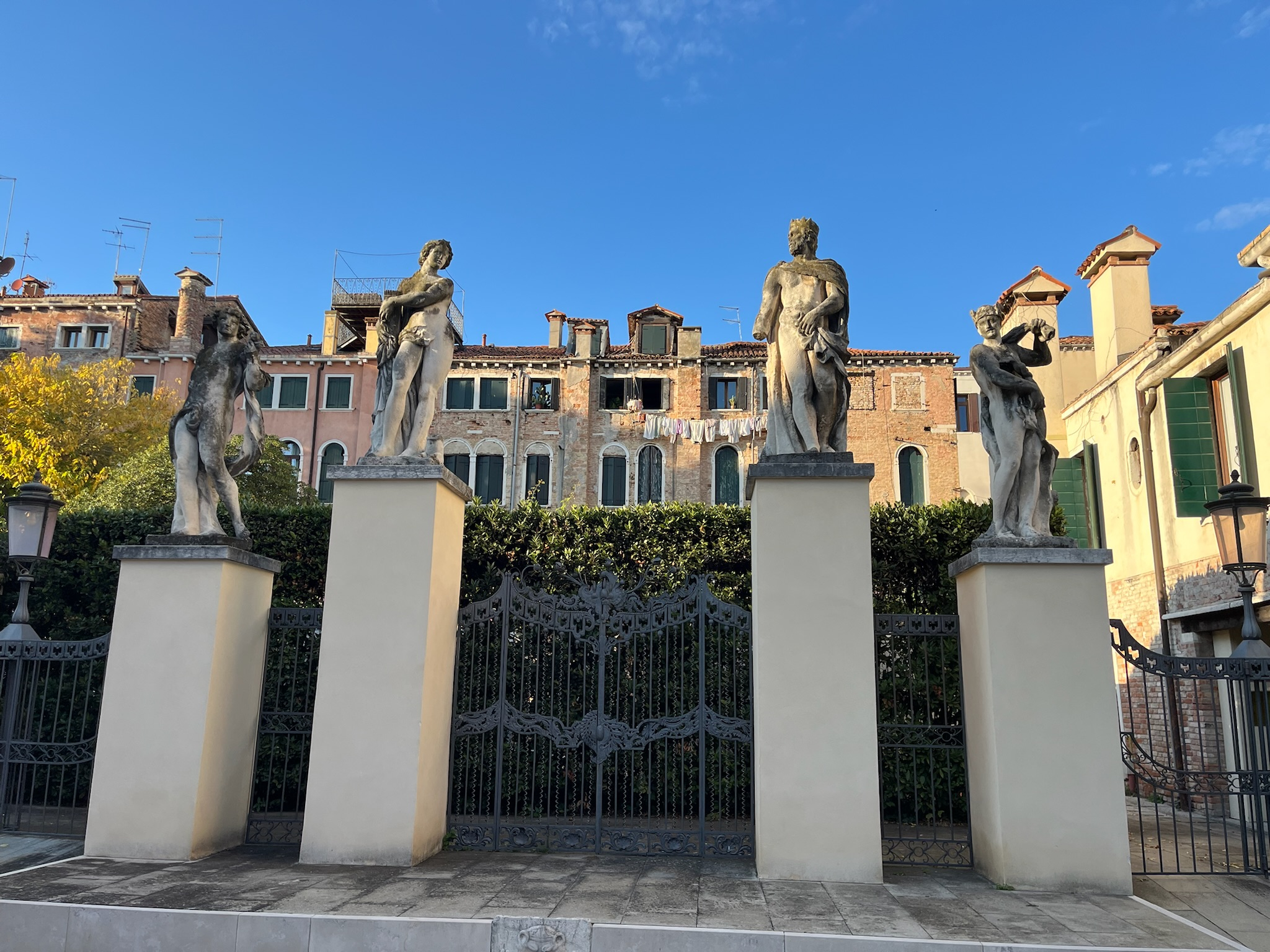
Rather than retreating for a nap, we knew we had to keep the momentum going to fight off the jetlag, so we pushed through to Ca’ Rezzonico. This magnificent palazzo-turned-museum dedicated to 18th-century Venice offered a tranquil scene, providing the perfect “second wind” as we indulged in the eye candy of opulent, sumptuous rooms and walls hung with masterpieces by Titian and Canaletto. We even took a refreshing spin around the private garden—a rare luxury in this water-bound city—before heading back to the hotel to freshen up.
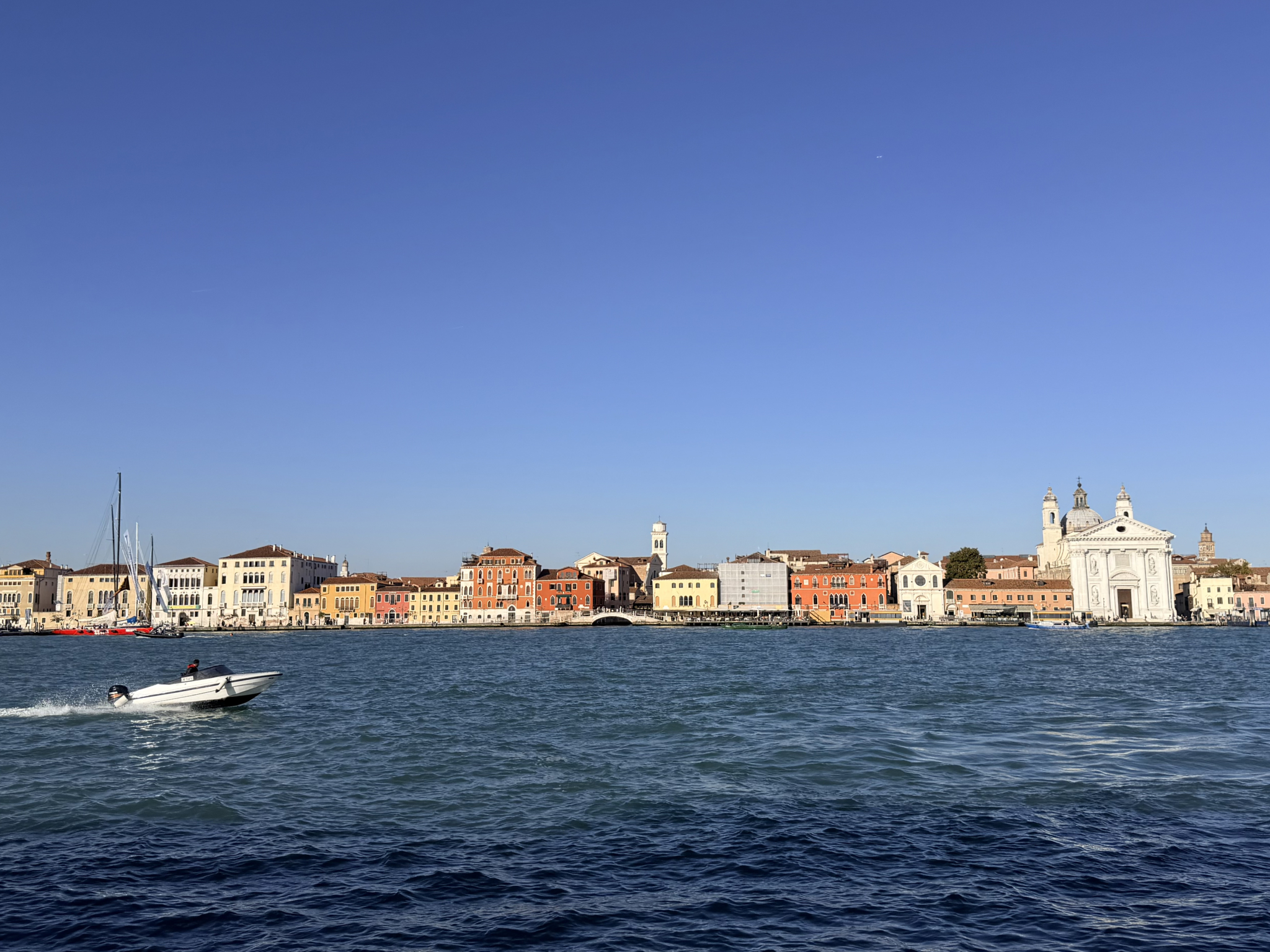
That evening, we walked 15 minutes to the Giudecca Canal for dinner at Ristorante Riviera. Widely considered one of the best dining spots in Dorsoduro, Riviera is celebrated for its avant-garde yet soulful approach to traditional flavors, featuring an extensive menu of pristine Adriatic seafood and fresh-caught fish. It was the perfect, light meal to end our first day, made even more magical by the unbeatable view of the Giudecca Canal glowing at twilight.
Modern Masterpieces at the Peggy Guggenheim Collection
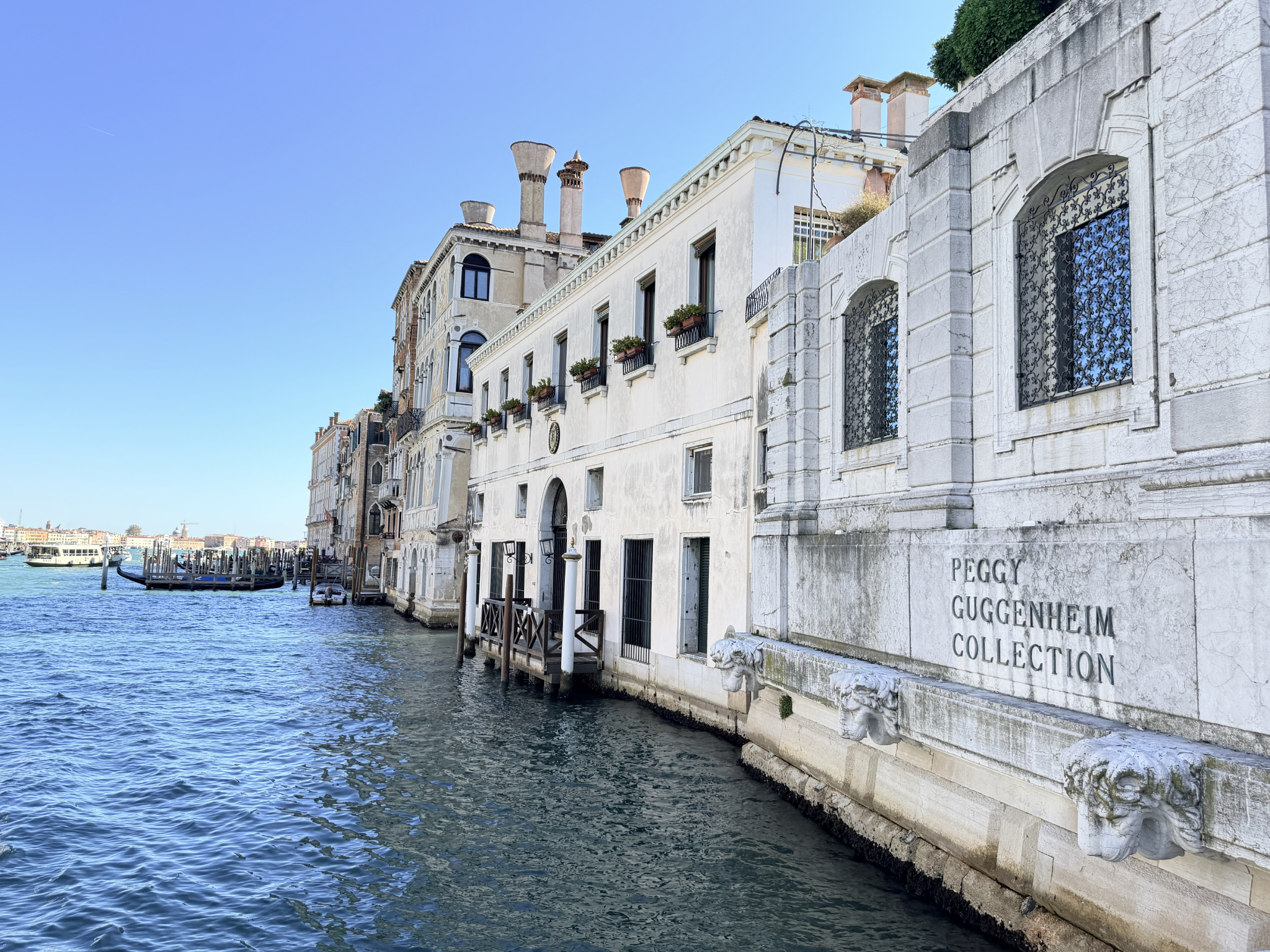
The next morning, we took a short, sun-dappled stroll to the Peggy Guggenheim Collection, housed in the unfinished but utterly iconic Palazzo Venier dei Leoni. This low-slung, Istrian stone palace served as Peggy’s private sanctuary for thirty years, and it remains one of the world’s most intimate and important repositories for 20th-century European and American art.
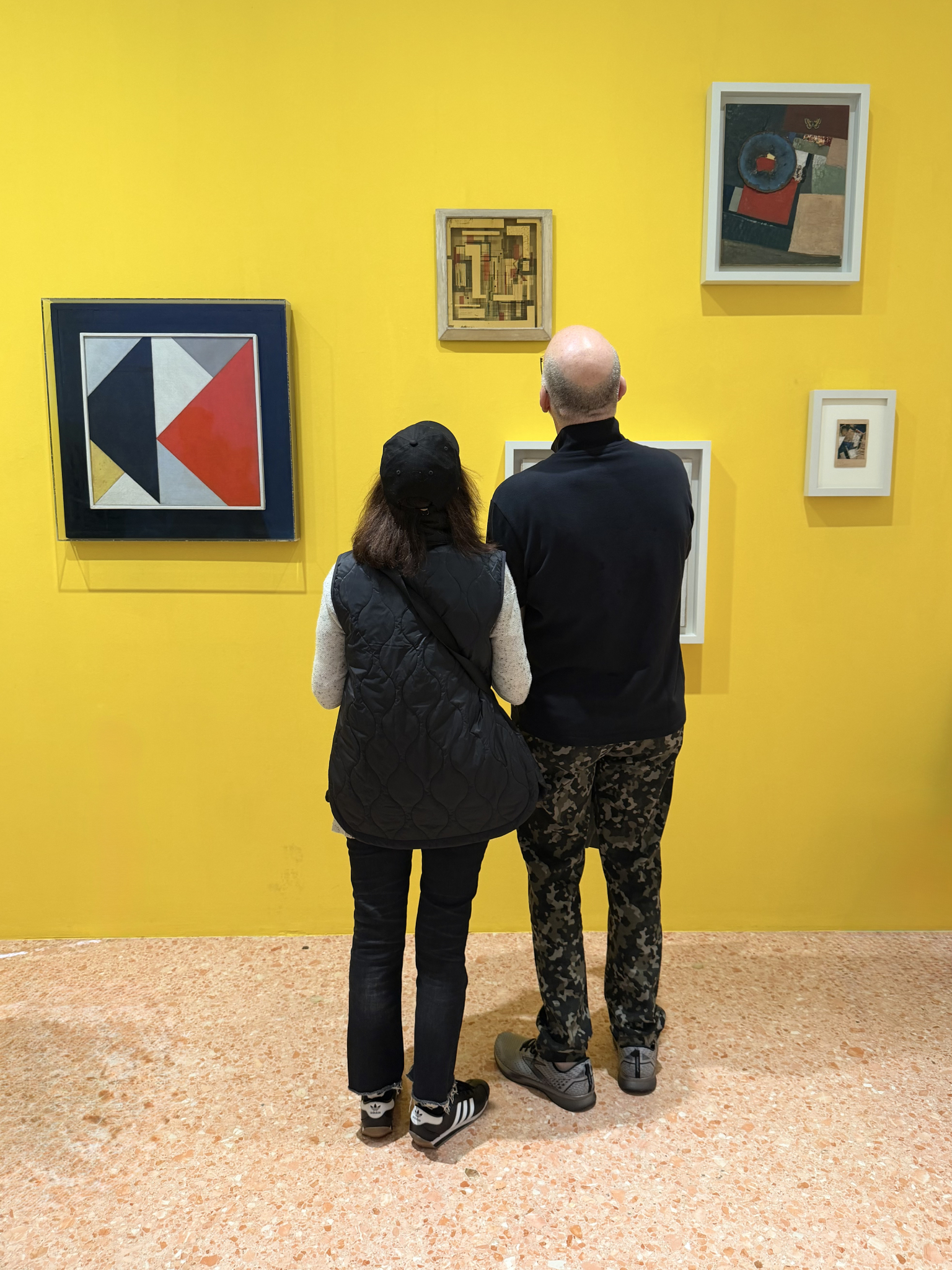
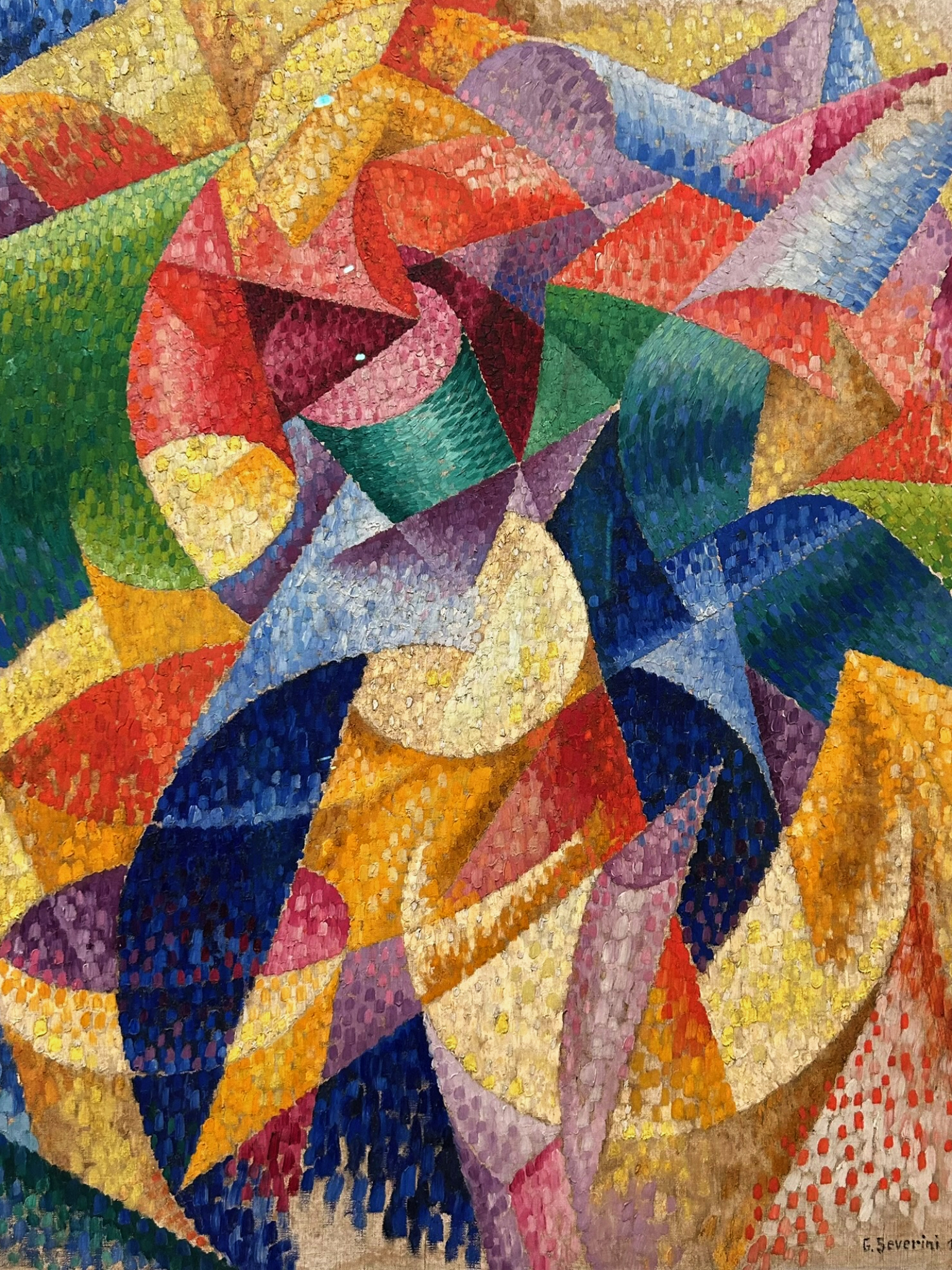
Charles and I last visited a decade ago, but the magic of the space has only deepened with time; there is something profoundly moving about seeing such high-caliber modernism displayed within the bones of a traditional Venetian palazzo. We spent a meditative hour revisiting favorites by Picasso, Mondrian, and Magritte, and stood in awe beneath the delicate, dancing shadows of Alexander Calder’s mobiles.
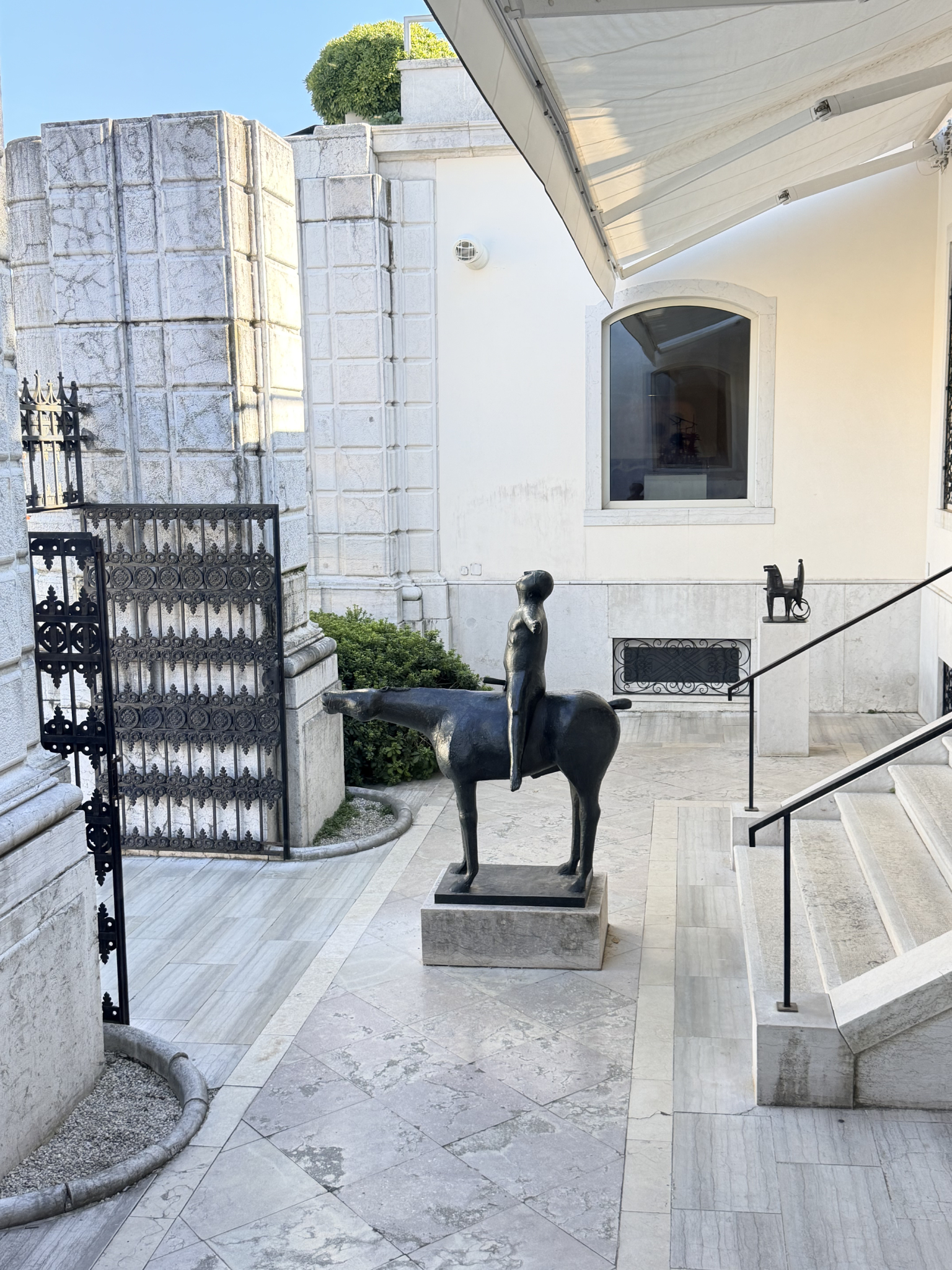
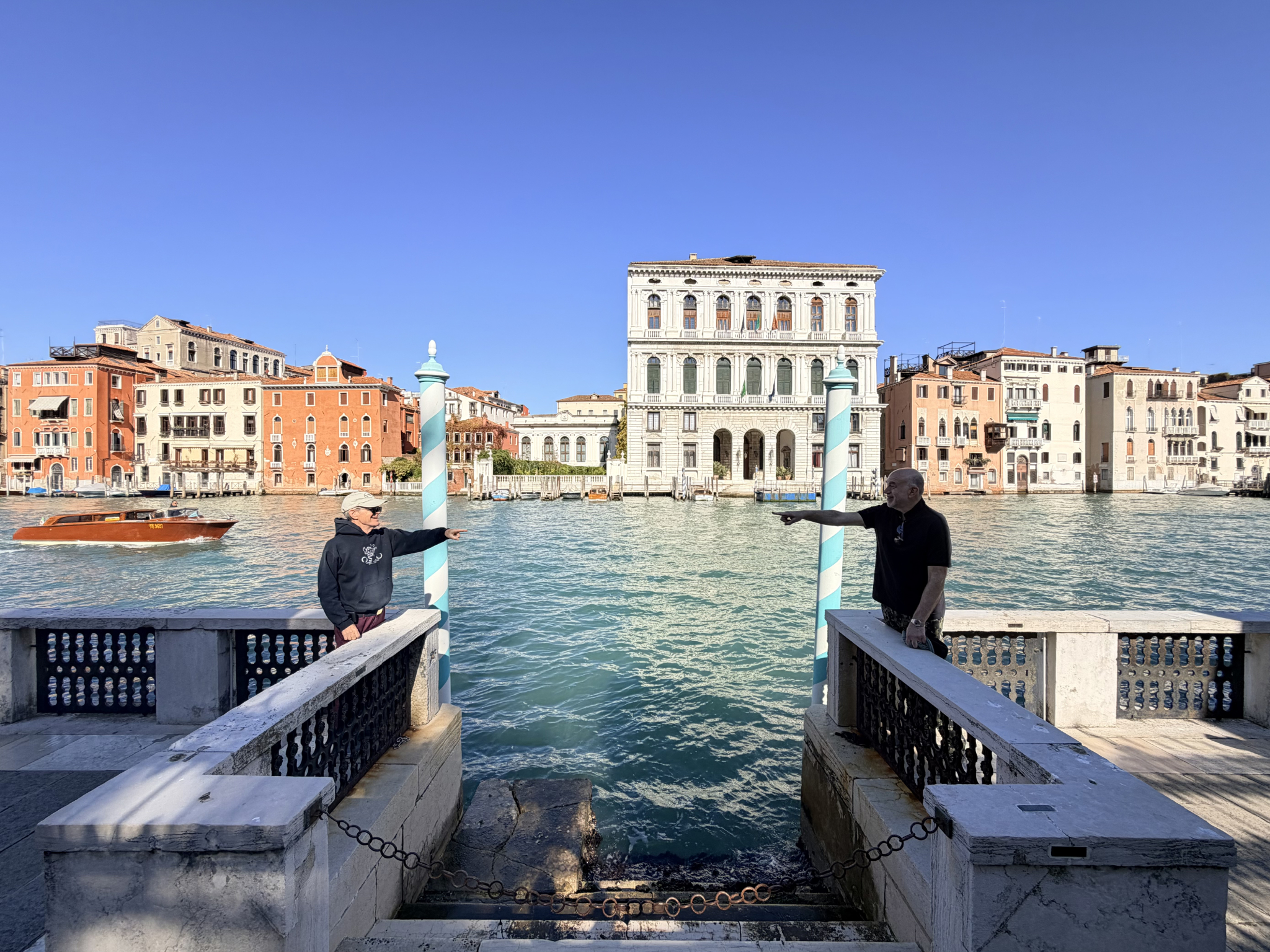
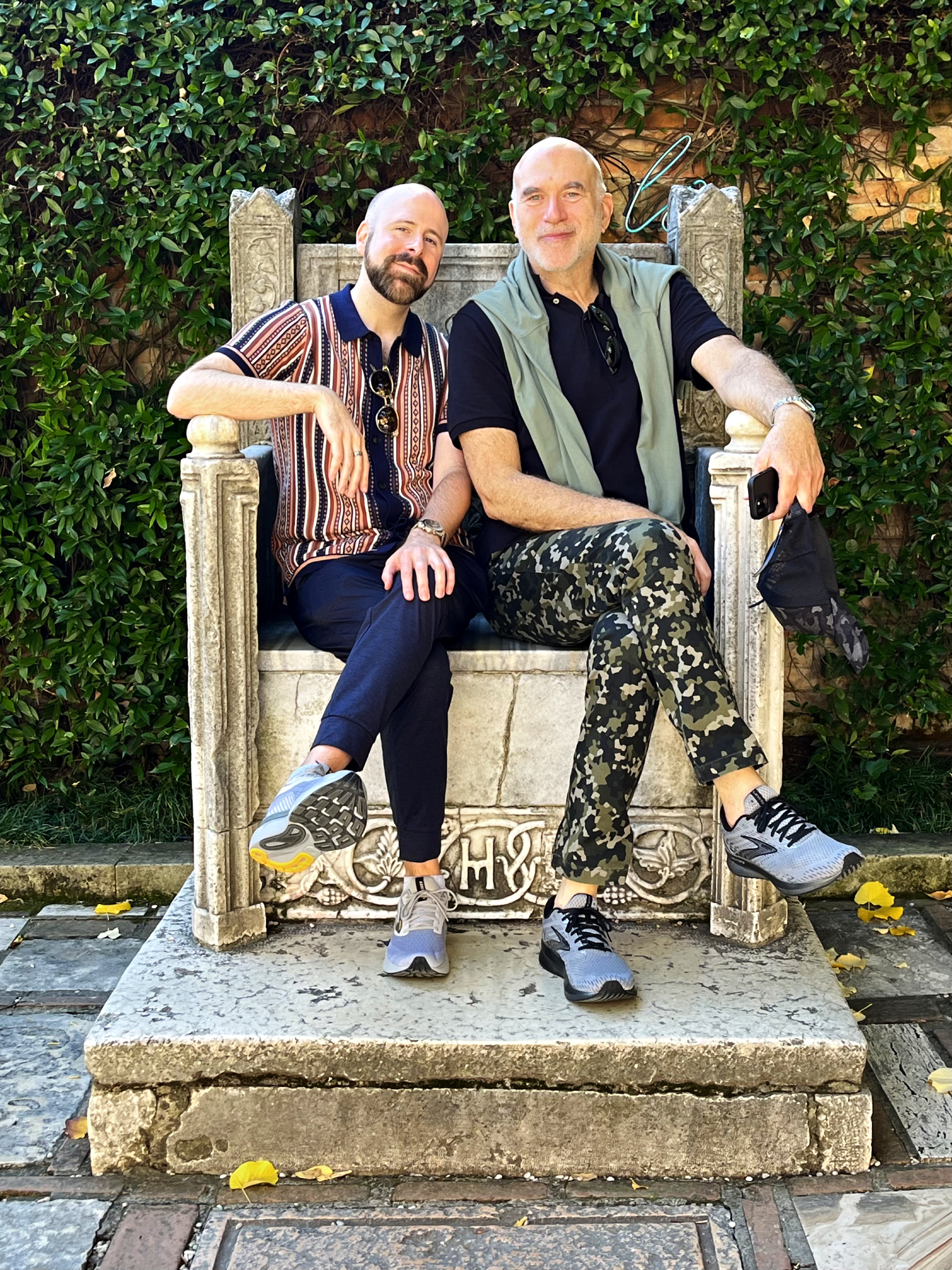
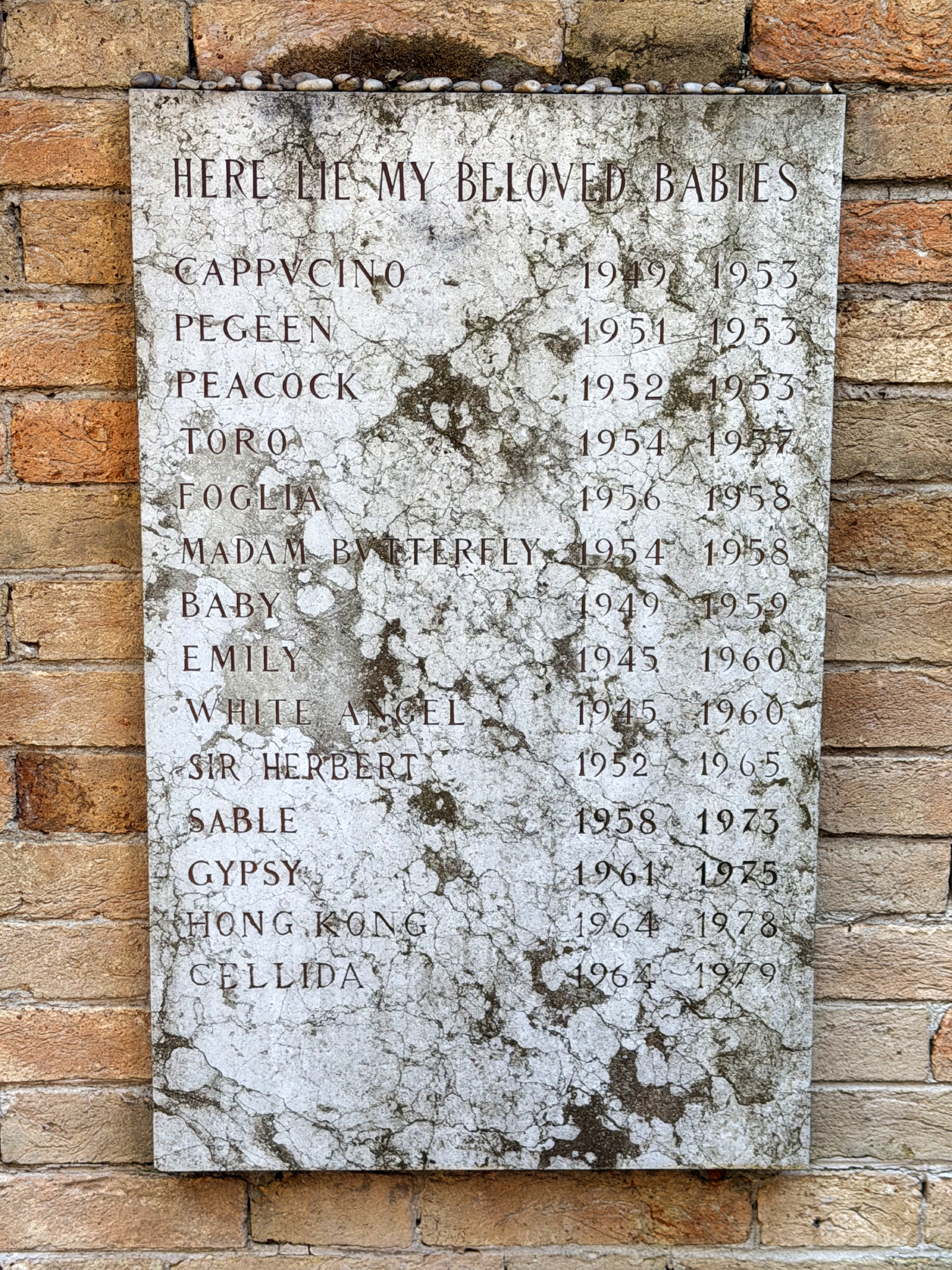
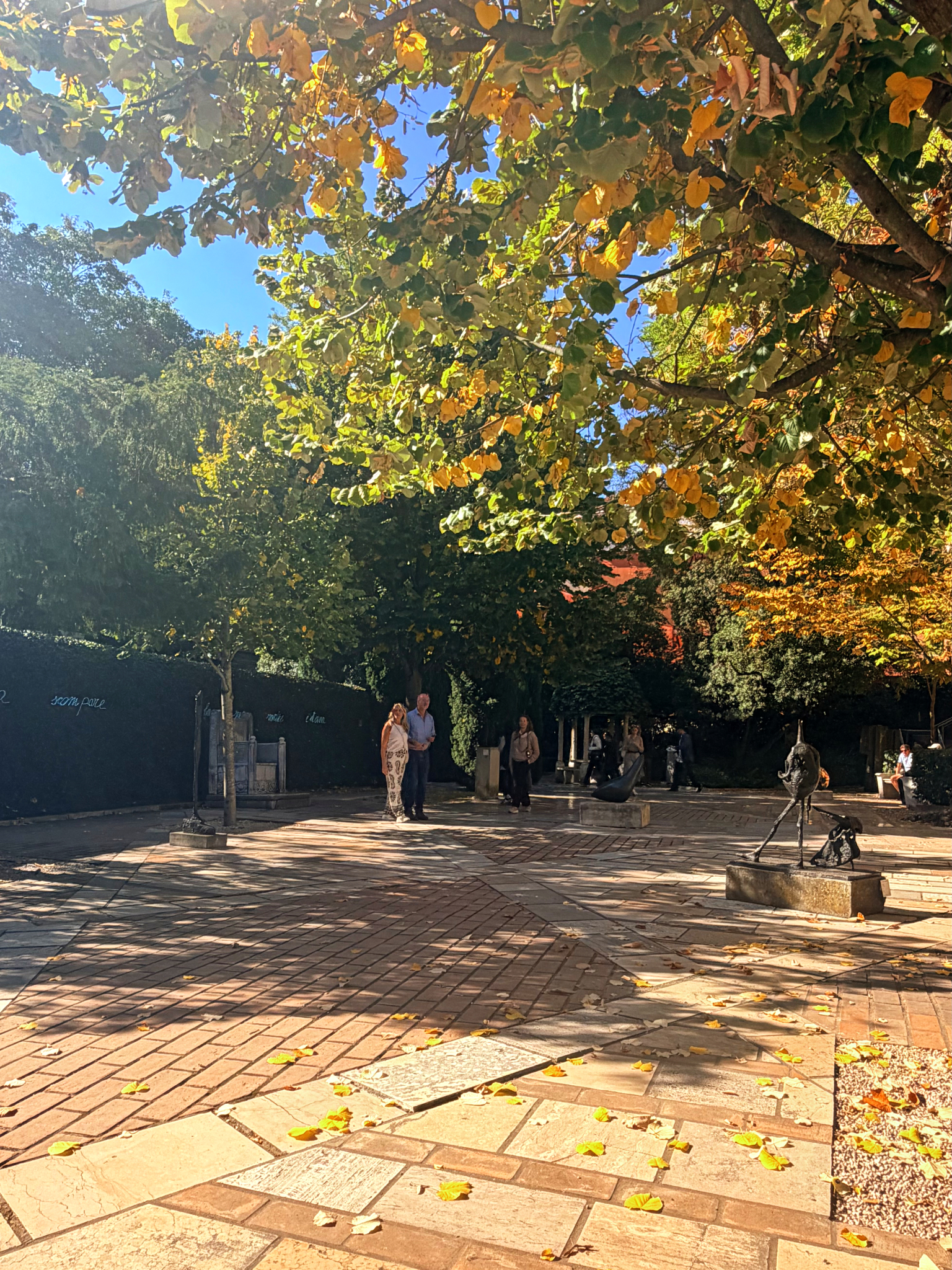
Eventually, we drifted toward the waterfront terrace, which offers one of the most unobstructed views of the Grand Canal. There, we had a laugh taking photos with Marino Marini’s The Angel of the City—the famous bronze man on a horse who greets passing gondolas with his notoriously detachable phallus. Before making our exit, we wandered into the serene sculpture gardens to pay our respects at the final resting place of Peggy herself, alongside her 14 beloved Lhasa Apsos. In the crisp mid-October air, the Osmanthus and Sasanqua Camellias were in full, glorious bloom, perfuming the garden with a delicate, sweet fragrance that seemed to hang perfectly in the still morning air. It was a transcendent visit that left us all feeling invigorated for the day ahead.
A Taste of the Lagoon at Ristorante Lineadombra
Lunch was a spectacular, sun-drenched affair at Ristorante Lineadombra, where we secured a table on the stunning wooden terrace that juts directly over the salt-kissed waters of the Giudecca Canal. Sheltered by expansive white umbrellas—an absolute necessity given there wasn’t a single cloud in the brilliant Venetian sky—we settled in for a meal that proved to be a masterclass in refined local flavors.
We shared several standout dishes that showcased the kitchen’s artistry, starting with a fragrant Adriatic fish soup enriched with a delicate hint of saffron, followed by a striking plate of seafood squid ink macaroni that tasted of the deep sea. The culinary crescendo, however, was the traditional Venetian-style veal liver, which was elevated by the addition of honeyed sweet figs, creating a dish that was as decadent as our surroundings. It was a truly memorable meal, made even more poignant by the rhythmic bobbing of boats and the shimmering panoramic views of Giudecca.
Giudecca Gems: Fortuny and Prismatic Projections
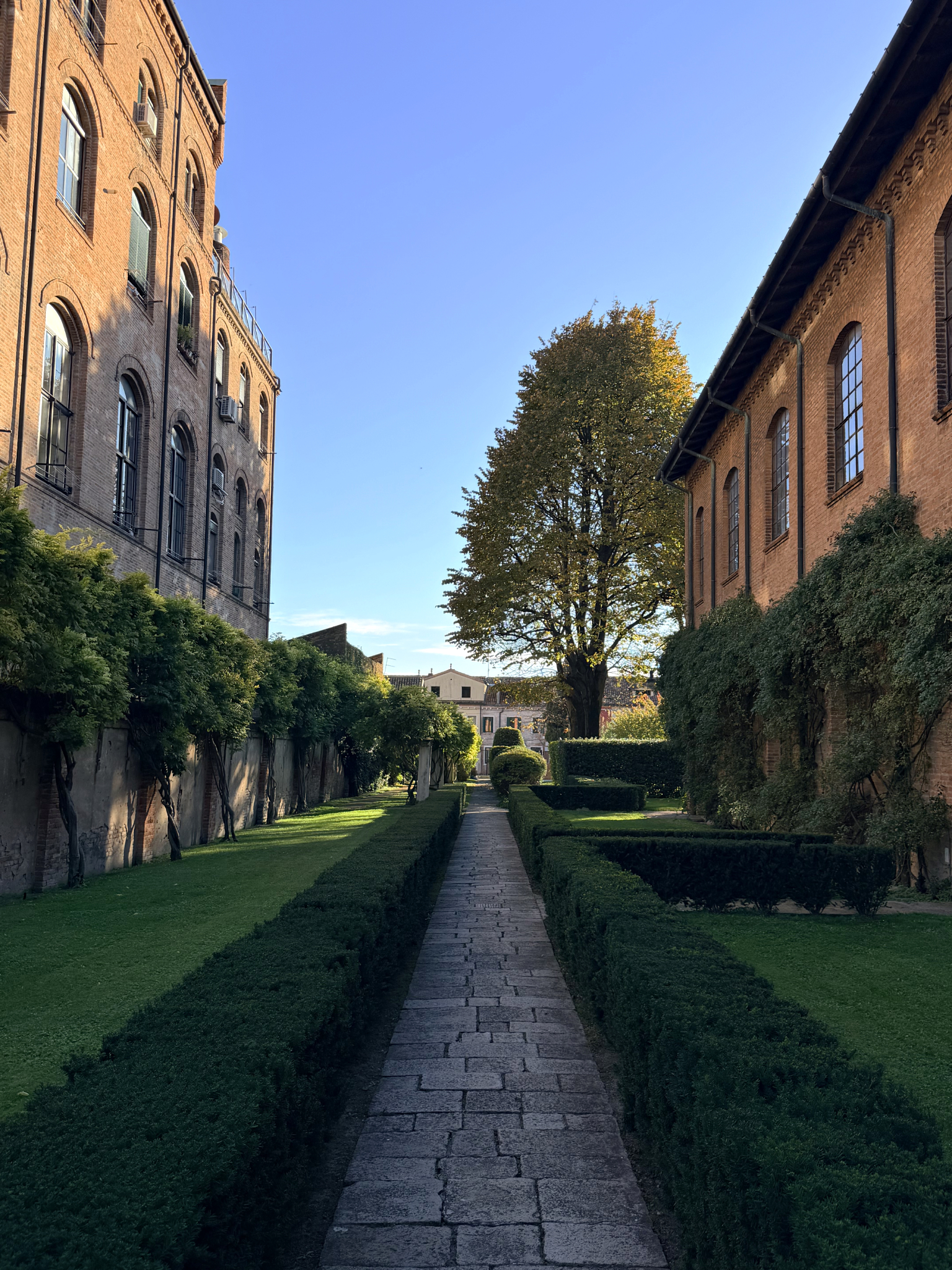
After lunch, we hopped a vaporetto to Giudecca, an island that remains a sanctuary for those looking to escape the relentless hum of the tourist track. Our first destination was the legendary Fortuny showroom and factory. Founded by the visionary polymath Mariano Fortuny, the atelier continues to produce its world-renowned hand-printed fabrics using the same secretive, artisanal methods established over a century ago. The true highlight, however, was being treated to a private tour of the lush, storied gardens hidden behind the factory walls—a verdant oasis of ancient trees and climbing vines that felt a world away from the stone and water of the city.
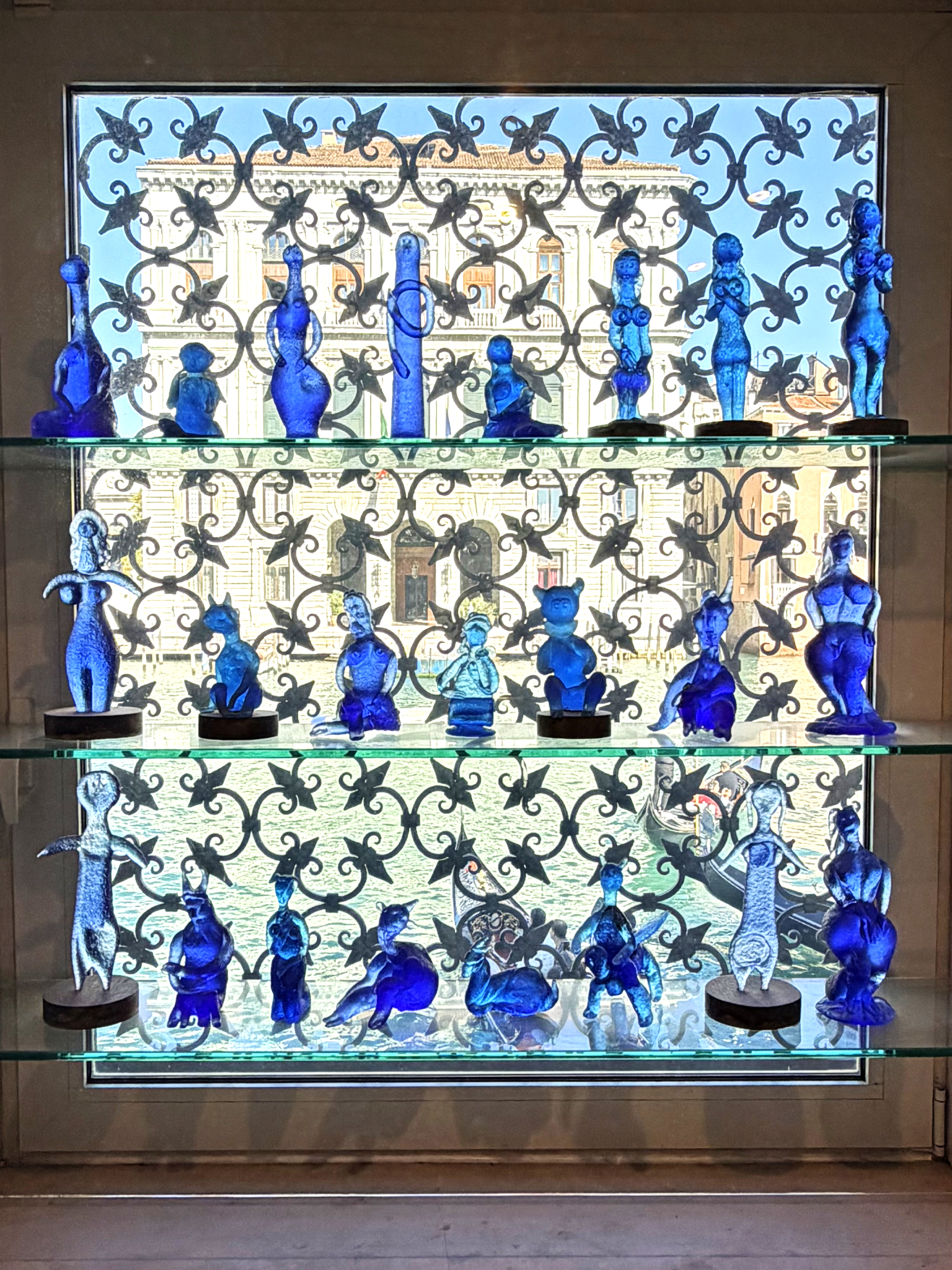
Just a short stroll away, we transitioned from historic luxury to the radical experiments of the Venice Design Biennial at SPUMA – Space for the Arts. The space was hosting the Extinction/Salvation exhibition, showcasing collectible design pieces that felt wonderfully unusual—objects that blurred the line between organic decay and futuristic survival. Some pieces looked like they had been salvaged from a lost civilization, while others felt like living organisms frozen in mid-growth. These strange, provocative forms created a jarring but brilliant dialogue with the weathered, industrial brickwork of the former brewery.
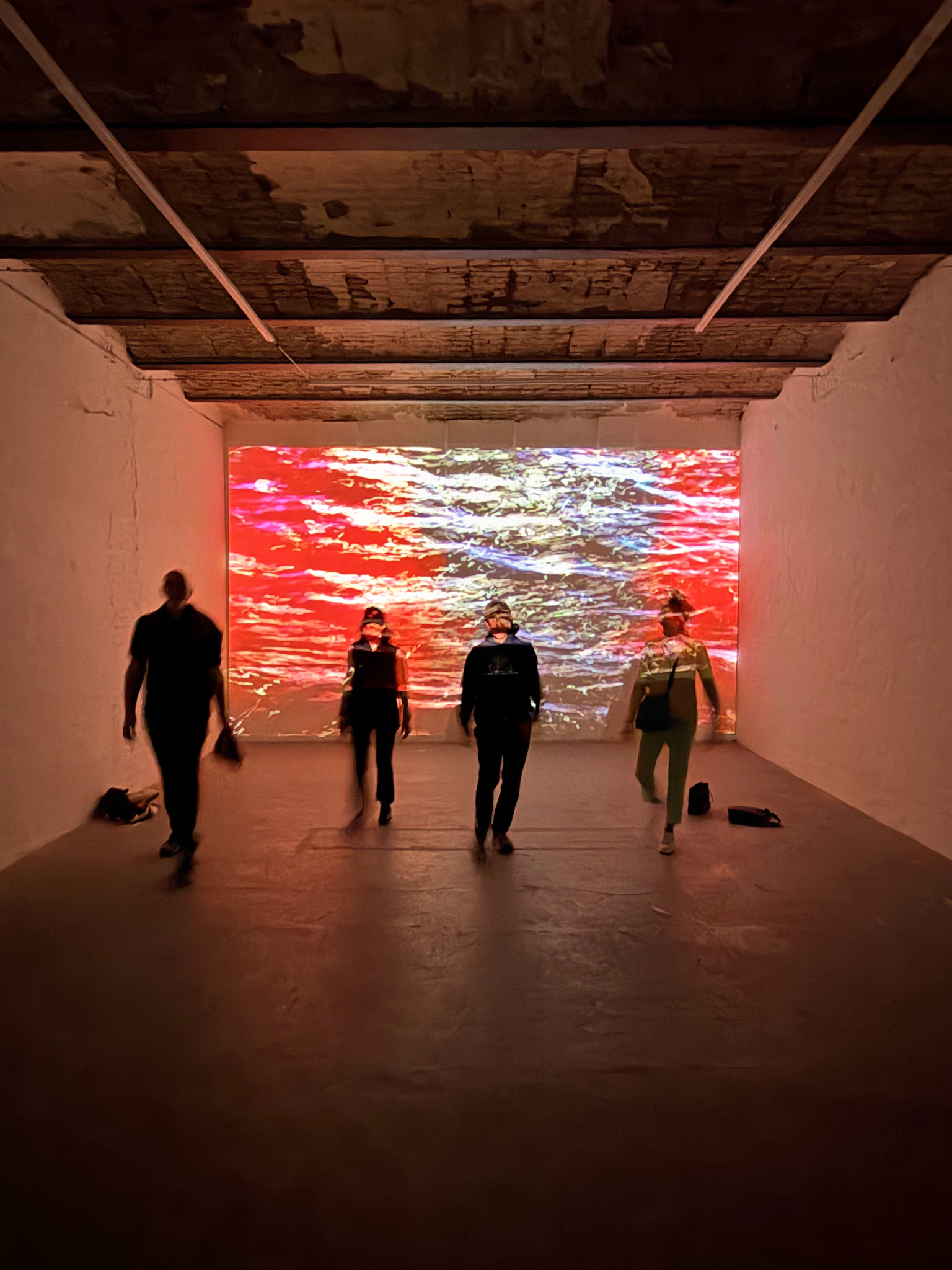
At the neighboring gallery, Spazio Punch, we had the rare Venetian luxury of complete solitude. We found ourselves alone in a darkened room dominated by a hypnotic video installation featuring a prismatic strobe. Richie, drawing on his background as an amateur tap dancer, seized the moment and guided our group through a series of choreographed moves in front of the flashing screen while I captured it all on film. It was a moment of pure, unadulterated spontaneity—the kind of “you had to be there” memory that defines a great trip.
The vaporetto ride back to Dorsoduro served as a comical, albeit visceral, contrast to the elegance of our private water taxis. The ferry was so jam-packed that we were held upright purely by the collective squeeze of warm bodies. The tension peaked when a minor, accidental bump between two locals erupted into a full-blown, operatic screaming match in rapid-fire Italian—just another day on the canals!
On the final stretch back to the hotel, I couldn’t resist ducking into Madera, a meticulously curated boutique known for its exquisite craftsmanship. There, I found a stunning, oversized lightweight wool scarf in a sophisticated palette of navy, teal, and green—my absolute favorite colors—which served as the perfect tactile souvenir of a day well spent.
A Disappointing Return to Ristorante Al Covo
For dinner that evening, we took a water taxi to Ristorante Al Covo, a spot tucked away in the Castello district. Charles and I had a deeply memorable meal here a decade ago, and we had spent the day talking up their legendary soft-shell crabs from the lagoon. Known locally as moeche, these delicacies are a hyper-seasonal Venetian treasure, typically appearing for only a few fleeting weeks each year.
Sadly, the hand of climate change was felt even here; the lagoon waters remained far too warm in mid-October for the crabs to make their seasonal debut. But the lack of crab wasn’t the only disappointment. We found the experience strikingly different from our last visit—the service felt uncharacteristically rushed, and the food itself was decidedly mediocre, lacking the soul we remembered. It was a disheartening shift for such a storied establishment, and we all agreed this would be our final visit to Al Covo.
A Private Motoscafo Tour: Burano, Murano, and the Soul of the Lagoon
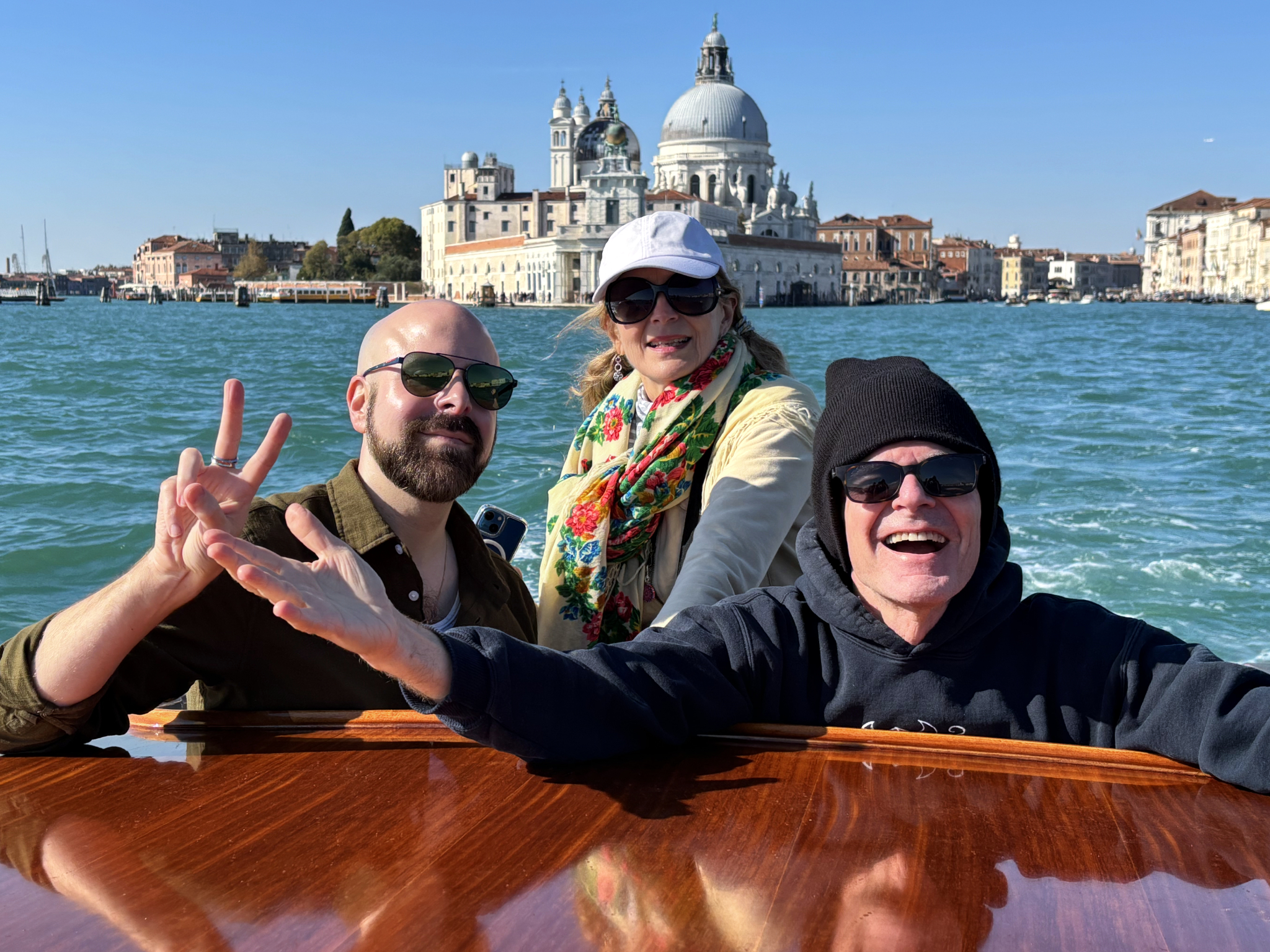
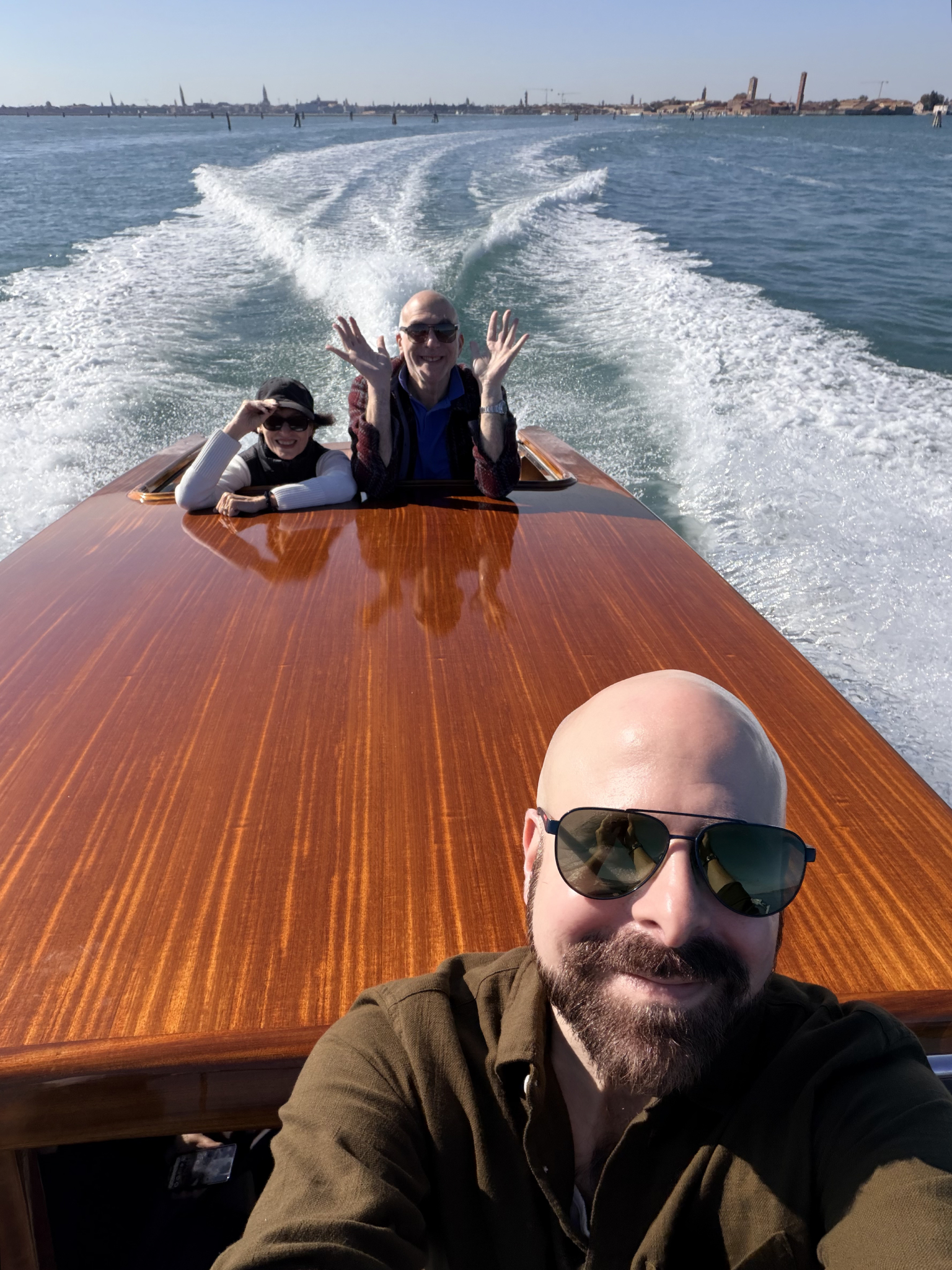
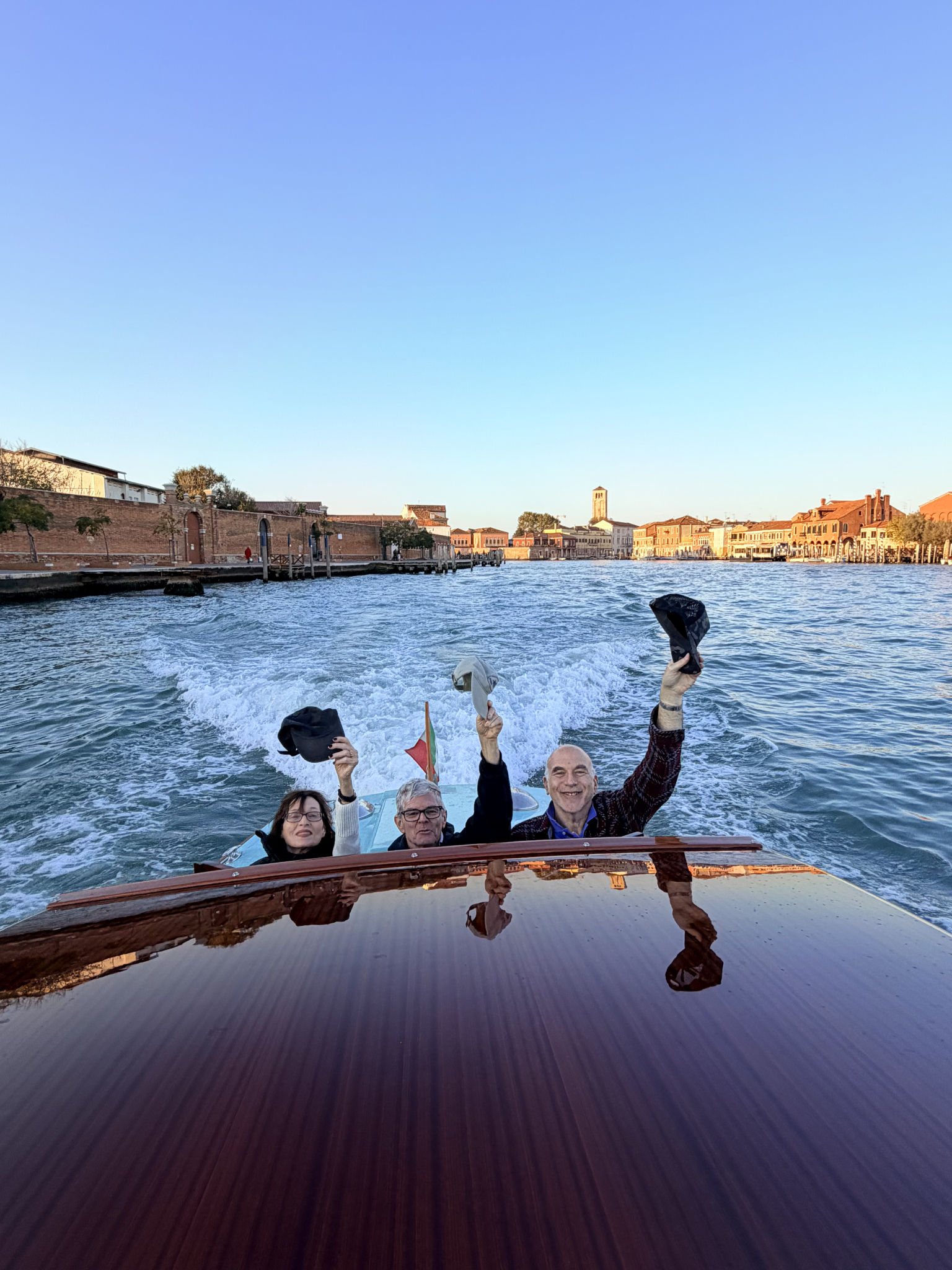
For our final day, I arranged for a private motoscafo to take us on a grand tour of the lagoon. We were blessed with another quintessential October morning—the kind of crisp, blue-sky day that makes you realize how much the weather dictates the Venetian mood. You haven’t truly seen this city until you’ve experienced it from the water on a day like this.
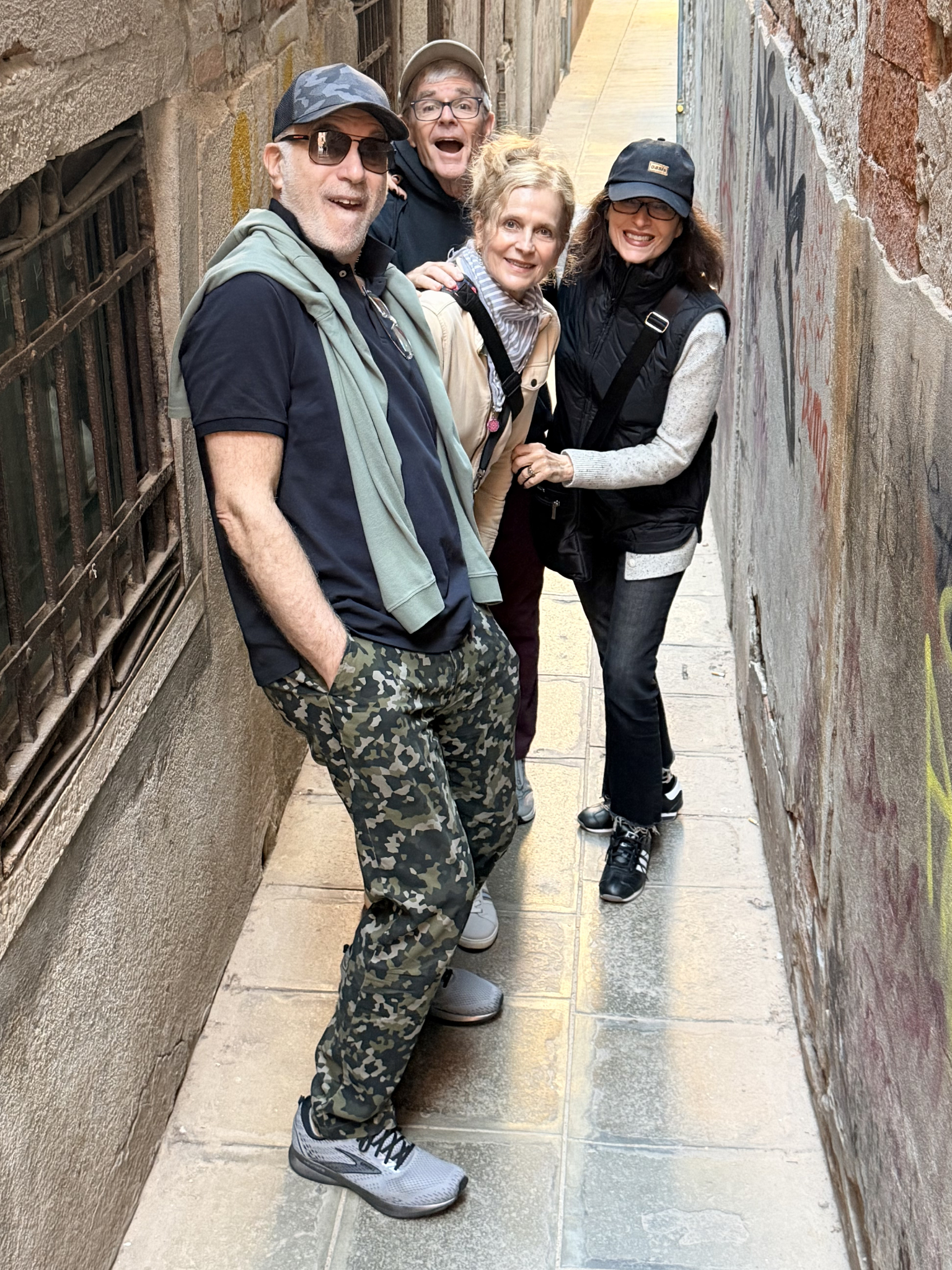
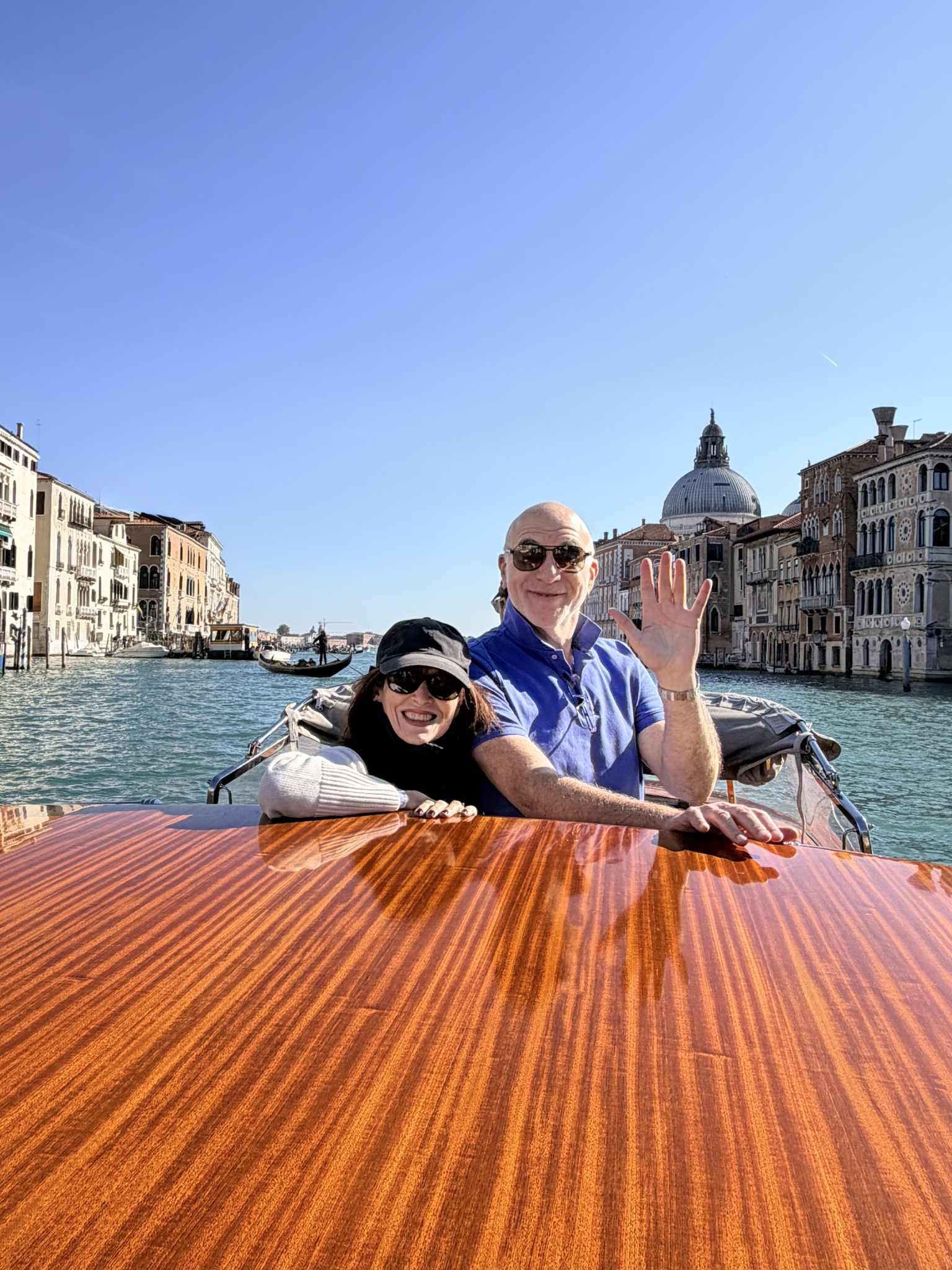
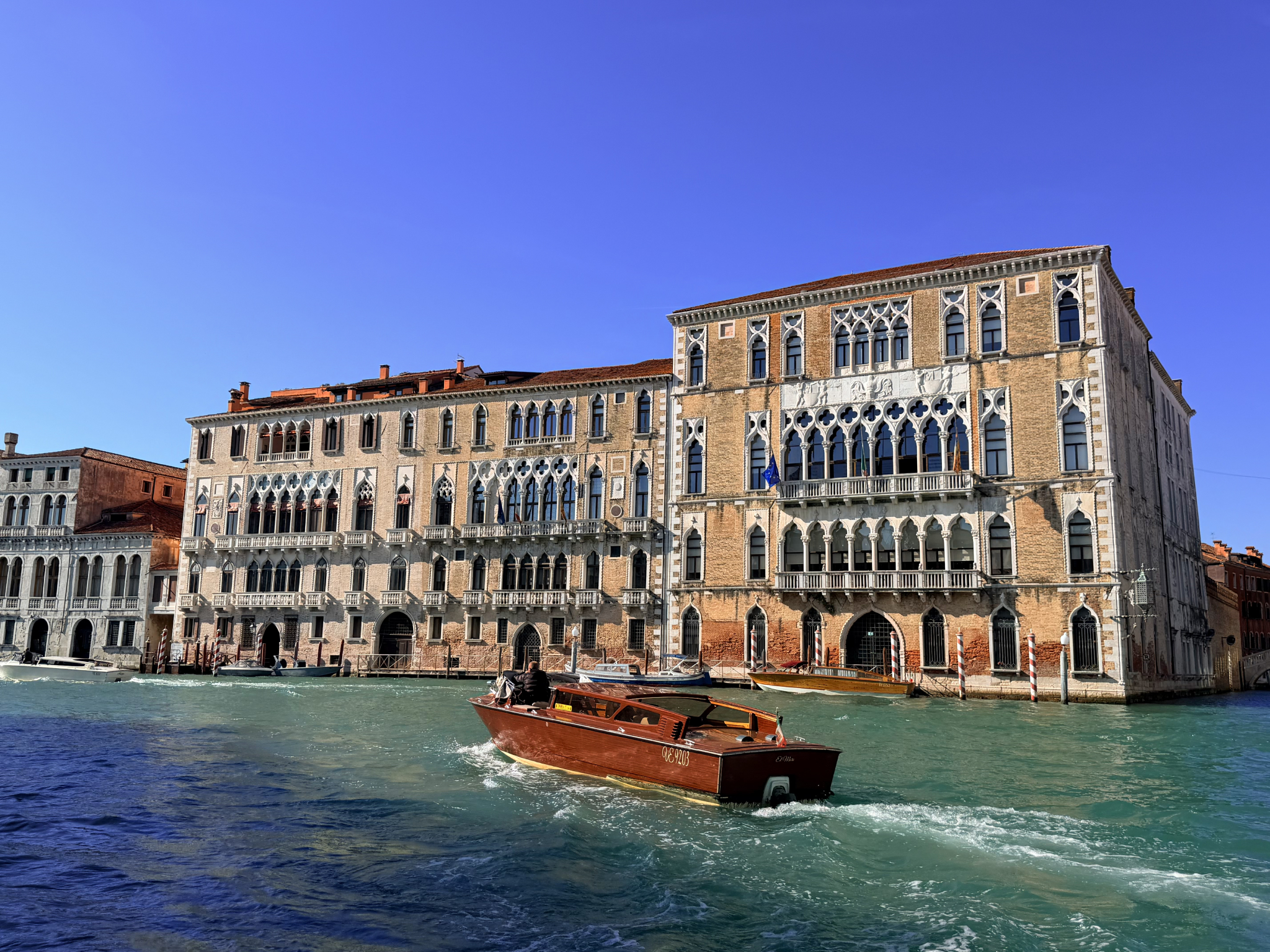
Our captain took us on a breathtaking route, first sweeping through the Bacino di San Marco, that vast, sparkling expanse of water where the Grand Canal meets the lagoon. We glided past the Punta della Dogana—the 17th-century customs house marked by its iconic golden globe—and then headed up the Grand Canal itself. Seeing the historic palazzos from the vantage point of a private boat is a completely different experience than the crowded vaporettos; you can truly appreciate the architectural layers of centuries past. We then cut through the atmospheric, narrow canals of Cannaregio, where the laundry hangs between buildings and the city feels most authentic. Finally, we broke out into the vast, open expanse of the lagoon, the water turning a deep, glassy blue as we set our sights on the colorful horizon of Burano.
A Mazzorbo Lunch and Burano’s Neon Hues
We were dropped off on the tranquil island of Mazzorbo for a delightful lunch at Trattoria alla Maddalena. While I had hoped to dine al fresco along the canal, the terrace was tucked away in the shade, so we opted for a cozy indoor table. We shared a feast of local specialties, including tender lagoon prawns, a zesty octopus salad, and a traditional Burano-style risotto de gò, a creamy, savory masterpiece made from the small, flavorful gobies found in the lagoon.
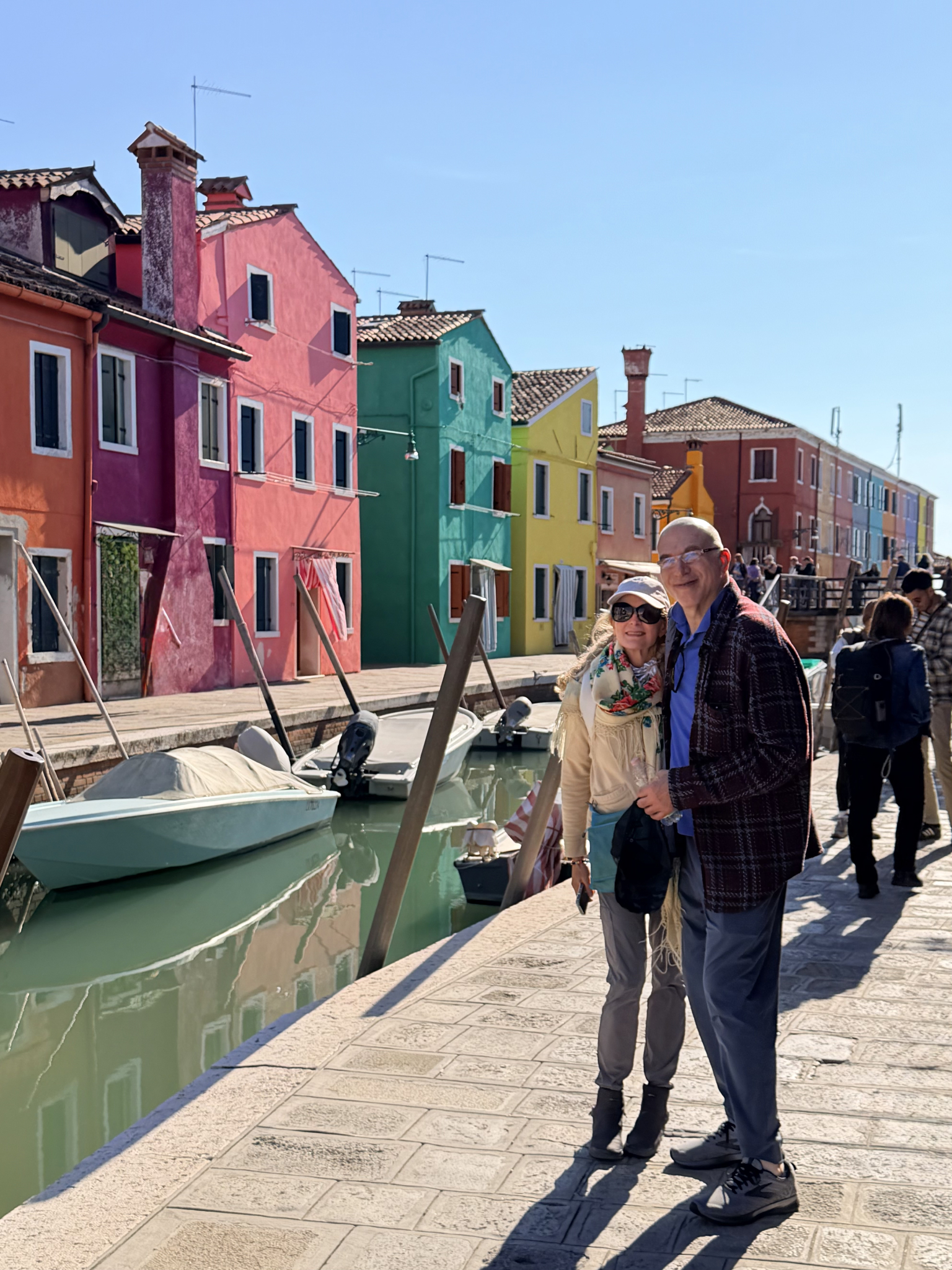
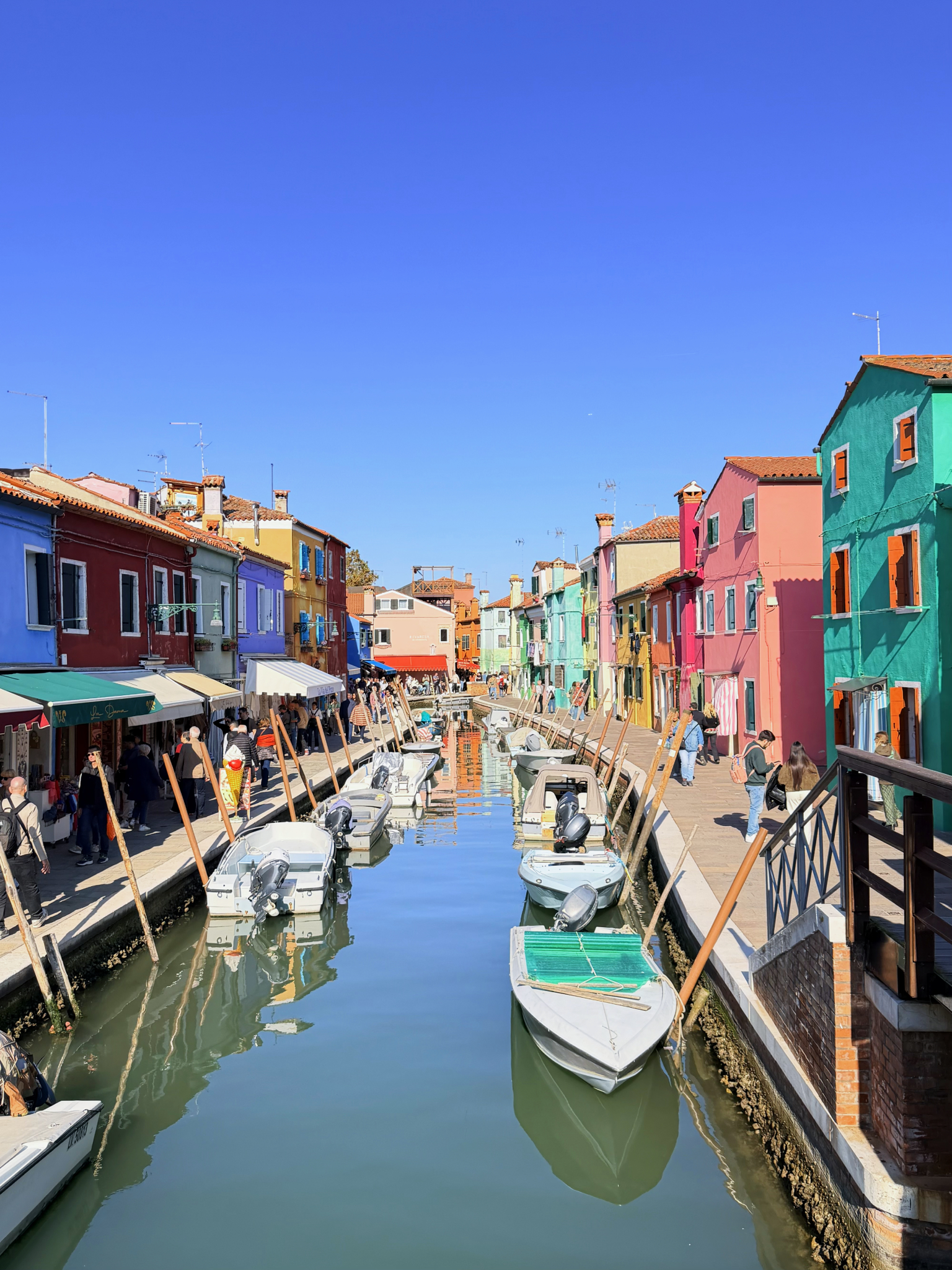
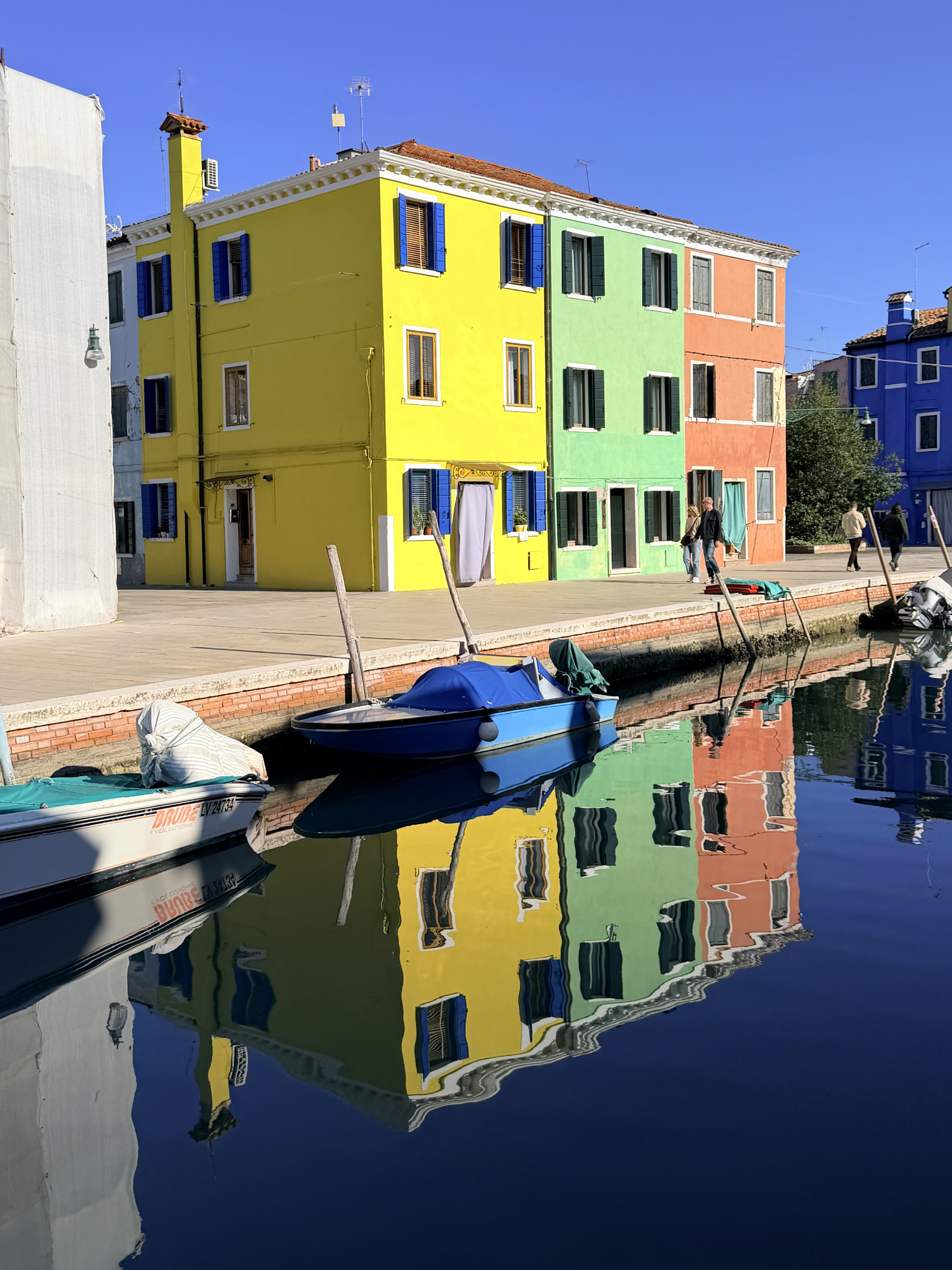
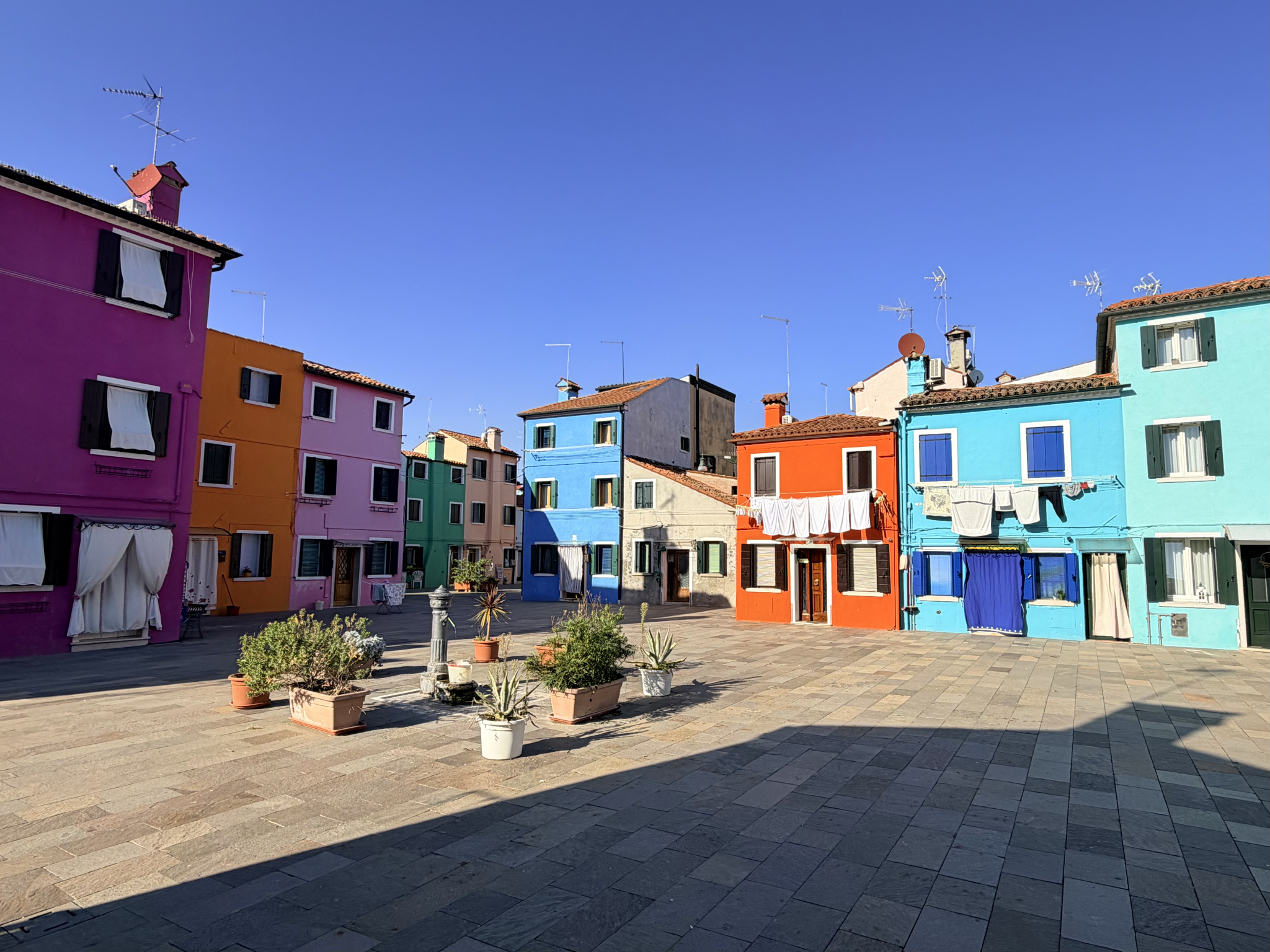
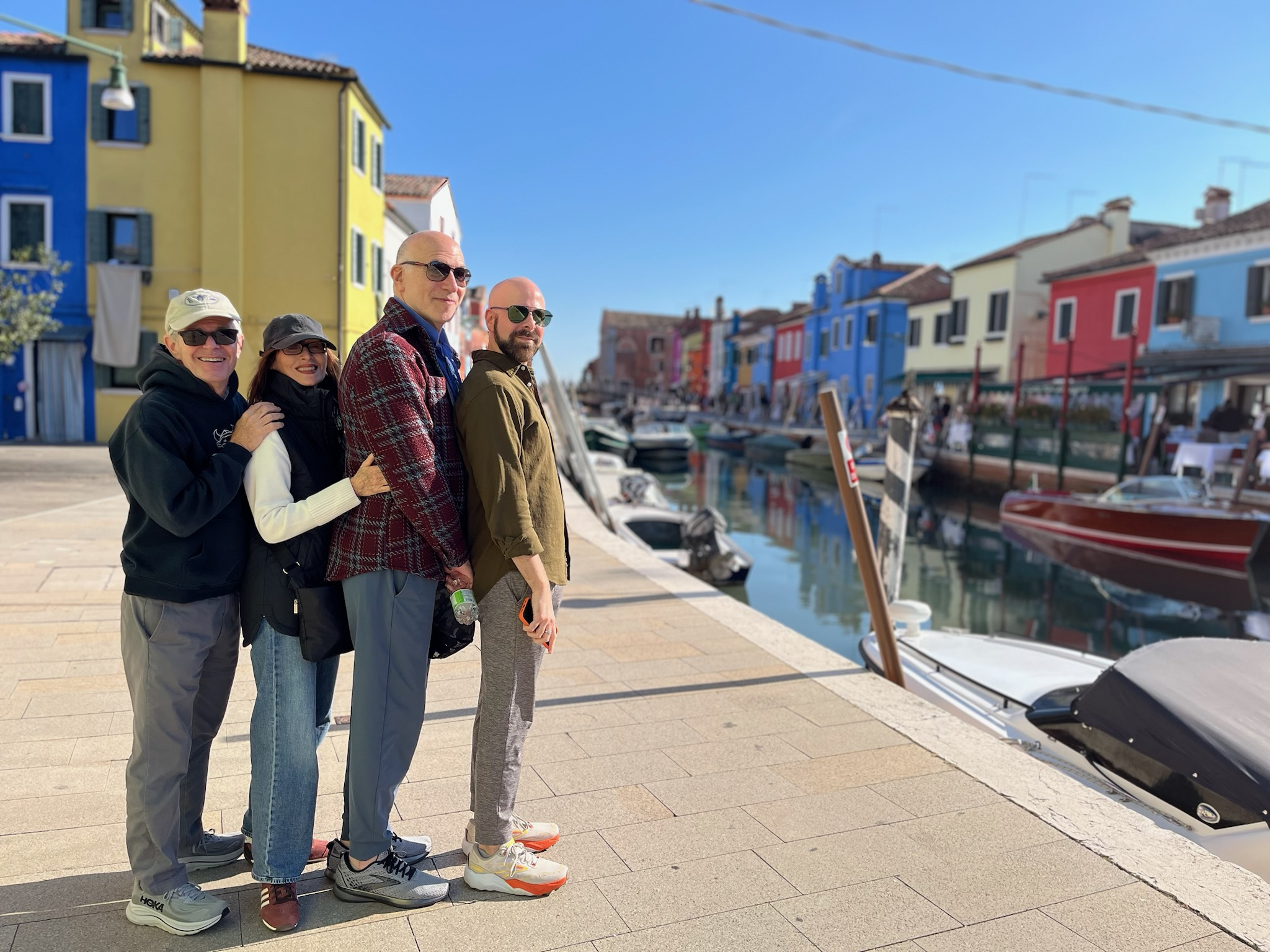
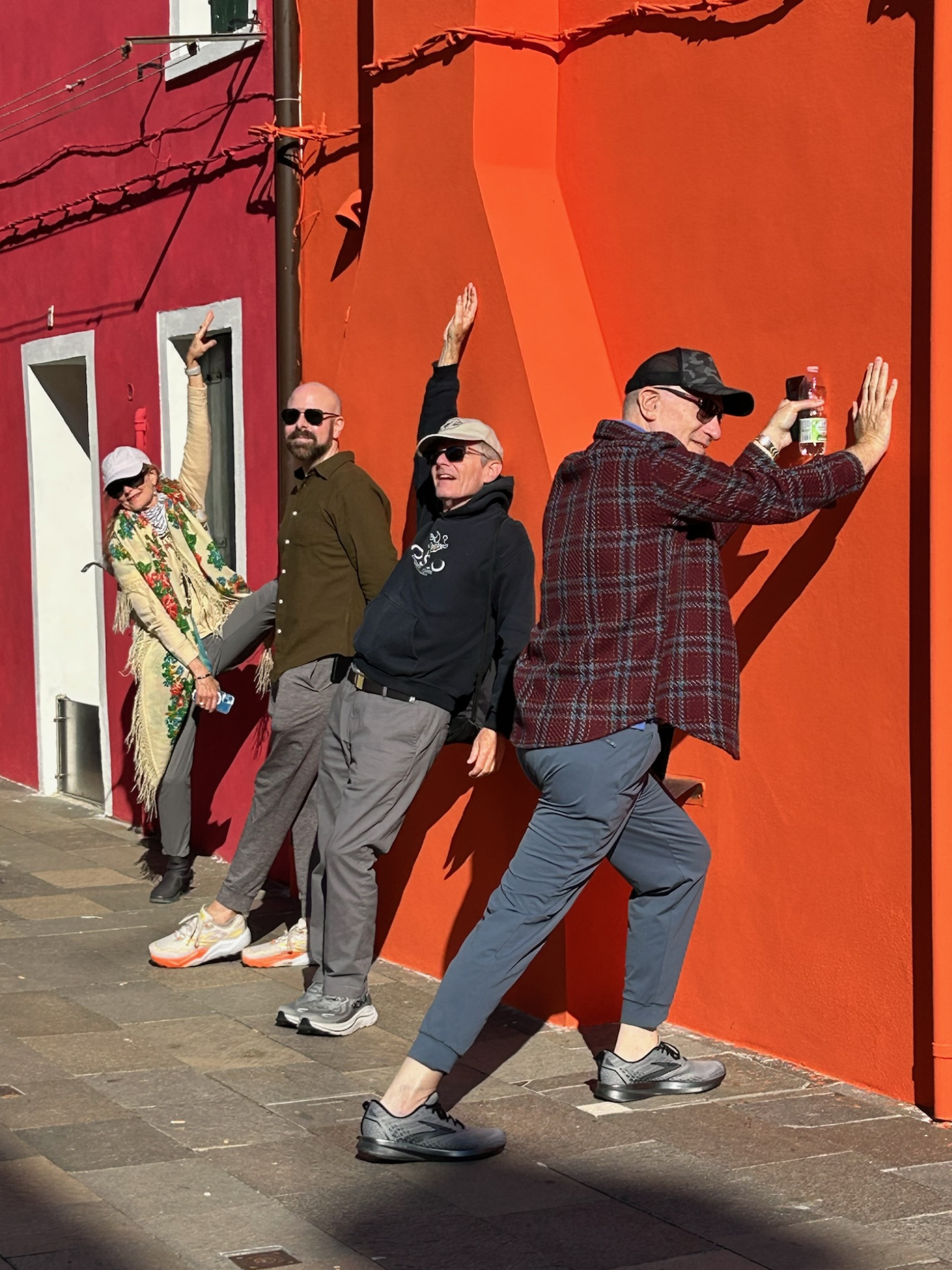
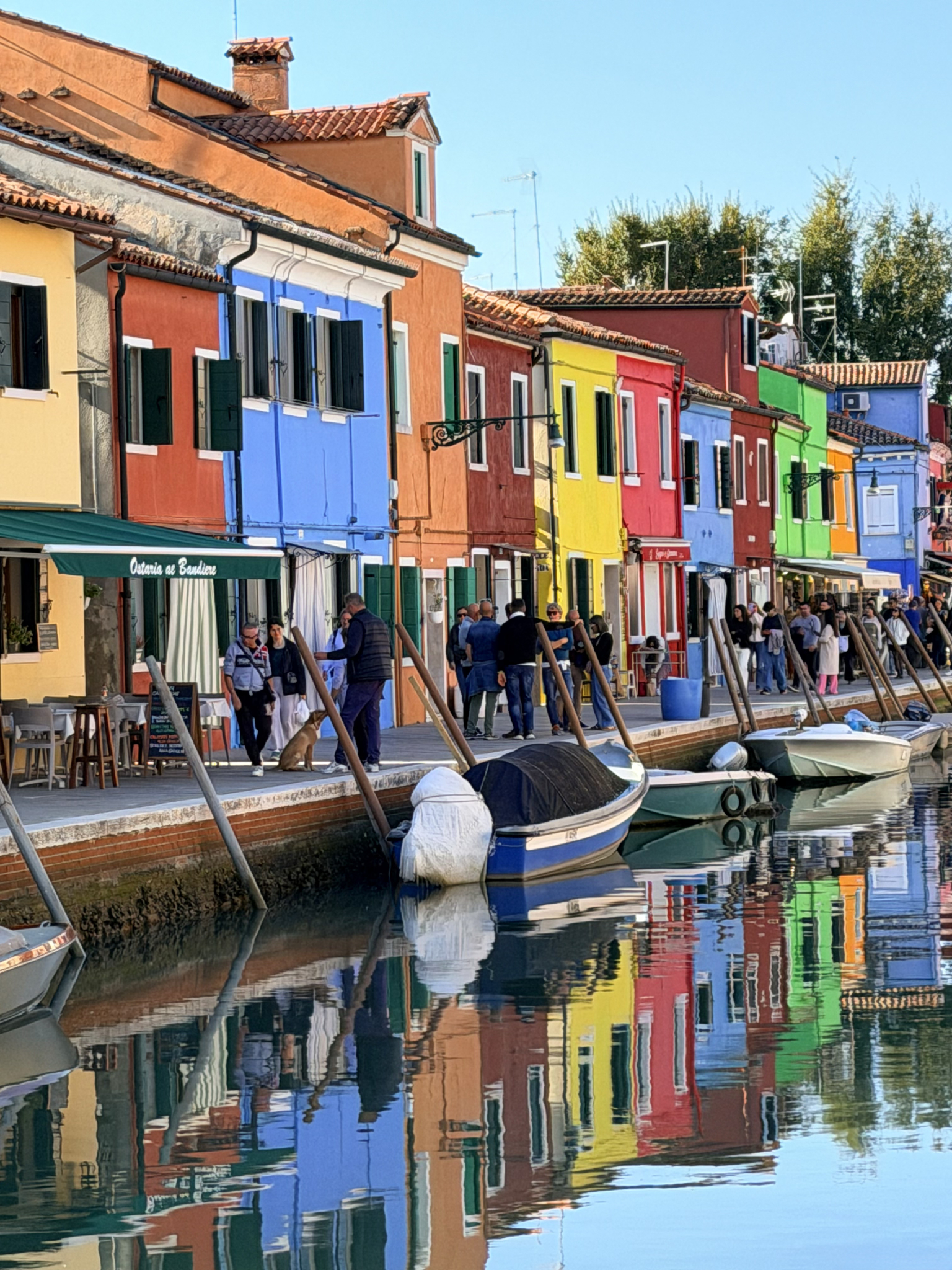
After lunch, we crossed the Ponte Longo wooden bridge into Burano and were immediately enamored with the stunning colors. It was Sunday, and the island was packed with locals enjoying their day off, but we managed to find quieter, tucked-away lanes. We had a blast with our photography, posing against vibrant backdrops of purple, pink, blue, orange, and green that seemed almost too bright to be real.
The Art of Glass in Murano
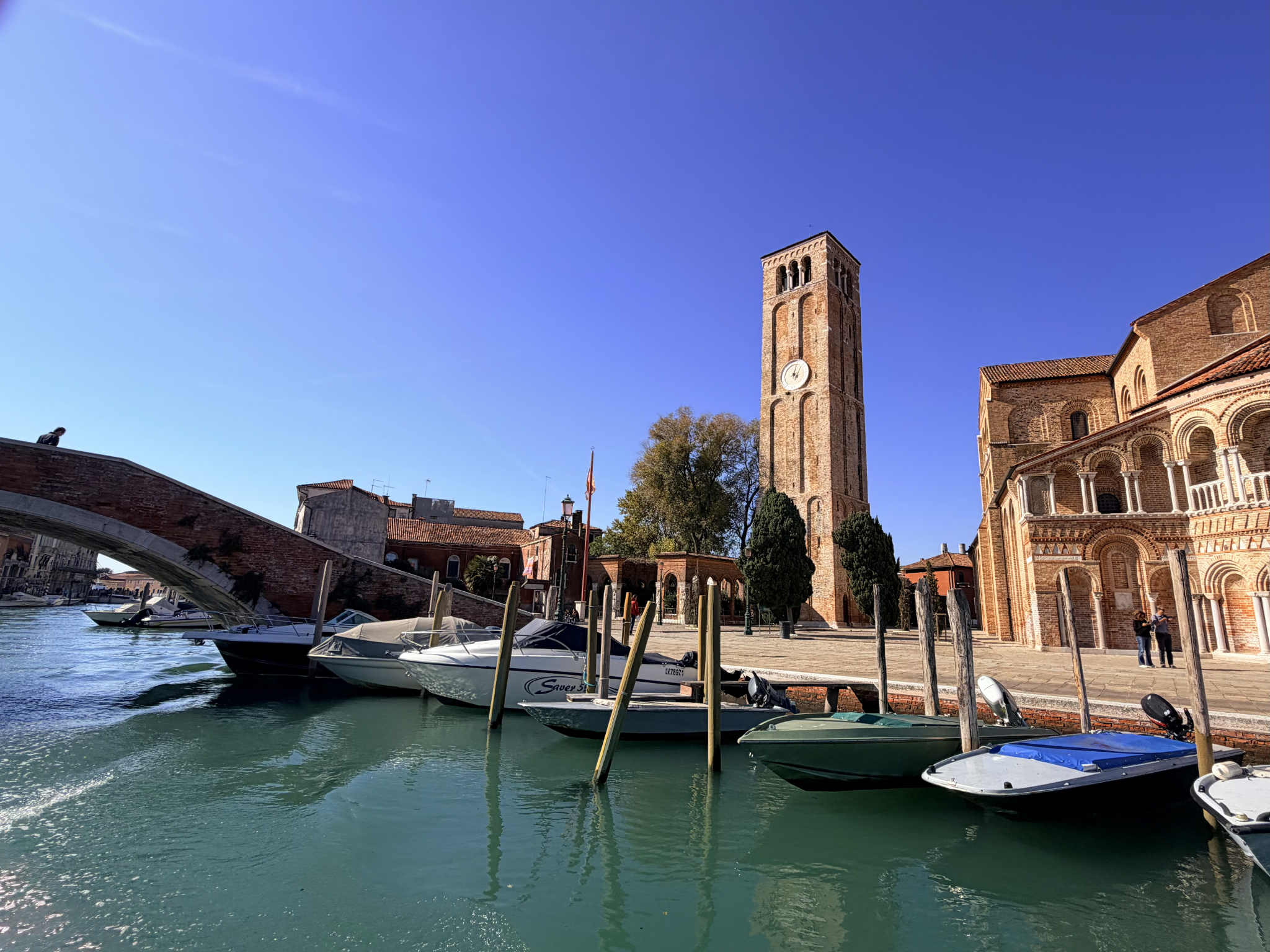
A quick water taxi ride brought us to Murano, the historic heart of the world’s glass production since 1291. Charles and I had been eyeing the beautiful glassware at our hotel and throughout our meals, and we were determined to bring a piece of it home. We stumbled upon the Franco Schiavon Gallery, an immense space filled with breathtaking artistry. After much deliberation, we settled on eight stunning tumblers—a colorful array of hand-blown glass, each one unique and reflecting the light of the lagoon. Further up the canal, Karen, Tricia, and I picked up a selection of glass beads, which we planned to thread into jewelry once we reached Umbria a few days ahead.
History and Heritage in the Jewish Ghetto
To cap off the afternoon, our water taxi dropped us in Cannaregio near the Jewish Ghetto. It felt essential to show our friends where the very word “ghetto” originated in 1516, when the Venetian Republic restricted the Jewish population to this small corner of the city. Being a largely Jewish group, we found the history deeply moving. At a small Judaica shop, I found a Star of David pendant set against a vibrant piece of Murano glass—the perfect, meaningful keepsake that I now wear proudly around my neck.
A Final Farewell at Impronta
Our final Venetian dinner was at Impronta, a sleek and contemporary gem located in the heart of Dorsoduro, just a pleasant ten-minute stroll from our hotel. Impronta is the kind of place that feels like a well-kept secret among locals; the dining room was buzzing with a sophisticated crowd of Italians and Europeans, a refreshing departure from the tourist-heavy haunts near the Rialto.
The meal was nothing short of a triumph. Several of us gravitated toward the Iberian pork chop, which arrived perfectly seared, juicy, and seasoned with an expert hand. We also shared a delicate sea bass tartare infused with citrus notes and a rich, velvety pumpkin risotto that tasted like the very essence of autumn.
We finished the night as all good Italians do: with gelato in hand, meandering through the back lanes of Dorsoduro. There was a touch of melancholy in the air as this was our final day in beautiful Venice, but that bittersweet feeling was mixed with the burgeoning excitement of beginning the next leg of our journey in Florence the following morning. Venice had done its job—it had enchanted our friends and reminded us exactly why we keep coming back.
Last visited in October, 2025
Download this itinerary at mindtrip.ai.