
Oslo, Norway
Cruising into Oslo aboard the Silver Dawn was a revelation. Docking at Revierkaia instantly put us at the nexus of the city’s futuristic waterfront, offering stunning views of the iconic Oslo Opera House, the newly minted MUNCH museum, and the razor-sharp geometry of the Barcode district right from the ship. We had two glorious days ahead to explore the city – it was Nordic cool right out of the gate.
After a restorative breakfast onboard – the best way to start any port day – Charles and I were eager to stretch our legs and feel the stability of solid ground again. Following two days at sea, it felt marvelous to be on foot and directly engage with the city’s vibrant pulse. We were ready to explore the city.
From Parliament to the Palace: Strolling Oslo’s Grand Boulevard
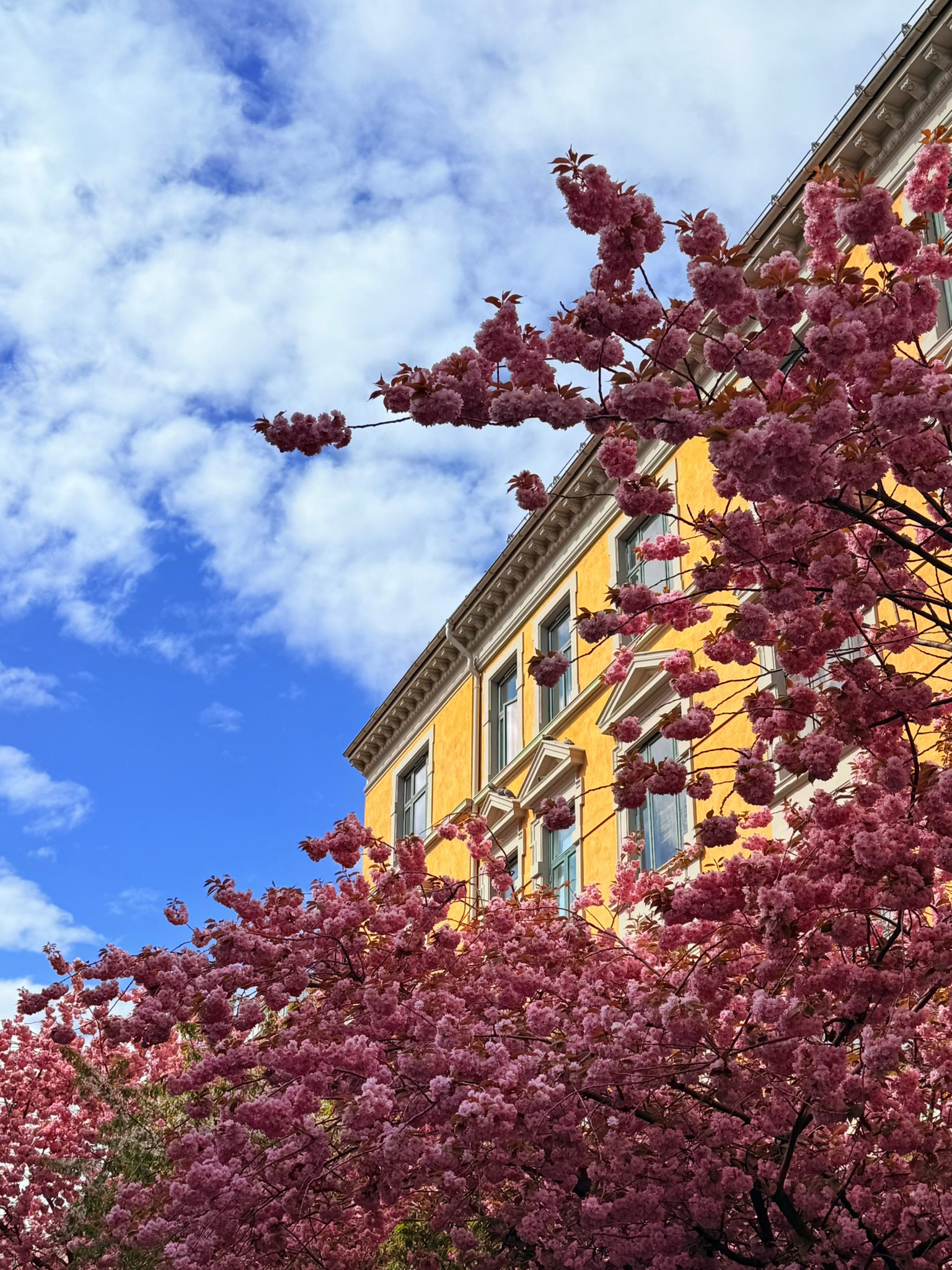
We began with a stroll through the historic center, leading us past the Parliament building, known as Stortinget. This landmark, completed in 1866, anchors the city’s civic life with its stately yellow brick and eclectic architecture. We moseyed along Karl Johans Gata, Oslo’s main boulevard, which cuts a peaceful, grand swath through the center, notably alongside Stortingsparken, a vital public square and forum for civic engagement. In the crisp spring air, the city was bursting with color, the air thick with the scent of lilacs and tulips in every shade imaginable.
We continued our relaxed stroll up the main artery, passing Det kongelige slott (The Royal Palace). This Neoclassical masterpiece, which opened in 1849, serves as the current official residence of the Norwegian monarch. Surrounded by the sprawling Palace Park, its elevated position marks the western end of Karl Johans Gata, providing a constant stately presence. We then weaved through the affluent Uranienborg neighborhood, admiring the beautiful historic homes and charming local cafes.




Gustav Vigeland’s Masterpieces: Exploring Oslo’s Frogner Park
The highlight of the morning was reaching the expansive Frognerparken, home to the stunning, permanent sculpture exhibition of Gustav Vigeland. This installation is simply extraordinary – it is the world’s largest sculpture park created by a single artist, comprising 212 sculptures in bronze, granite, and cast iron.
Vigeland’s works focus entirely on the human condition and the cycle of life, depicting life-size figures in fun, curious, and often raw and emotional poses. It made for countless photo opportunities. We walked up the main axis to the park’s centerpiece, the towering Monolitten (The Monolith). Carved from a single massive block of granite, this 47-foot high pillar is composed of 121 human figures intertwined, climbing and reaching toward the heavens – an incredibly powerful representation of humanity’s yearning and struggle. We wrapped up our visit by sitting beneath the towering maple trees, simply breathing in the fresh Nordic air.
Shopping Bogstadveien and the Perfect Toast Skagen
From the park, we sought out retail therapy along Bogstadveien, a bustling thoroughfare known as one of Norway’s longest and most exclusive shopping avenues. Lined with hundreds of boutiques, high-end shops, and stylish cafes, it’s a required stop for anyone interested in Scandinavian fashion and design.
We popped into Moniker Man, located in the Valkyrien shopping complex, where I secured a great pair of Frank Walt sunglasses and a sharp patchwork seersucker shirt from Portuguese Uppers. Down the street, Charles browsed Volt, which specializes in modern menswear, and picked up some fantastic summer knits from These Glory Days.
For lunch, we found a perfect spot at Gabi’s (sadly, now closed), an outdoor cafe under a canopy of colorful umbrellas. We shared a caprese salad, fries, and the quintessential Scandinavian dish: Skagen. This is a classic Swedish staple consisting of skagenröra (a mix of shrimp, mayonnaise, sour cream, and dill) served atop a piece of toasted bread and often garnished with salty roe—a truly refreshing and indulgent midday treat.
A Taste of Asia in Oslo: Omakase at LuLu
After weaving back through the historic center and returning to the ship for a refresh, we were ready for dinner on land. We chose LuLu, a restaurant known for its innovative omakase experience that masterfully fuses traditional Japanese techniques with bold influences from Southeast Asia and Latin America.
We opted for the 10-course omakase. The chef showcased seasonal ingredients, focusing on fresh, delicate seafood. The dinner was utterly delicious and beautifully presented. It was a truly satisfying and memorable meal off the ship – a fantastic change of pace from ship dining.
Climbing the Iceberg – Architecture and Art with a Local Guide
Our second day began with a private two-hour walking tour booked through City Unscripted. Our guide, Sima, a lovely Indian woman who relocated to Oslo for her husband’s job, provided wonderful, informed conversation. The weather was perfect – crisp and sunny – for a spring day exploring the city.
Our first stop was the Oslo Opera House. Designed by the renowned Norwegian firm Snøhetta, the building is meant to resemble an iceberg rising from the Oslo Fjord. Crucially, its sloping roof, clad in pristine white Carrara marble from Italy, is designed to be fully accessible to the public, creating a new public plaza. Walking on the roof provided uninterrupted views out to the fjord and across the harbor to our ship – a truly unique architectural experience.
We then visited Deichman Bjørvika, the new main public library located directly across from the Opera. It is architecturally stunning, noted for its bright, open space, multiple floors, and a fantastic living wall installation. Inside, the library serves as much more than a repository for books, featuring cinemas, open workshops, and the famous Future Library art project.
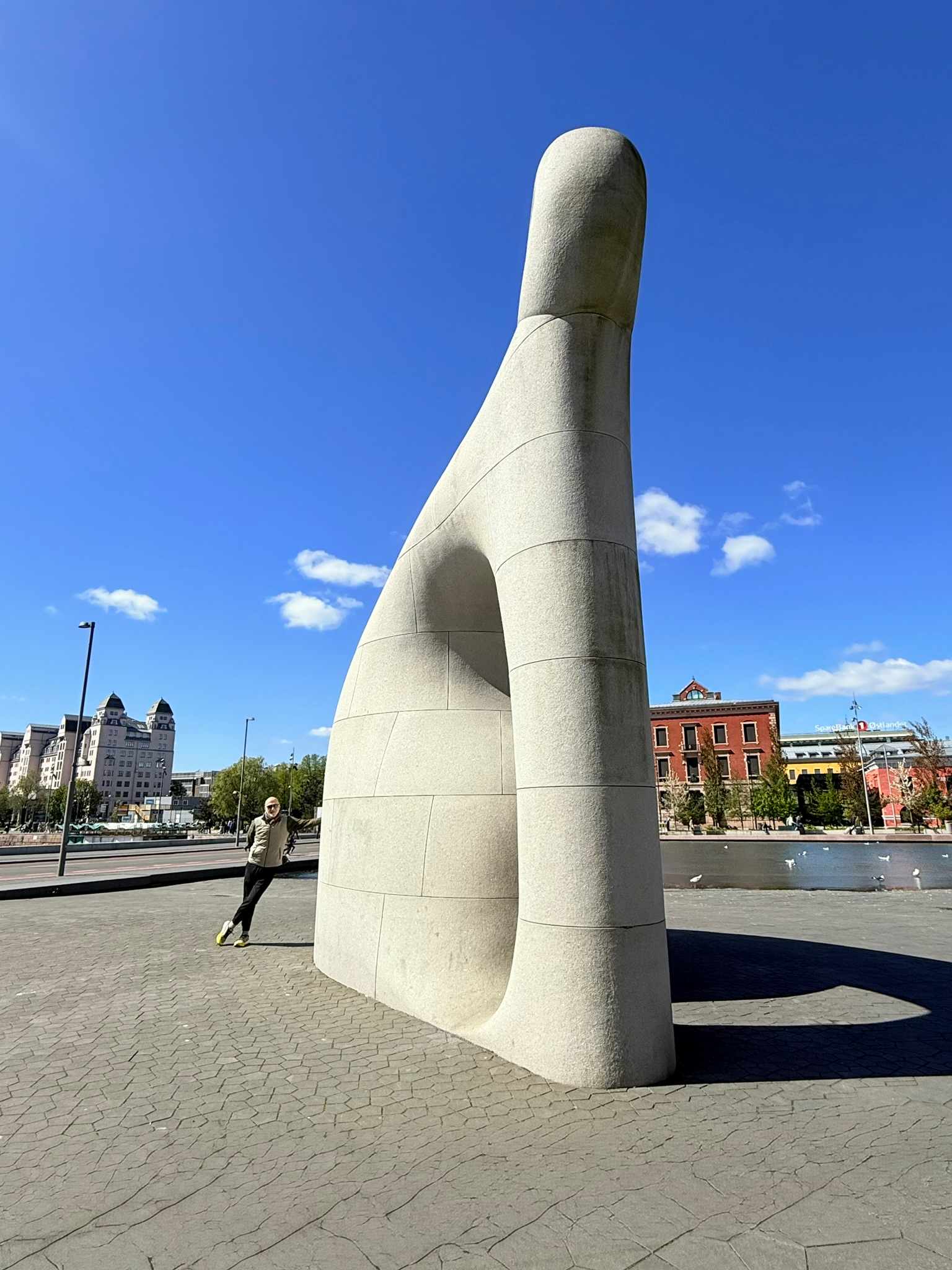
In front of the library, we noted a sculpture by Martin Puryear – a neat coincidence, as he has a house upstate near where we live. We then strolled past the central train station, pausing at Christian Frederiks plass to pet the famed Tiger statue. This massive, 14.8-foot bronze tiger, created by Elena Engelsen, was gifted to the city in 2000 for its millennium celebration and serves as a proud symbol, referencing Oslo’s long-standing nickname, “Tigerstaden” (The Tiger City).
We went inside the Oslo Domkirke (Oslo Cathedral) to admire the spectacular ceiling. Unlike many older churches, this cathedral is notable for its vivid, large-scale ceiling murals painted by Norwegian artist Hugo Lous Mohr between 1936 and 1950, which lend the space a unique, modernist spiritual feel.
Our curiosity about the city’s Jewish history led us down a quiet, reflective path. While the community has historically been small in Oslo, its story is tragically layered, particularly when considering the Nazi invasion and the subsequent deportations during World War II. Learning that many Norwegian Jews were sent to camps, despite facing limited local resistance in an occupied country, served as a somber reminder of Europe’s darkest chapter. This history, though faint in the physical city center, underscored the profound depth and complexity of Oslo’s past.
Strolling back through the city center past the elegant Nationaltheatret, Sima took us to the Nobels Fredssenter (Nobel Peace Center). We learned a key piece of trivia: the Peace Prize is the only Nobel Prize distributed from Oslo; the others are endowed and distributed from Stockholm, Sweden. We parted ways with Sima on a pier overlooking the historic Akershus Fortress, thankful for her personalized insights.




Finding The Scream (and More) at the MUNCH Museum
After the tour, we walked straight over to the bold, new MUNCH museum. We stopped for a quick, fresh, and delicious lunch at the cafeteria, indulging, of course, in a second round of Skagen – this time alongside a soul-warming vegetable soup.
Edvard Munch (1863–1944) is Norway’s greatest artistic son, and this museum is a spectacular showcase of his expansive work. We, naturally, made a beeline for his most famous painting, The Scream. The museum holds multiple versions (a painting, a drawing, and several prints) of the motif. Because the versions created on paper and cardboard are so fragile, they cannot be permanently displayed. Instead, the museum rotates them throughout the day, ensuring future generations can enjoy them while protecting them from light damage.
I was genuinely amazed by Munch’s breadth of work beyond The Scream, particularly some of his large-scale canvases, which allow the viewer to step into the dramatic, expressionistic landscapes of his mind. The sheer scale and volume of his collected work here offer a profound look into the artist’s prolific and deeply emotional career.
A Final Scandinavian Design Score
Before heading back, we ventured into the city center for some last-minute shopping. We visited Norway Designs, a well-established design store with over 50 years of history, featuring the best in Norwegian, Nordic, and European design articles. While I only admired the exquisite craftsmanship this time, the inspiration was high.
Our final stop was Illums Bolighus at GlasMagasinet. This Danish design and lifestyle institution is known for curating iconic furniture, lighting, and textiles. It was here that I found and bought a very cool short-sleeve macrame-style knit sweater – the perfect souvenir and a nod to Scandinavian style.
We bid farewell to Oslo and made our way back to the ship. Sipping champagne on our veranda as the city slipped away into the distance, I reflected on a perfect two days that blended high culture, incredible architecture, and stylish retail finds. Oslo truly is a gem of the North.
Last visited in April, 2025