
Faroe Islands
A Reunion in the North Atlantic: Waking Up to Tórshavn
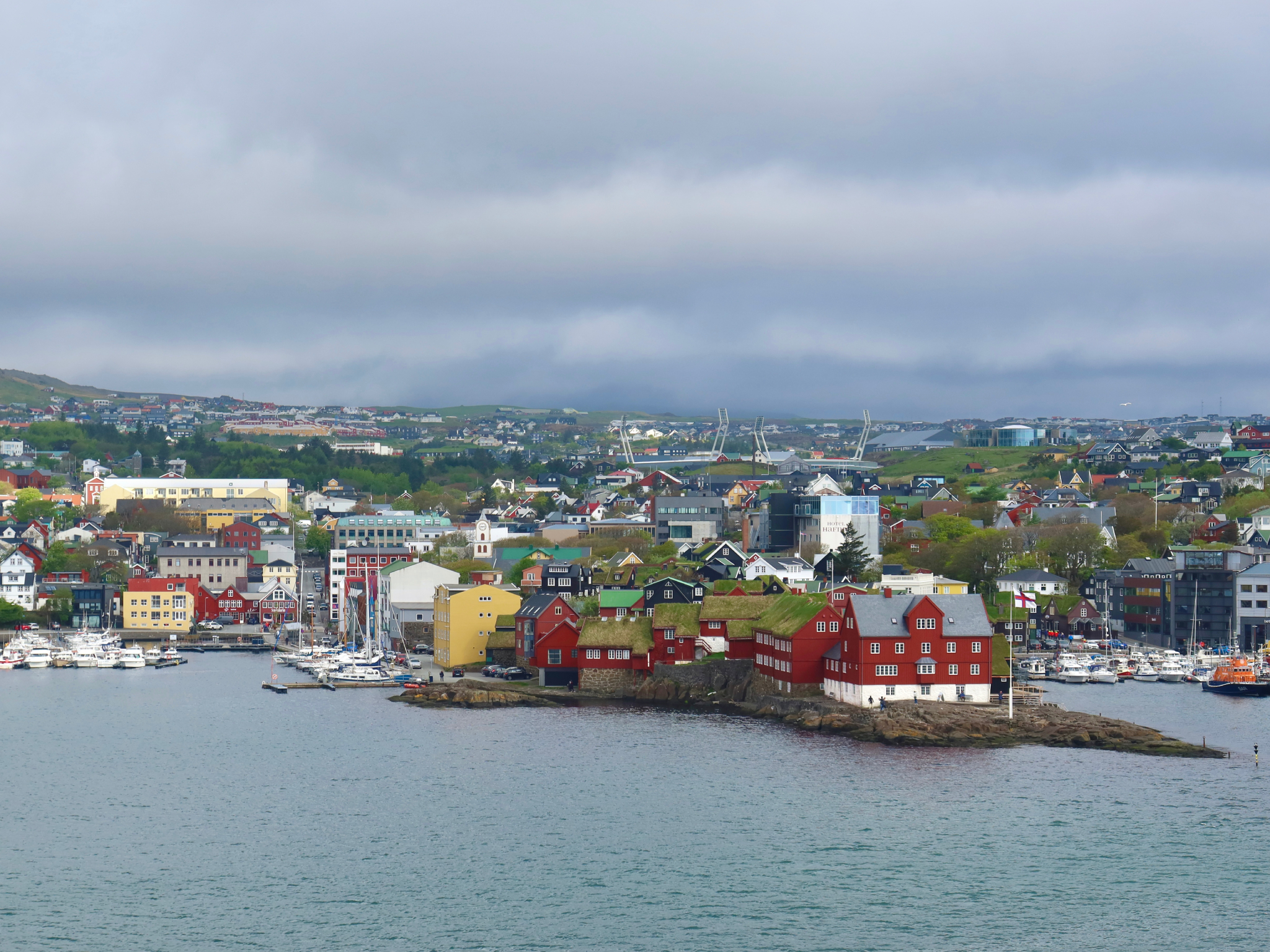
After another rhythmic day at sea aboard the Silversea Silver Dawn, I pulled back the curtains to a scene from a storybook: the small, vibrantly colored city of Tórshavn. As the capital of the Faroe Islands, it sits tucked away in a corner of the North Atlantic, a remote territory of Denmark that often feels like the edge of the world.
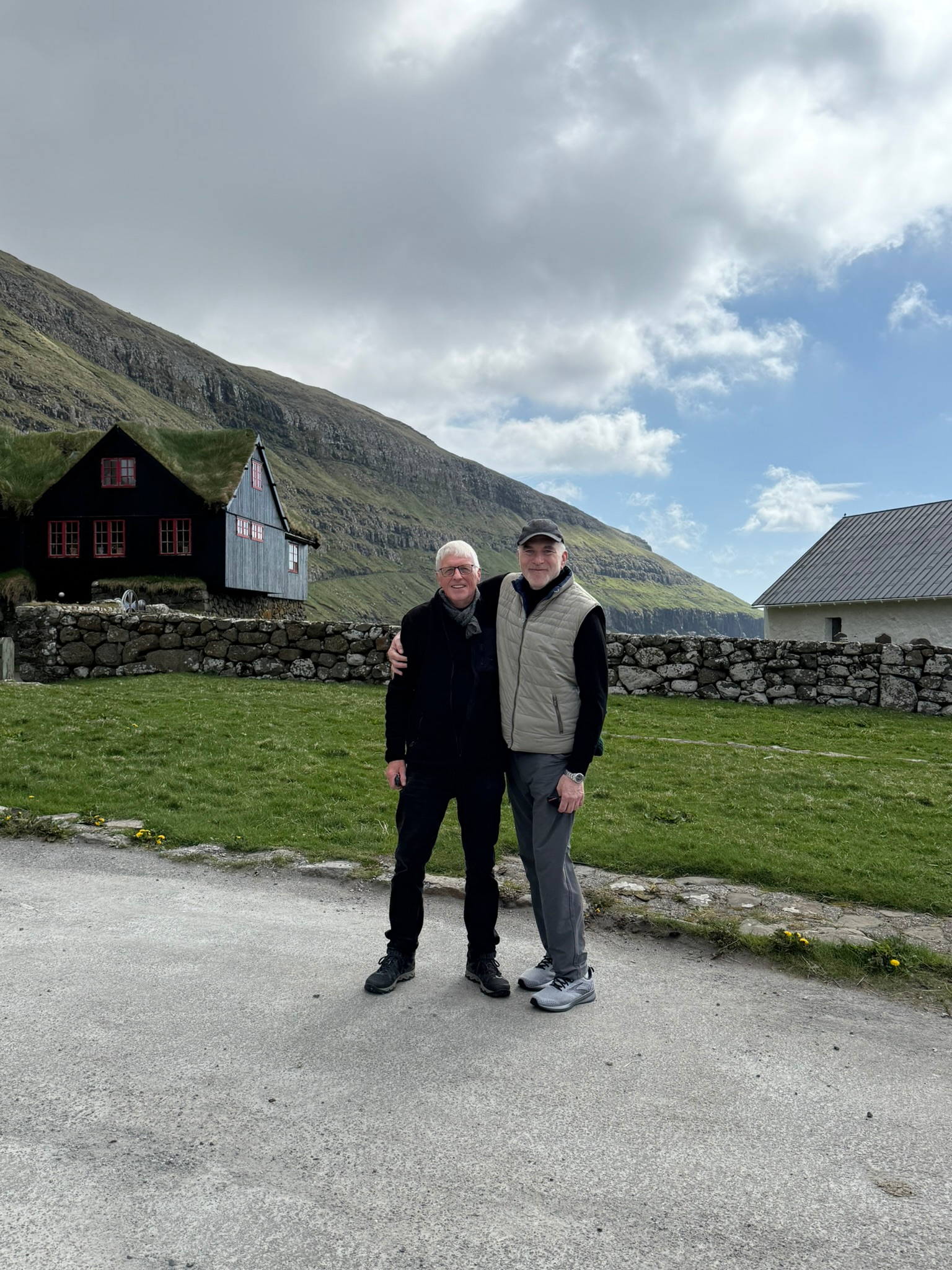
To be honest, I didn’t know much about the Faroes before our arrival, other than their reputation for isolation. But for Charles, this wasn’t just another port of call; it was a mission. He had a friend from summer camp, Holger, whom he hadn’t seen or spoken to in over 50 years. Holger had moved from Denmark to the Faroes with his wife, Sonja, decades ago.
Thanks to a bit of digital sleuthing, I managed to find Holger’s email online. Sure enough, they still lived in the Faroes, in Tórshavn no less – and were just as eager to reconnect as we were. The digital thread led us straight to the harbor, and as we arrived on land, a beautiful reunion unfolded – half a century of life bridged in a single hug. For the next six hours, Holger and Sonja gave us a private tour that no cruise excursion could ever hope to match.

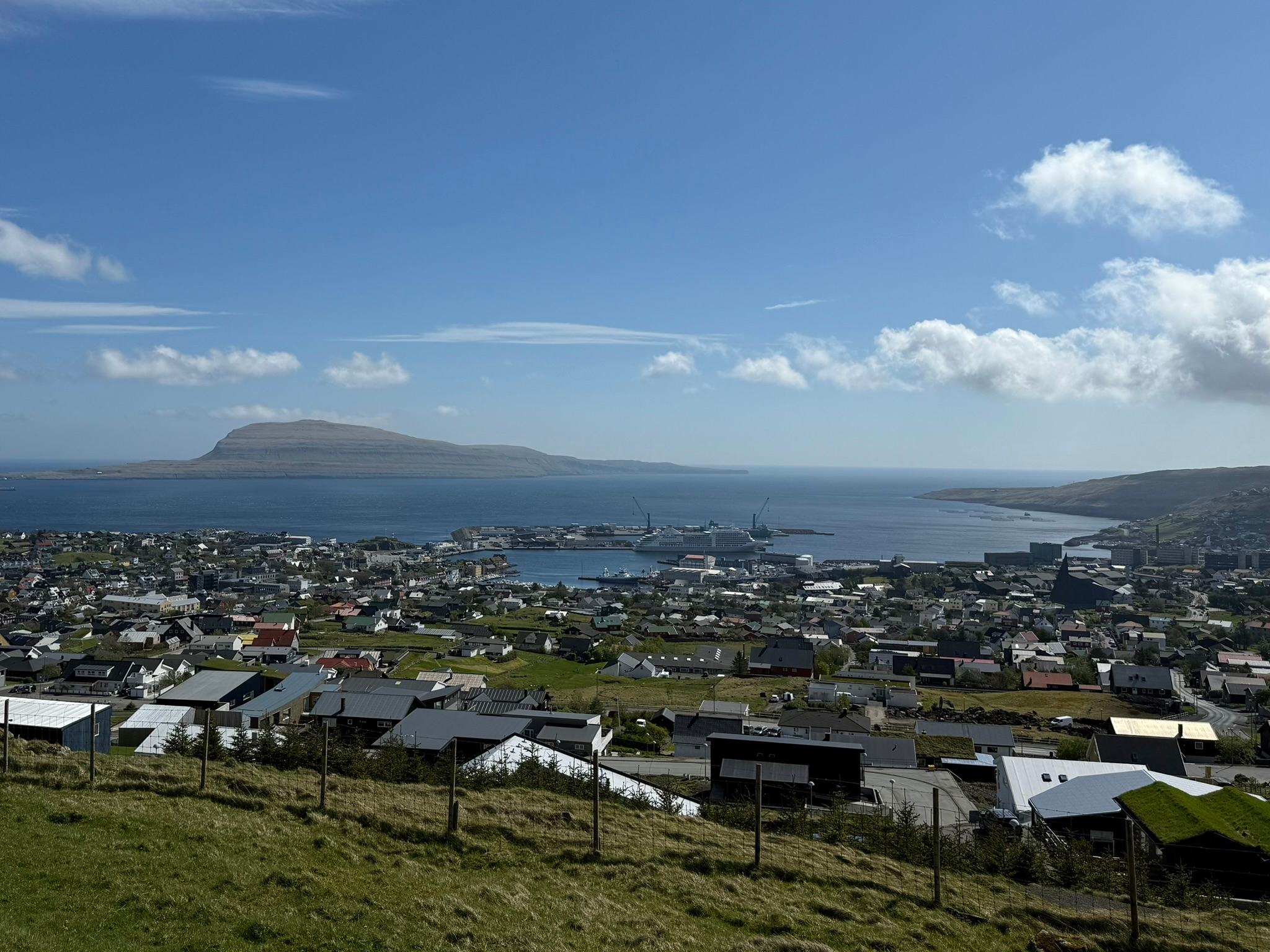

Exploring the Volcanic Majesty of Streymoy and Kirkjubøur
We left the capital behind, driving through a landscape that can only be described as Jurassic. The Faroes are an archipelago of 18 jagged volcanic islands, characterized by steep cliffs, treeless moors, and narrow fjords. Geologically, they are layers of basaltic lava tilted toward the east, creating a dramatic, stepped terrain that feels ancient and raw. The only thing missing are the dinosaurs.
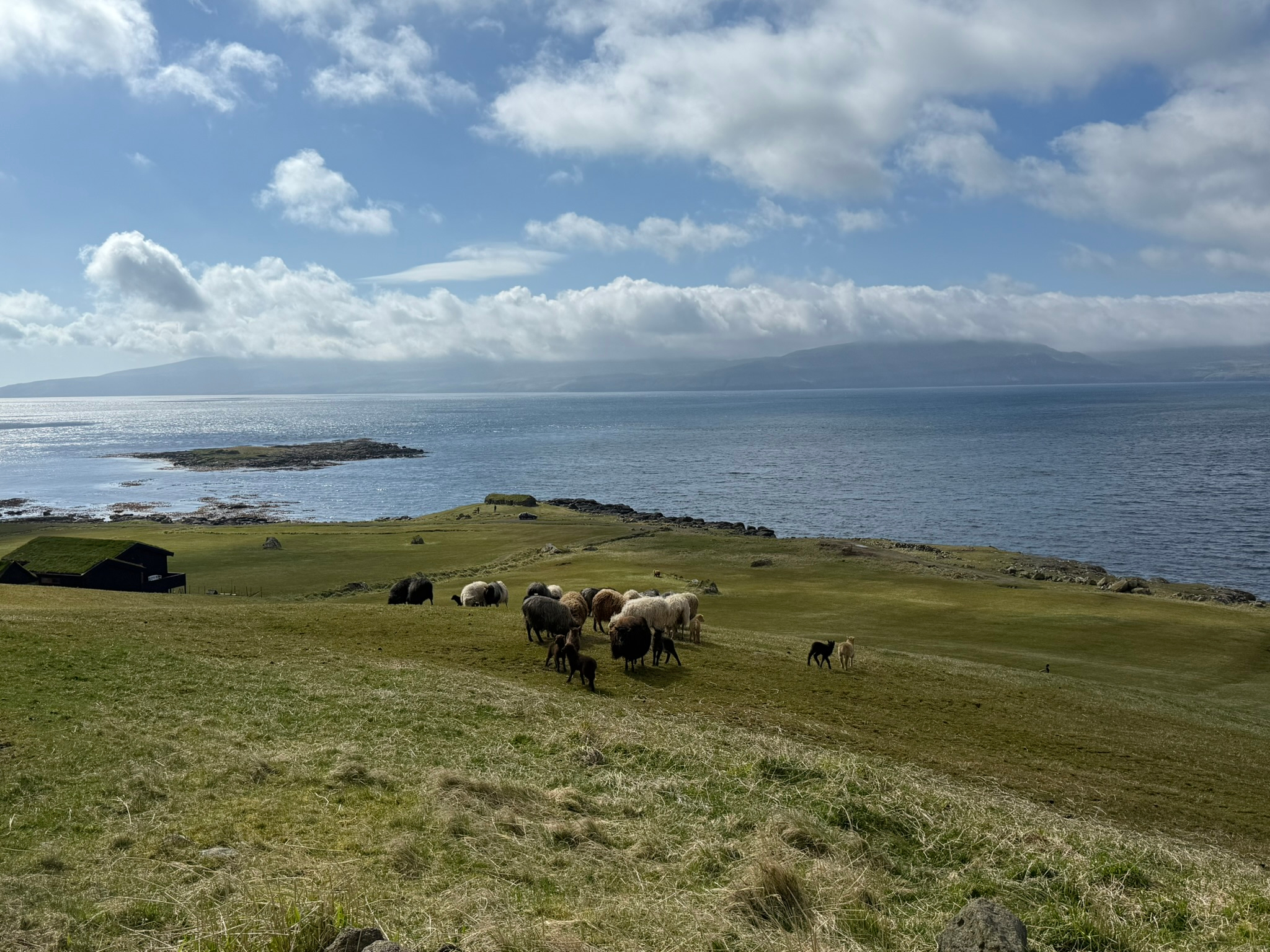
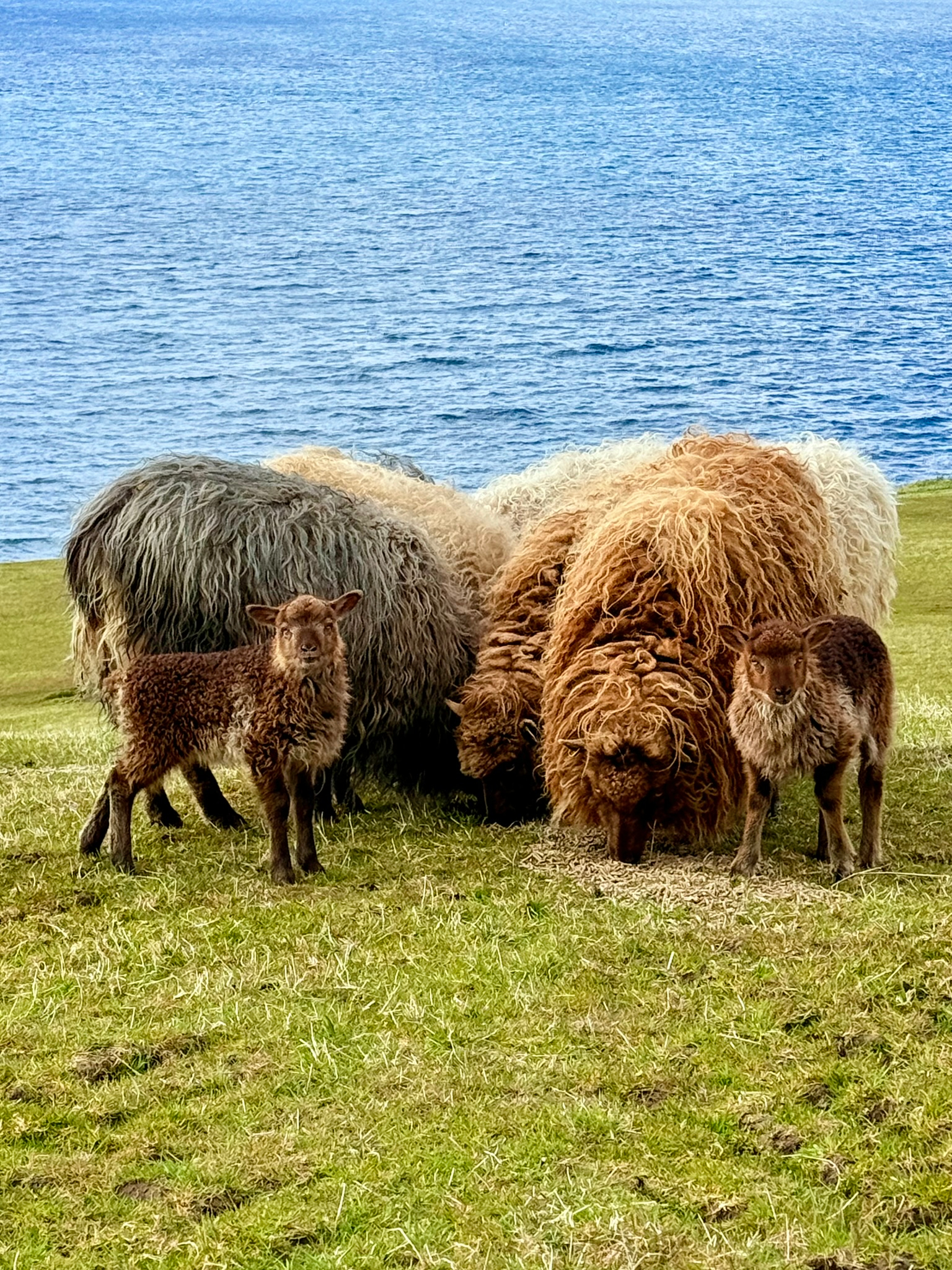
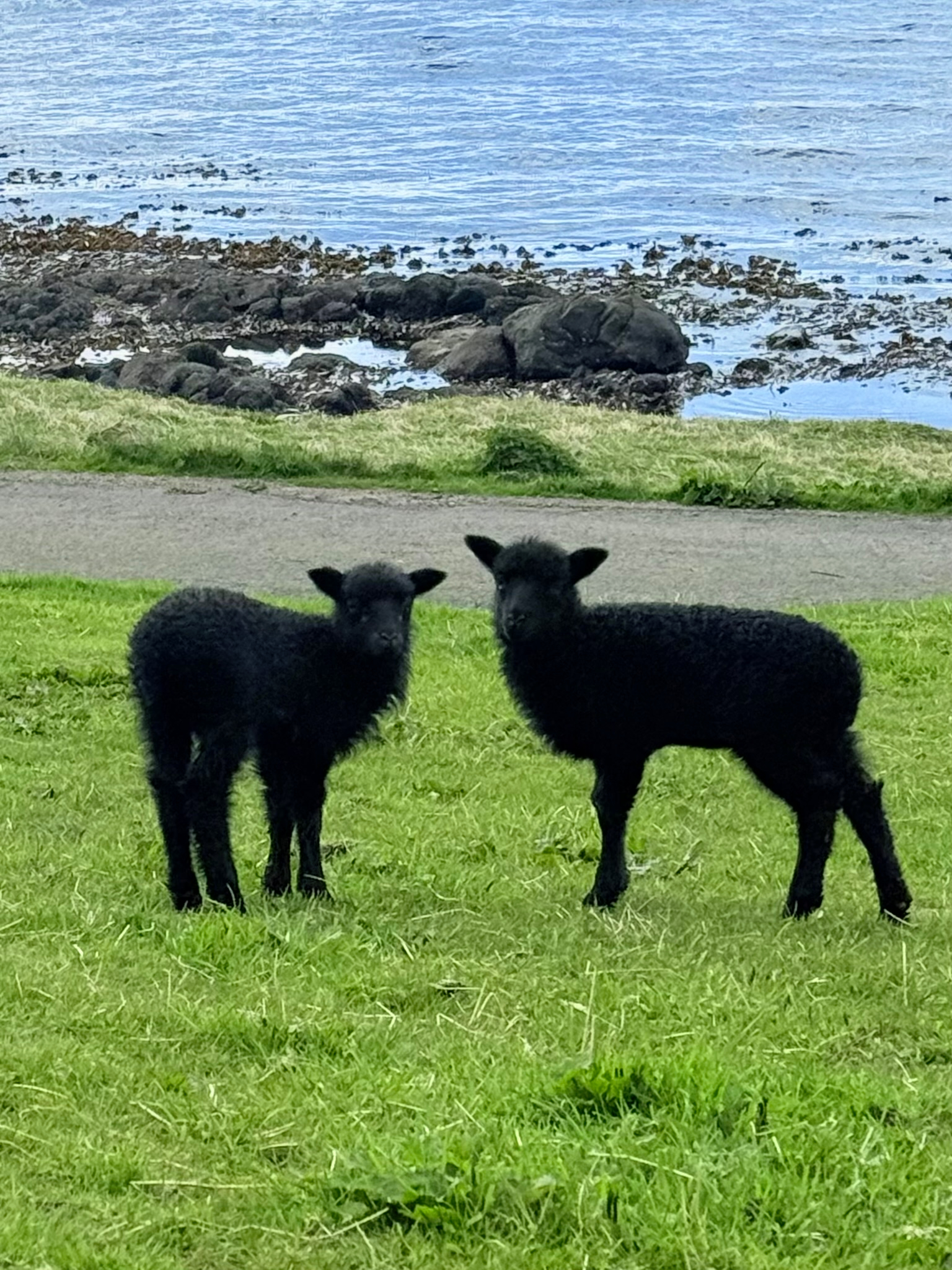
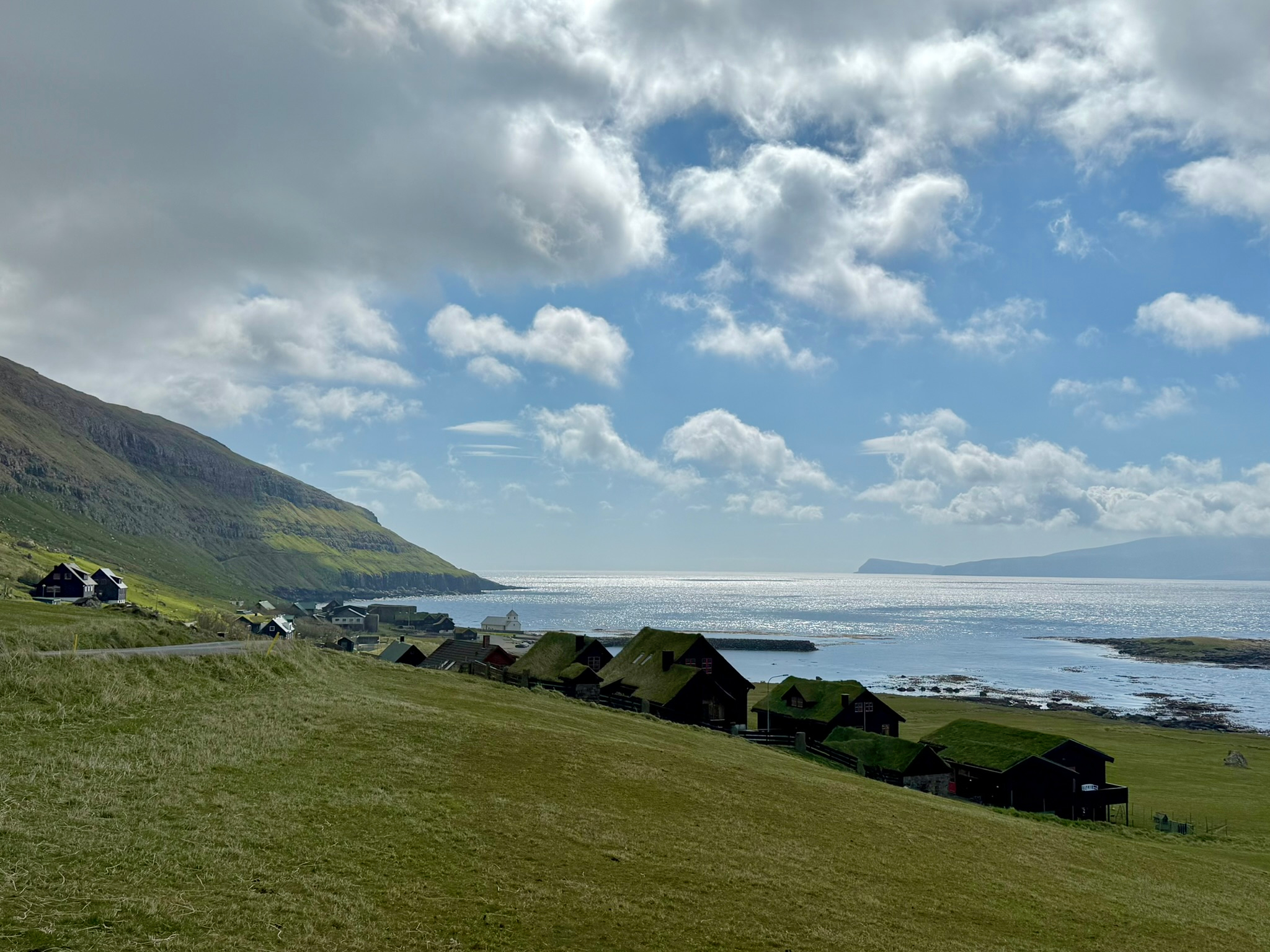
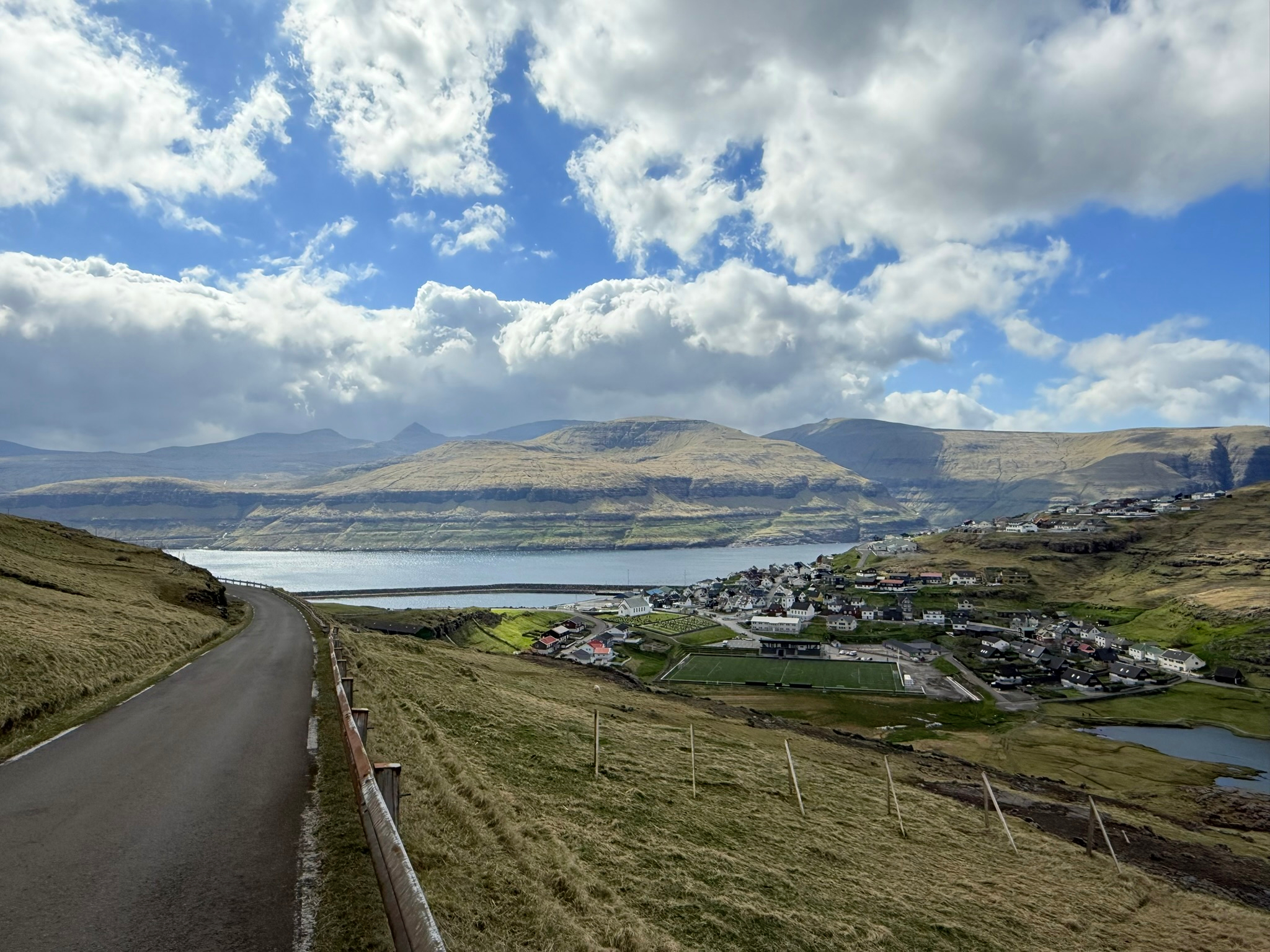
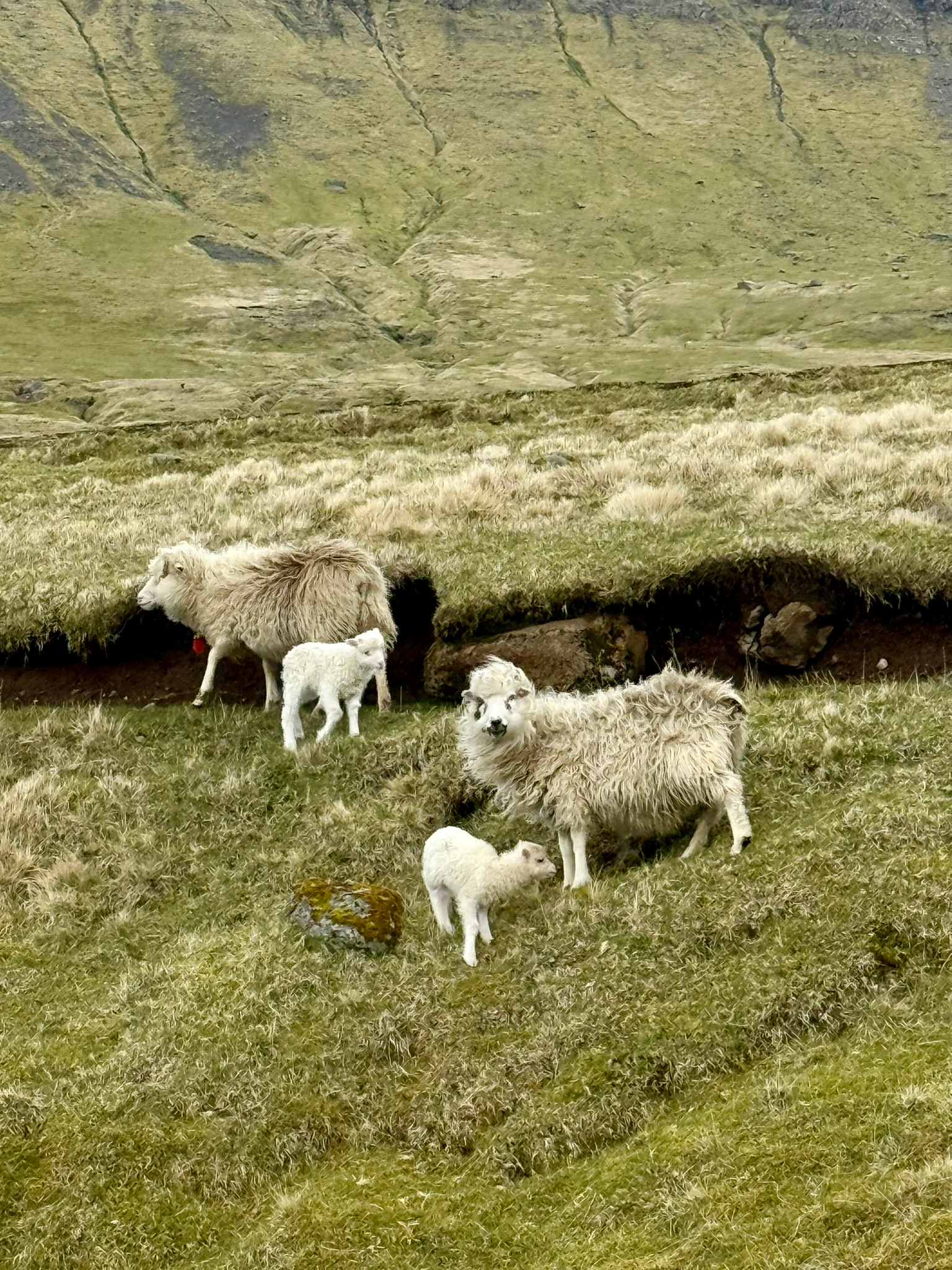
As we crossed the island of Streymoy toward Kirkjubøur, we passed flocks of multi-colored sheep. Since it was early May, the hills were dotted with spring lambs, barely a few weeks old, huddled against their mothers. Kirkjubøur itself is a tiny village perched on a fjord at the foot of a mountain ridge. With the recent snowmelt, the cliffs were alive with flowing waterfalls. This village is the Faroes’ most important historical site, having served as the episcopal see during the Middle Ages.
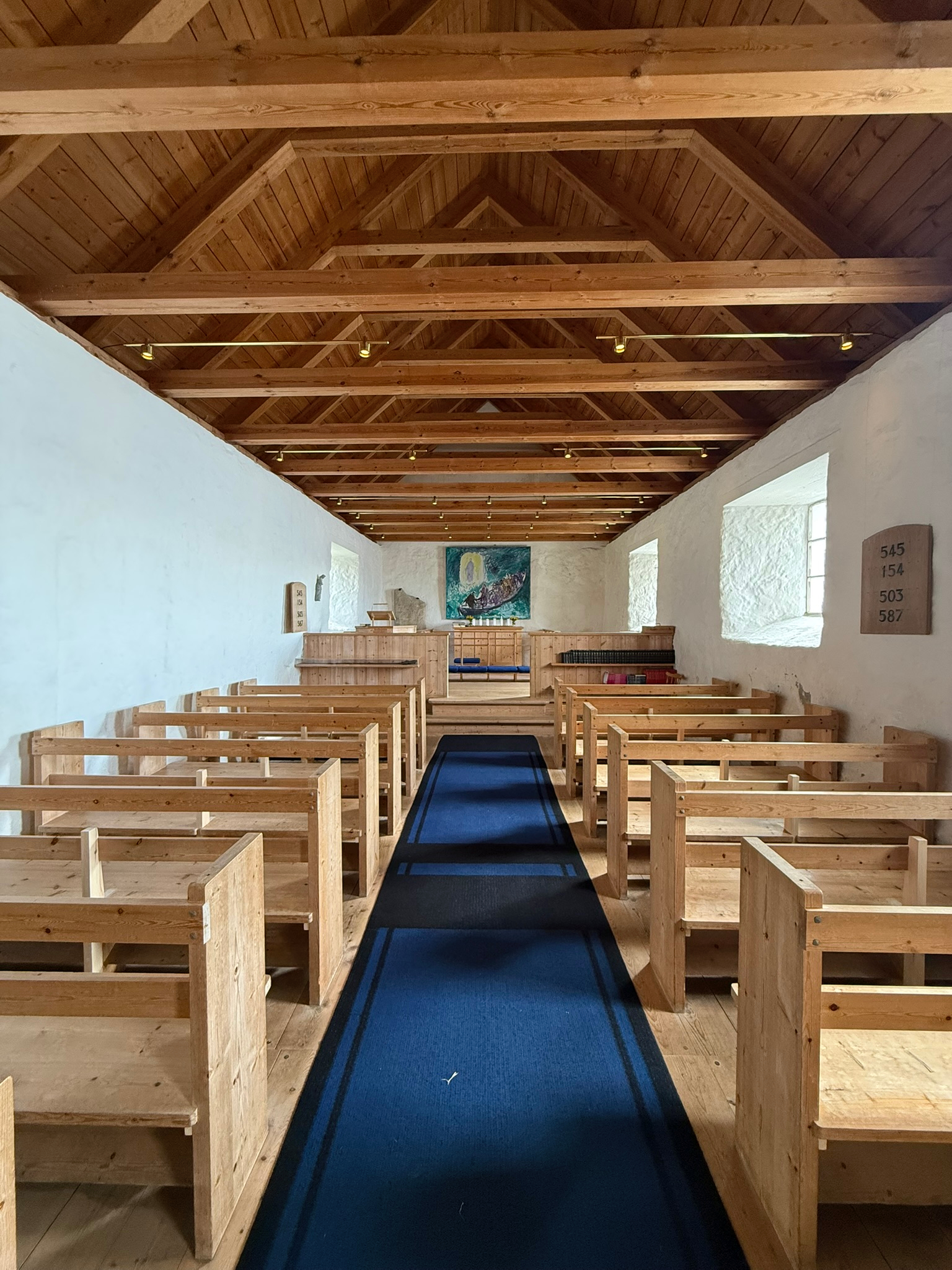
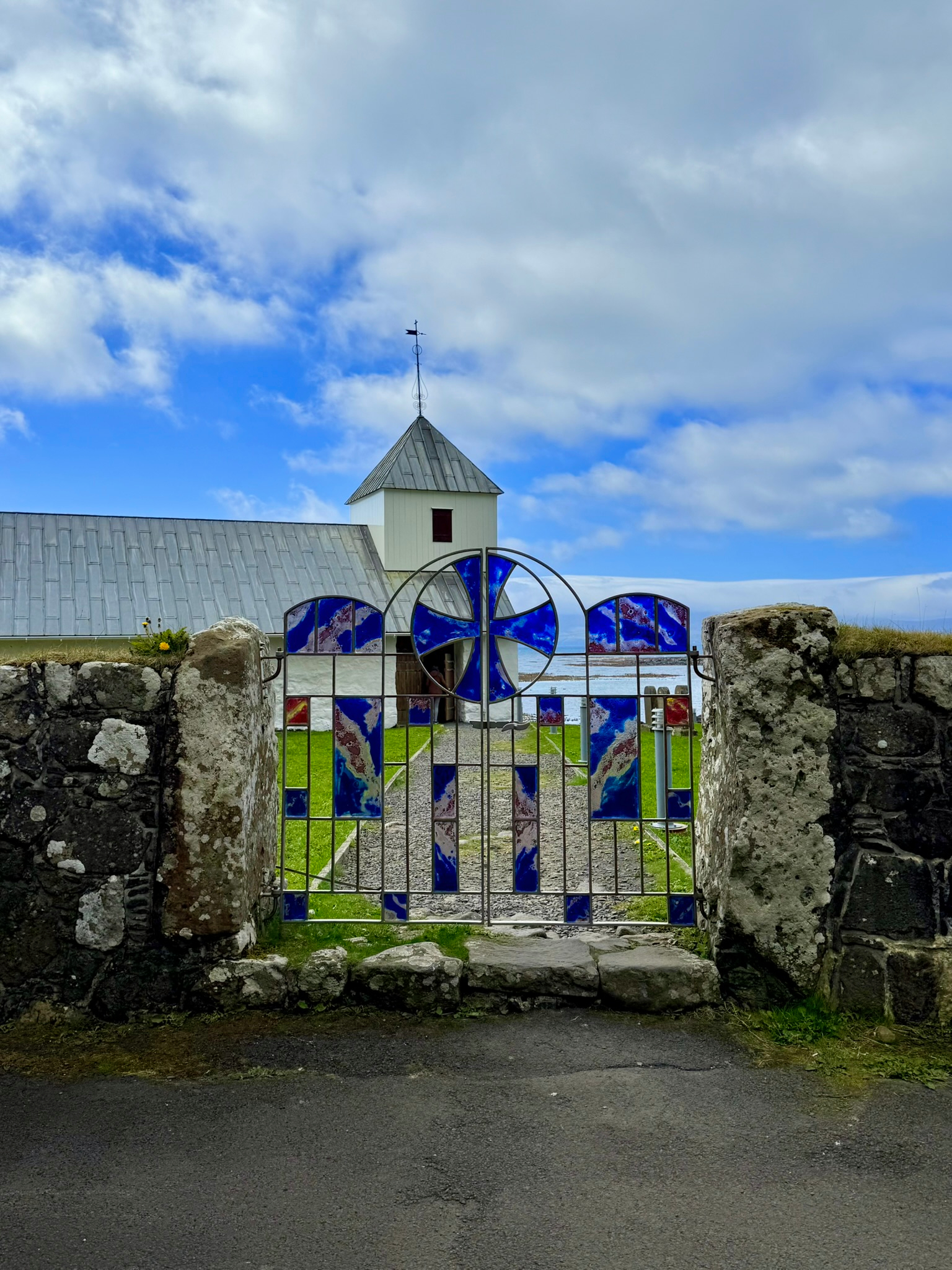
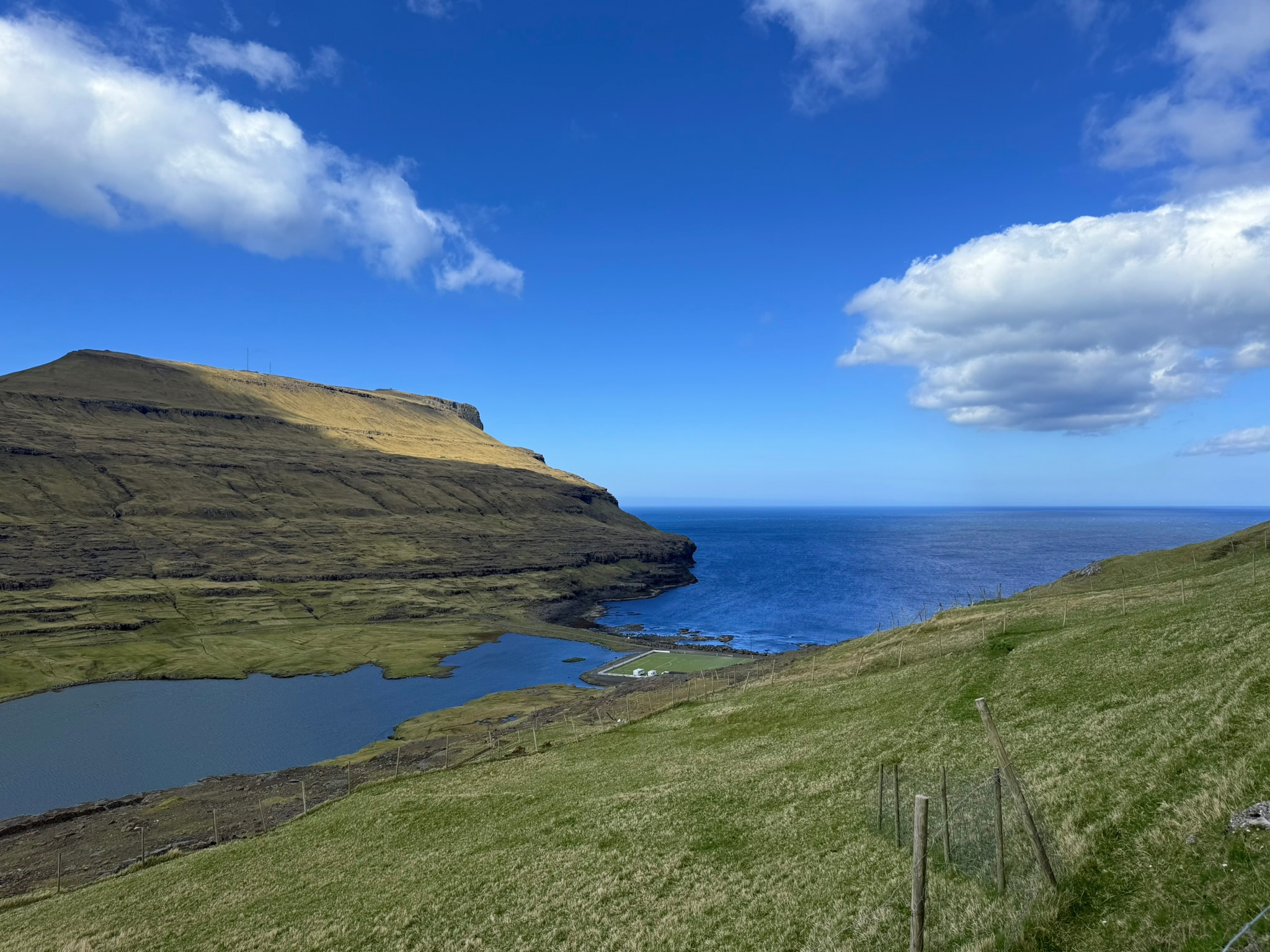
The scenery in Kirkjubøur was nothing short of stunning: vibrant green mountains rose sharply against deep blue waters, while wispy white clouds caught a resplendent light that cast a golden glow across the entire landscape. Holger led us through the new church, which possessed a stark yet deeply peaceful interior. I was particularly struck by the modern stained-glass gates, which filter the Atlantic light into a kaleidoscope of colors, bridging the gap between the ancient surroundings and the present day.
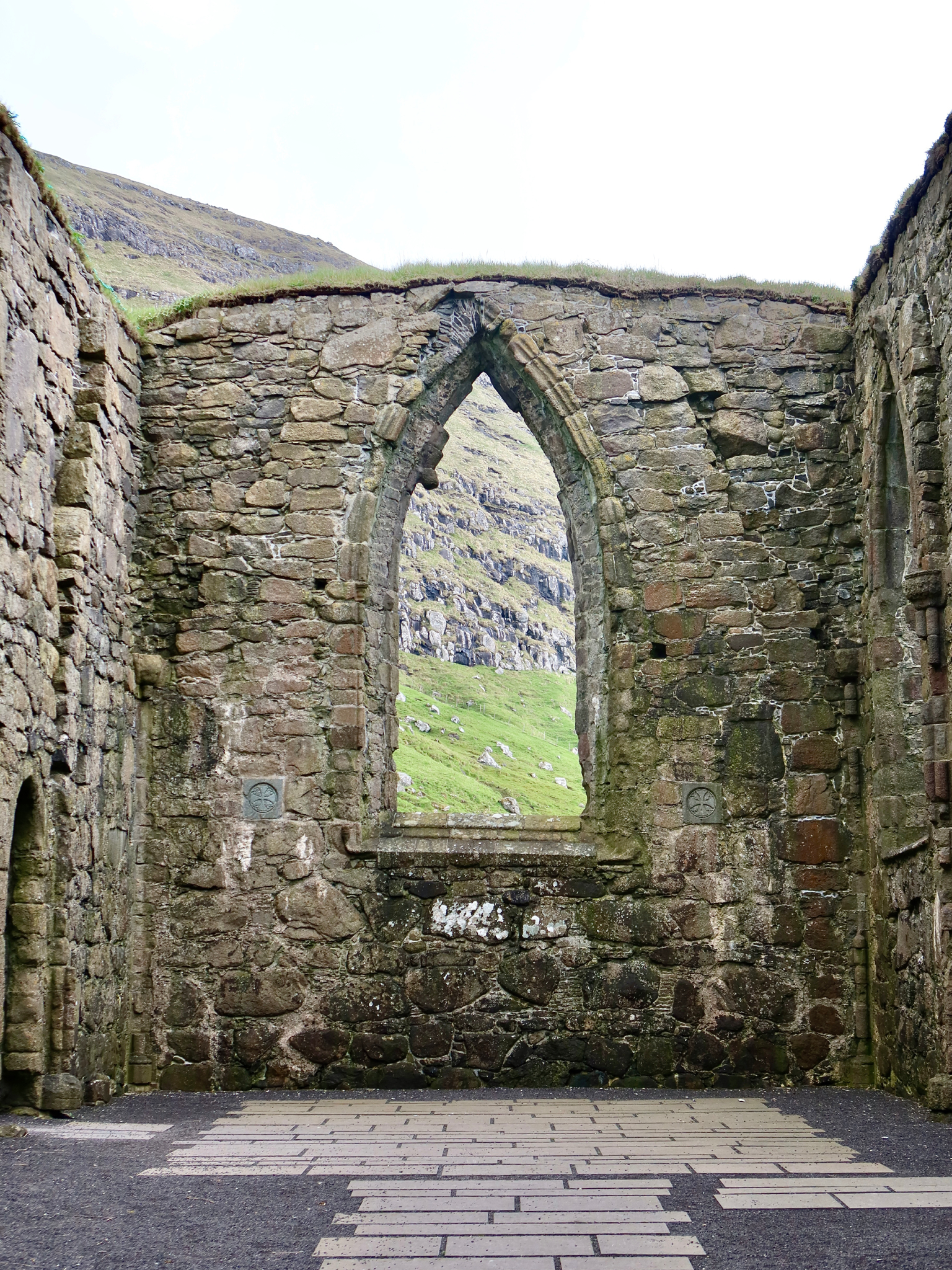
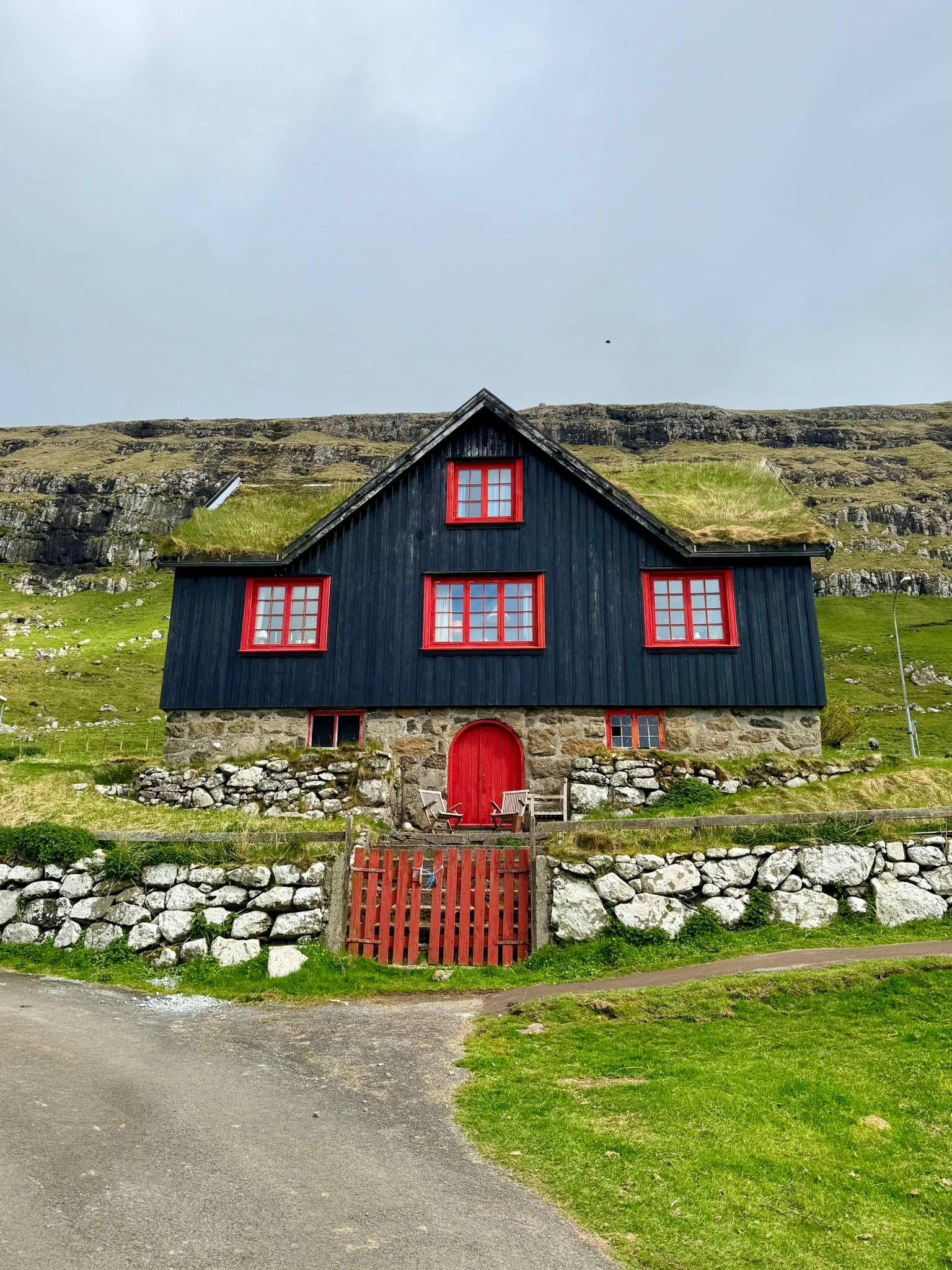
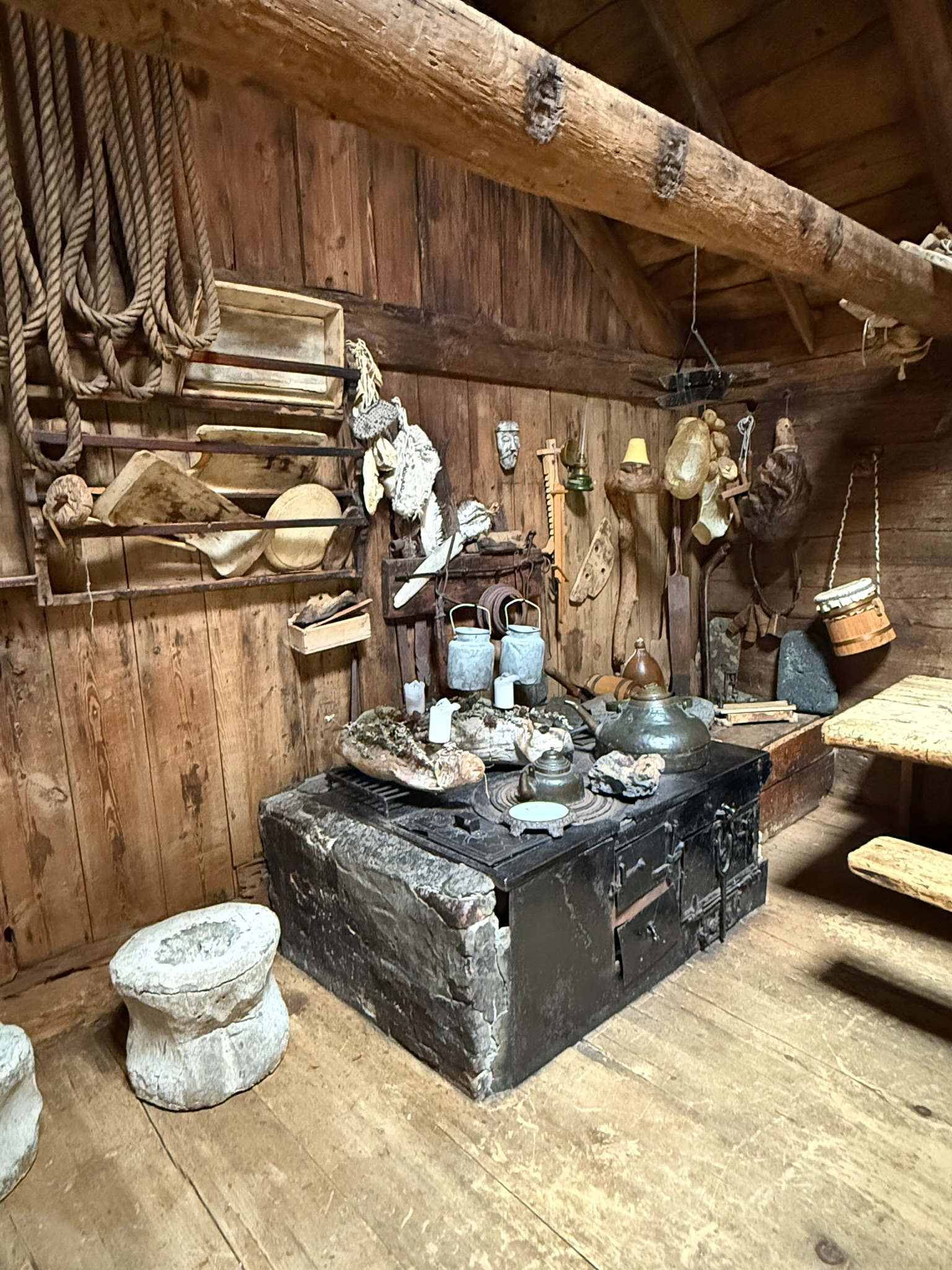
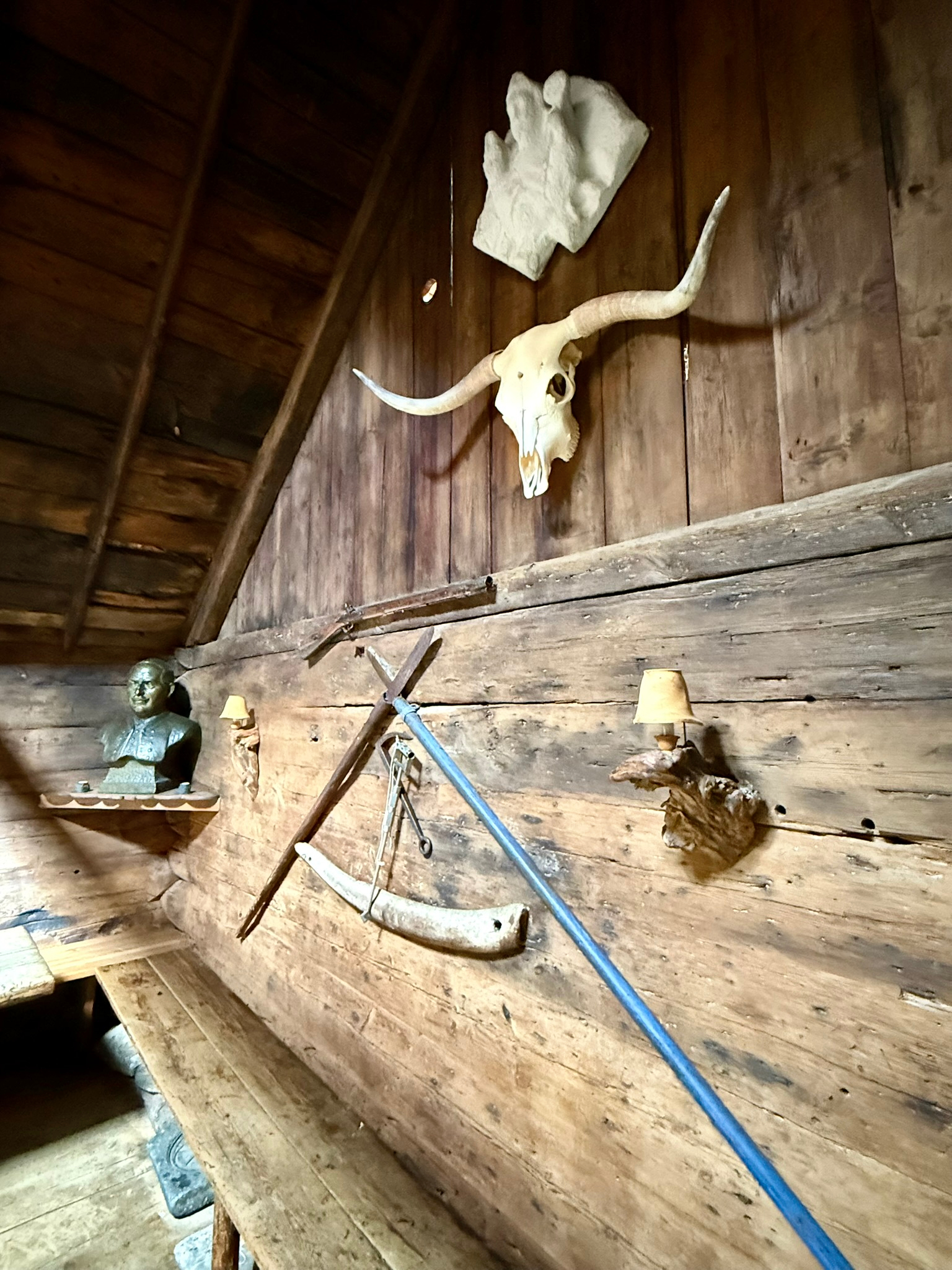
Just a stone’s throw away, we wandered through the skeletal remains of the 14th-century St. Magnus Cathedral. Its roofless stone archways acted as perfect, weathered frames for the breathtaking views of the fjords, making the scenery look like living oil paintings. To round out the history, we stepped into a small whaling museum housed in a traditional turf-roofed building. It was a fascinating, tactile look at island survival, filled with perfectly maintained tools and implements from the 1800s that were once essential for cooking and keeping the North Atlantic chill at bay.
Art, Culture, and the “Dancing Sun” of the Fjords
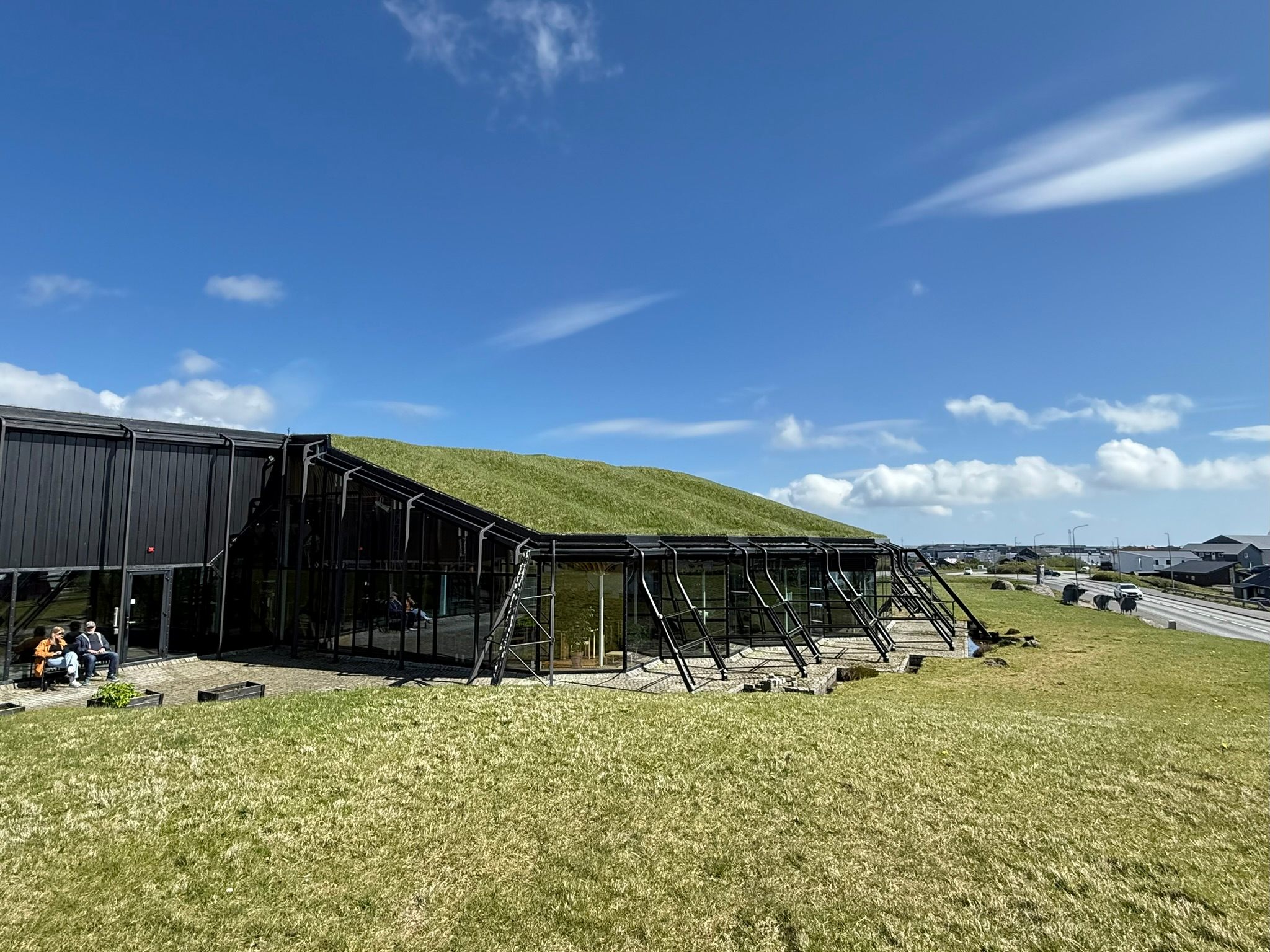
After making our way back to Tórshavn to drop Sonja off at a church forum – she is impressively one of only two female priests in the islands – Holger took us to the Nordic House, a stunning piece of Scandinavian eco-architecture that serves as the cultural heart of the archipelago. Designed with a massive, traditional Faroese turf roof to withstand the North Atlantic winds, the building is a poetic tribute to the region, featuring Danish glass, Finnish furniture, and Norwegian granite floors. Inside, we found a surprisingly vibrant art scene that felt incredibly well-supported for such a small nation. Light pours through massive glass panes to illuminate a space that hosts everything from jazz festivals to modern art exhibitions.
Before heading back into the wilder parts of the island, we ascended a steep road just outside Tórshavn toward Mjørkadalur. This area served as the headquarters for Færøernes Kommando, a military base with a storied past stretching from the British occupation in WWII to its secret life as a Cold War NATO radar station. An installation at the top of the mountain once scanned the North Atlantic for Soviet submarines, but as we climbed, the only thing we could see was a wall of white. We were swallowed by a dense, eerie fog, and without Holger’s expert navigation, the cliff’s edge would have been a mere guess.
As we descended and headed north, Holger pointed out a phenomenon the locals call the “dancing sun.” This natural light show occurs when the sun hits the water at just the right angle, sending “dancing” golden ripples climbing up the basalt cliffs in a mesmerizing, kinetic display. Shortly after, we crossed the Nordskala Bridge, famously known as the “Bridge Across the Atlantic.” It earned this grand title because it is one of the rare places on earth where a bridge physically spans a narrow sound of the Atlantic Ocean to connect two separate islands – Streymoy and Eysturoy.
The Pyramids of Eysturoy and the World’s First Undersea Roundabout
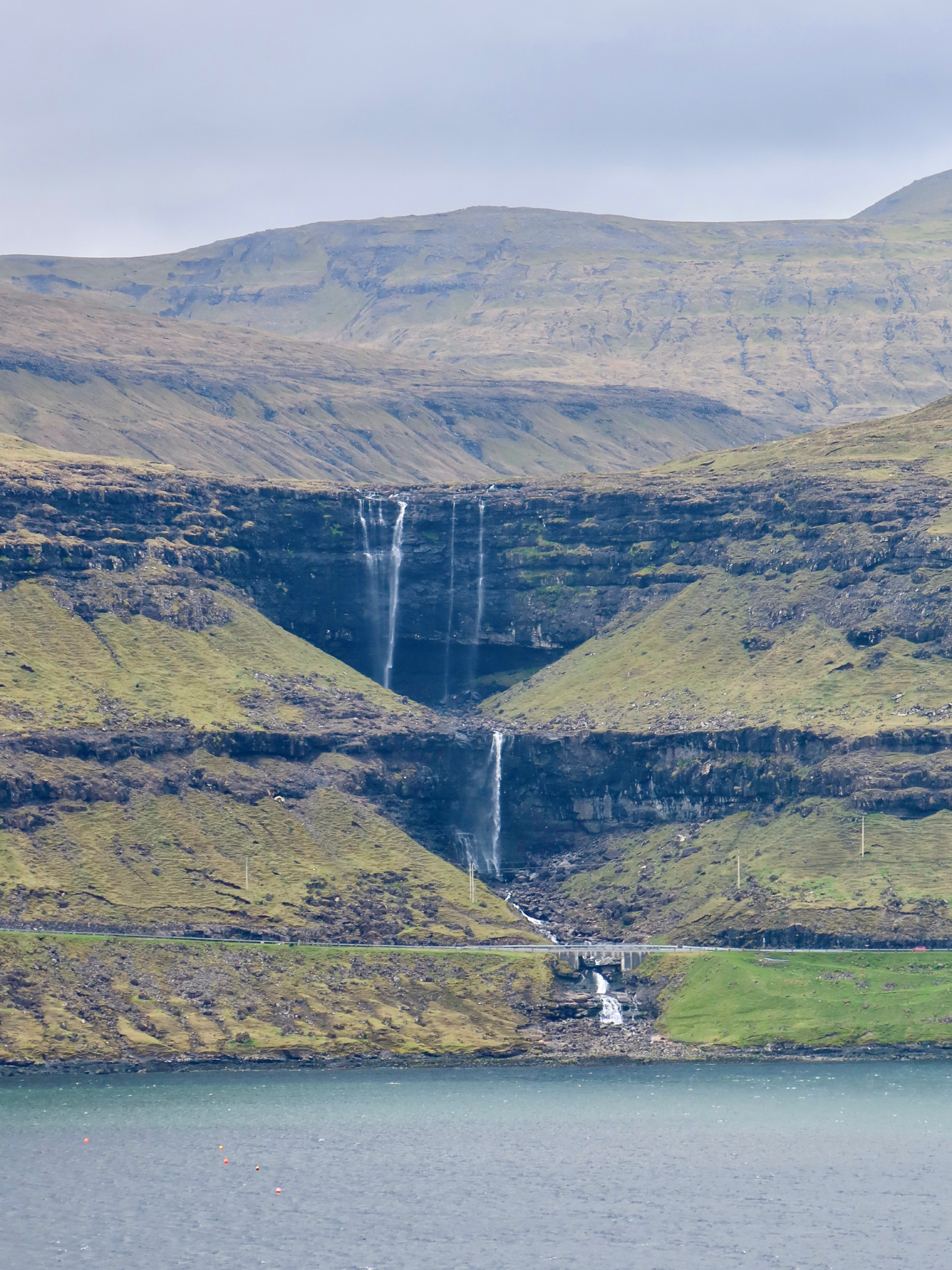
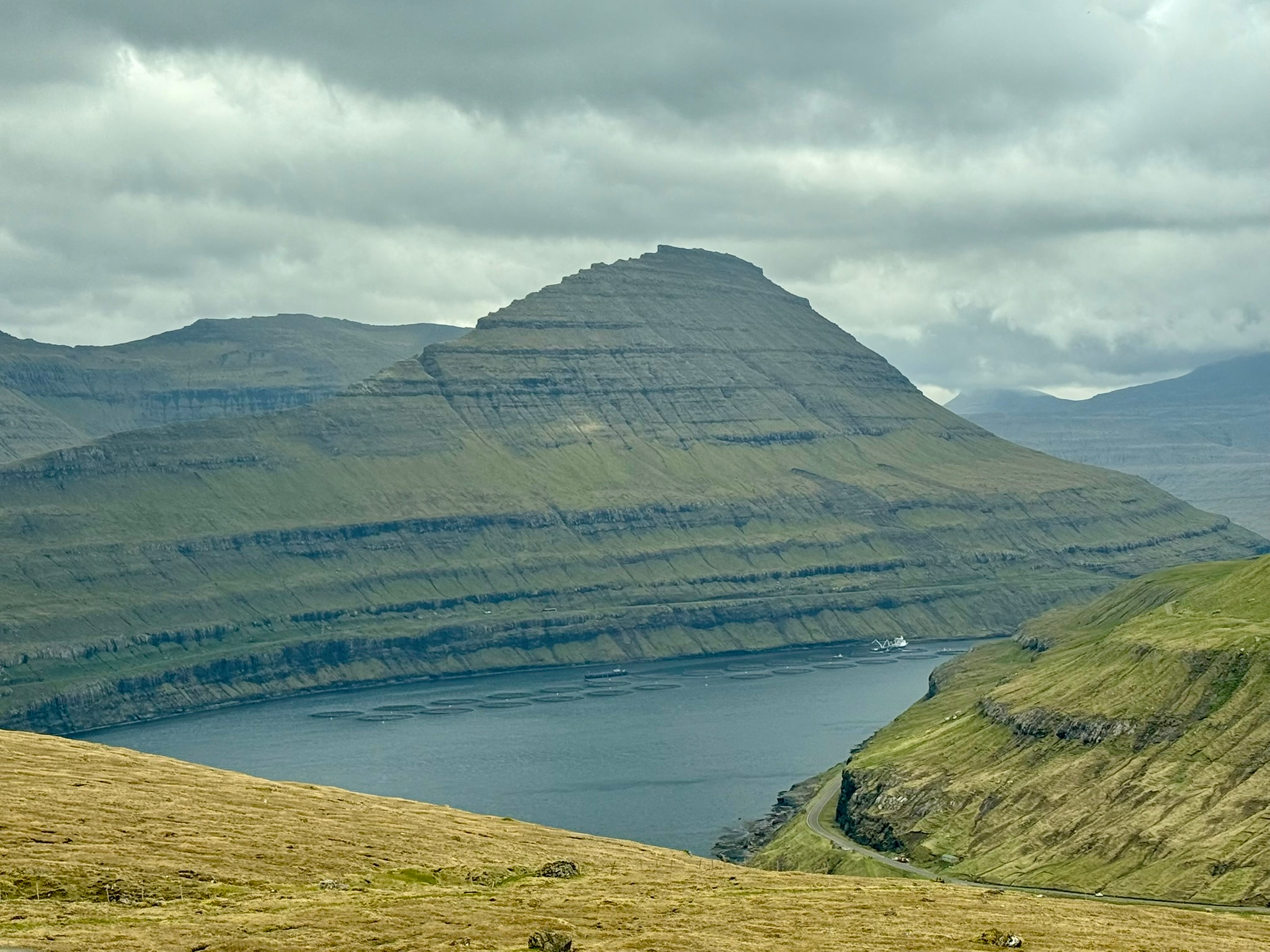
The scenery became increasingly sublime as we continued north, passing world-renowned salmon farms – vast steel rings floating in the deep, cold fjords – and the pellucid Fossá waterfall, the tallest in the islands. At nearly 460 feet, the water drops in two grand stages before reaching the sea. The landscape was so spellbinding that I forced Holger to stop every ten minutes for photos. He likely thought I’d lost my mind, but one does not simply drive past such beauty without documentation.
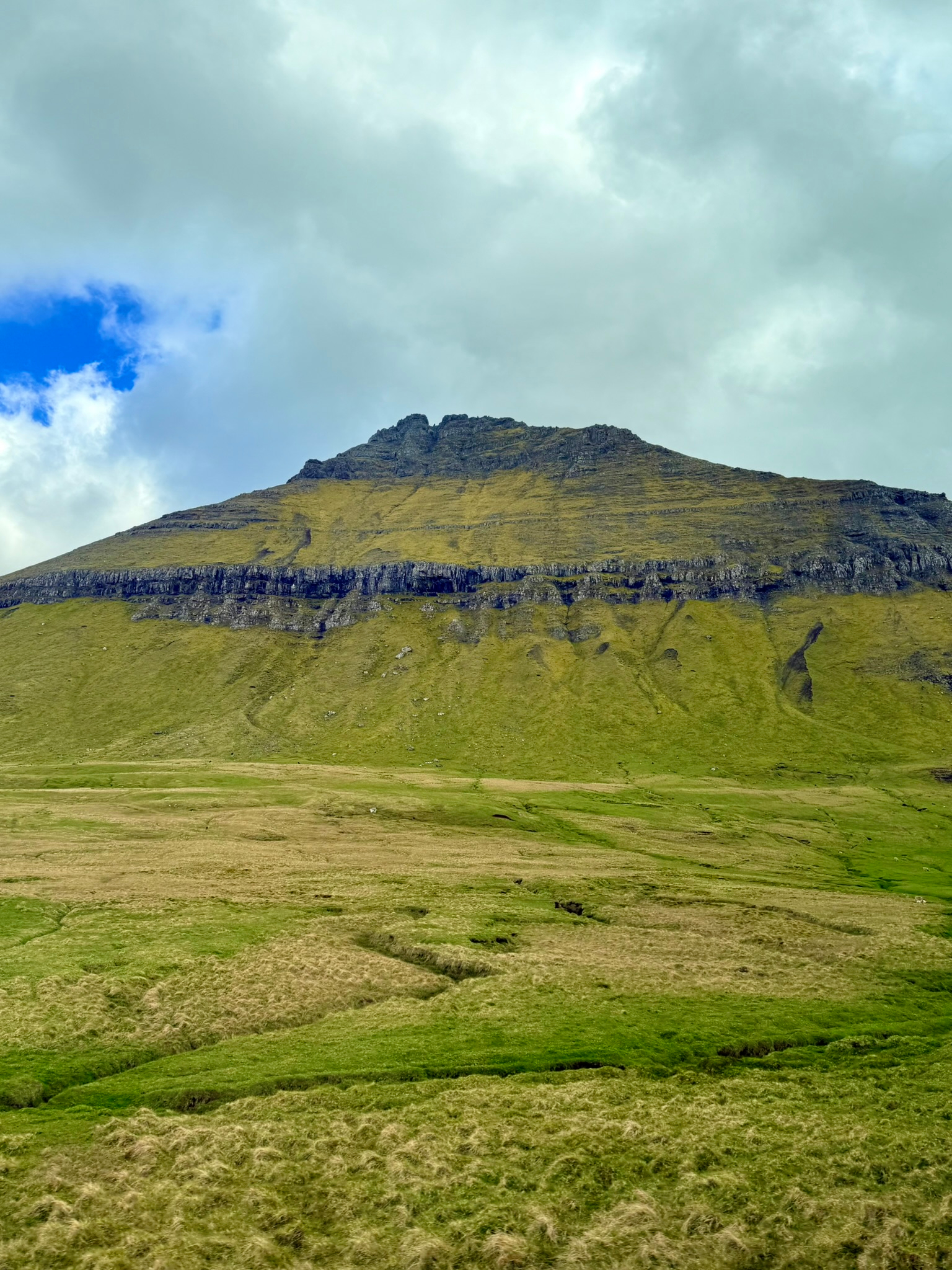
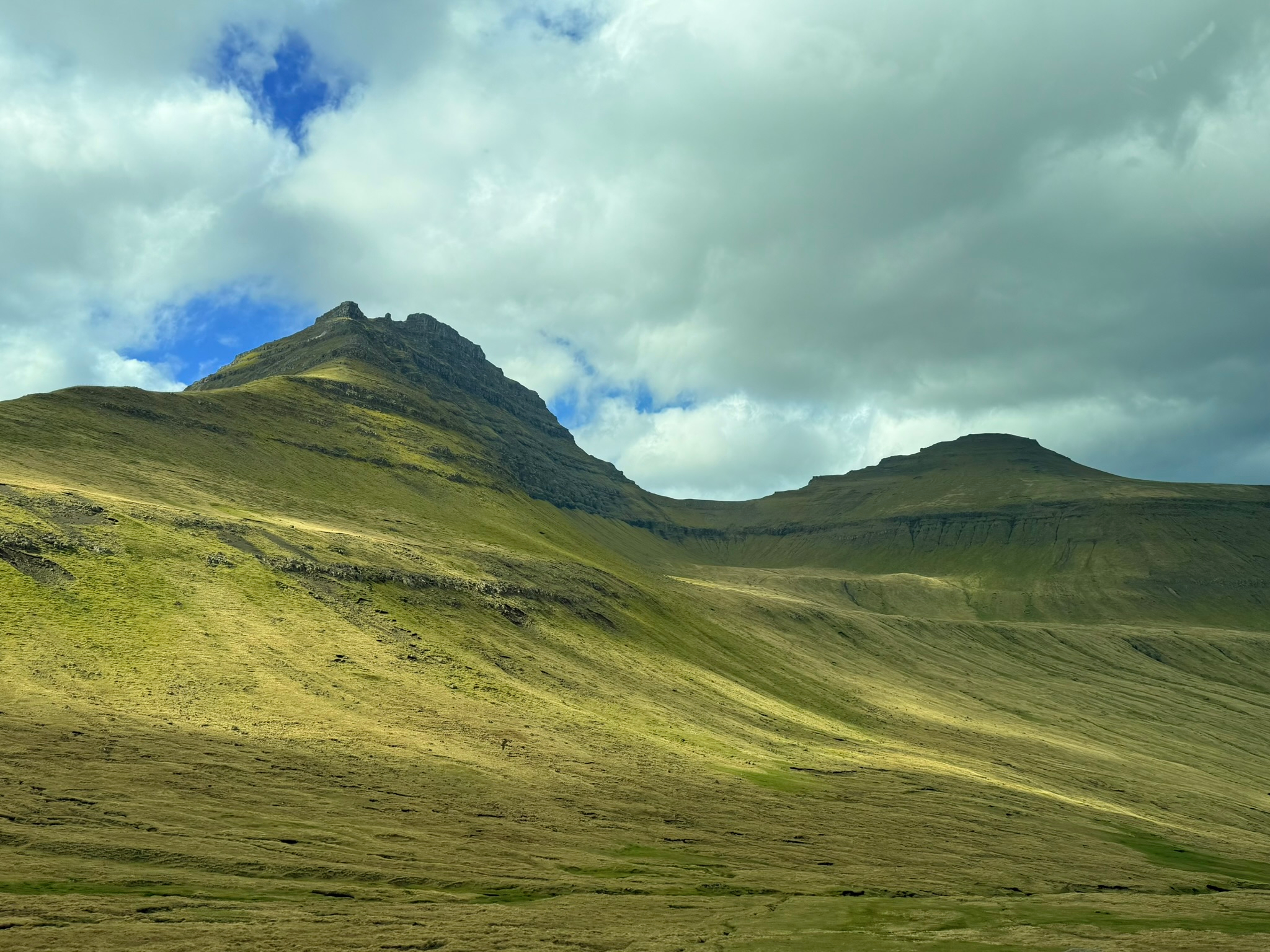
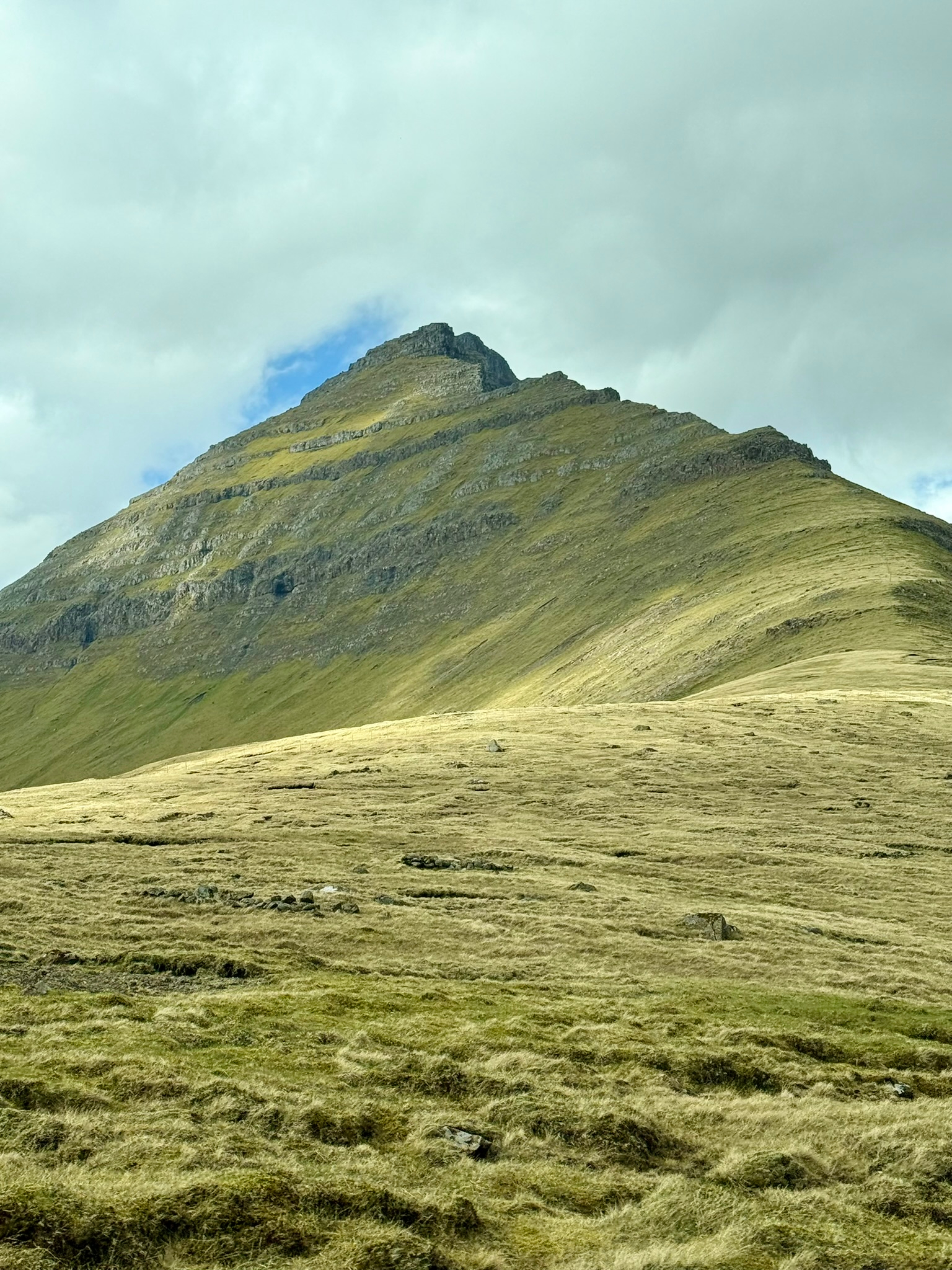
We skirted the village of Eiði to catch a glimpse of Risin og Kellingin (The Giant and the Witch). These two towering sea stacks rise 240 feet from the ocean; legend has it they were giants who tried to rope the Faroe Islands and drag them home to Iceland, only to be turned to stone by the rising sun. Our route then climbed past Slættaratindur, the archipelago’s highest peak at 2,894 feet. The mountain’s triangular face is marked by ancient volcanic striations – horizontal bands of basalt and tuff that look like giant etchings carved by the elements over millions of years.
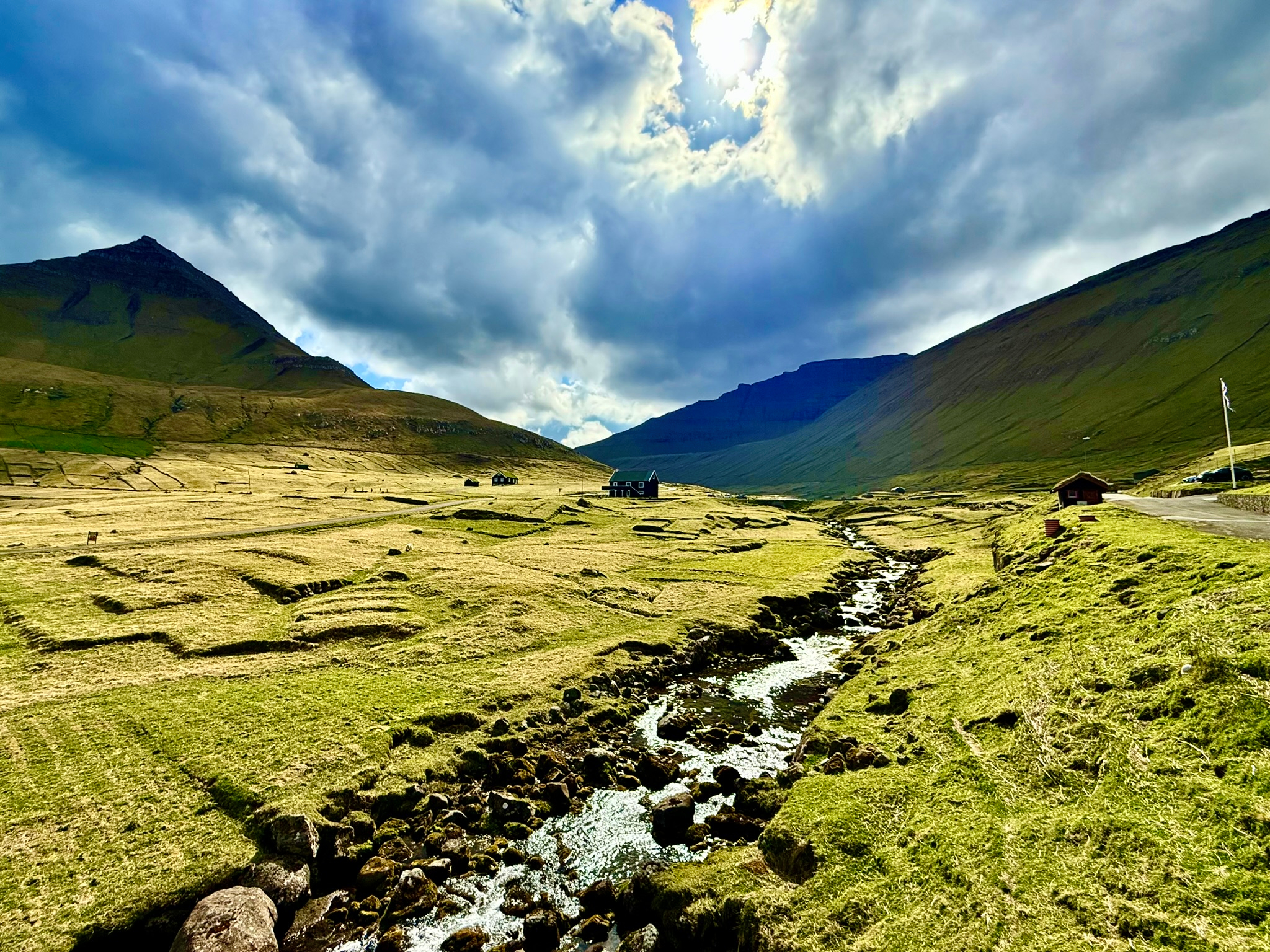
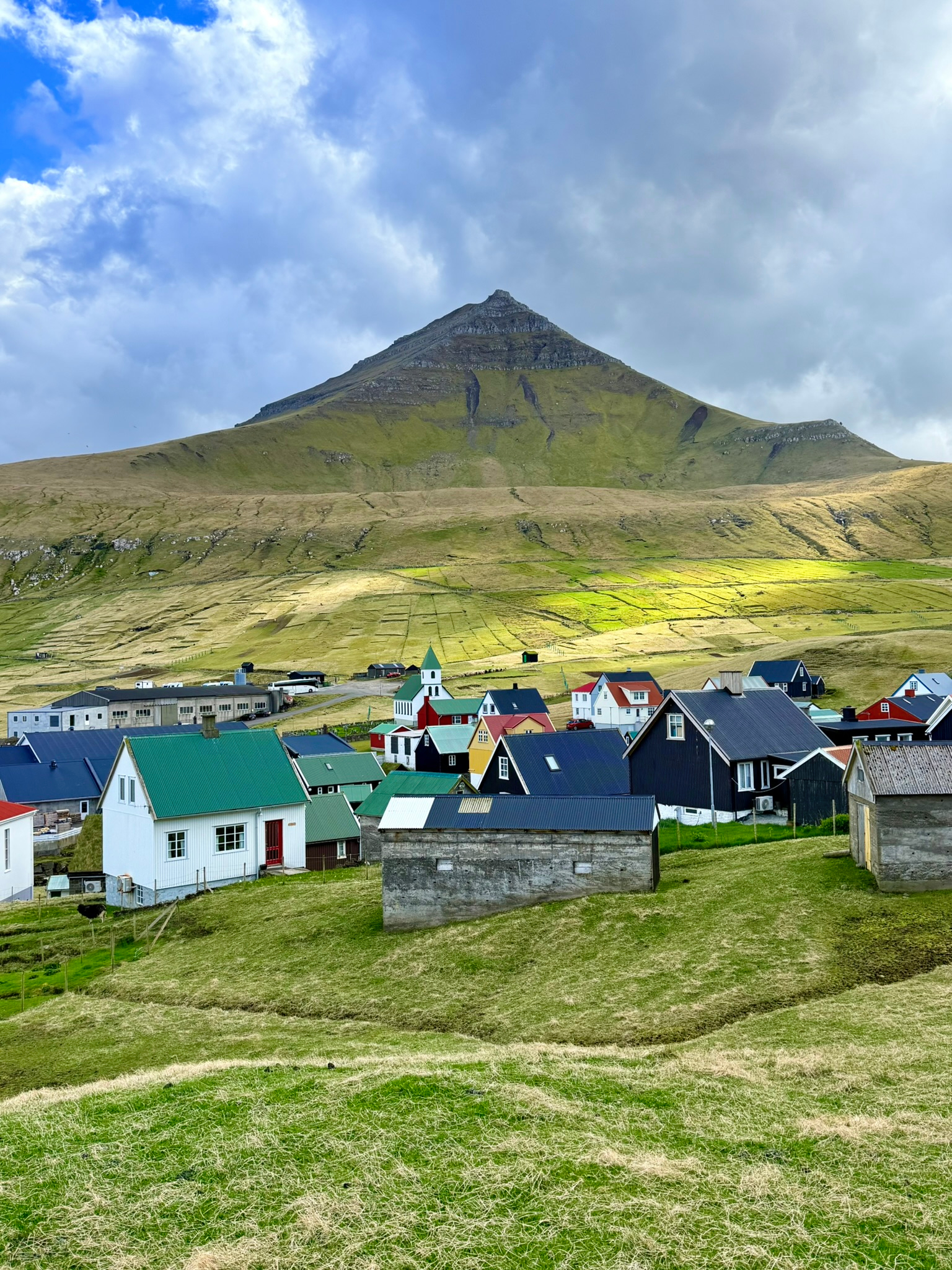
Our final destination was Gjógv, a village on the northeast tip of Eysturoy that felt like the literal end of the road. It sits nestled in a valley of ethereal pyramidal mountains, with a crystalline brook babbling through the village center before emptying into the sea. After a quick, hearty lunch at the Gjaargardur Guesthouse, we walked a headland path that descended toward the village’s namesake: a 650-foot long sea-filled gorge. Down at the water’s edge, still tide pools acted as liquid mirrors, perfectly reflecting the emerald cliffs and the vast North Atlantic sky.
On the return trip to Tórshavn, we circumnavigated the mountain passes for the Eysturoyartunnilin. This seven-mile sub-sea tunnel is a marvel of modern engineering, diving 620 feet below the seabed. It features the world’s first underwater roundabout, a glowing subterranean hub illuminated by shifting blue and yellow LED lights. At its center stands a massive rock sculpture by Faroese artist Tróndur Patursson, depicting figures joined in a traditional ring dance – a surreal, beautiful reminder of Faroese culture even deep beneath the ocean floor.

A Golden Departure and a Heartfelt Adieu
Back in Tórshavn, before we re-embarked, Holger shared old picture slides from the 1970s of his and Charles’s days at Camp Tahoe. It was a poignant end to a whirlwind day. Charles promised it wouldn’t be another 50 years before their next meeting.
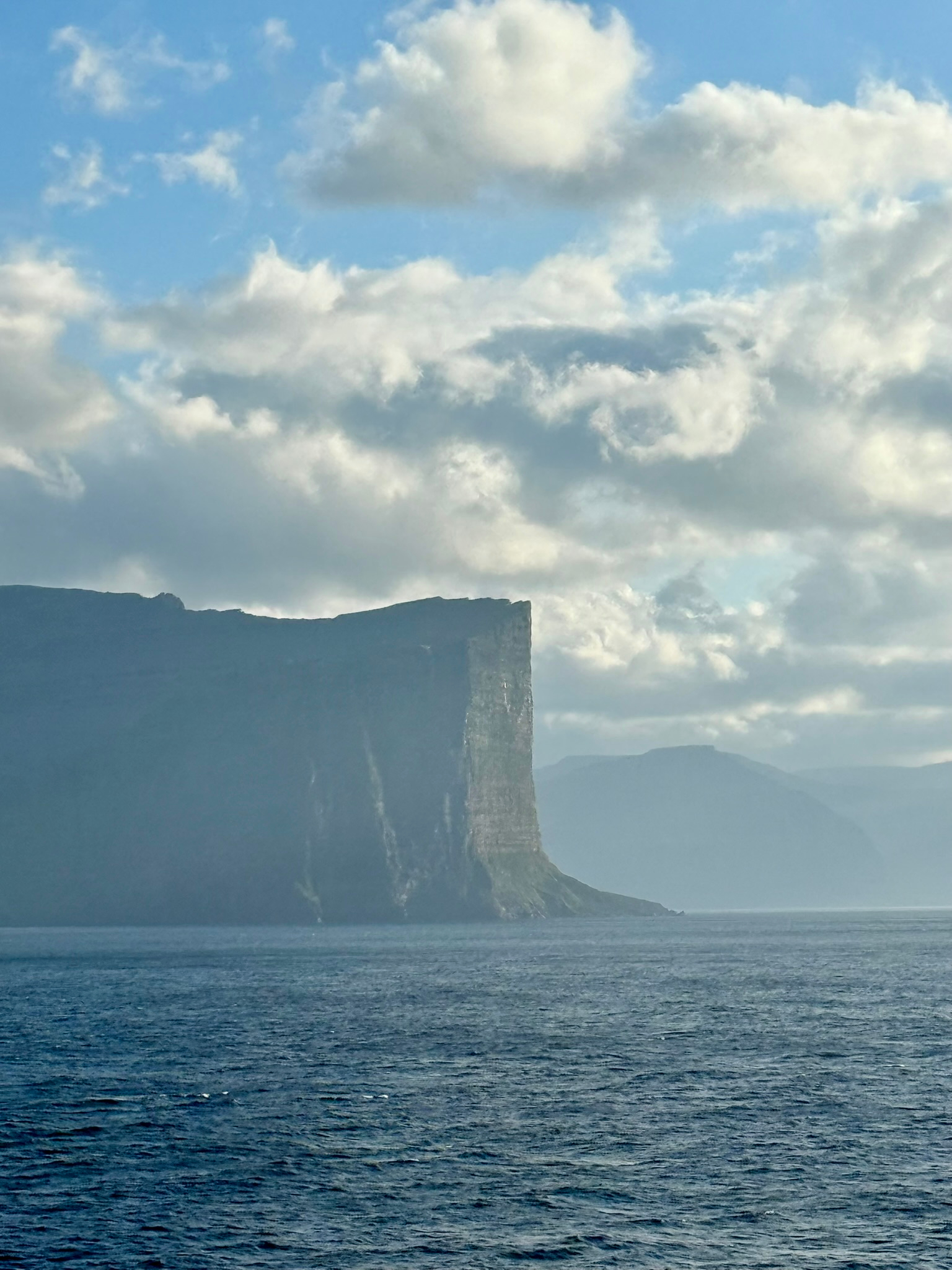
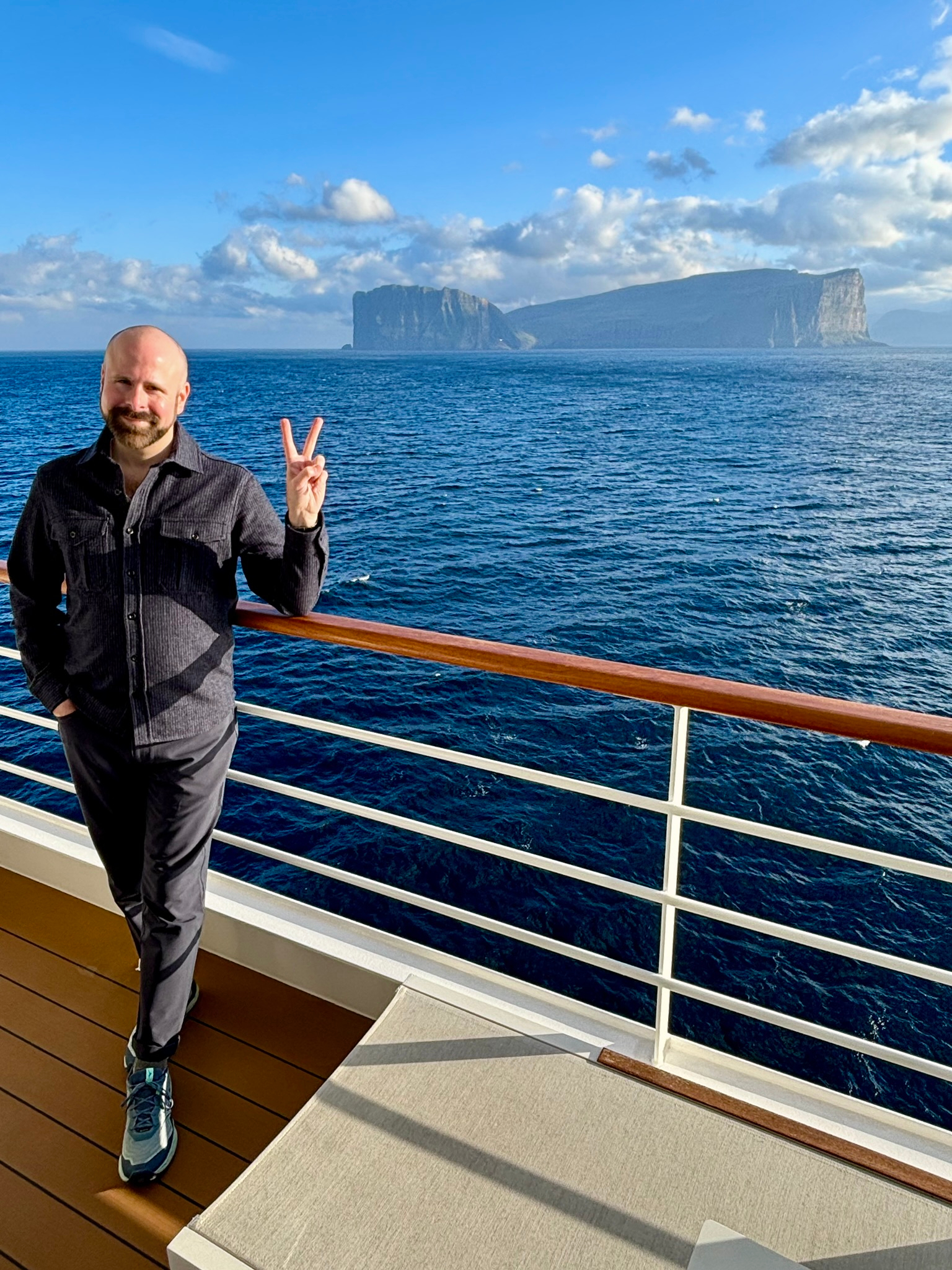
As our ship slowly pulled away from the harbor, we retreated to our suite to find a decadent caviar spread awaiting us. But the true luxury was just beginning. The Captain, seemingly as enamored with the landscape as we were, charted a scenic course eastward, threading the needle around the far-off reaches of the archipelago.
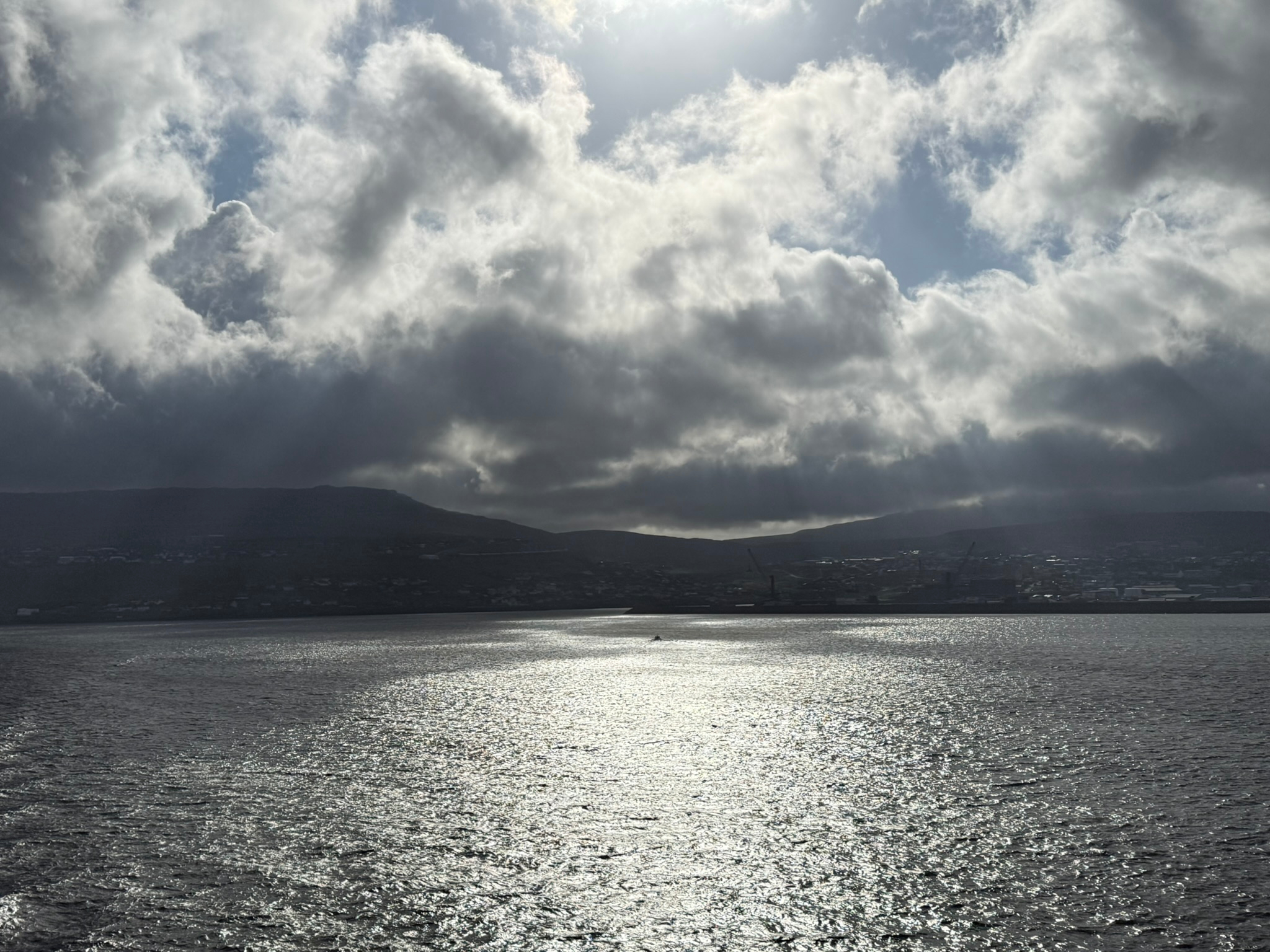
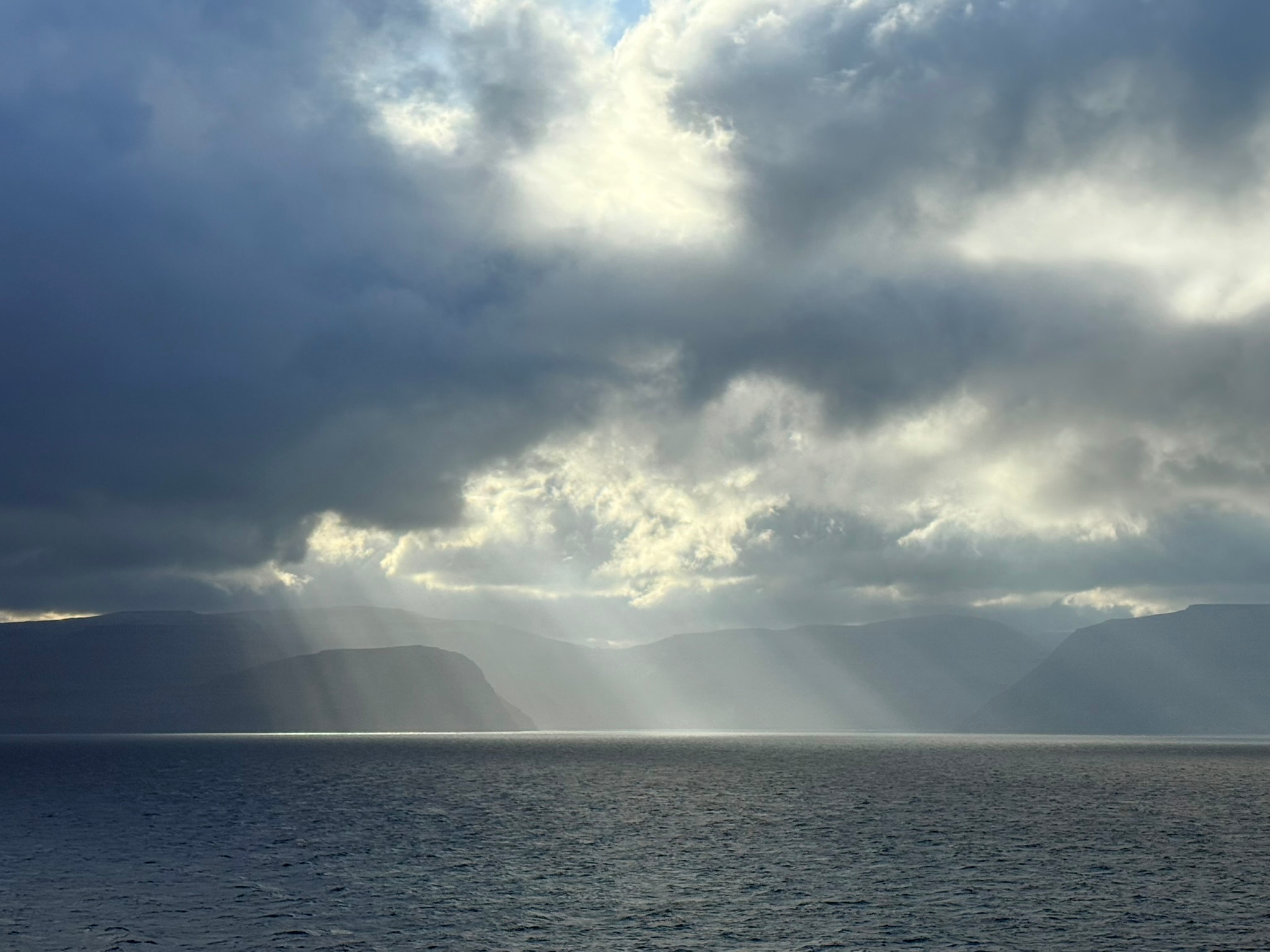
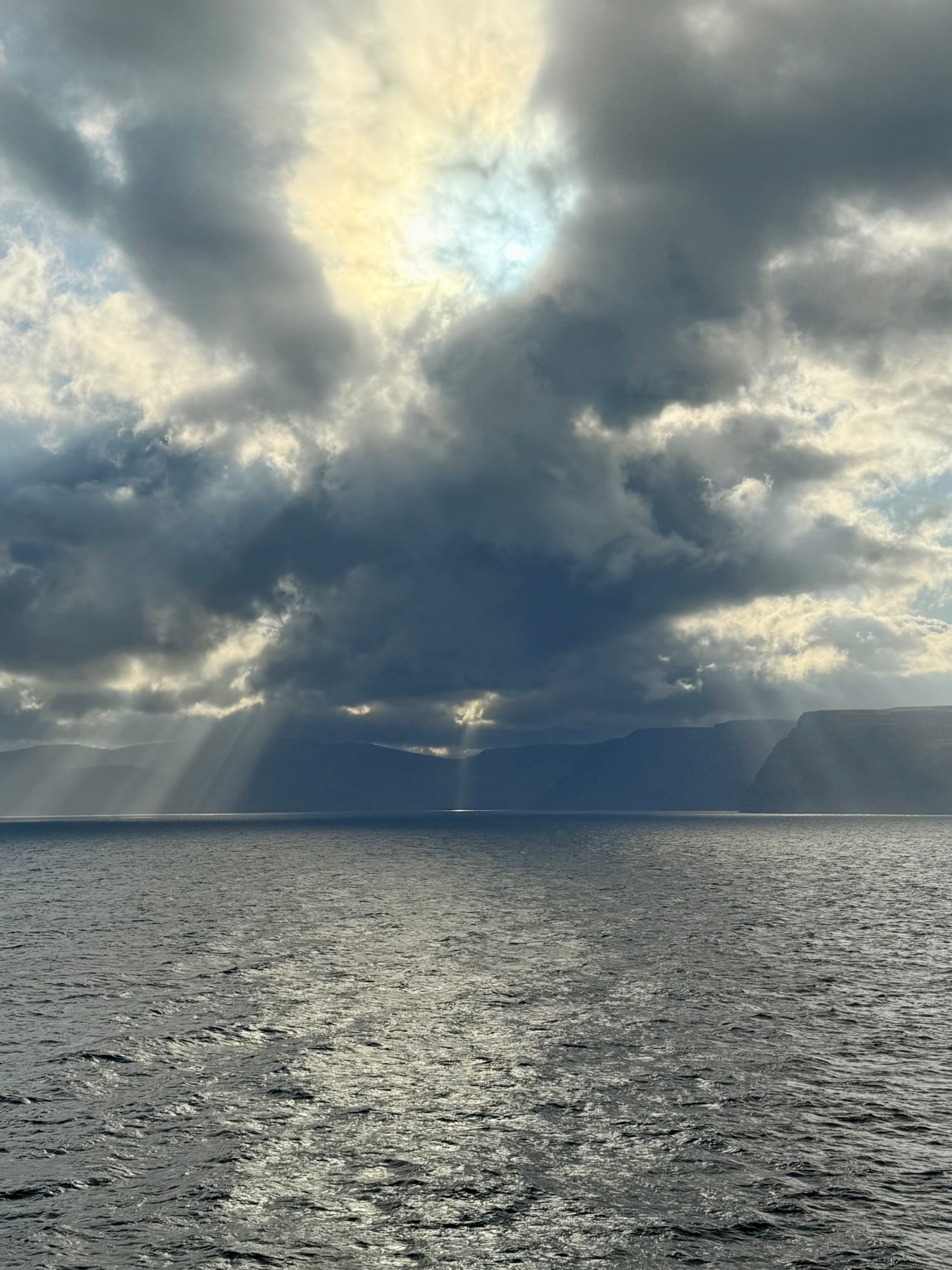
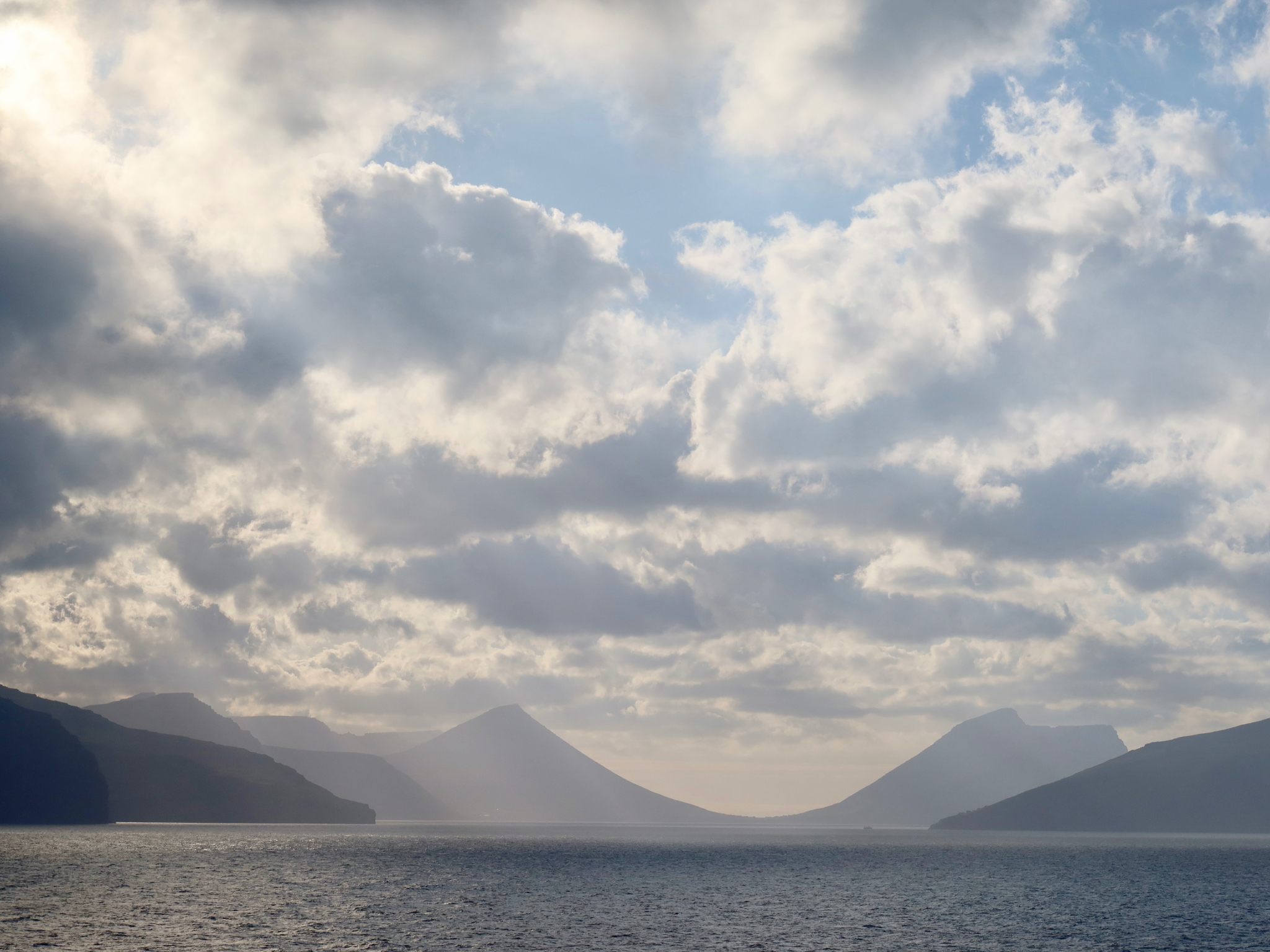
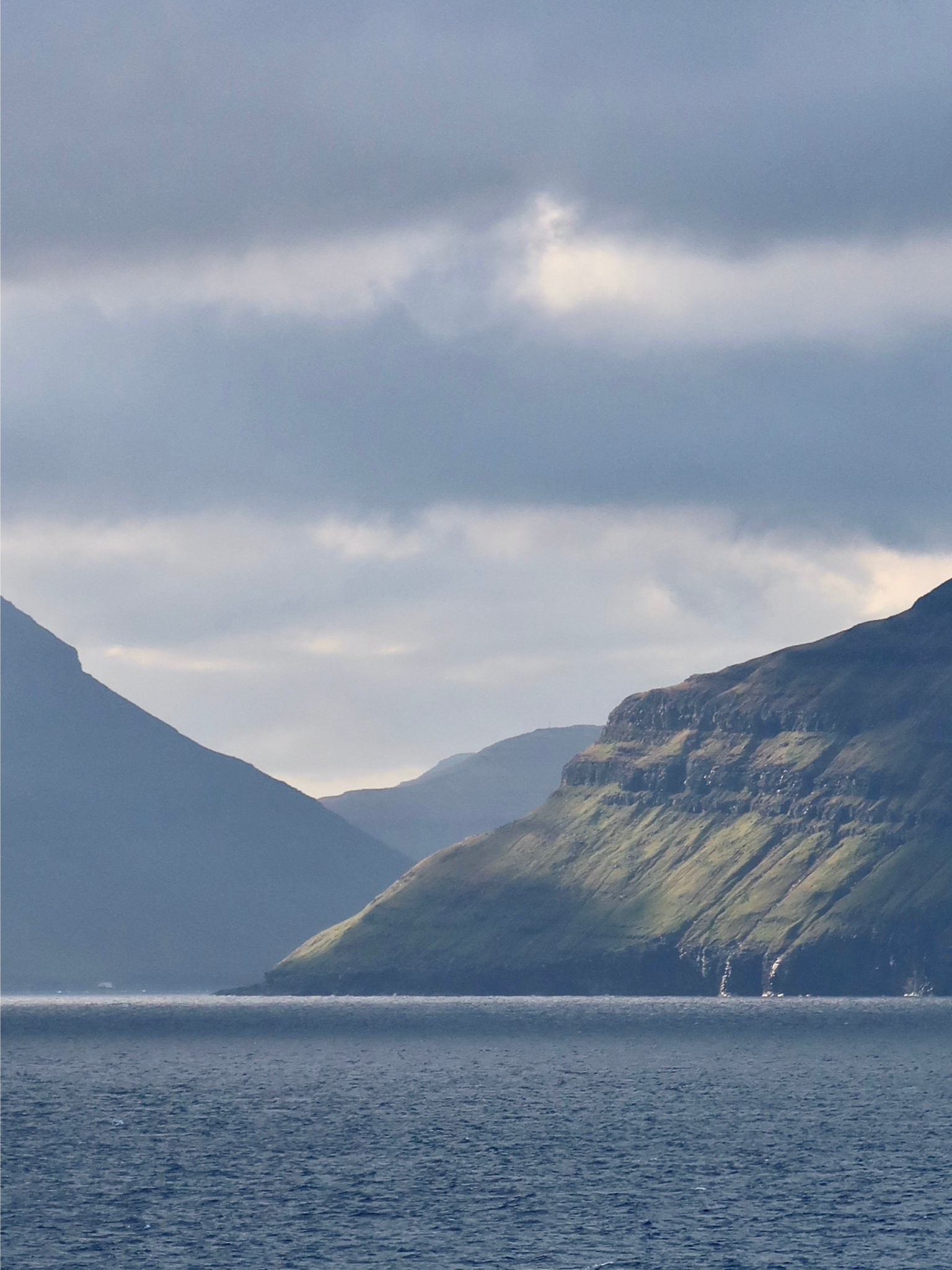
I stood on the veranda, champagne in hand, completely transfixed. I simply couldn’t peel myself away. The late afternoon sunlight began to filter through the heavy Atlantic clouds, casting a heavenly spotlight that set the verdant, emerald cliffs aglow. Watching those massive, ancient headlands tumble vertically into the churning white foam of the ocean was the perfect, silent coda to our magical day. The Faroe Islands may be difficult to reach, but once they’ve taken hold of you, they remain etched in your mind like the very basalt they’re built upon.
Last visited in May, 2025