
Reykjavik & the Golden Circle, Iceland
Exploring the Golden Circle and Beyond: A Cosmopolitan Surprise in Reykjavik
The theme of Iceland pleasantly surprising me continued the moment we arrived in Reykjavik. I’ll be honest: I didn’t expect such a cosmopolitan flair from a city of this size. Its ease of access to the raw, rugged beauty of the North Atlantic is simply unmatched. While some may call it a “flyover” destination, they couldn’t be more wrong.
On our first day, we disembarked the Silver Dawn for a private tour of the renowned Golden Circle. This iconic 190-mile circuit takes you through the heart of Iceland’s southern uplands, hitting four of the country’s most famous landmarks: Þingvellir National Park, the Geysir geothermal area, the mighty Gullfoss waterfall, and Kerið Crater.
I booked our journey through GetYourGuide, and we were met at the cruise terminal by a gentleman named Muhammed. A refugee from Syria who settled in Iceland years ago, Muhammed shared moving stories of his family’s adaptation from the subtropical, Mediterranean climate of Syria to the subarctic winds and dark winters of the North Atlantic. His gratitude for a new lease on life in this peaceful corner of the world set a poignant tone for our adventure.
Walking Between Tectonic Plates at Langistígur and Öxarárfoss
After just fifteen minutes traveling east on the auto route out of Reykjavik, the urban landscape vanished, replaced by emerald greenery, rushing snowmelt, and mountains that seemed to rise out of the earth with a jagged intensity.
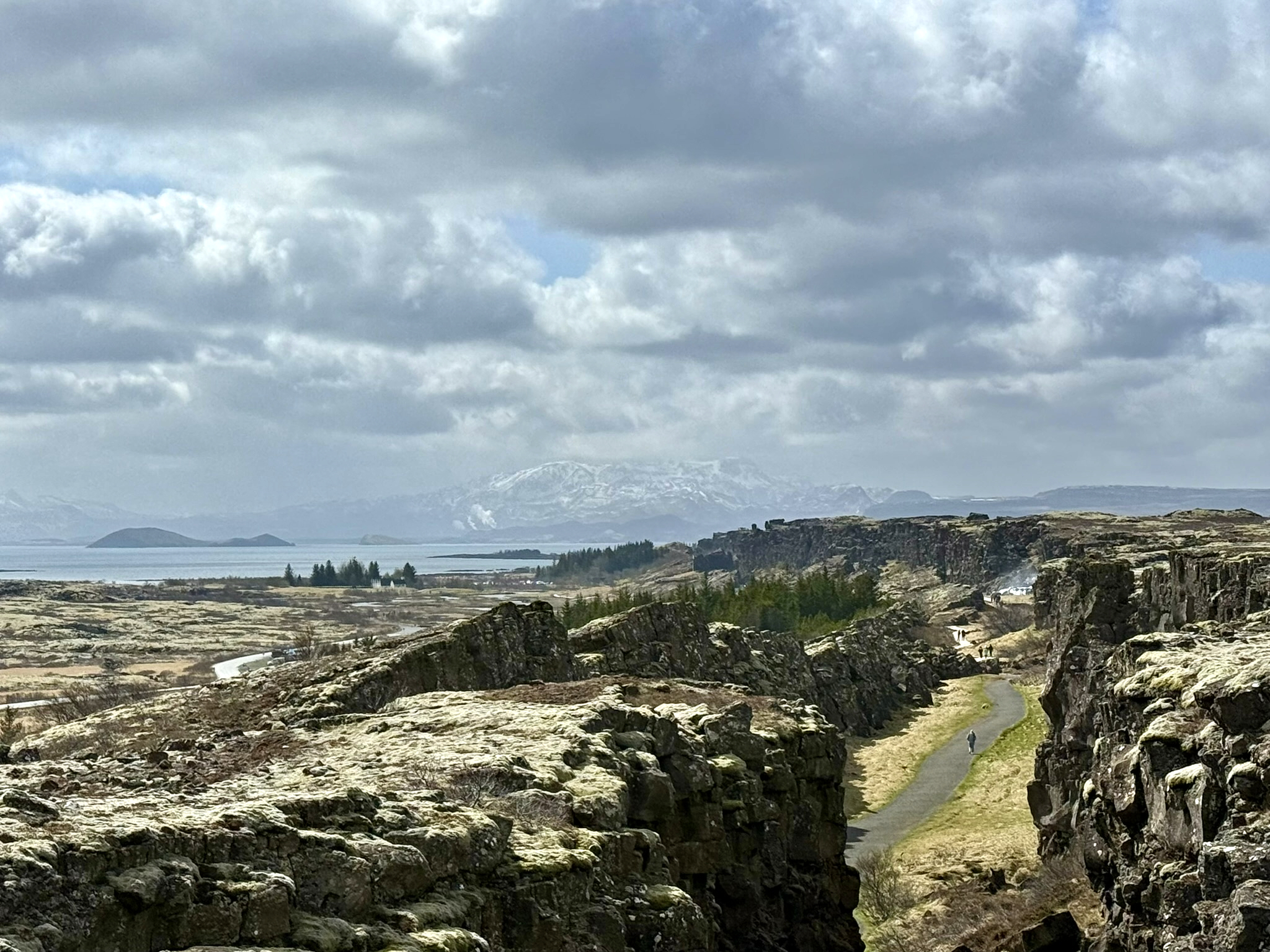
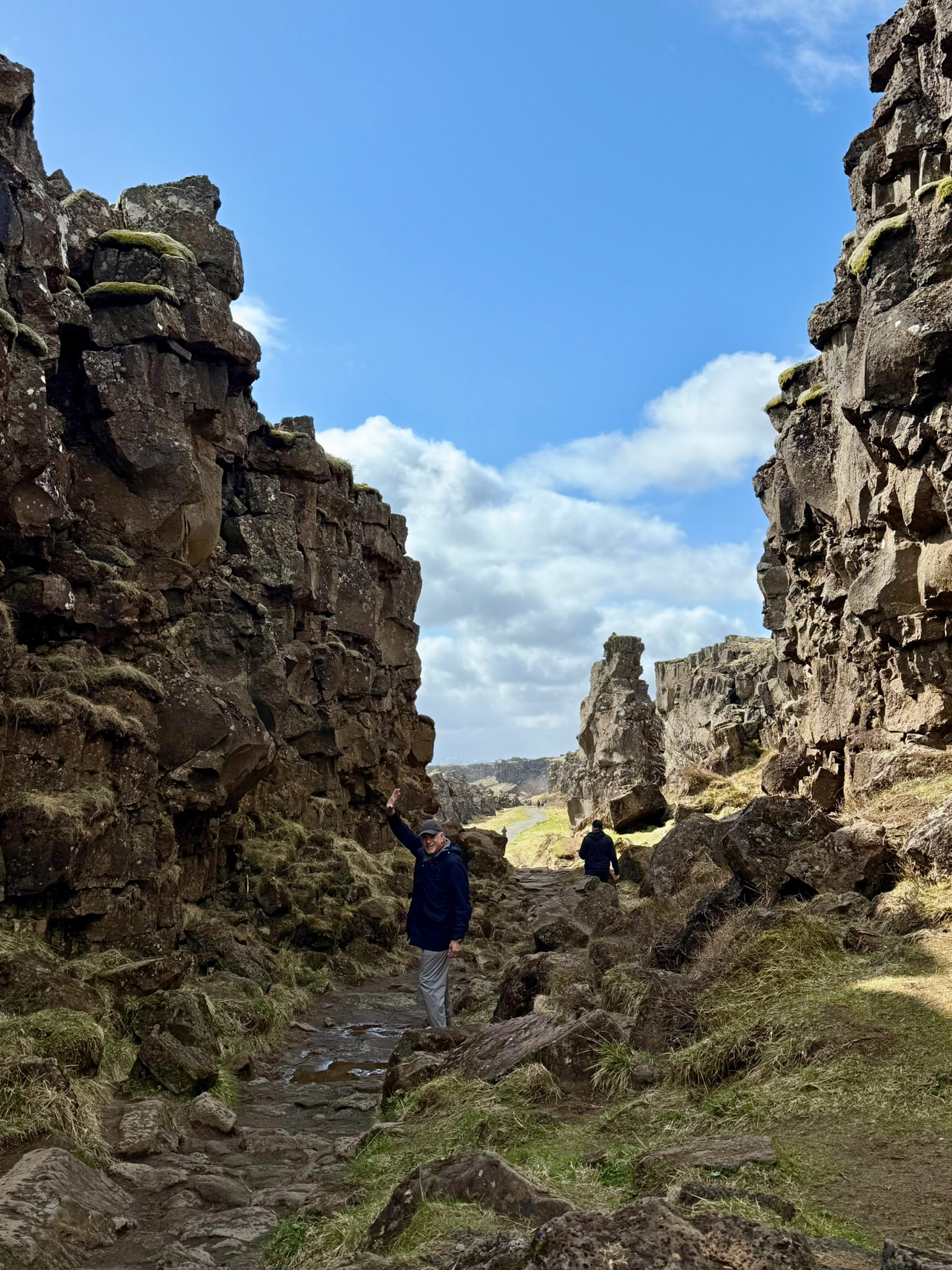
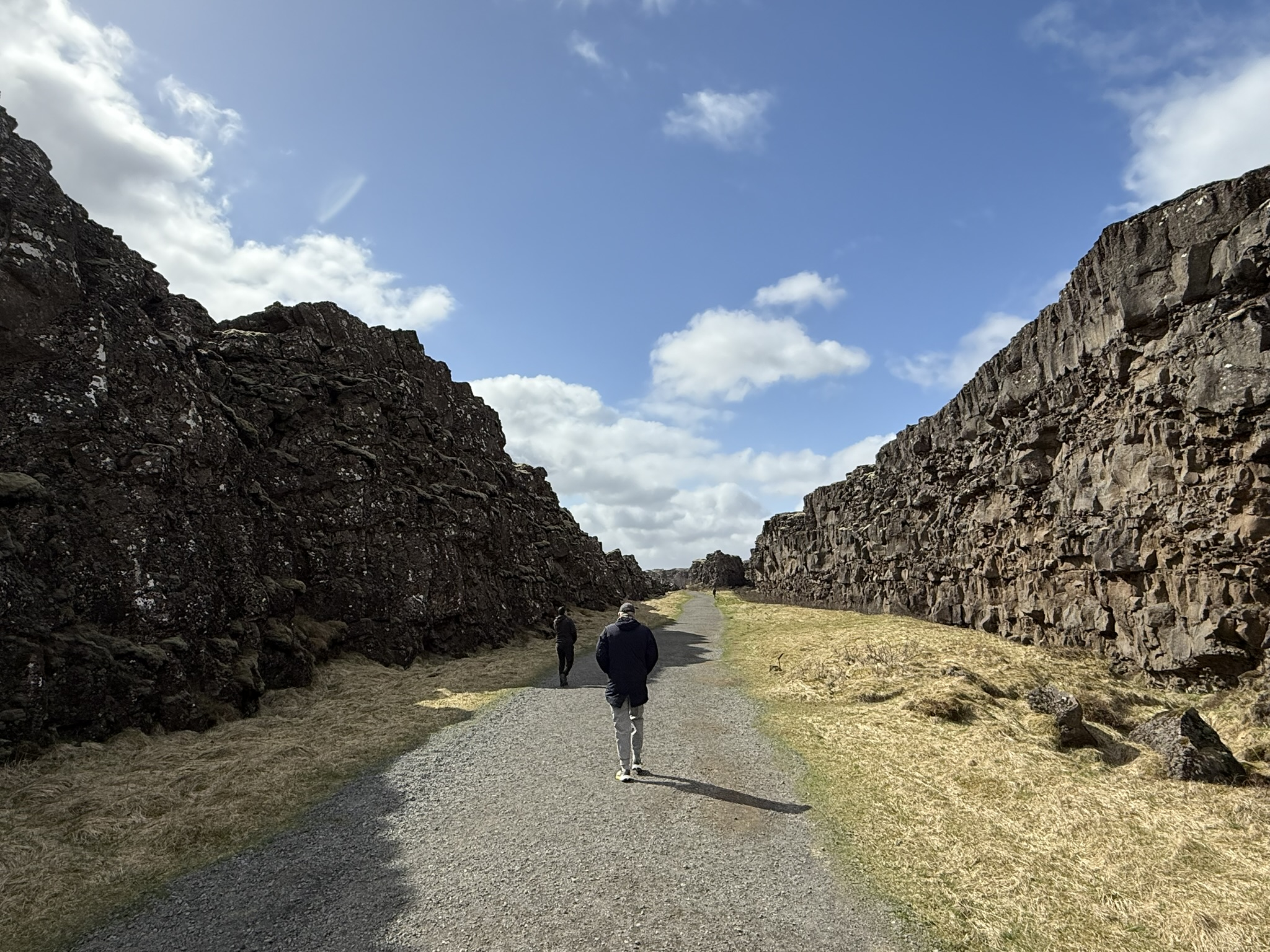
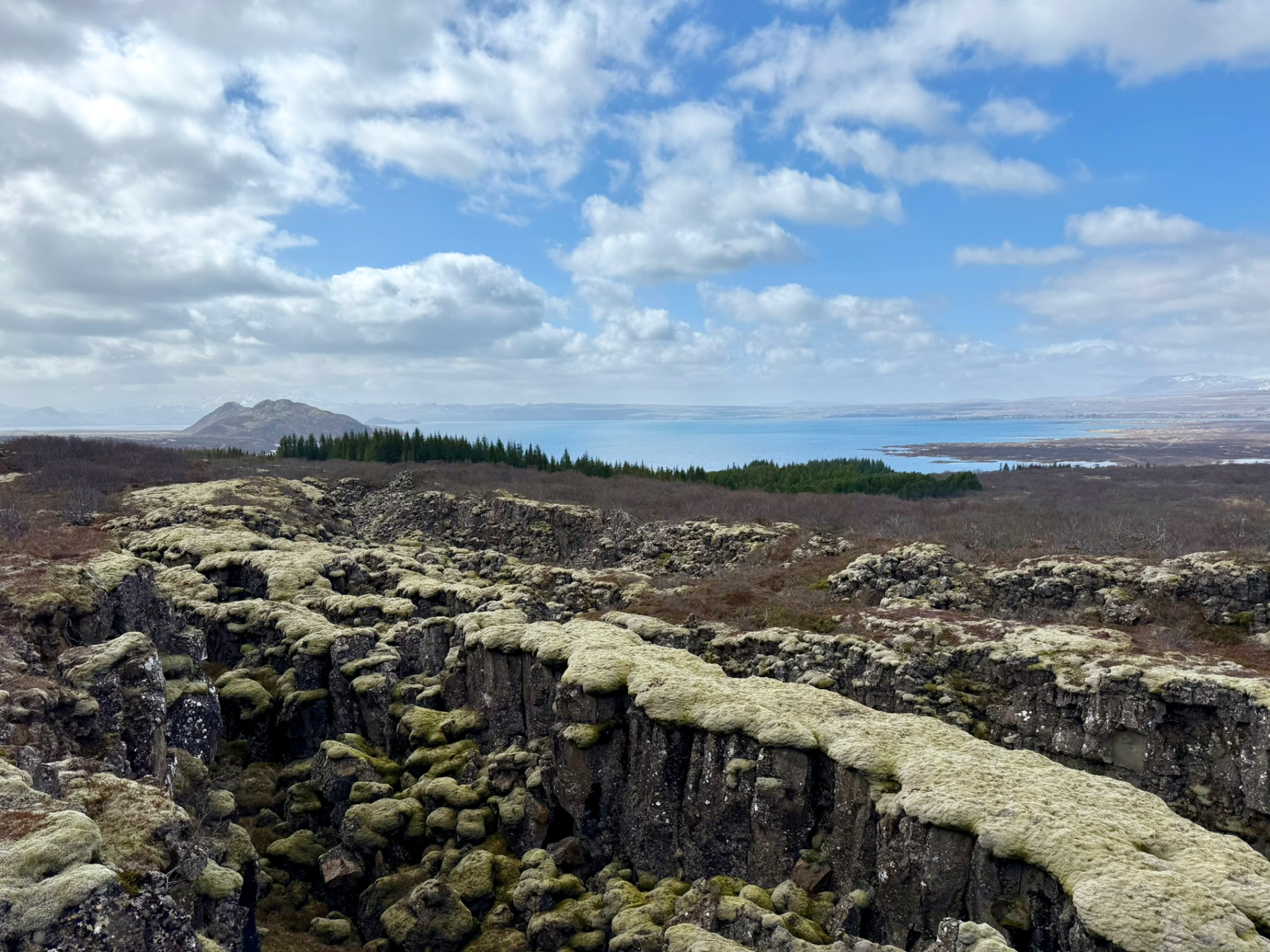
Our first stop was Langistígur, a historic path in Thingvellir National Park. This isn’t just a hiking trail; it’s a geological miracle located in a rift valley where the North American and Eurasian tectonic plates are literally pulling apart. Muhammed wisely advised us to stick to the designated path. In such an active tectonic zone, it’s often impossible to tell if your next step is solid ground or a deep fissure hidden beneath the moss.
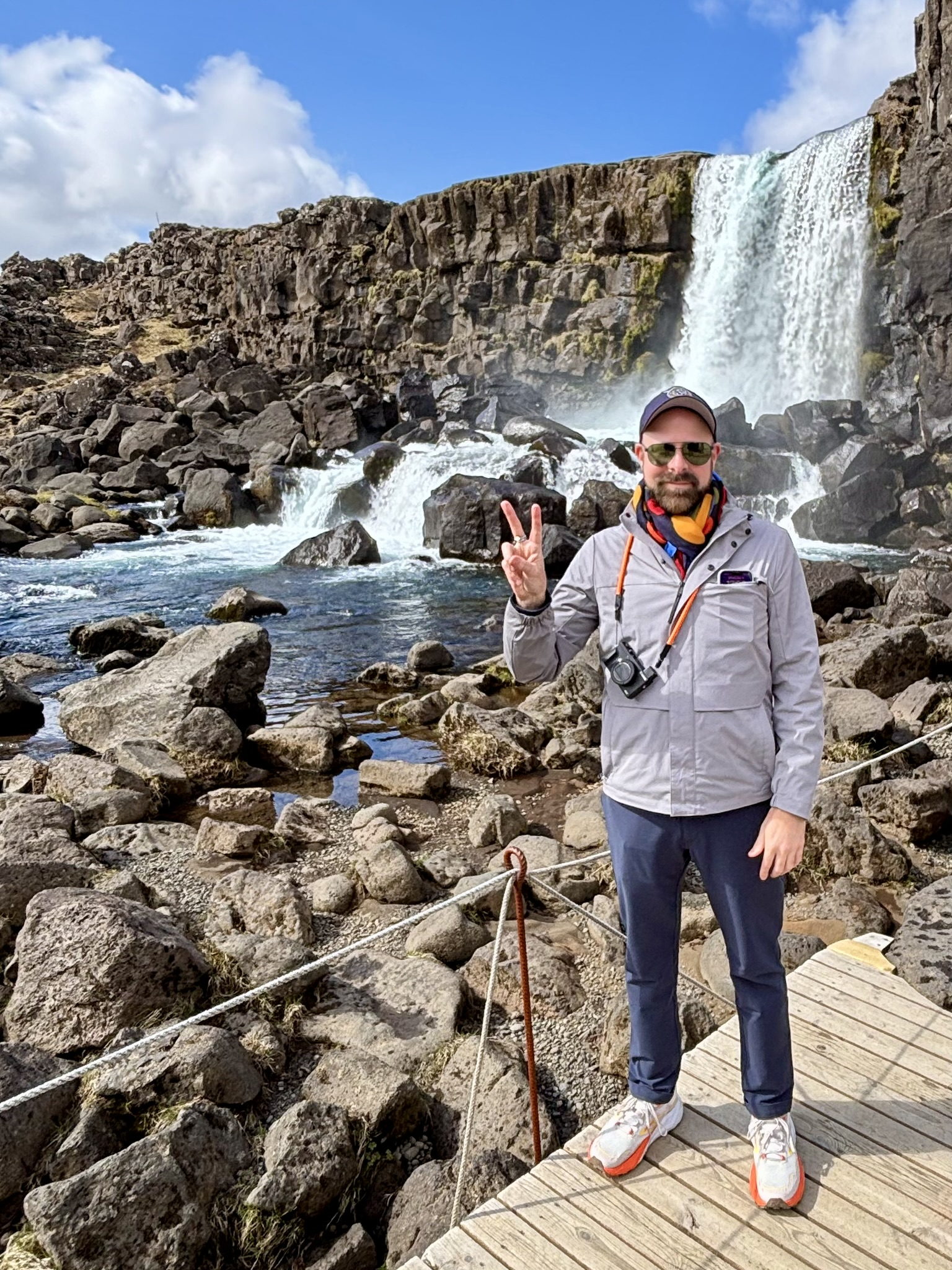
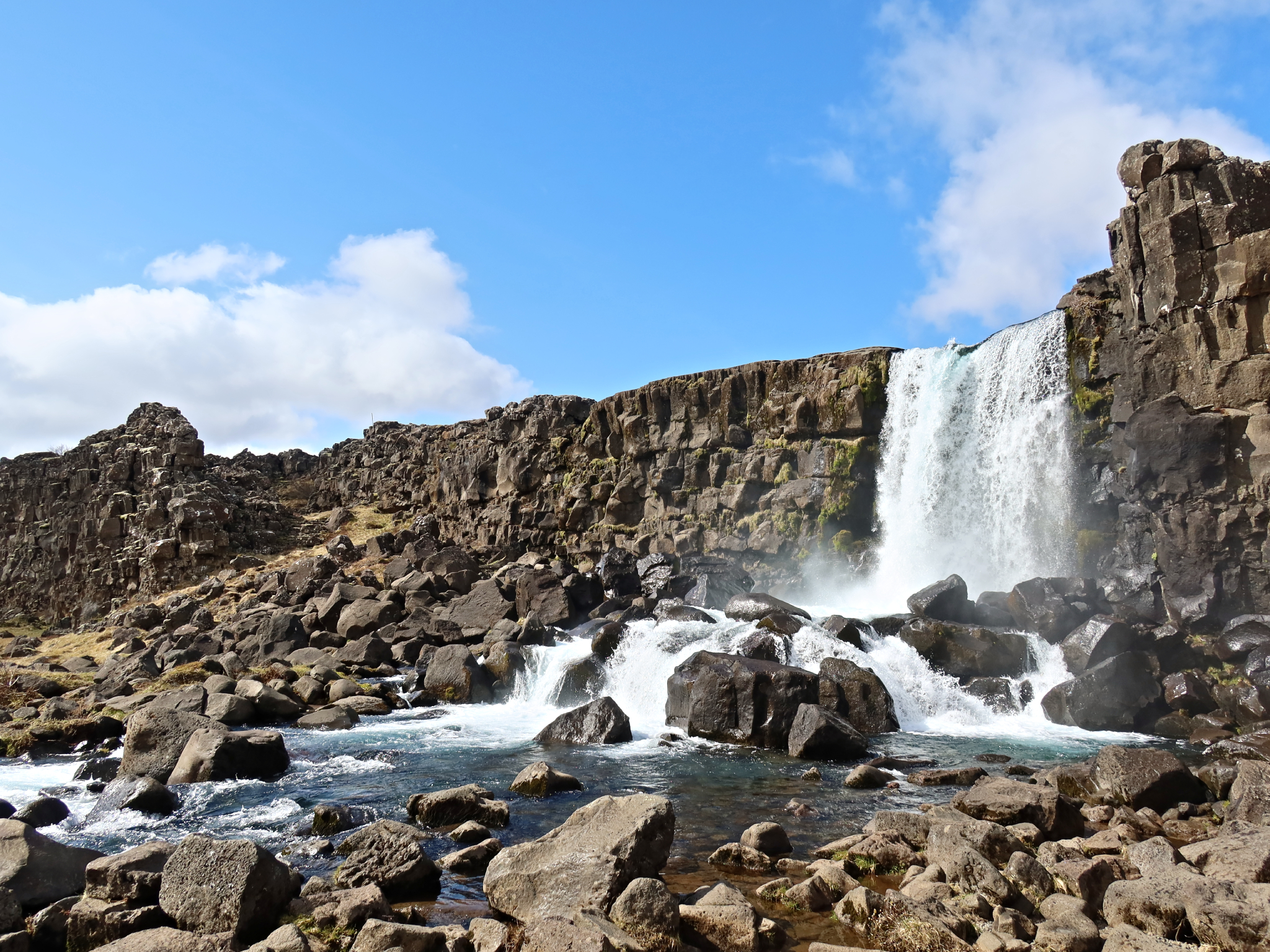
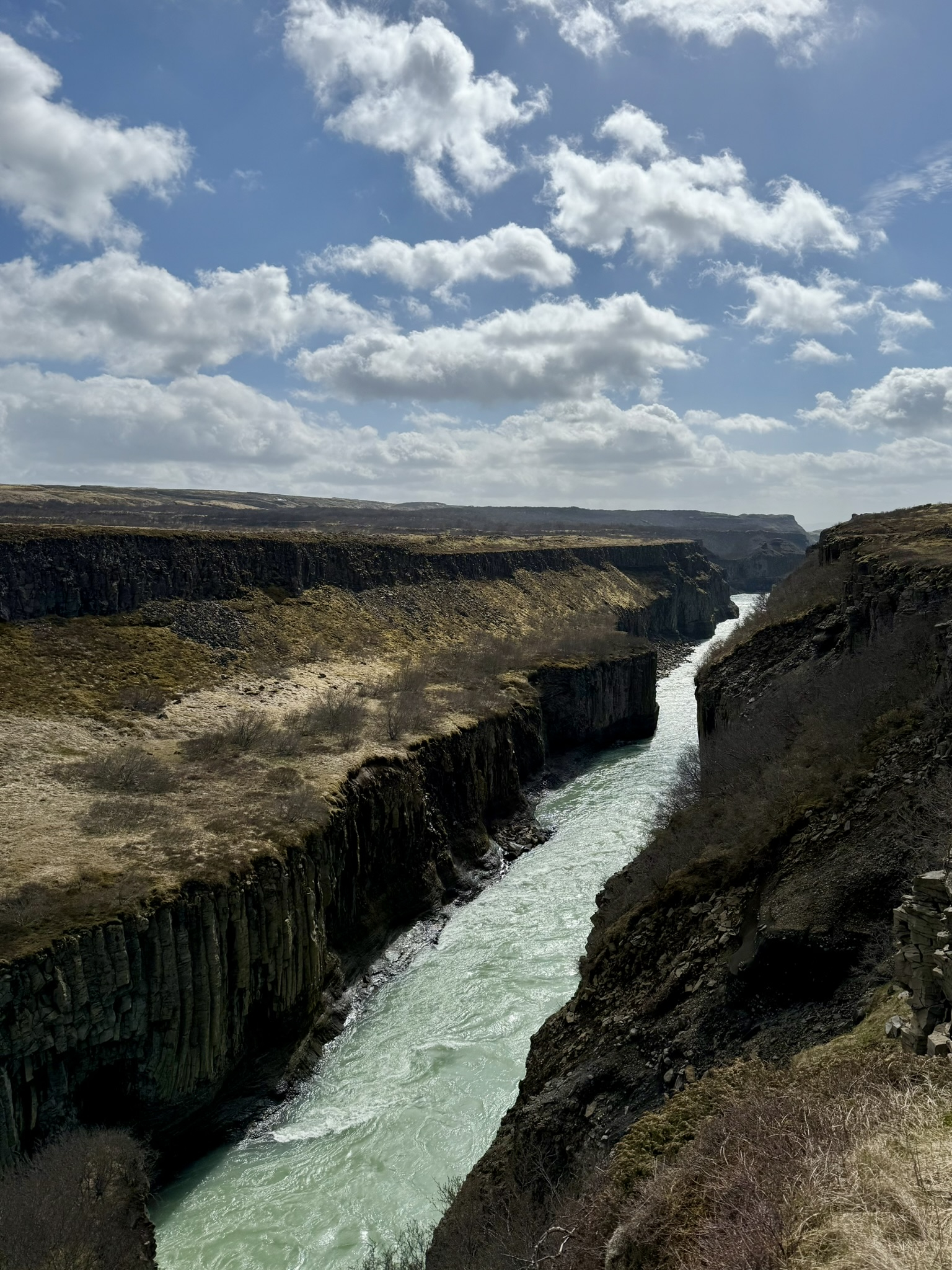
We walked through the Almannagjá Gorge, flanked by towering basalt cliffs that look like the fortress walls of a lost civilization. At the path’s end, we reached Öxarárfoss. This striking waterfall drops about 43 feet over the cliffs. Interestingly, historians believe the river was diverted here centuries ago by early Icelanders to provide water for the Alþingi (parliament). Surging with recent snowmelt, it was the first of many arresting waterfalls we would encounter.
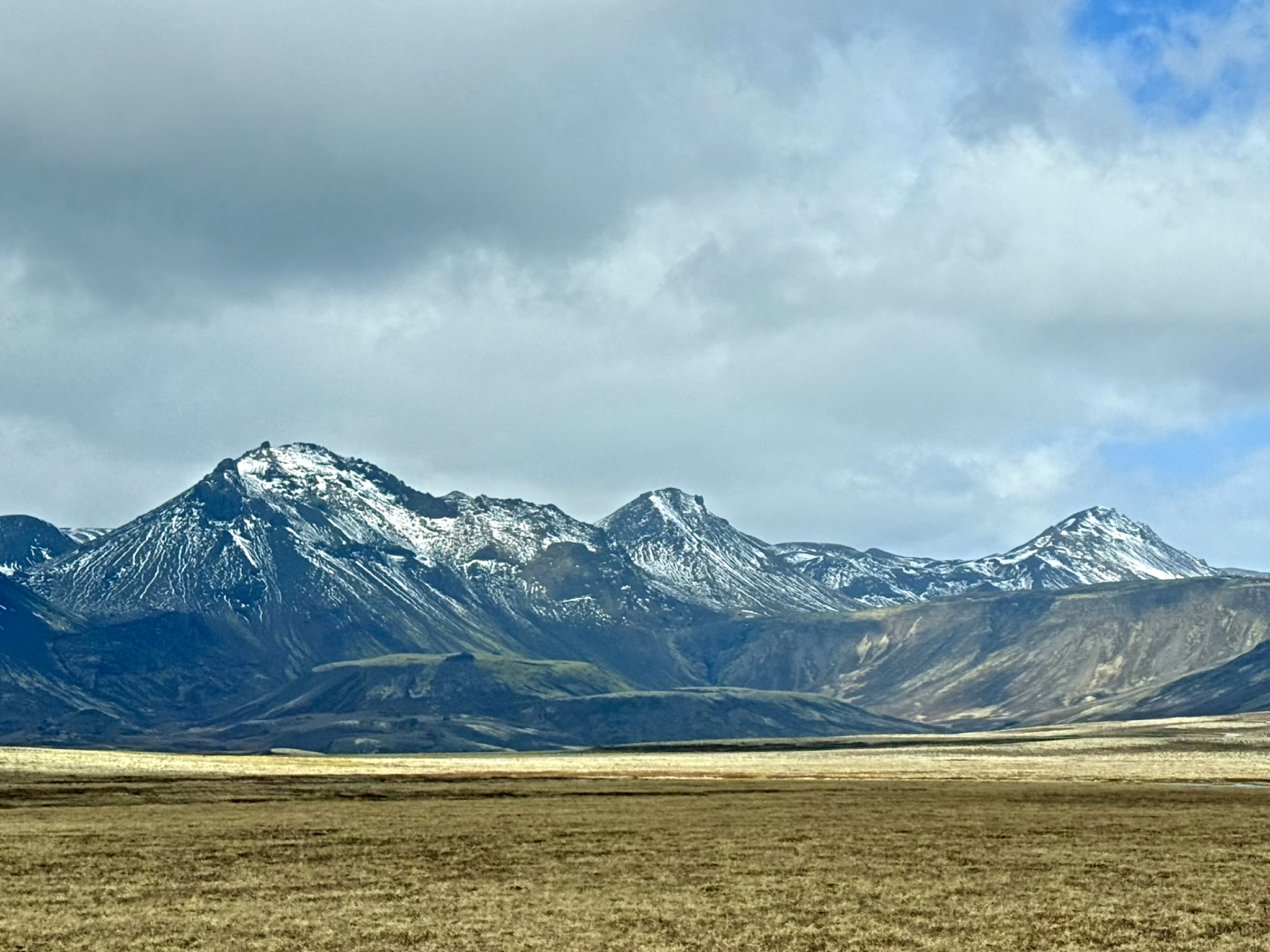
From the Hrafnagjá Observation Deck to the Haukadalur Geysers
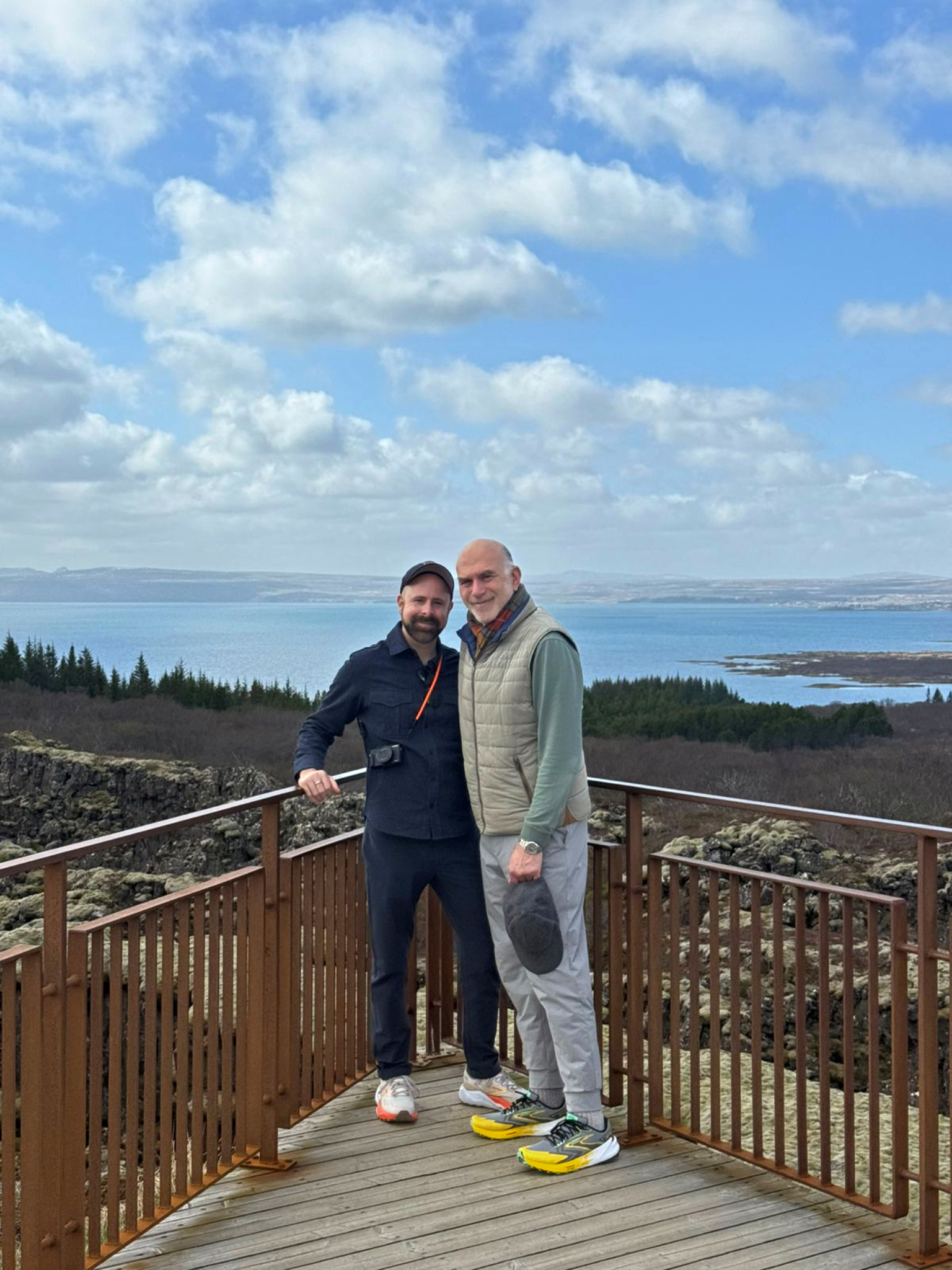
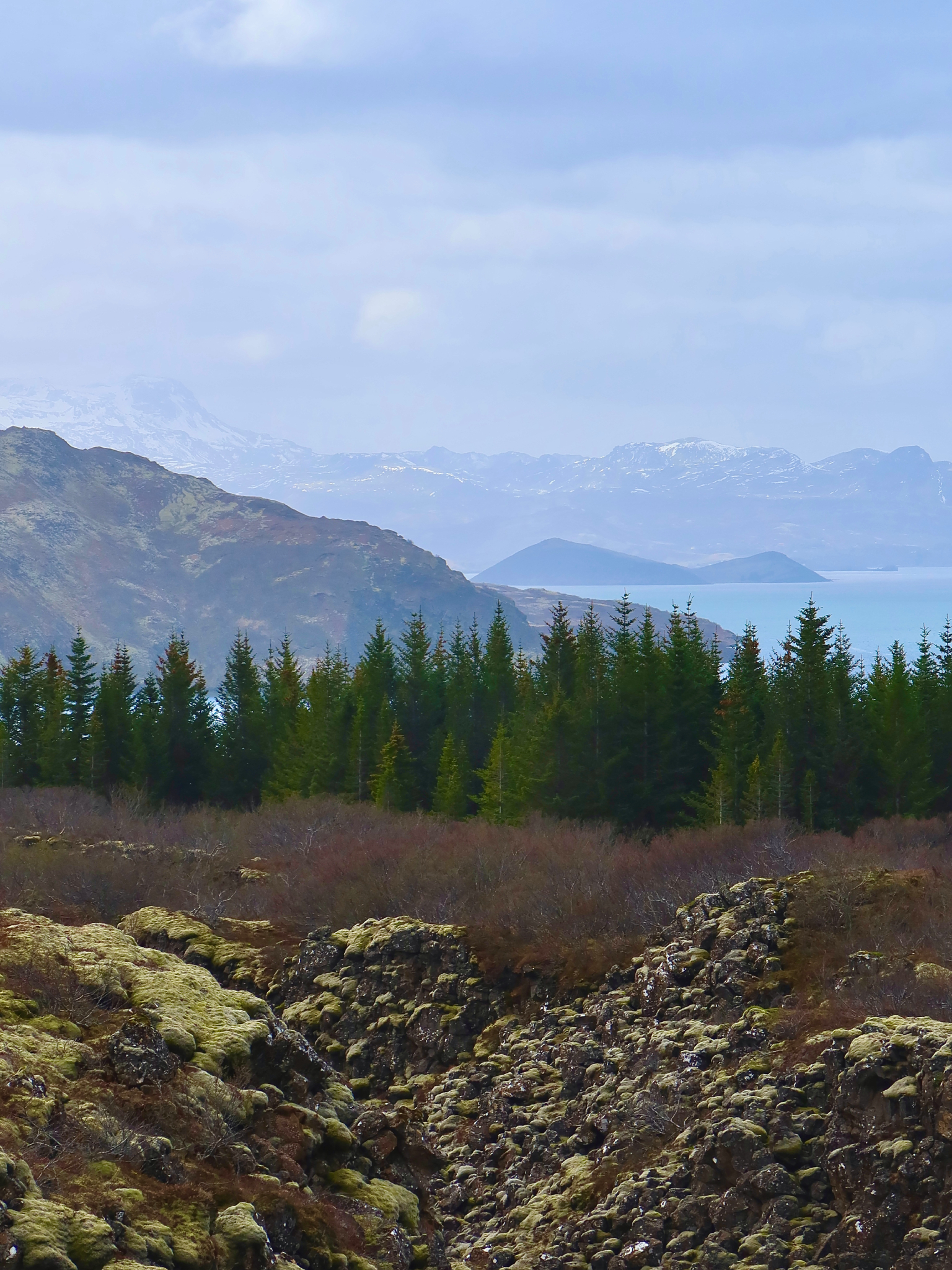
We continued to the Hrafnagjá Observation Deck, which offers a panoramic view of Thingvallavatn, the largest natural lake in Iceland. The scale of the rift valley from this vantage point is breathtaking. After posing for photos against the ethereal scenery, we hit the Laugarvatnsvegur – the scenic corridor of the Golden Circle – passing countless roadside cascades that dazzled in the midday sun.
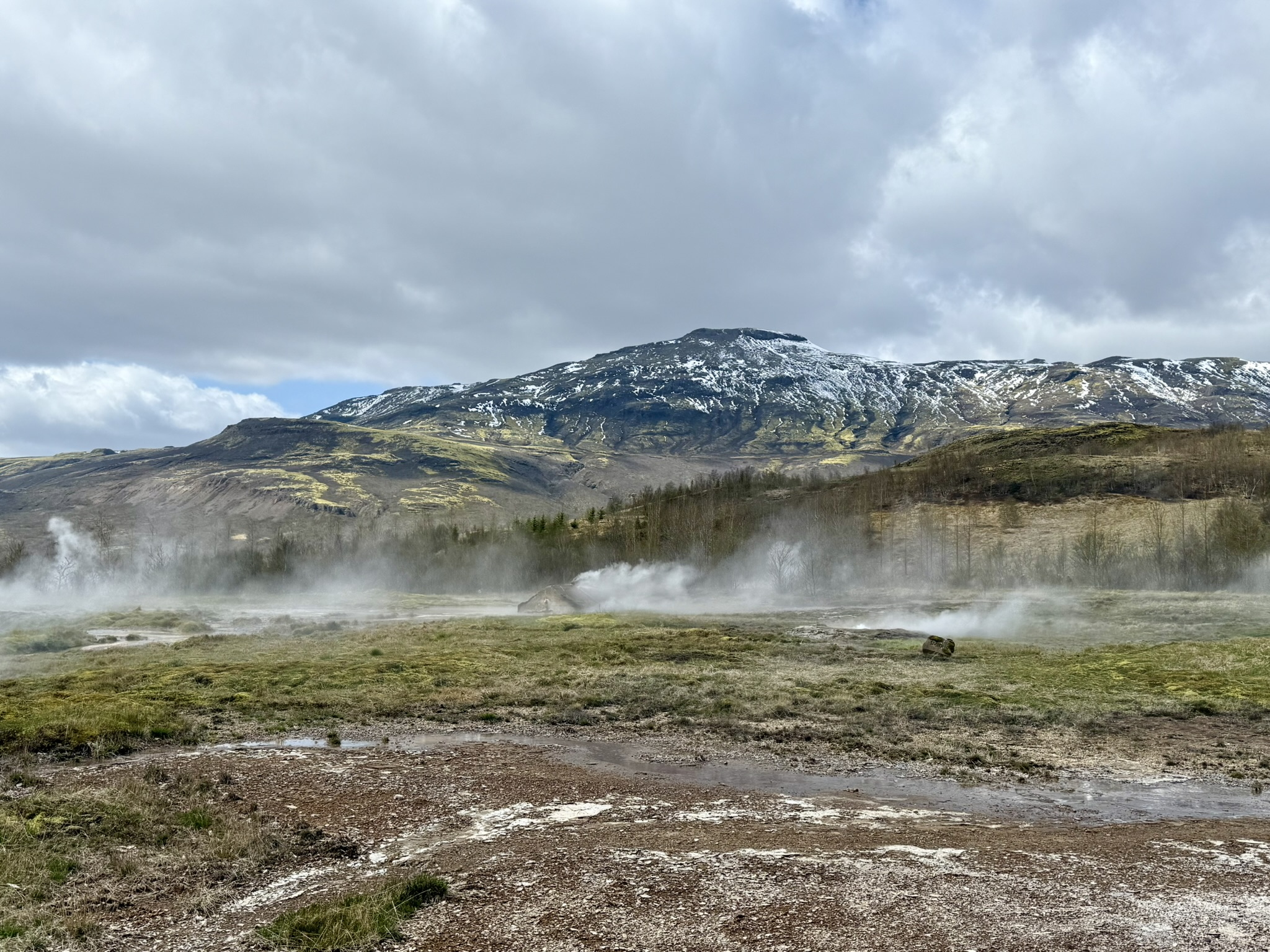
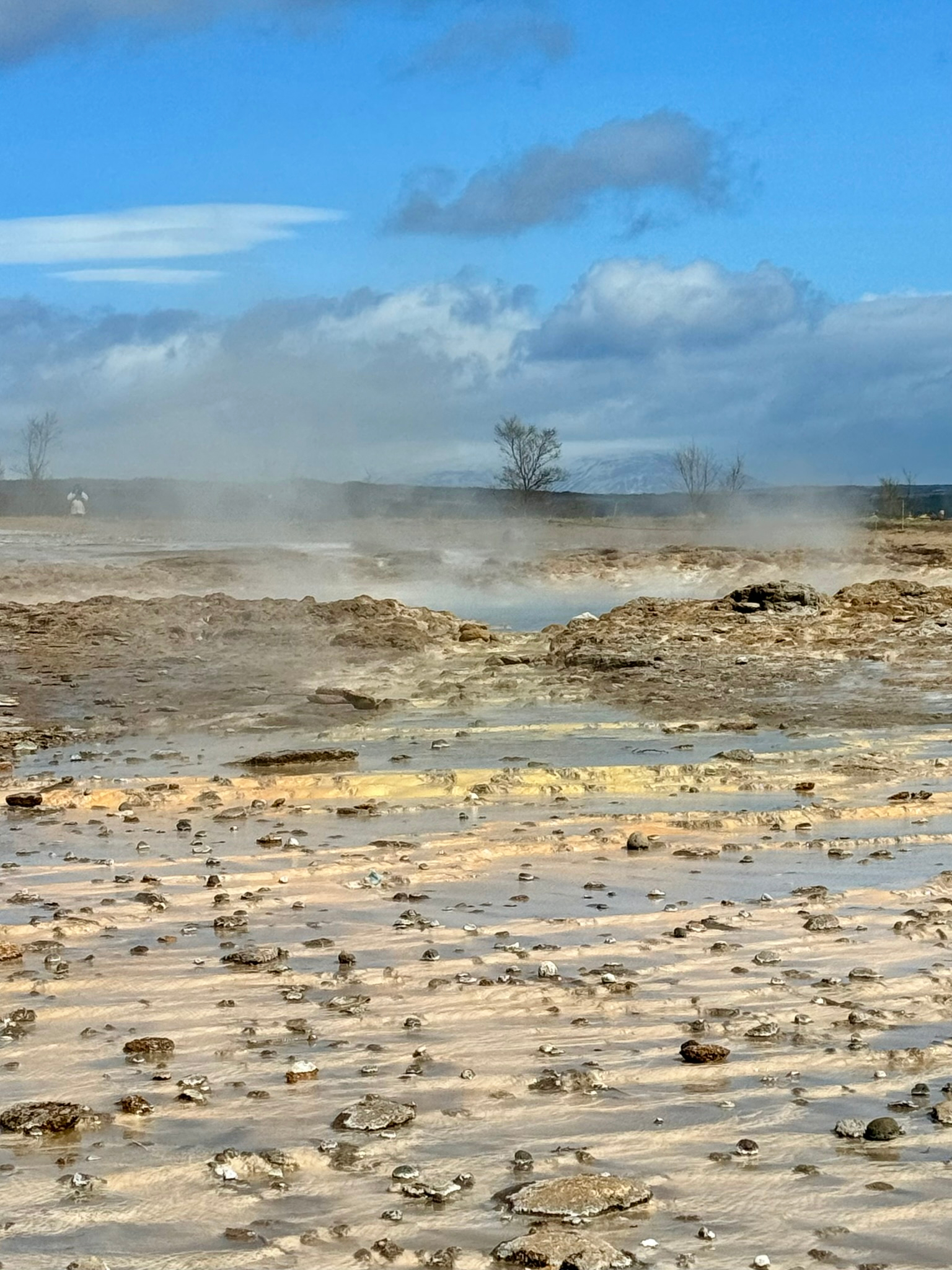
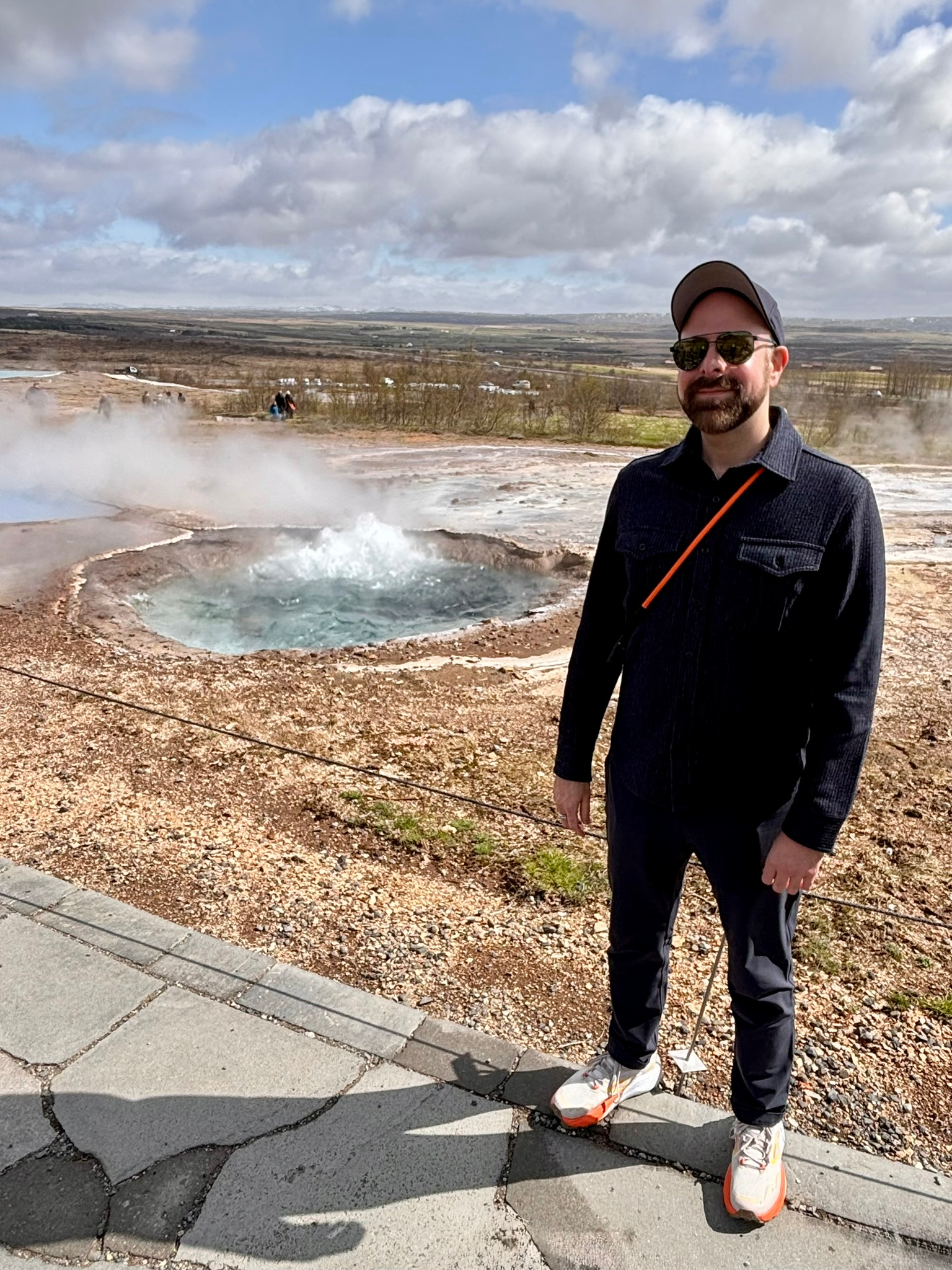
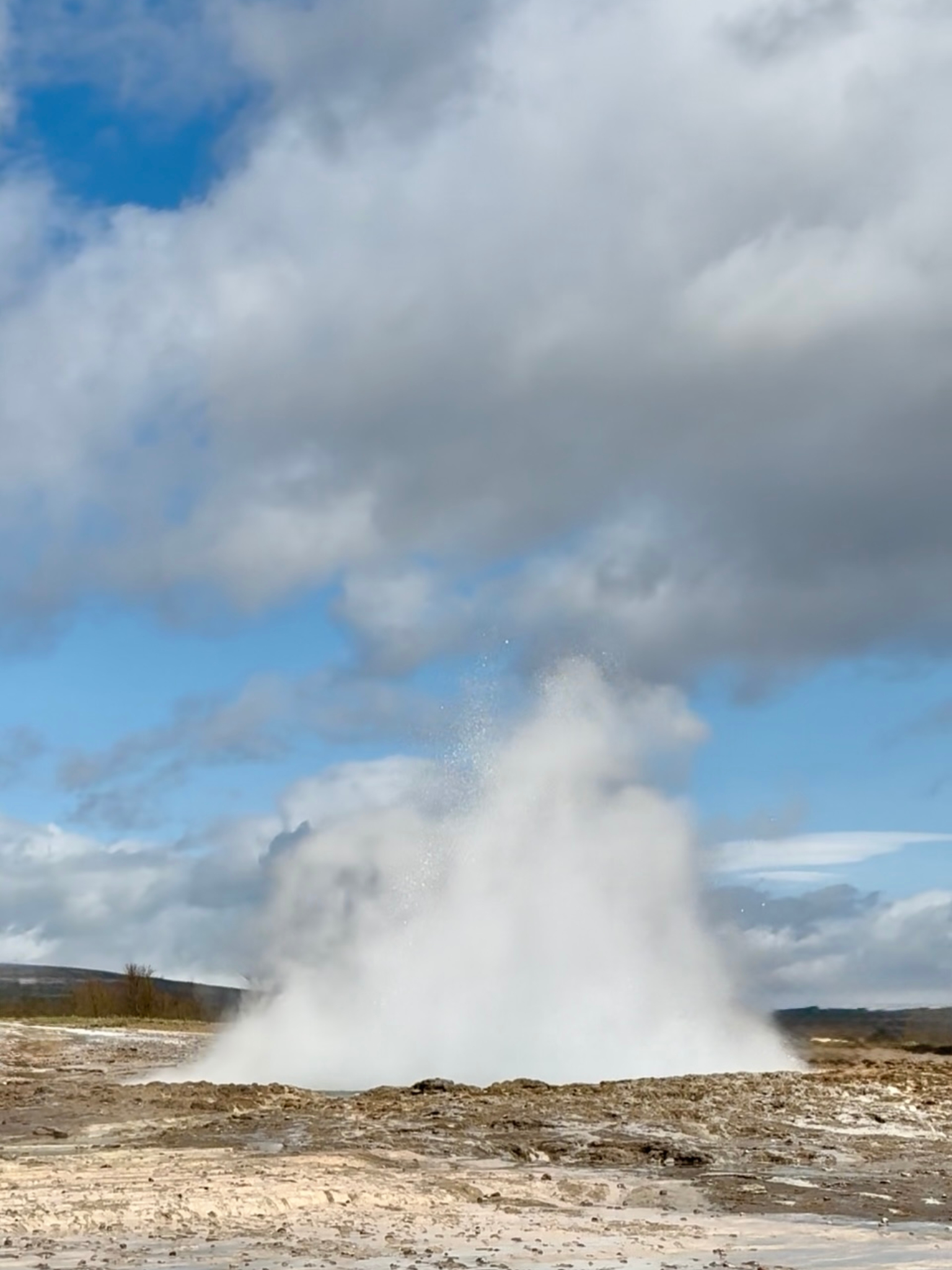
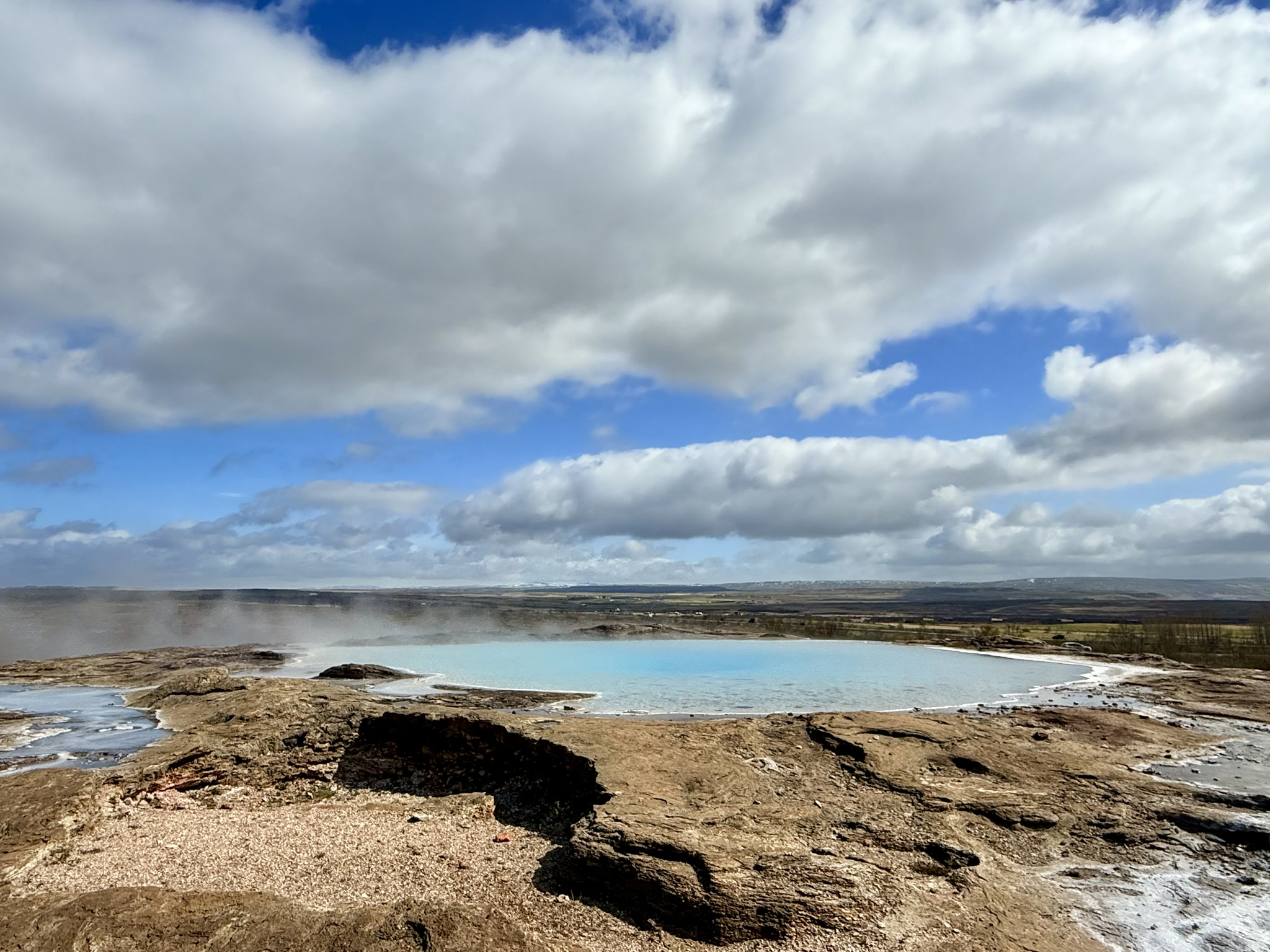
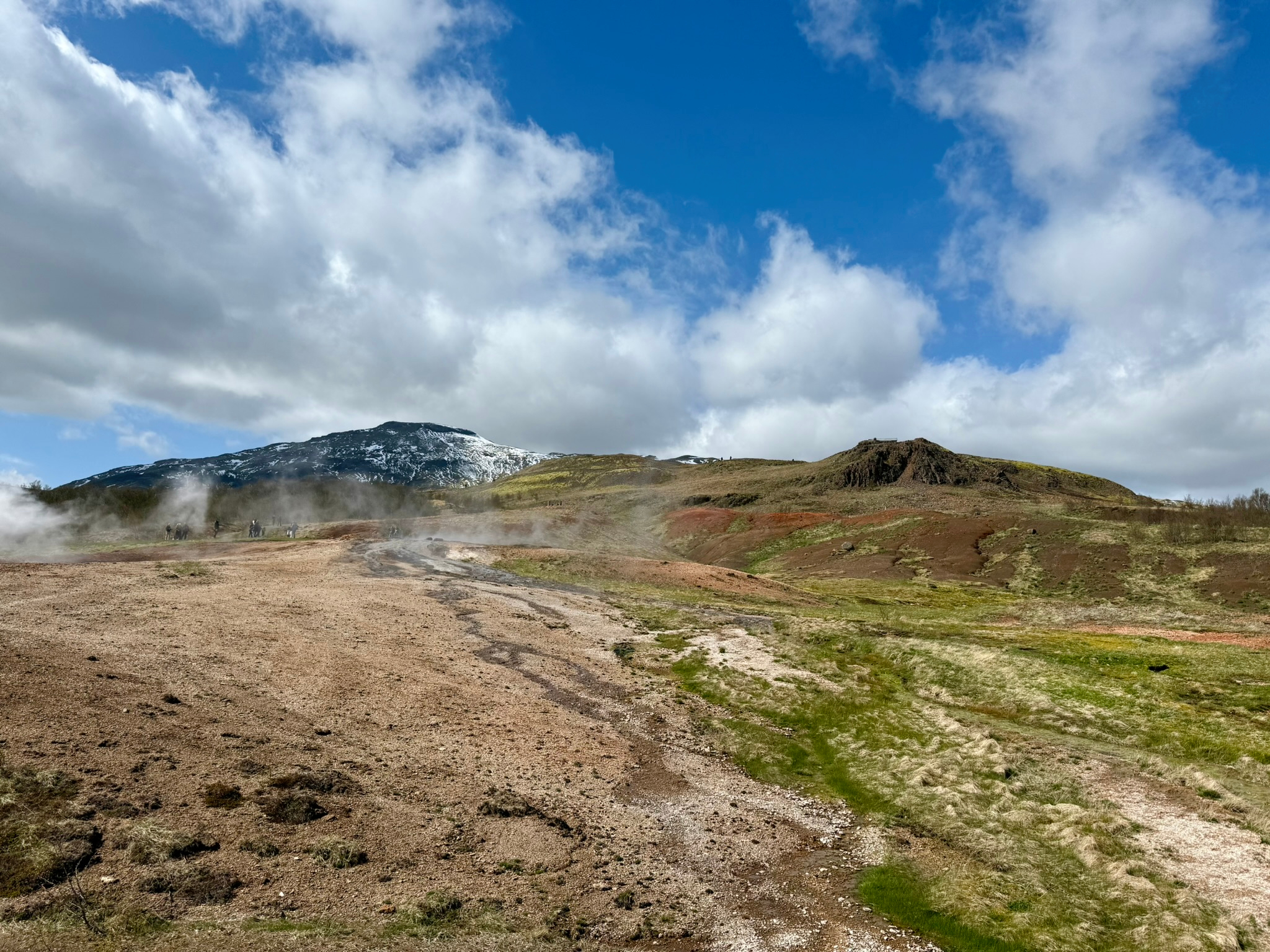
Thirty minutes later, we arrived at the Geysir Geothermal Area. This is a landscape of extremes, filled with mud pots, fumaroles, and the famous Strokkur Geyser, which reliably explodes into the air every few minutes. Before exploring, we enjoyed a surprisingly gourmet lunch at the Geysir Centre Kantina – a velvety vegetable bisque, crusty fresh bread, and a crisp salad.
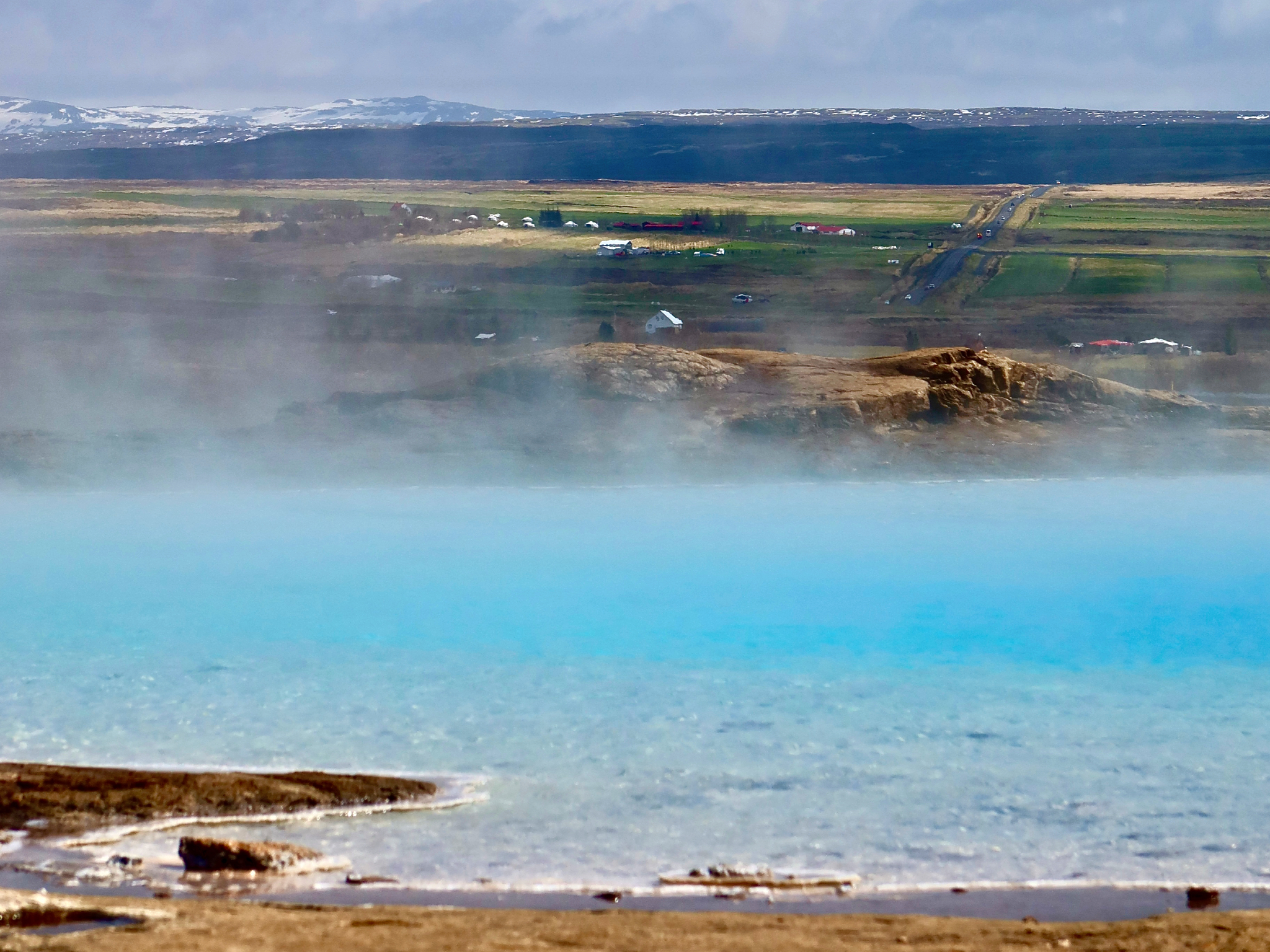
Walking through the geothermal loop is an otherworldly experience. Between the gurgling pools of sulfuric liquid and the roar of Strokkur, you truly feel the heat of the earth beneath your feet. The vibrant turquoise of the thermal pools contrasts sharply against the rugged terrain, creating a palette that feels almost extraterrestrial. Standing there, one can’t help but feel small in the face of such ancient, geothermal power.
The Thundering Majesty of Gullfoss and the Colors of Kerið Crater
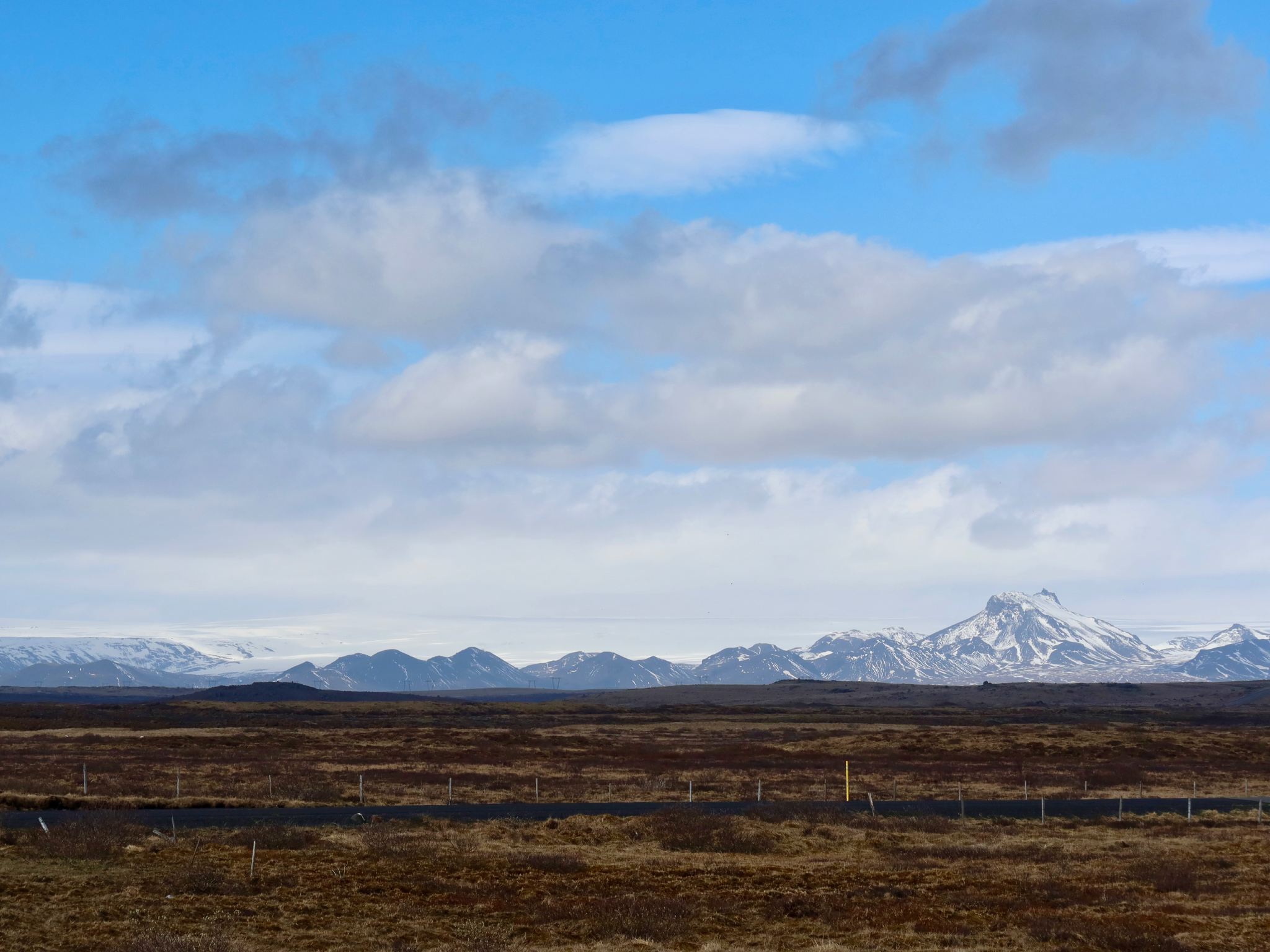
A bit further up the road, we reached Gullfoss, the “Golden Falls.” Before descending into the ravine, we paused to look north at Langjökull, Iceland’s second-largest ice cap, gleaming white in the distance. The sheer vastness of the glacier made the horizon feel infinite, a stark reminder of the ancient ice that feeds the thundering river below.
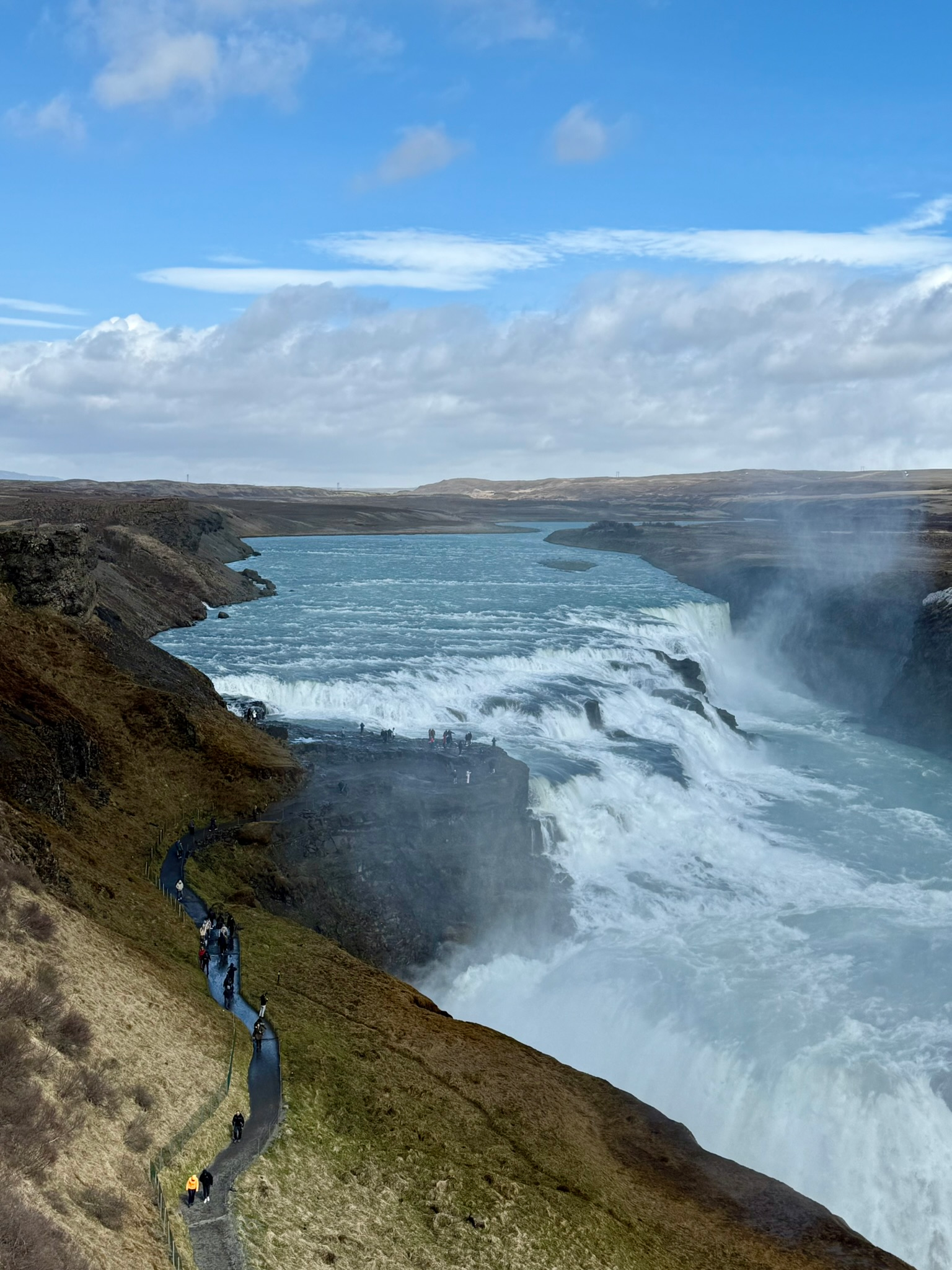
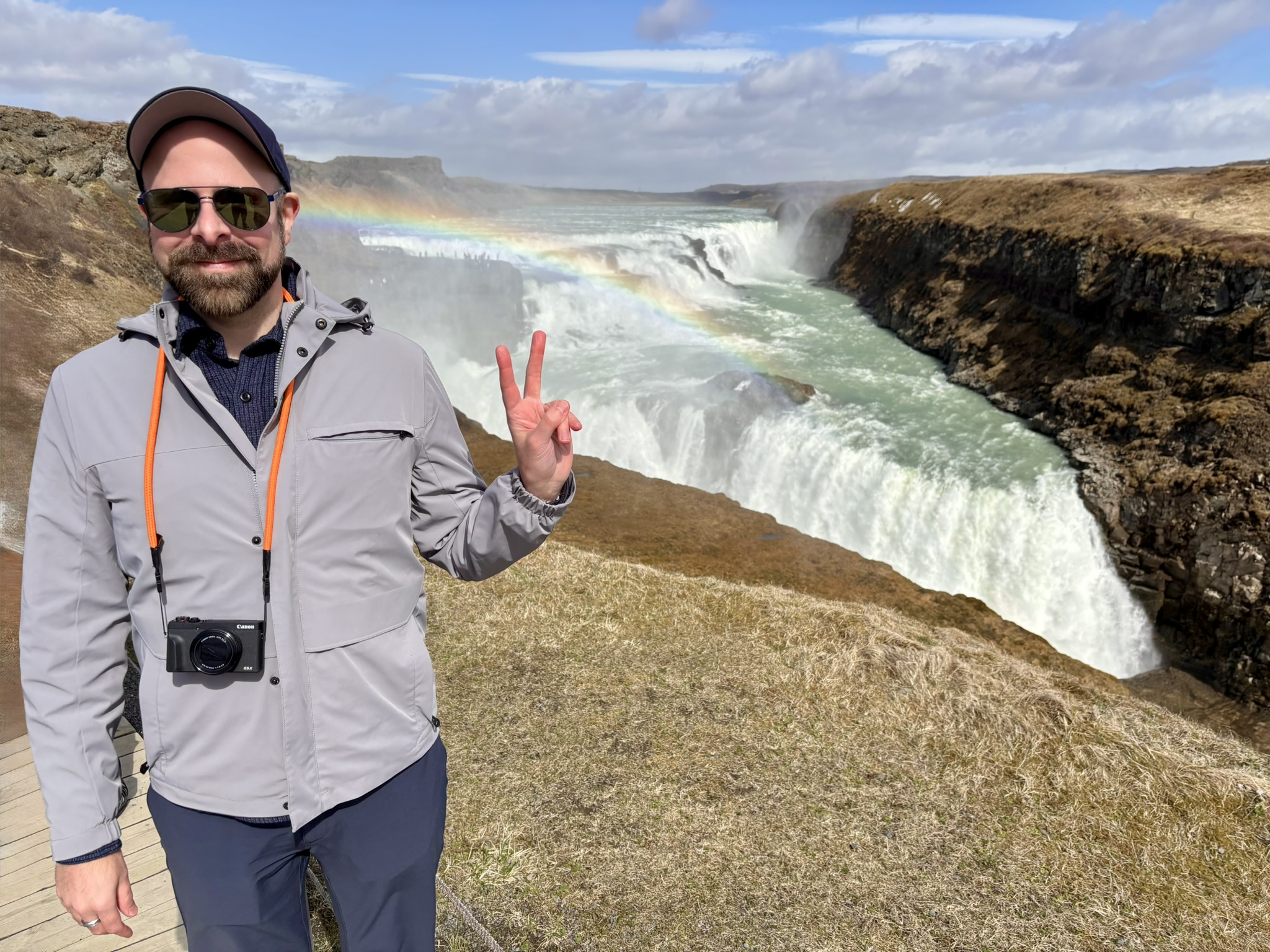
As we followed the path down to the upper lookout, the sheer power of the Hvítá River was deafening. Thousands of tons of glacial meltwater plummeted into the abyss, creating a permanent cloud of spray that felt like a localized rainstorm. Just as we arrived, the sun broke through the clouds, casting a perfect rainbow across the mist that arched directly into the churning white foam below. It was a fleeting, cinematic moment of brilliance – a scene straight out of a storybook that felt curated just for us.
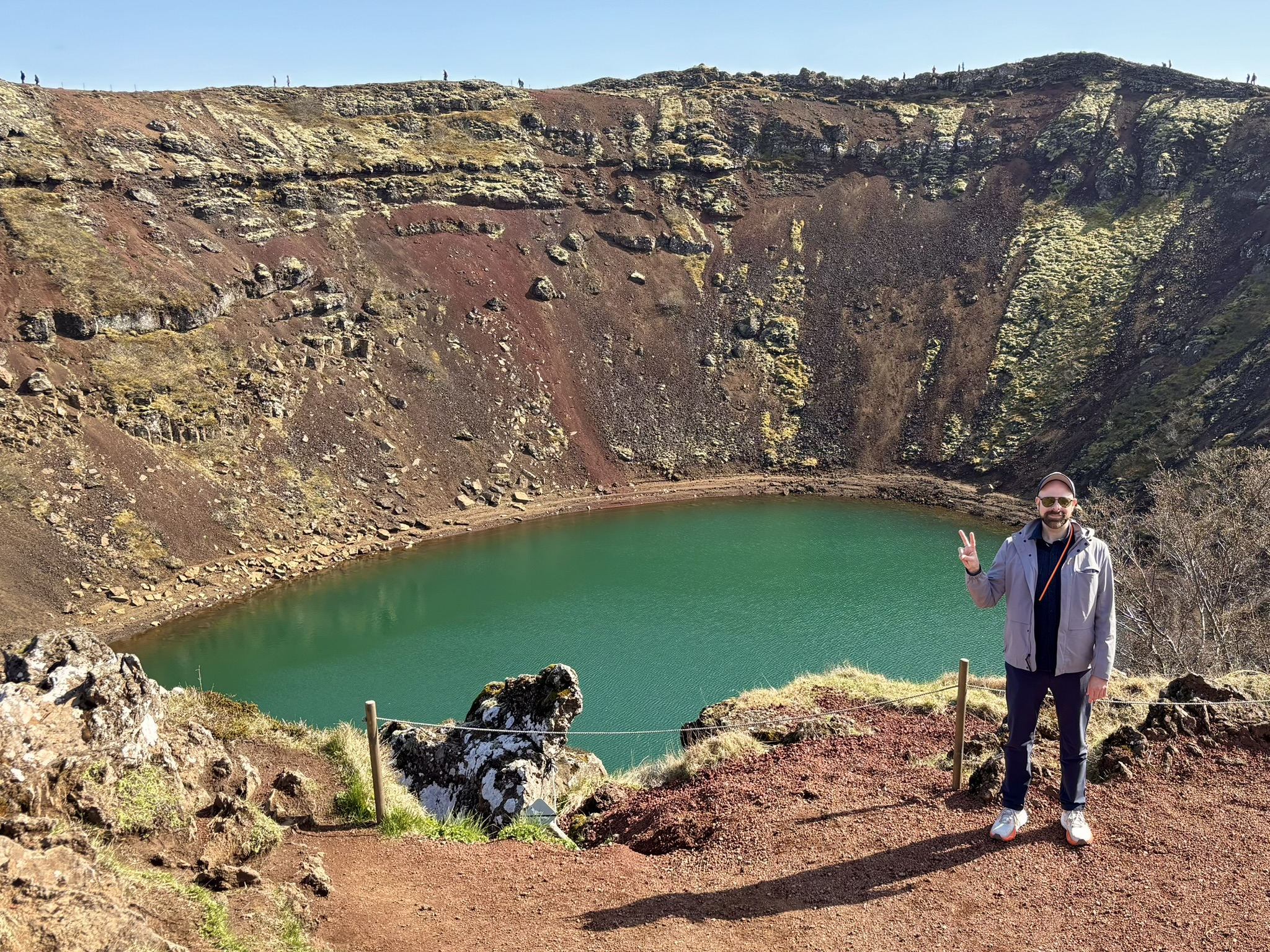
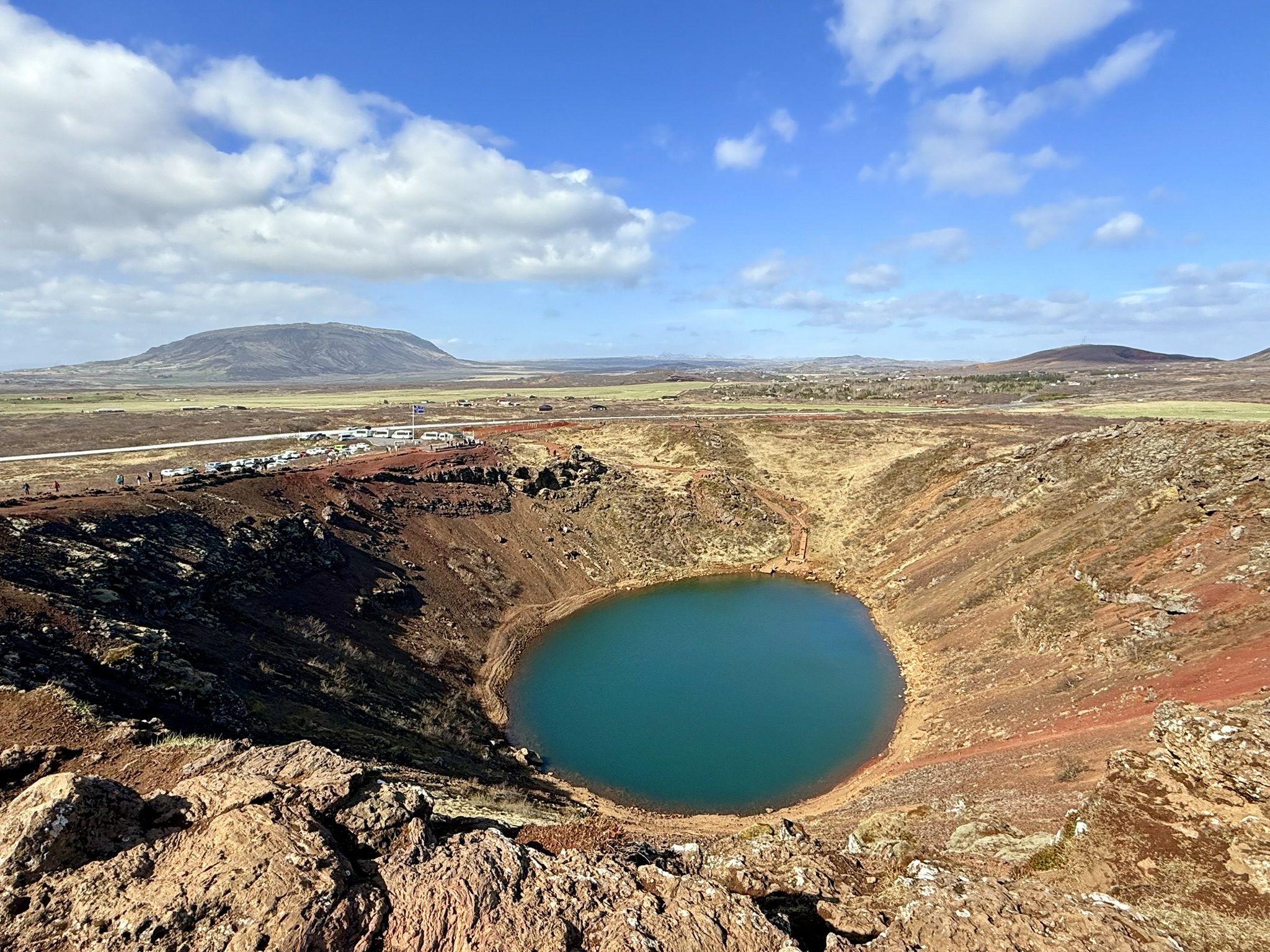
Our final Golden Circle stop was Kerið, a 3,000-year-old volcanic crater lake. I trekked the rim, examining the tephra – the volcanic rock and “soil” that is a vivid, oxidized red, contrasting sharply with the azure water at the bottom. The silence here was a stark, beautiful contrast to the thunderous roar of the waterfalls we’d left behind. On the drive back, we passed several geothermal power plants, a testament to how Iceland harnesses the tectonic activity we’d been admiring all day. It felt like a full-circle moment, realizing that the same subterranean fire responsible for these alien landscapes is also the heartbeat of the country’s daily life.
A Perfect Evening in Downtown Reykjavik at Hotel Saga
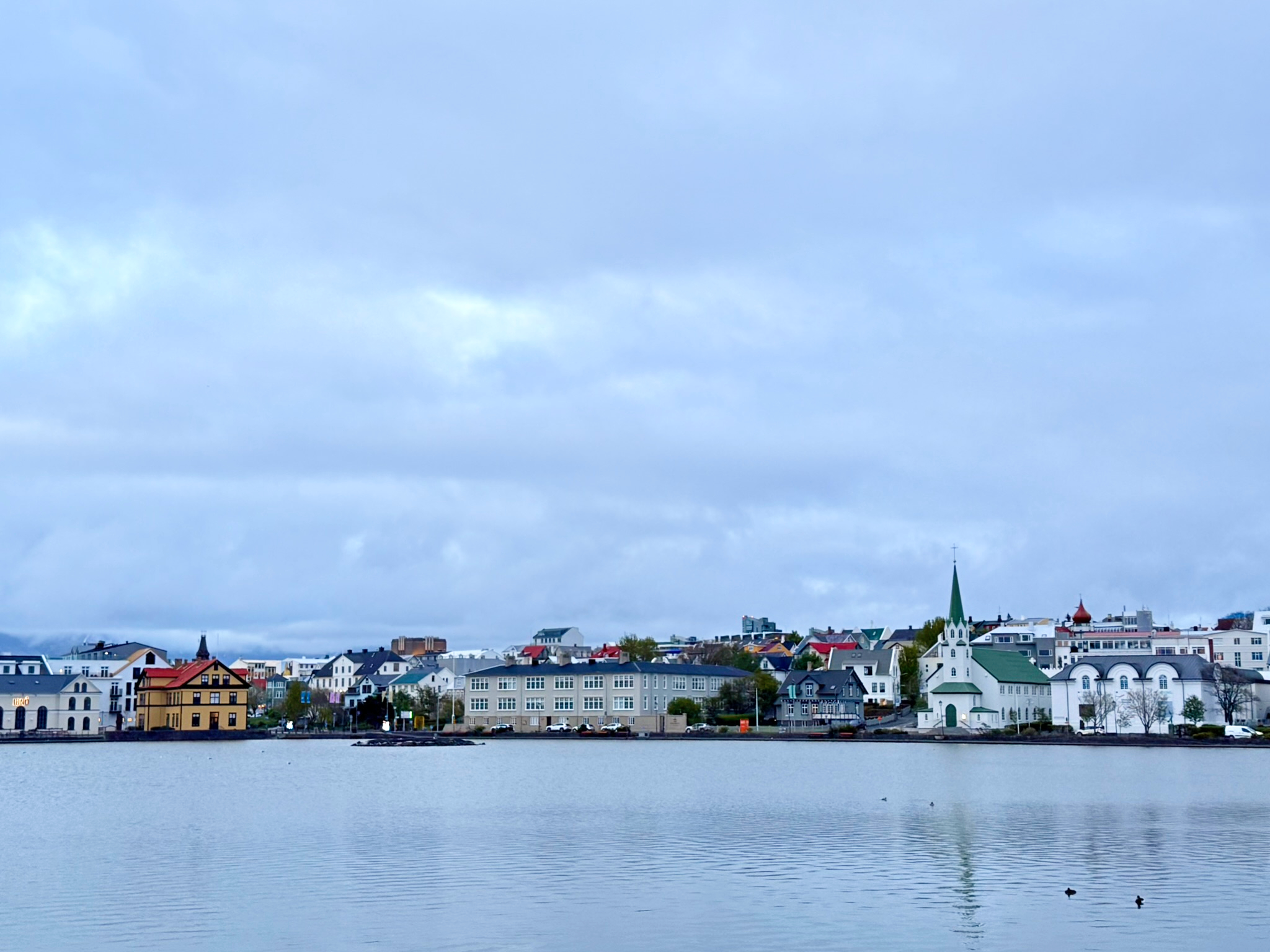
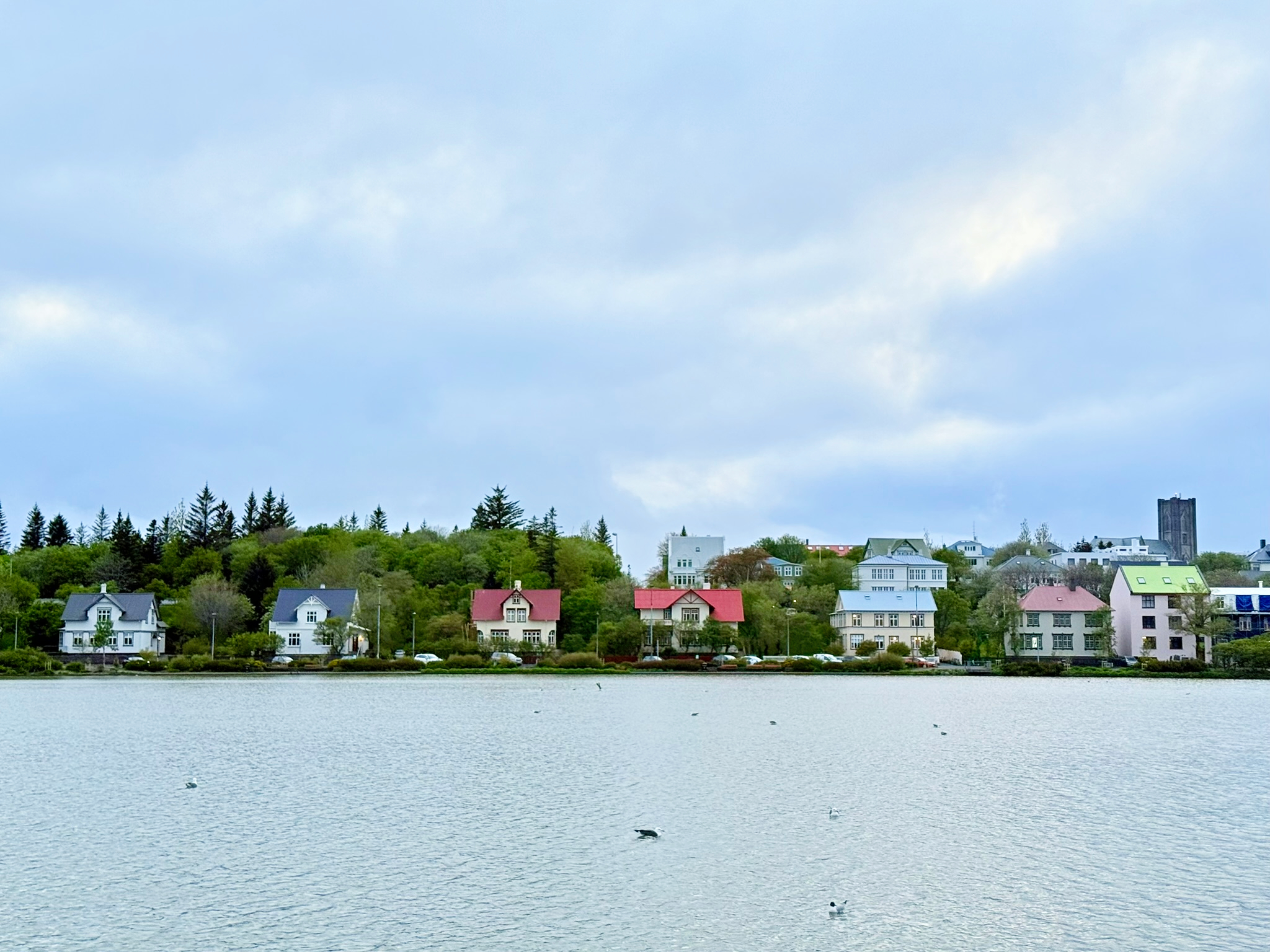
Back in the city, we disembarked the Silver Dawn for good and checked into Hotel Reykjavík Saga, a sophisticated gem tucked right into the heart of downtown. After settling in, we wandered the city center, where the crisp northern air carried the faint scent of roasting coffee and sea salt. Charm oozes from every corner – from the iconic multi-color corrugated iron buildings that pay homage to the city’s fishing roots to the sleek, modern glass architecture that reflects the sky. The streets are a vibrant mix of hidden-gem boutiques, cozy cafes filled with locals, and high-end bars where the craftsmanship of the cocktails rivals the design of the furniture.
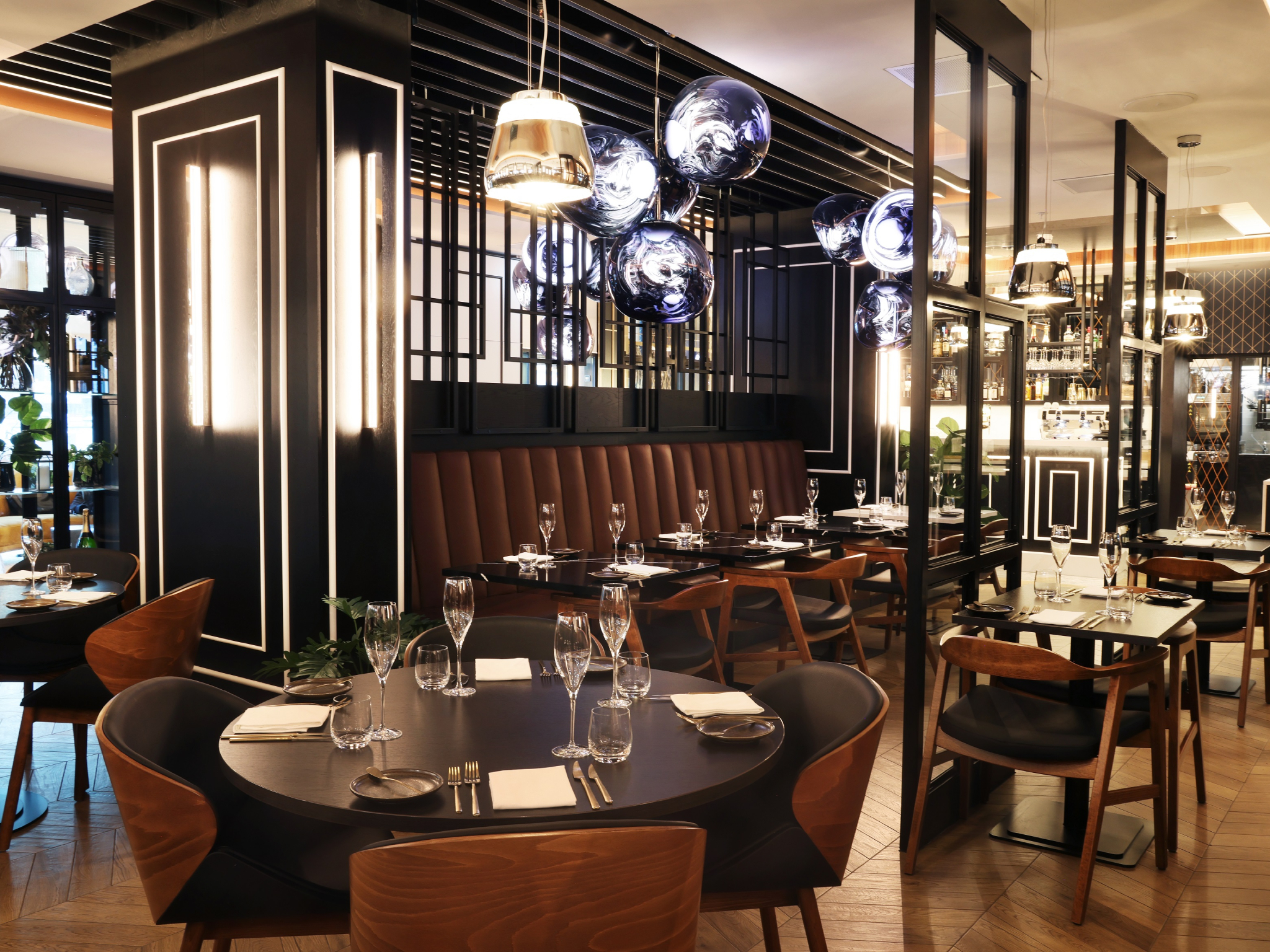
Dinner at the hotel’s restaurant, Fröken Reykjavík, was a true culinary highlight of the journey and a sophisticated departure from the standard cruise fare. We shared a series of expertly prepared dishes, starting with the unique agedashi bread served with a savory, umami-rich ponzu butter and perfectly crisp lamb croquettes. For the main event, the grilled Arctic Char was a revelation, beautifully balanced by a ginger chili soy noisette and a bright, crisp little gem salad with tarragon. The elegance of the plating and the freshness of the local ingredients made it easily the most memorable meal of the entire trip.
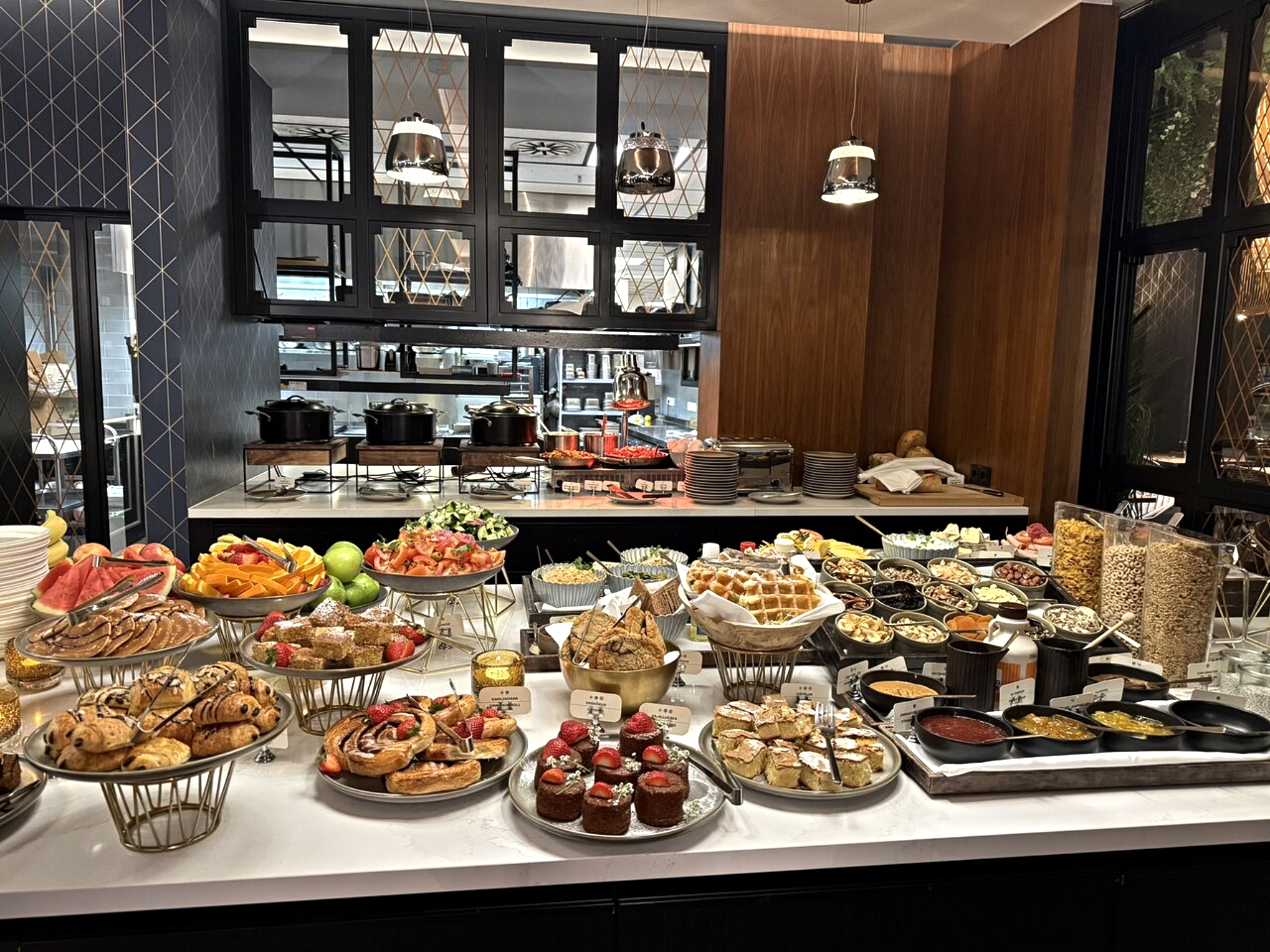
The next morning’s breakfast at Fröken was equally impressive, going far beyond your average continental spread. The buffet featured traditional Icelandic staples like creamy Skyr topped with house-made granola, delicate smoked salmon, and pickled herring, but the real magic was in the abundance of freshly baked goods and sweets. We indulged in dense, cake-like Rúgbrauð (the famous dark rye bread baked in the ground), enormous chocolate-glazed Snúður cinnamon rolls, and Kleina, those classic cardamom-scented twisted doughnuts. It was a decadent spread that showcased the very best of Icelandic comfort food.
The Rainbow Street and the Aftermath of the Sundhnúkur Eruption
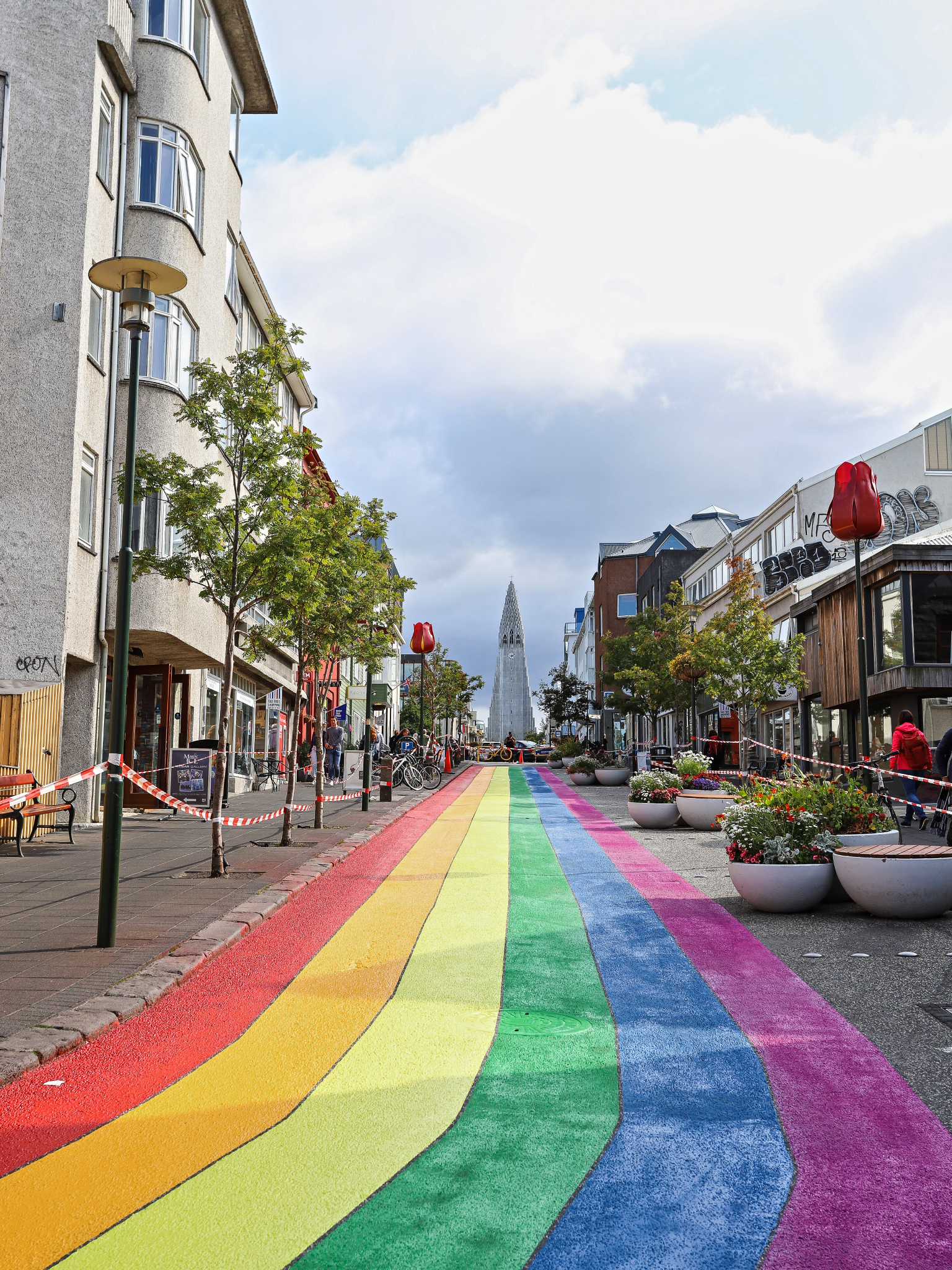
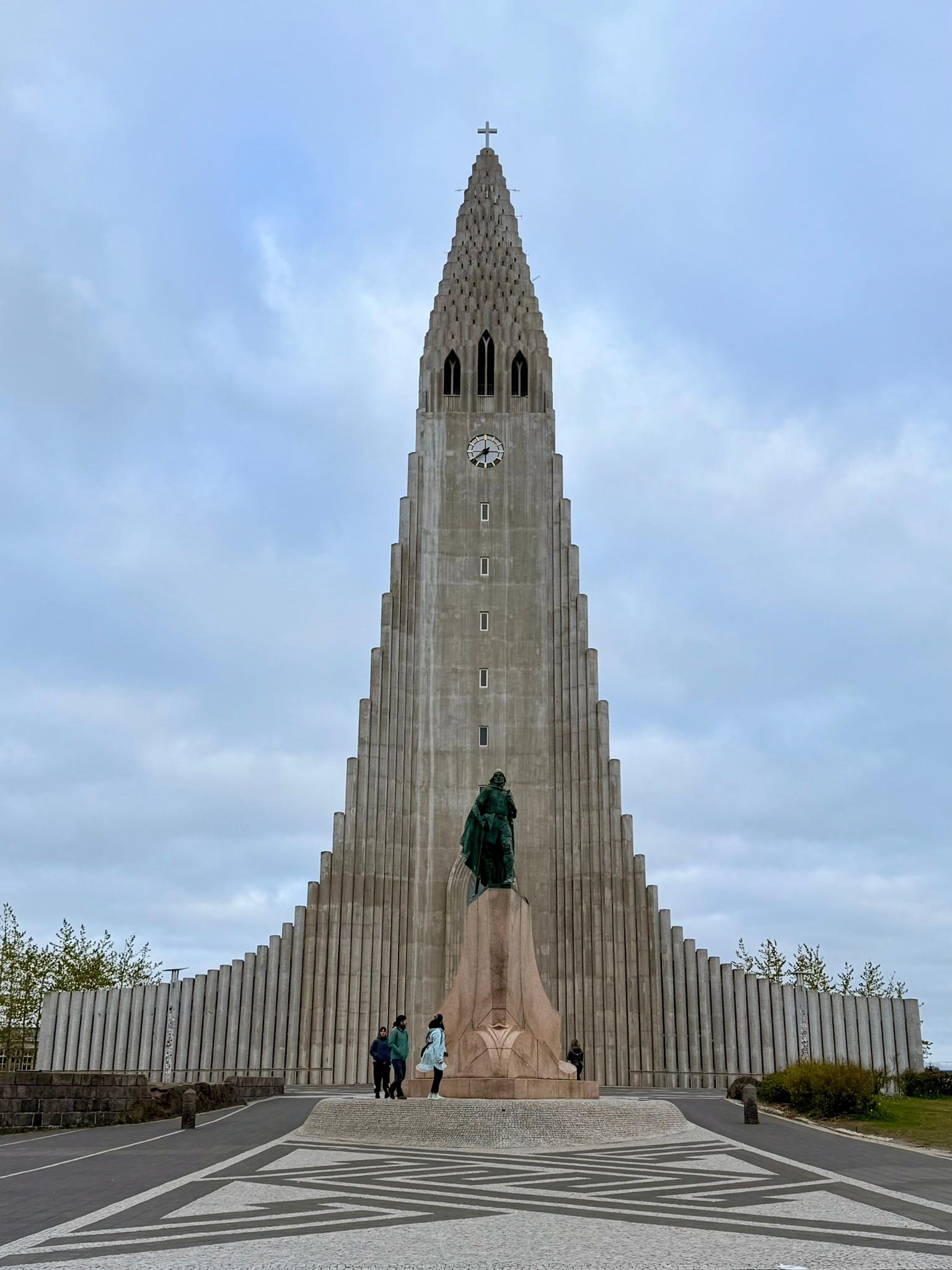
After breakfast, Charles and I walked up Skólavörðustígur, the famous “Rainbow Street,” toward Hallgrímskirkja. This renown Lutheran church is Iceland’s tallest, with a design inspired by the basalt lava columns we saw at Thingvellir. We did some shopping at Rammagerðin, picking up authentic souvenirs like lavender soap wrapped in sheep’s wool, shearling gloves, and a hand-carved wooden bird for our avian collection.
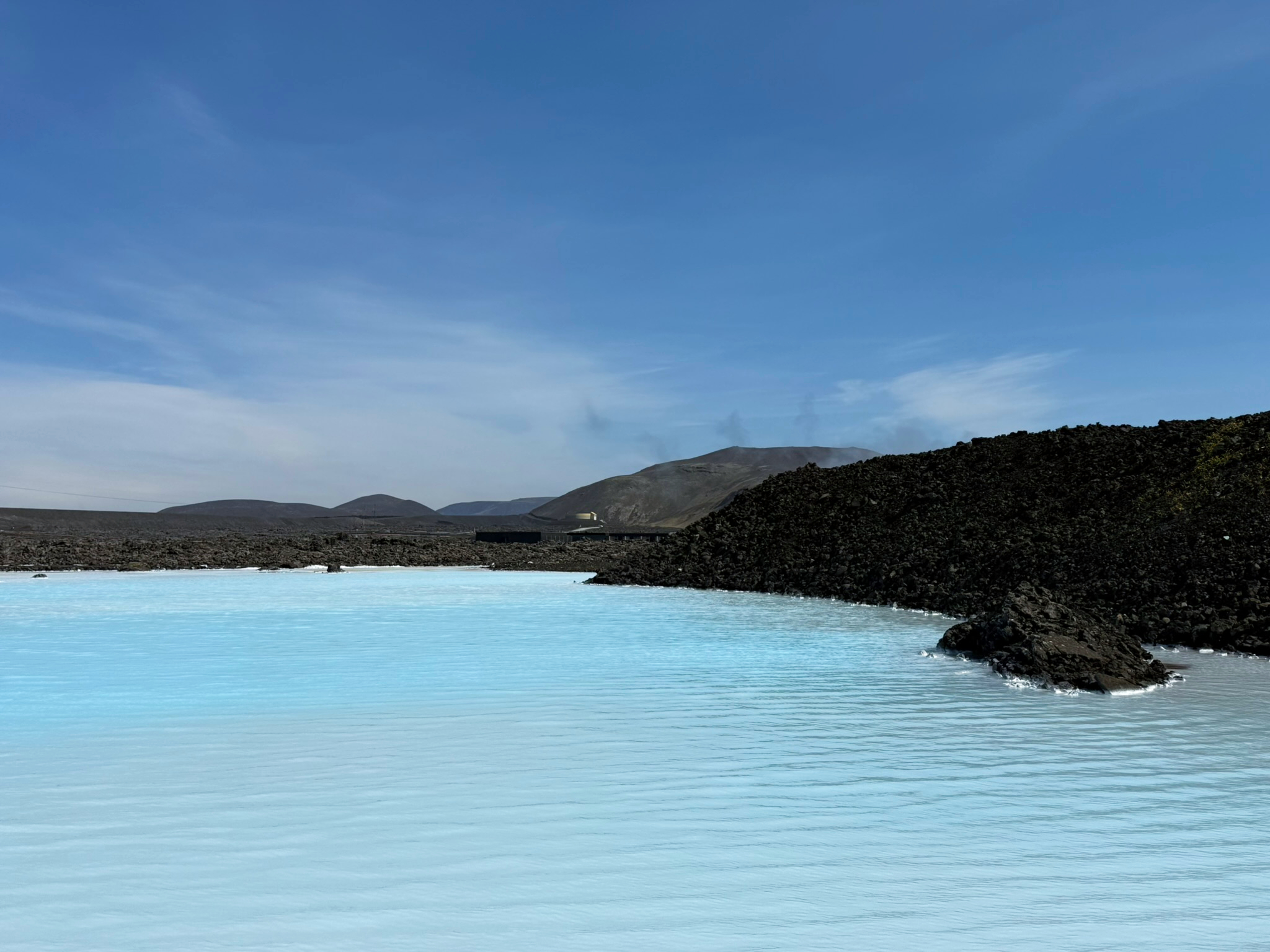
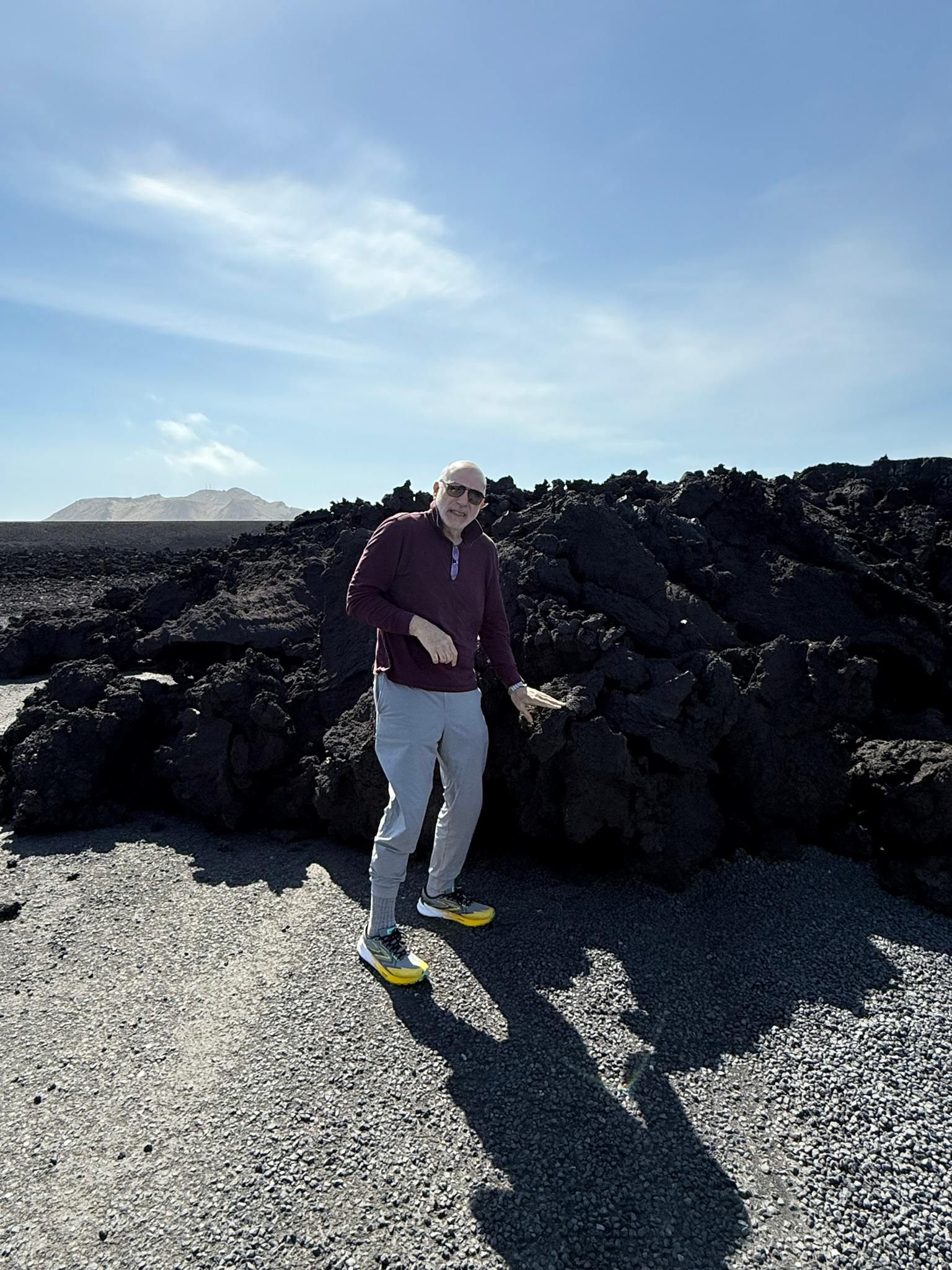
For our final leg, Reykjavik Private Tours & Transfers picked us up for a specialized tour of the Reykjanes Peninsula before dropping us off at Keflavík for our flight home. Our guide, Drifa – originally from Ísafjörður but now a local to the peninsula – took us down Grindavíkurvegur toward the Blue Lagoon. We unfortunately didn’t have enough time to enjoy the geothermal pools before our flight. However, we were still able to marvel at the milky-blue waters, set against a dramatic backdrop of freshly hardened lava ridges from the recent Sundhnúkur eruptions, sitting only meters away.
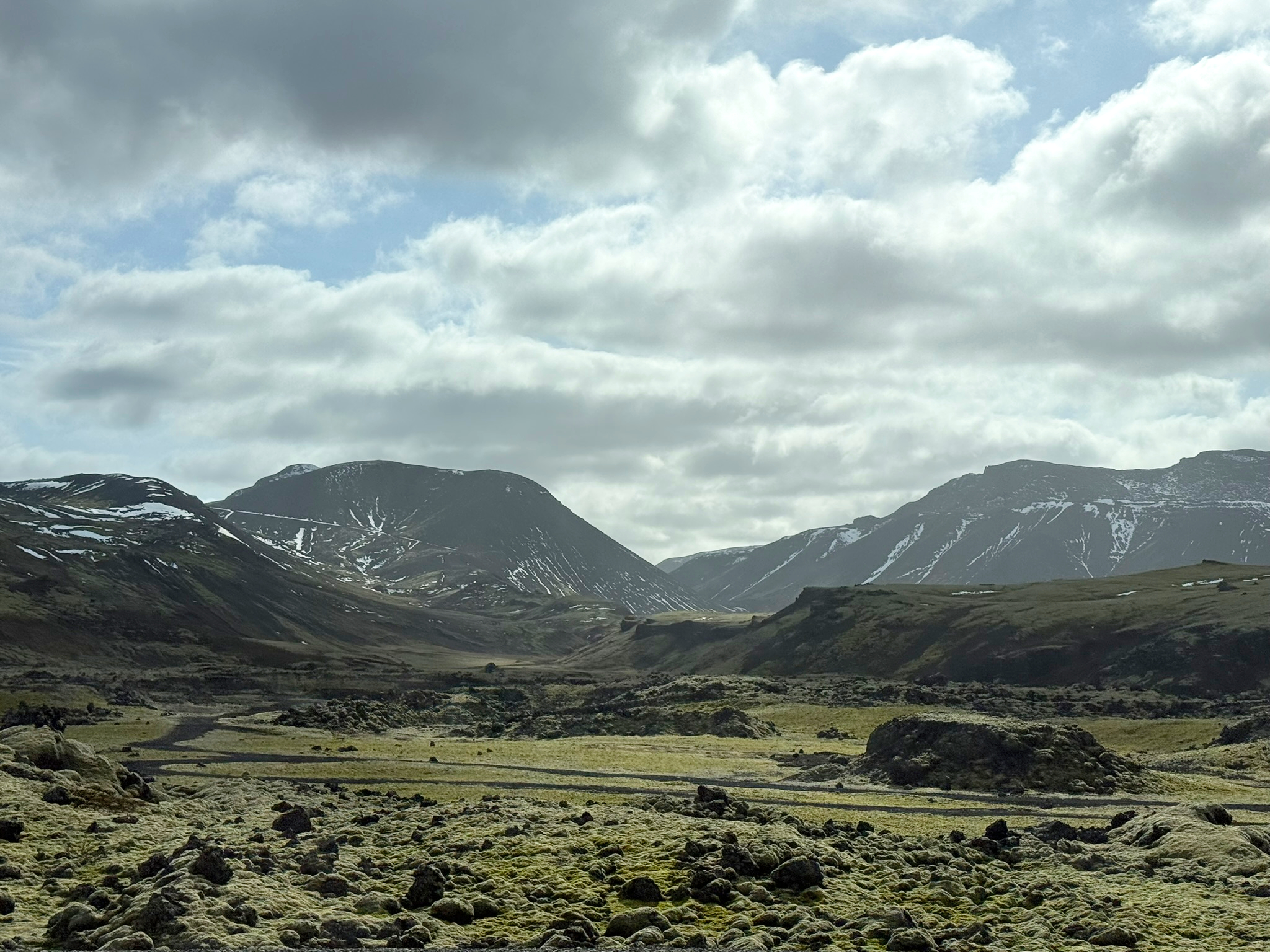
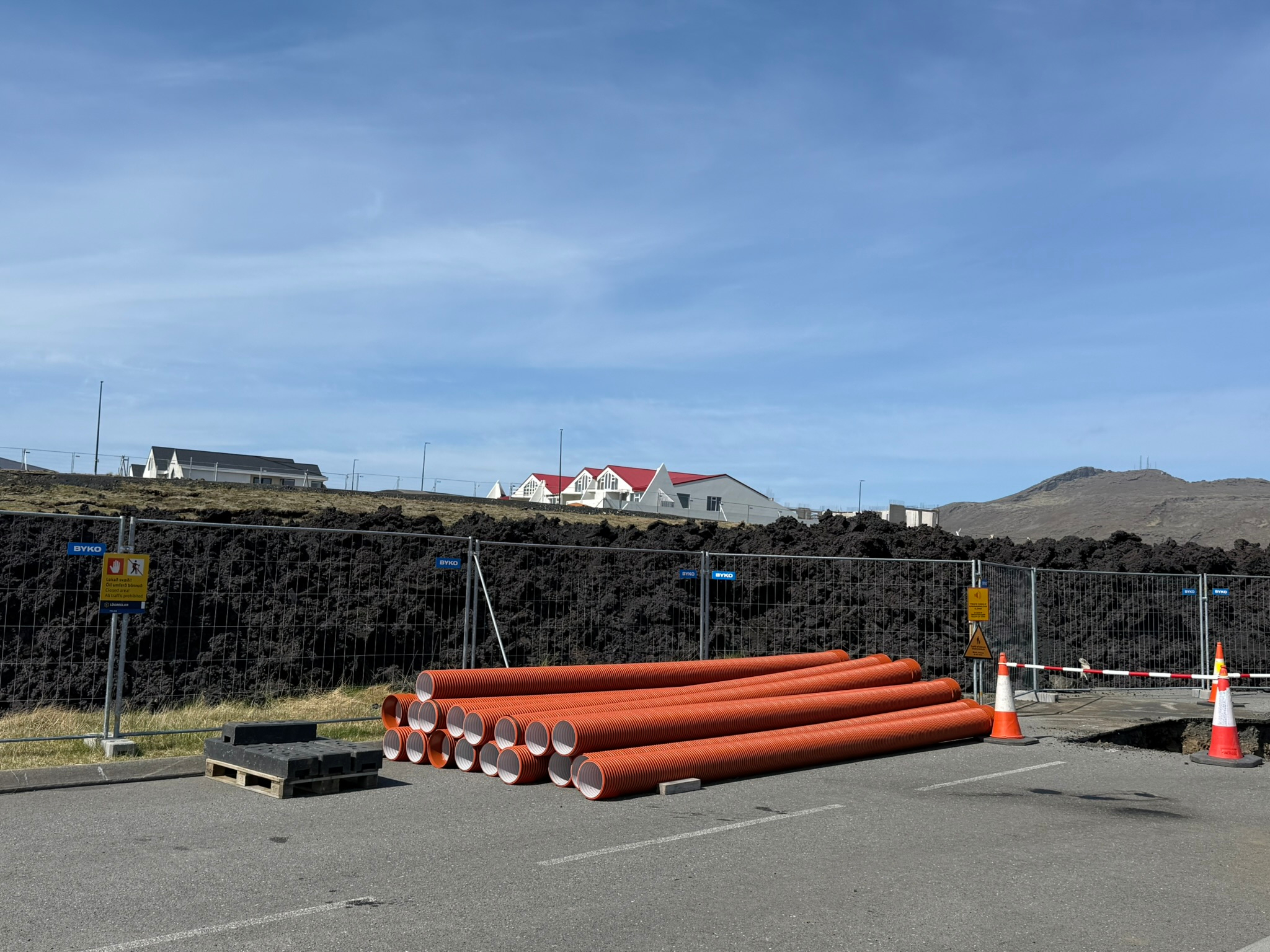
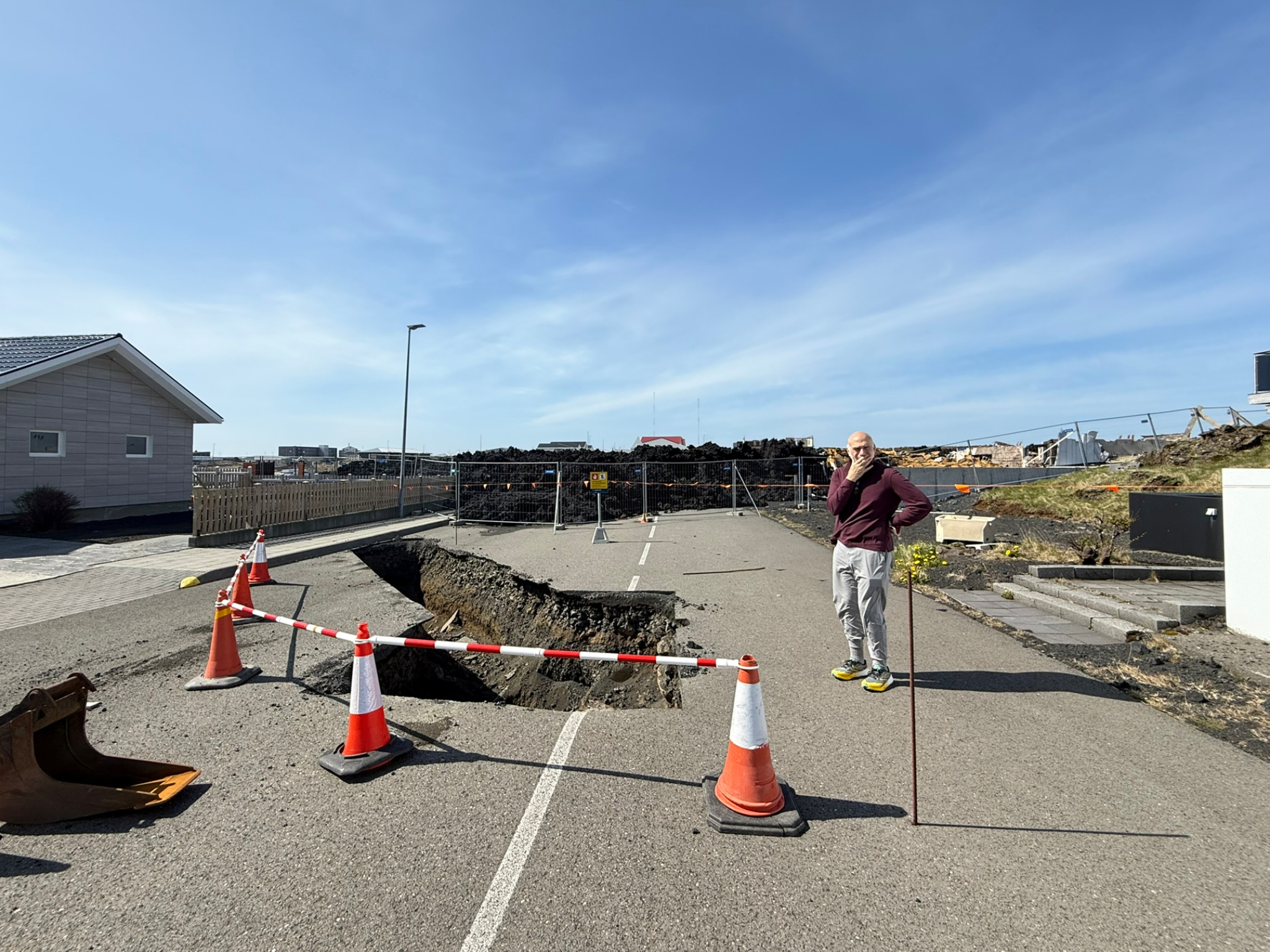
Drifa then navigated us into the recent ghost town of Grindavik, expertly crossing several road closures. This once prosperous fishing village was evacuated in late 2023 after the most recent volcanic eruption, and seeing the cracked roads and abandoned buildings – many of which were purchased by the government to subsidize relocation costs – was a sobering reminder of the earth’s raw power. Being that close to an active volcanic zone was a highlight of the trip, and we even took a small piece of freshly hardened lava back home as a memento. On the final drive to the airport, we crossed a terrain of vast, moss-covered lava fields that looked like the surface of the moon.
We left Iceland knowing we hadn’t seen enough. We’ve already decided that on our next visit, we’ll start our trip at the Blue Lagoon – which sounds like the perfect way to shake off jet lag before heading back into the wild.
Last visited in May, 2025