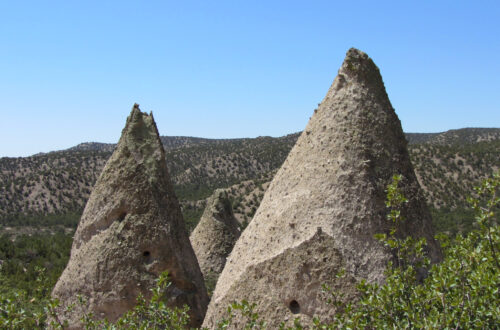

Isafjordur & Vigur Island, Iceland
Chasing Puffins in the Westfjords: A Journey to Remote Vigur Island
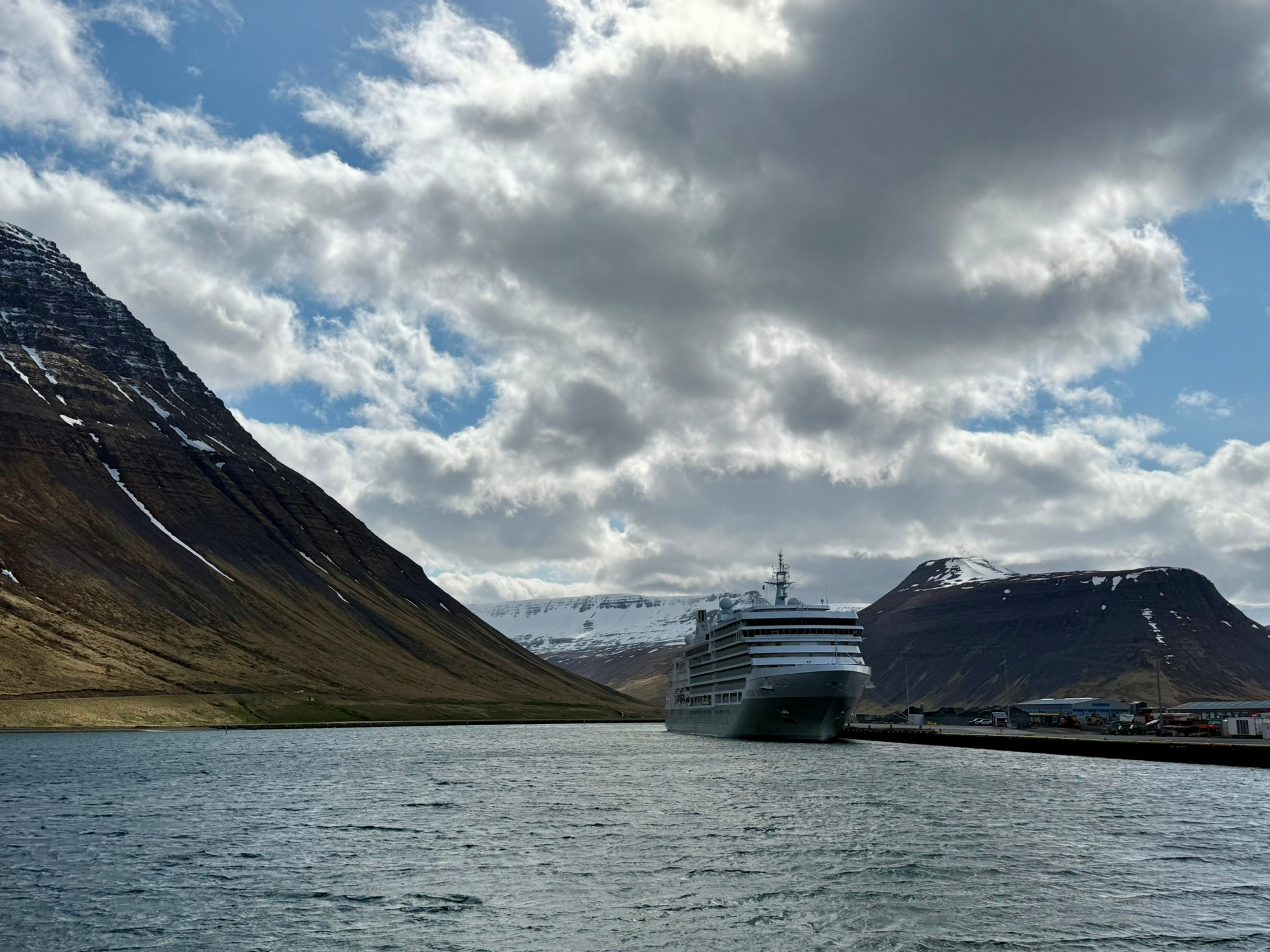
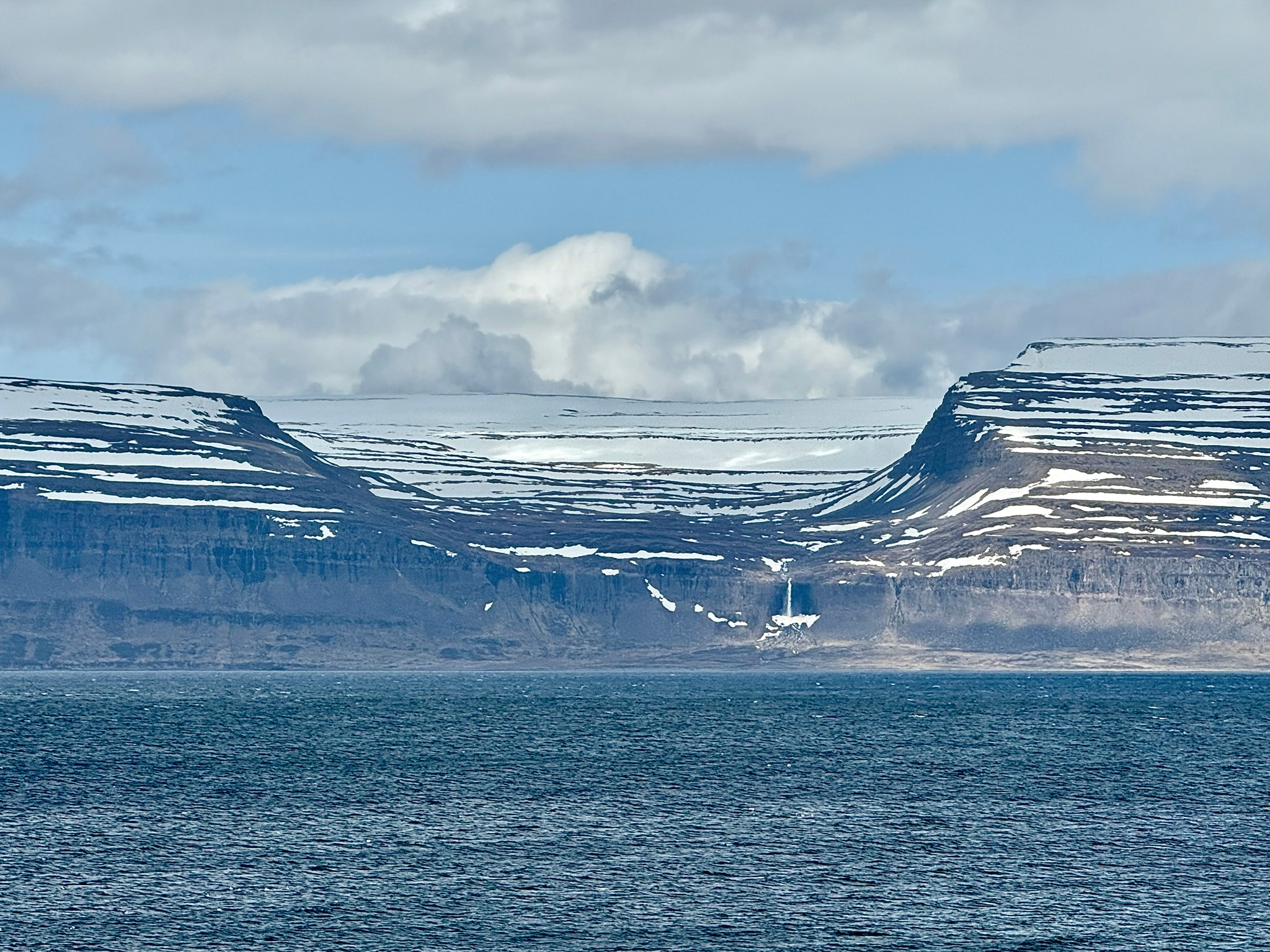
After the northern charms of Akureyri, we woke the next morning in the capital of the Westfjords: Ísafjörður. Nestled on a narrow spit of land in Skutulsfjörður, this town is the gateway to one of Iceland’s most dramatic and least-visited regions. The Westfjords are a labyrinth of deep waters and ancient basalt, where the land has been carved by glaciers over millennia into a series of jagged, table-top mountains.
A step onto our veranda revealed a breathtaking sight: towering, flat-topped peaks draped in a mantle of fresh snow. These giants seemed to press in from all sides, framed against an azure sky that provided the perfect foil for the stark white slopes. It was a scene that promised a day of rare Icelandic clarity.




Crossing the Deep: A Trawler Ride into Isafjardardjup
Our mission for the day, expertly curated by Silversea, was a pilgrimage to Vigur Island in the heart of the Ísafjarðardjúp fjord system. Our primary hope? To catch a glimpse of the Atlantic Puffin in its natural habitat.
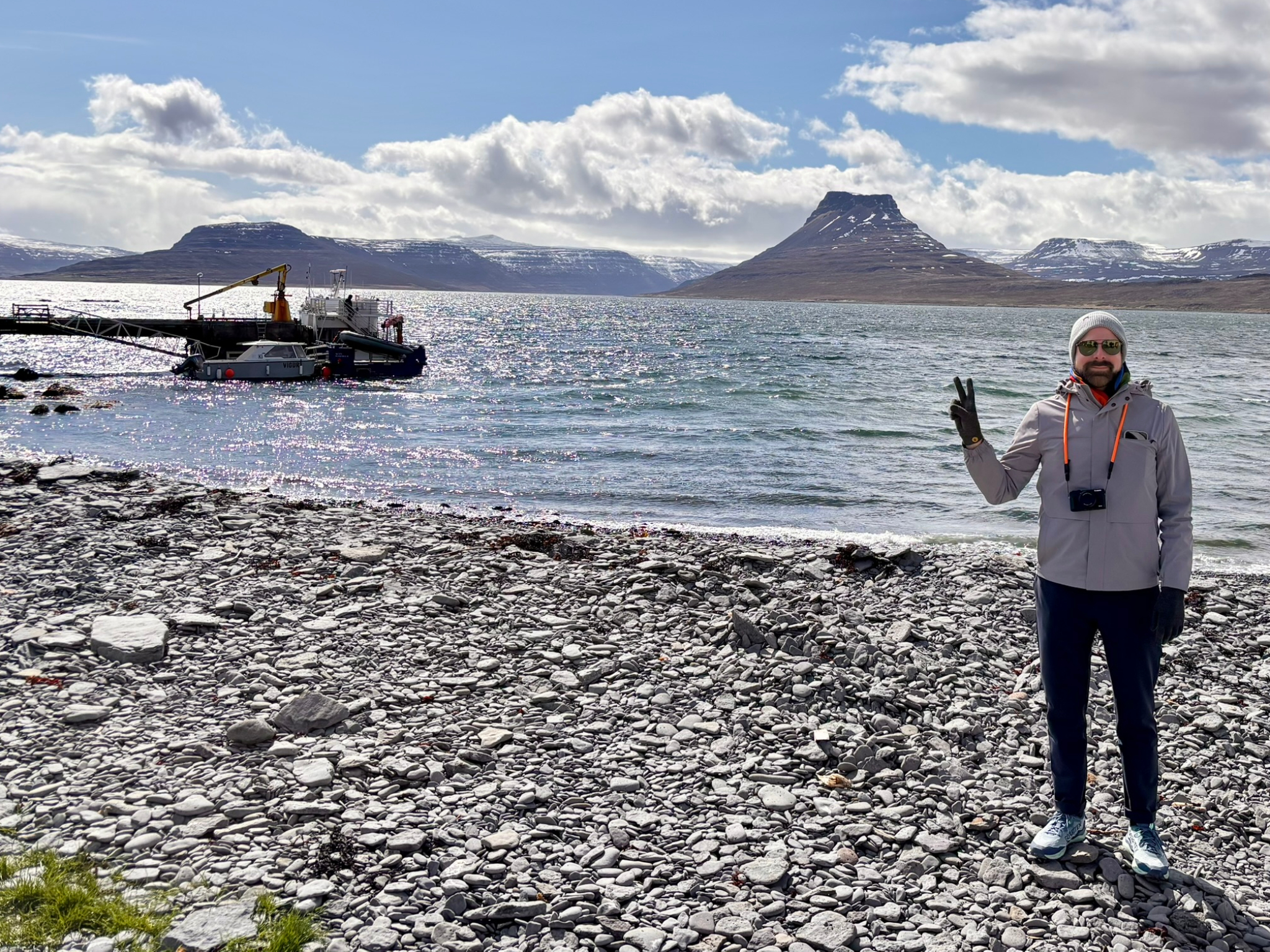
Following a leisurely breakfast, we joined a small group of fellow travelers and boarded a rugged trawler. The 30-minute crossing took us out of Skutulsfjordur and into the vast expanse of “The Djúp.” The scenery here is nothing short of cinematic; the fjord is a shimmering mirror reflecting the steep, ribbed cliffs that plunge straight into the North Atlantic. The scale of the landscape makes you feel beautifully insignificant.
A Warm Welcome to Iceland’s “Bird Island”
Approaching Vigur, the island emerged like a technicolor dream. A collection of yellow, red, and white heritage buildings sat nestled amidst a stretch of green grass beneath a brilliant sky. It was a vivid scene, where the deep hues of the structures popped against the cool, crystalline atmosphere of the fjord. We were greeted on the pier by Gísli Arnar Guðmundsson, one of only three permanent human residents on the island, alongside his wife, the renowned polar explorer Felicity Aston, and their young son.
Vigur is more than just a home; it is a meticulously managed sanctuary. Gísli led us on a tour of their harvesting facility, where he shared the fascinating history of eiderdown farming. I was surprised to learn that eiderdown isn’t plucked from the bird; rather, it is the soft “down” that the ducks shed from their own chests to insulate their nests.
The family harvests this precious material by hand, replacing the down with dry hay. It’s a remarkable symbiotic relationship – the ducks aren’t bothered by the swap and return to the safety of Vigur year after year, providing a sustainable livelihood for the family that protects them.
The Puffin Circus: A Cliffside Spectacle
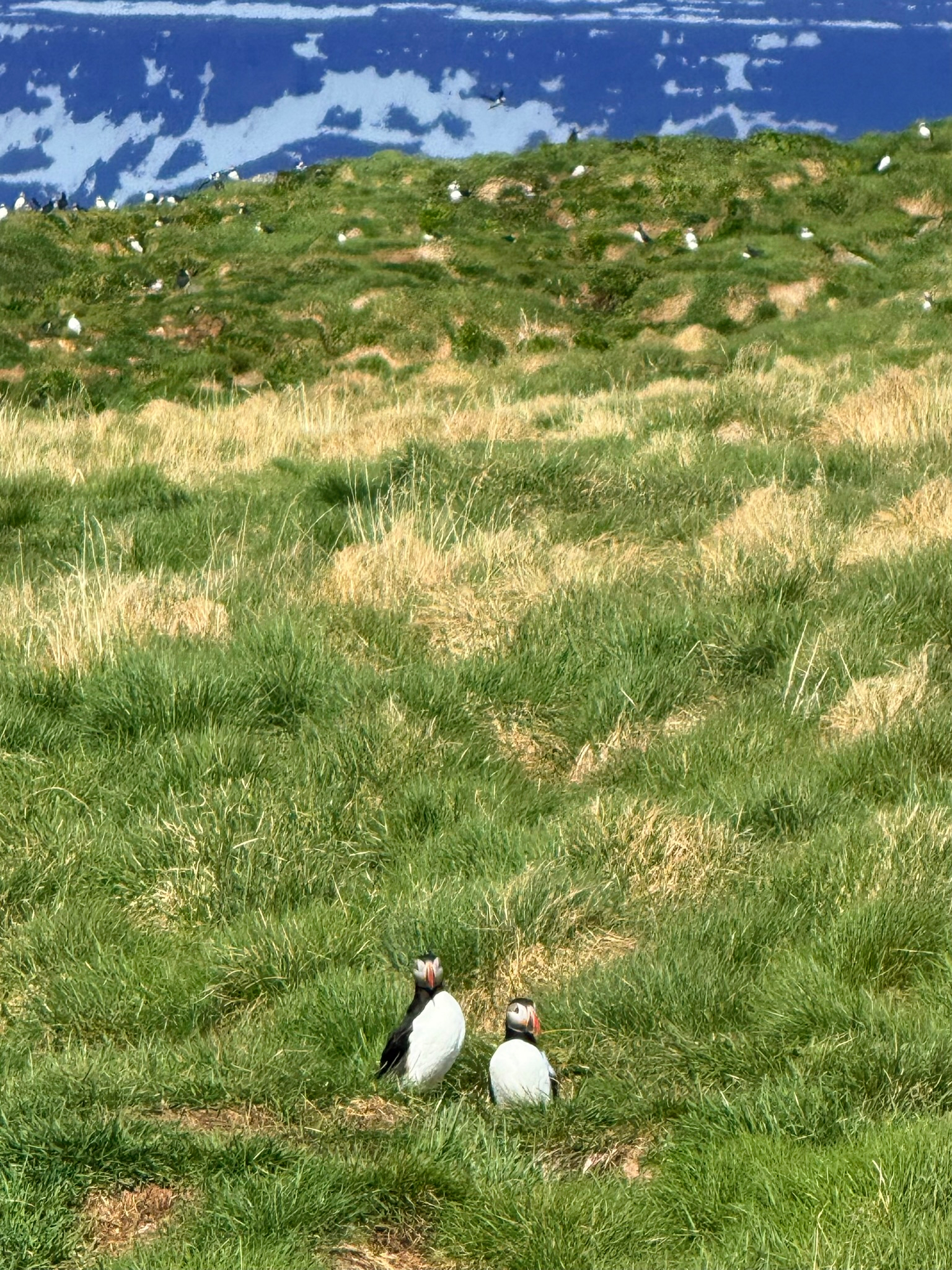
The highlight of the day was Gísli’s announcement that the puffins were officially in residence. Their arrival is entirely weather-dependent, and given how much I had looked forward to this moment, the relief was palpable.
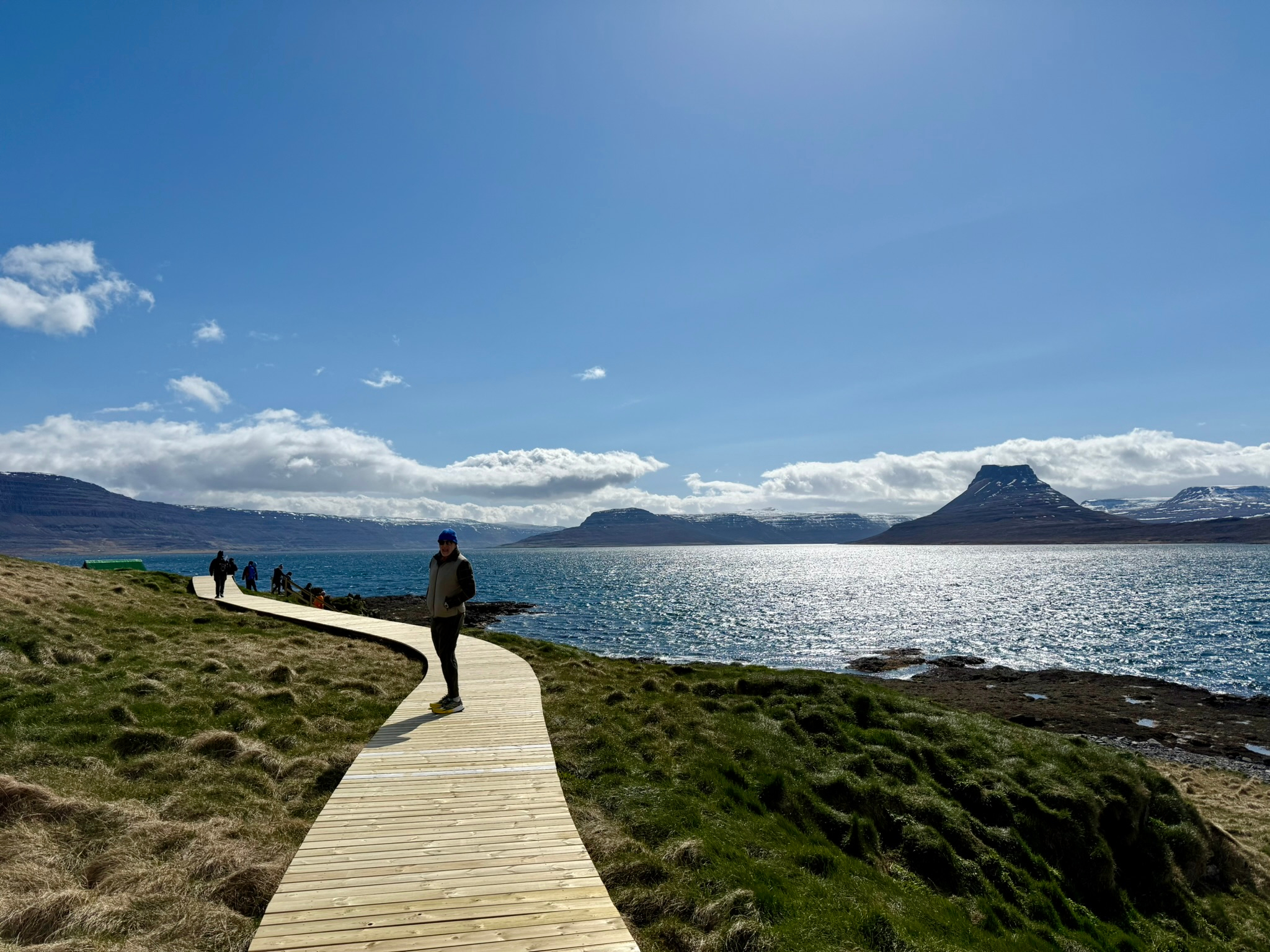
We were led along a winding boardwalk toward the nesting grounds. Unlike many seabirds, puffins are burrowers; they use their sharp claws to dig deep “apartments” into the soft, grassy turf of the cliffs. Soon, we were surrounded by a circus of thousands. Some were scattered along the cliffside, while others formed a raft in the water below.
Watching a puffin take flight is pure comedy. Their stout, torpedo-shaped bodies seem ill-suited for the air, requiring them to flap their wings up to 400 times a minute just to stay aloft. With their signature orange-and-yellow beaks and those soulful, triangular-masked eyes, they are undoubtedly the most charismatic residents of the Arctic.
Midday Indulgence: Hjonabandssaela and History
The island’s hospitality extended to a small, sun-drenched café where we were treated to a slice of hjónabandssæla – Icelandic “Happy Marriage Cake.” This traditional treat, made with oats and a tart jam from rhubarb grown right on the island, was served with a generous dollop of freshly whipped cream. It was, in a word, scrumptious.
Before our trawler returned, I took a moment to wander up to the island’s windmill. Built around 1840, it stands as the only surviving historic windmill in Iceland. From this vantage point, I witnessed a sublime tableau: another colony of puffins nearby, seals sunbathing on the kelp-covered rocks below, and a distant waterfall cascading off the mountains across the fjord.









A Path of Color in a Remote Corner
Back in Isafjordur, Charles and I took a stroll down Hafnarstræti, the town’s main artery. There, we encountered a vibrant rainbow path painted directly onto the street. It was a poignant and refreshing sight.
In a world where LGBTQ+ rights are increasingly under scrutiny – particularly back home in the U.S. – seeing this remote community broadcast an unwavering message of inclusivity and diversity felt like a warm embrace. It serves as a reminder that even in the most secluded corners of the globe, the spirit of acceptance can shine brightly.
Sailing into the North Atlantic
As the afternoon sun began its gradual descent, we reboarded our ship. With the anchor hauled up, we began a slow transit through Skutulsfjordur and out into the vast Isafjardardjup, eventually reaching the open, cold waters of the North Atlantic.
Sailing along Iceland’s northwestern coast, framed by the raw beauty of the Westfjords, I reflected on the day. It wasn’t just a “bucket list” experience of seeing puffins; it was a lesson in the delicate balance between man, bird, and the wild, wonderful landscape of the North.
Last visited in May, 2025