Heraklion, Crete
Heraklion Crete Travel Guide: A Journey Through Knossos, Thrapsano, and Beyond
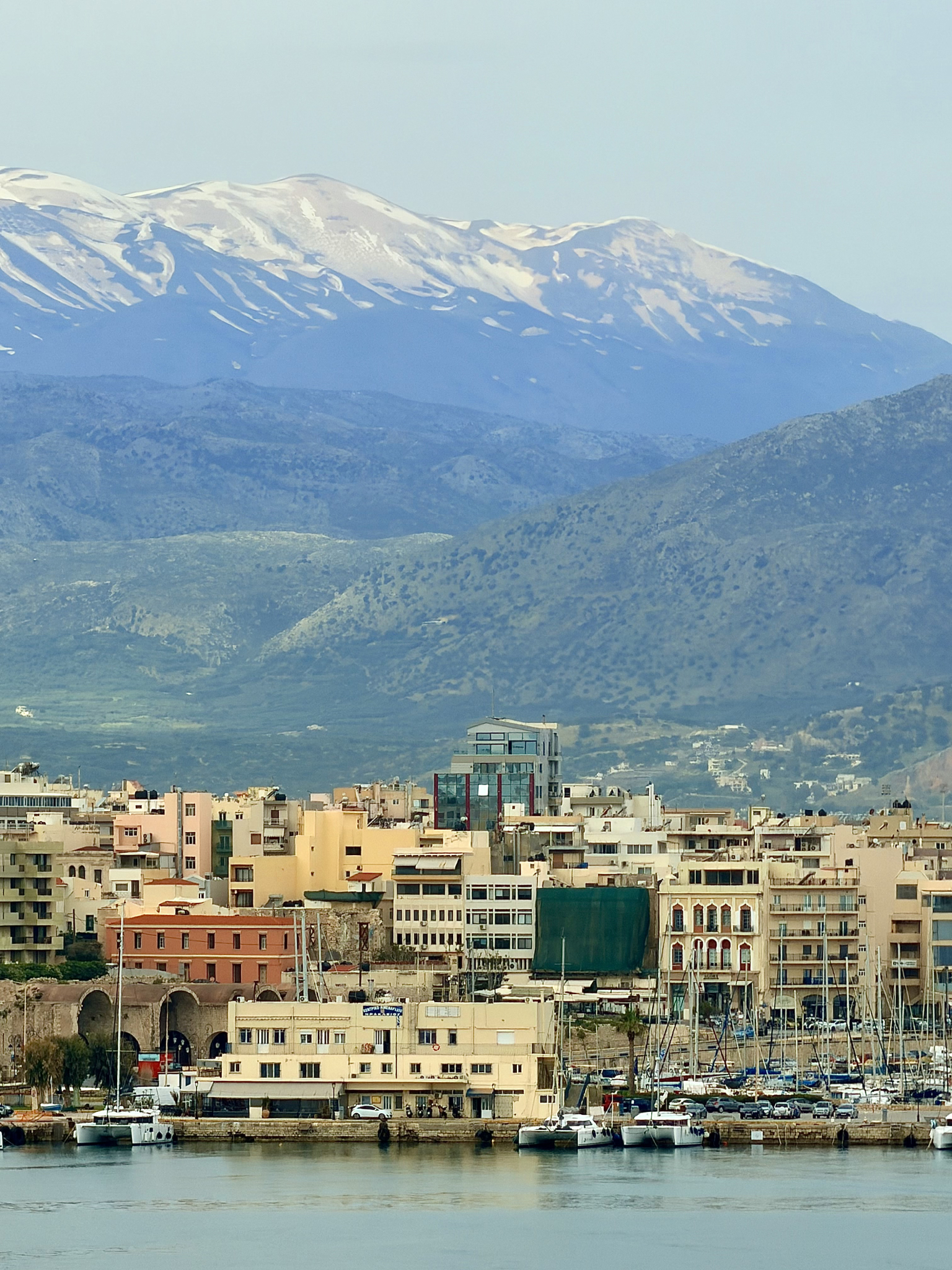
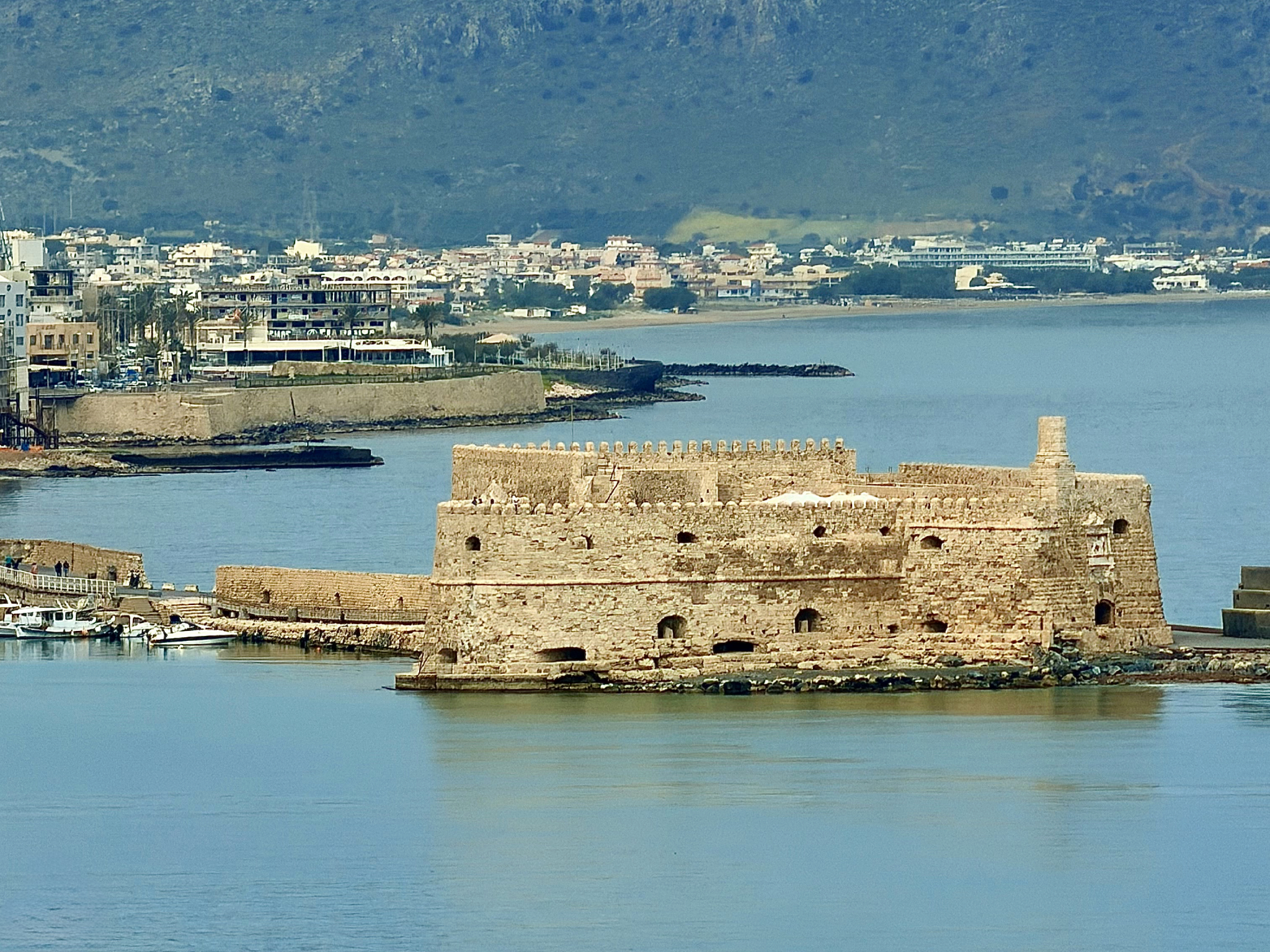
Waking up on our first morning in the ancient Venetian port of Heraklion, with the snow-capped peak of Mount Ida rising in the distance, captures the true essence of this definitive Heraklion Crete travel guide. There is an undeniable thrill in pulling back the stateroom curtains to a completely new horizon.
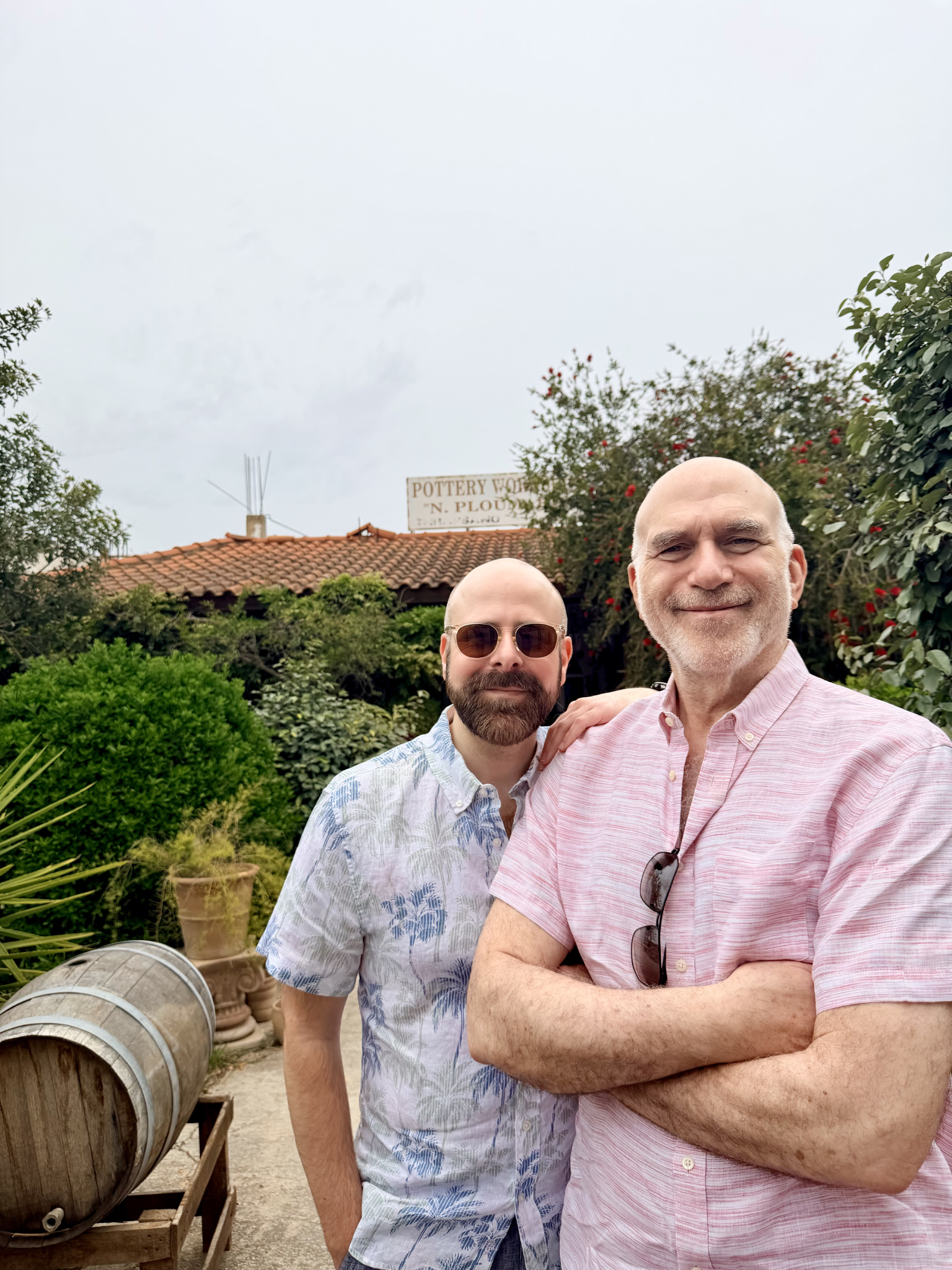
After a hearty breakfast on the aft deck overlooking the harbor, Charles and I disembarked into the warm Cretan air, where Dimitris of SunSud Tours awaited us with a gracious welcome. Our original plan was simple: head straight for the sprawling archaeological site of Knossos, followed by the historic Agkarathos Monastery, a traditional pottery workshop, and finally, the Kleanthi Olive Mill.
Travel, however, often demands improvisation. Upon arriving at Knossos a mere twenty minutes outside the city, we found the gates teeming with tour buses—undoubtedly flooded with fellow passengers from our ship. Sensing our instant dismay, Dimitris pivoted immediately, executing a seamless mid-trip adjustment that saved our morning.
- Tour Partner: SunSud Tours (Guide: Dimitris)
- Key Stops: Thrapsano, Agkarathos Monastery, Kleanthi Olive Mill, Knossos
- Highlight: Olive oil tasting at Kleanthi and private tour of Knossos with a local historian
The Master Potter of Thrapsano
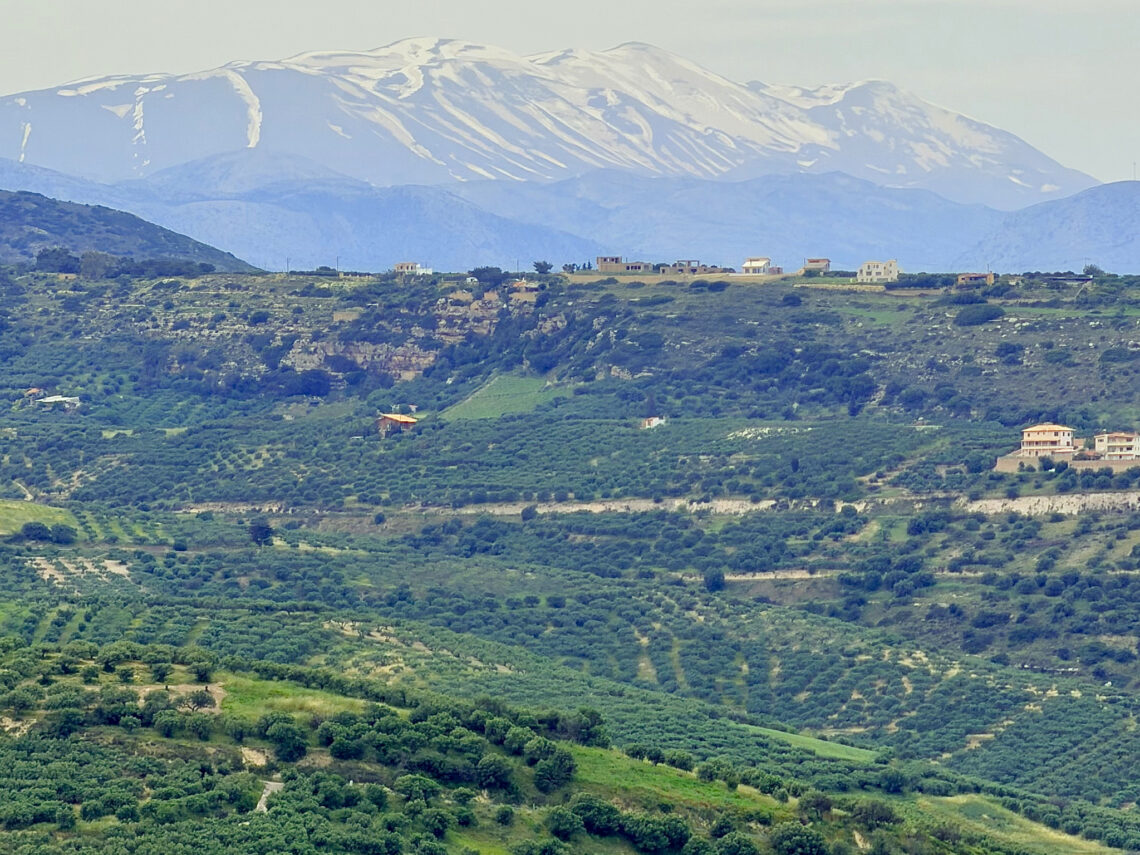
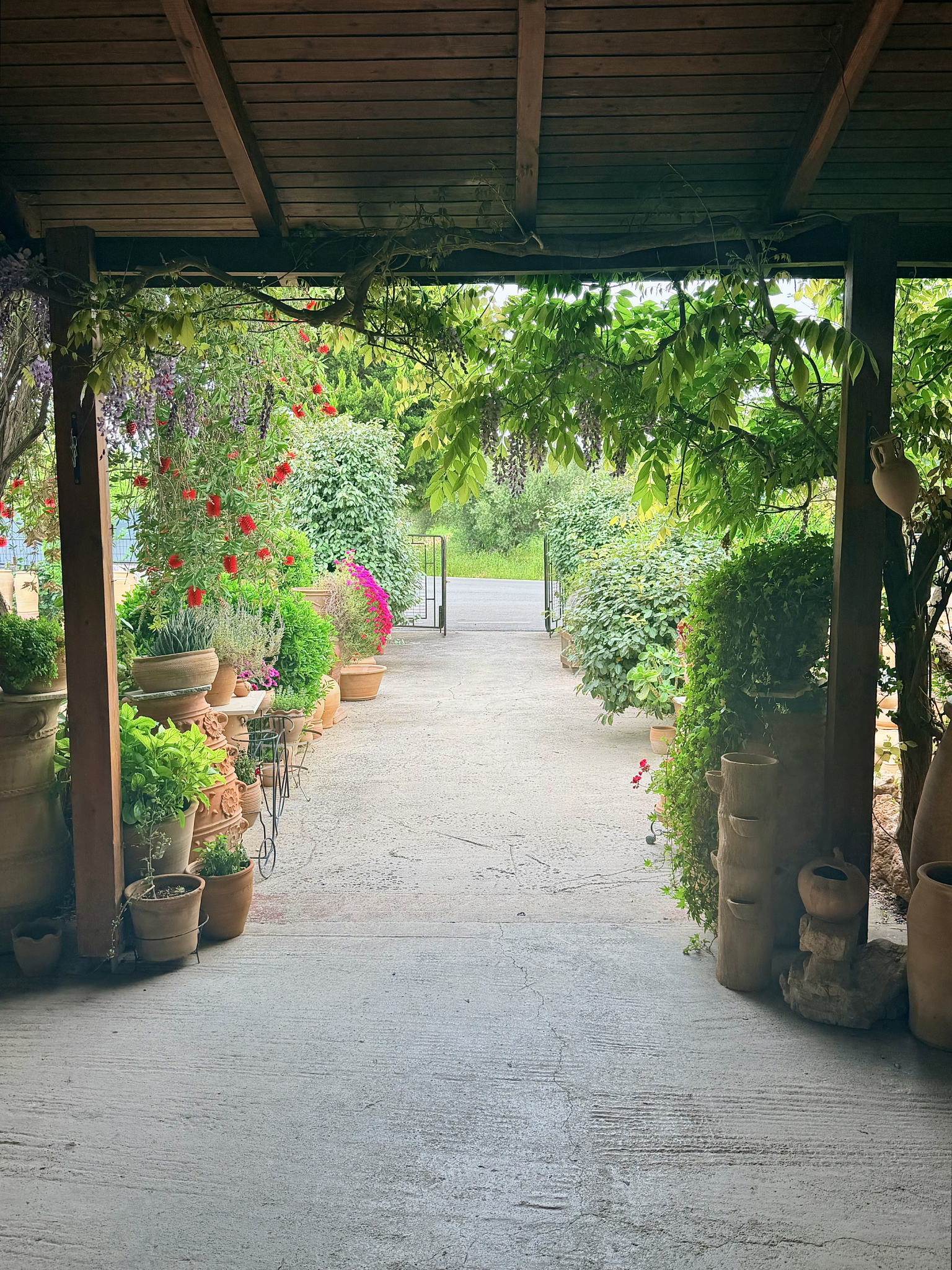
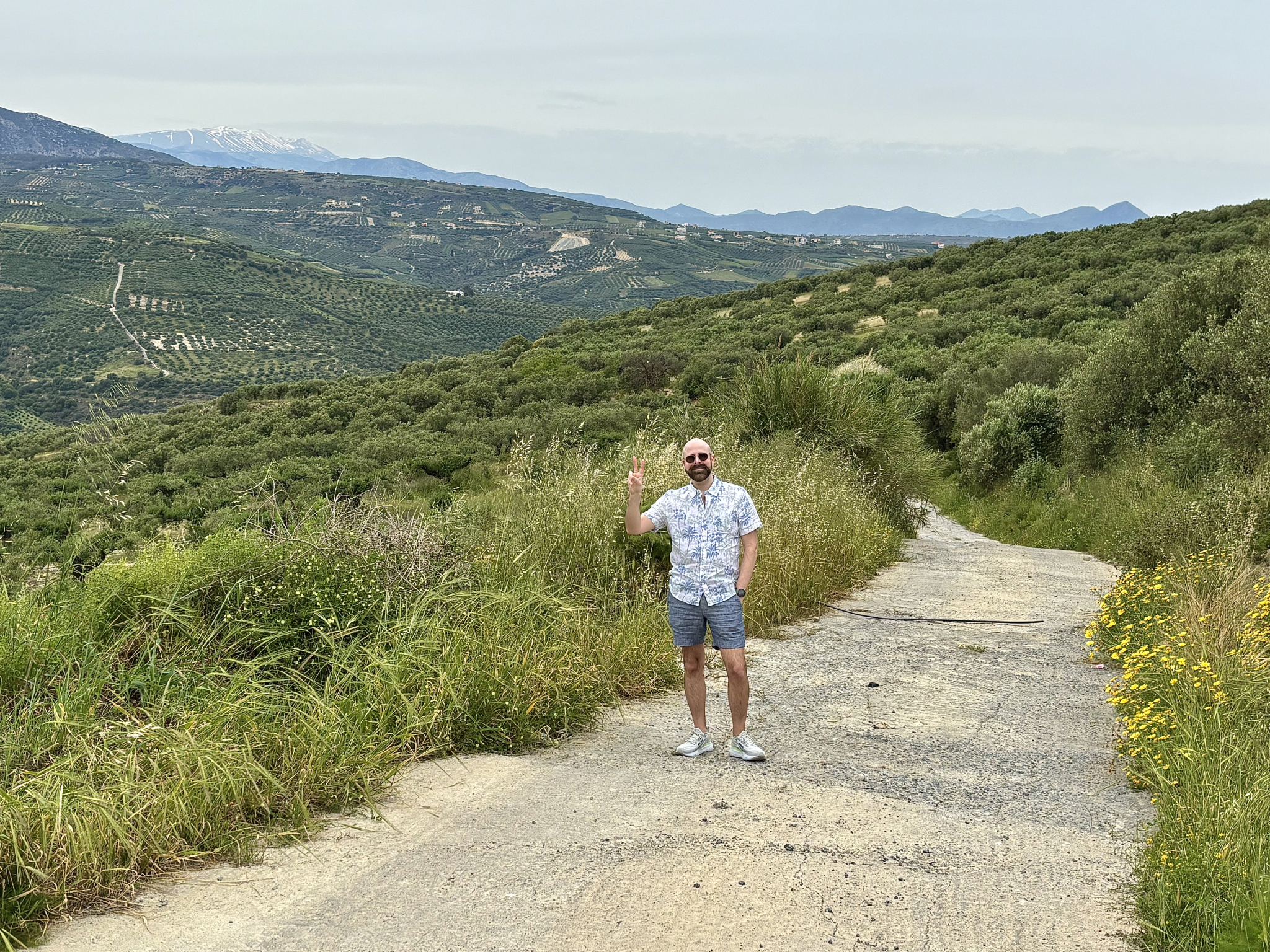
Opting to bypass the crowds, we headed fifteen minutes inland through verdant rolling hills and silver-leafed olive groves toward a traditional pottery workshop set amidst a lush garden brimming with vibrant spring blooms.
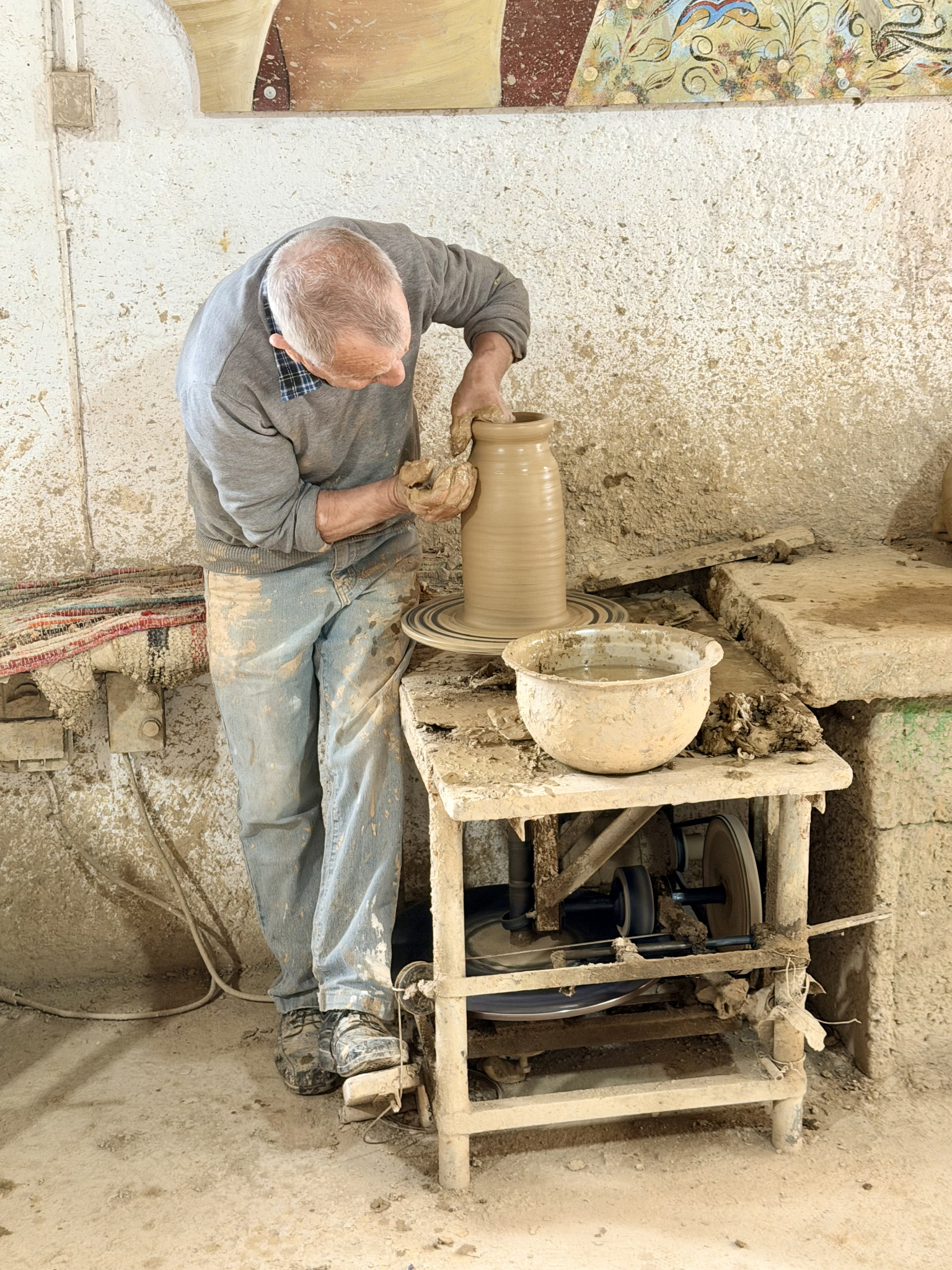
Here, we met Nikos Ploumakis, an octogenarian master craftsman whose hands have shaped Cretan clay for decades. Watching him throw massive, ancestral terracotta jars known as pithoi with astonishing speed and precision was mesmerizing. When we asked how many vessels he produces in a single day, his reply of around 90 left us utterly speechless.
Adjacent to the studio, his shop offered an array of traditional ceramics crafted by Nikos and his sons. We couldn’t resist purchasing two hand-thrown cruets and a set of finger bowls, each finished with swirling, vibrant cobalt and earthen-toned geometric patterns reminiscent of classic Aegean motifs.
Serenity at Agkarathos Monastery
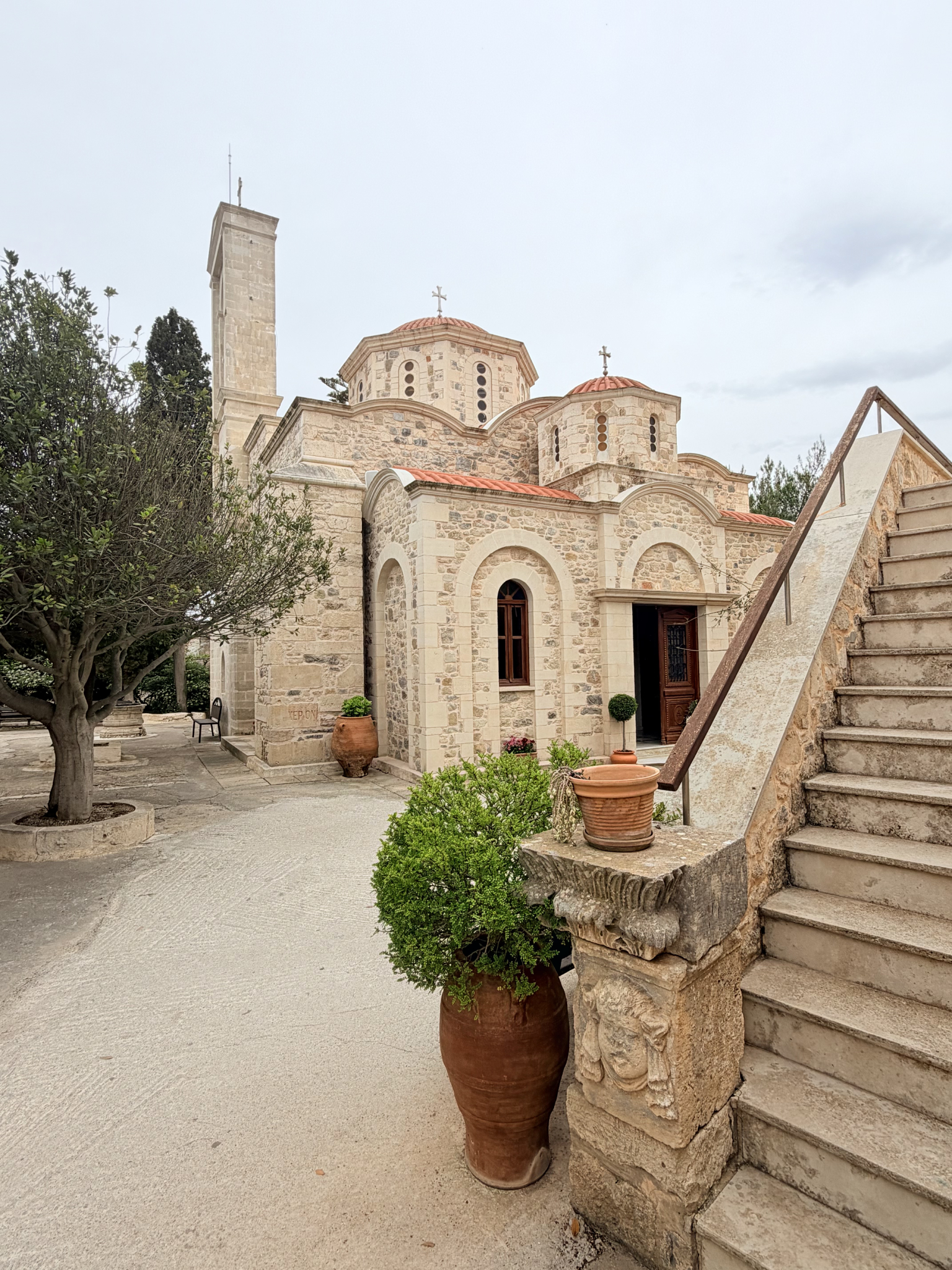
Ten minutes deeper into the Cretan countryside brought us to the tranquil stone courtyards of the Agkarathos Monastery. Founded during the Byzantine era and serving as a spiritual beacon for centuries, the complex bore subtle scars on several structures from a recent earthquake, lending a poignant, weathered grace to the grounds.
Aside from a bearded monk in a sweeping black robe and a few wandering stray cats, we had the historic sanctuary entirely to ourselves. We wandered the grounds in absolute silence, stepping into the colorful chapel—resplendent with traditional Byzantine frescoes and flickering sanctuary lamps—while the sweet, delicate aroma of blossoming apple and cherry trees drifted on the breeze.
The Liquid Gold of Kleanthi Olive Mill
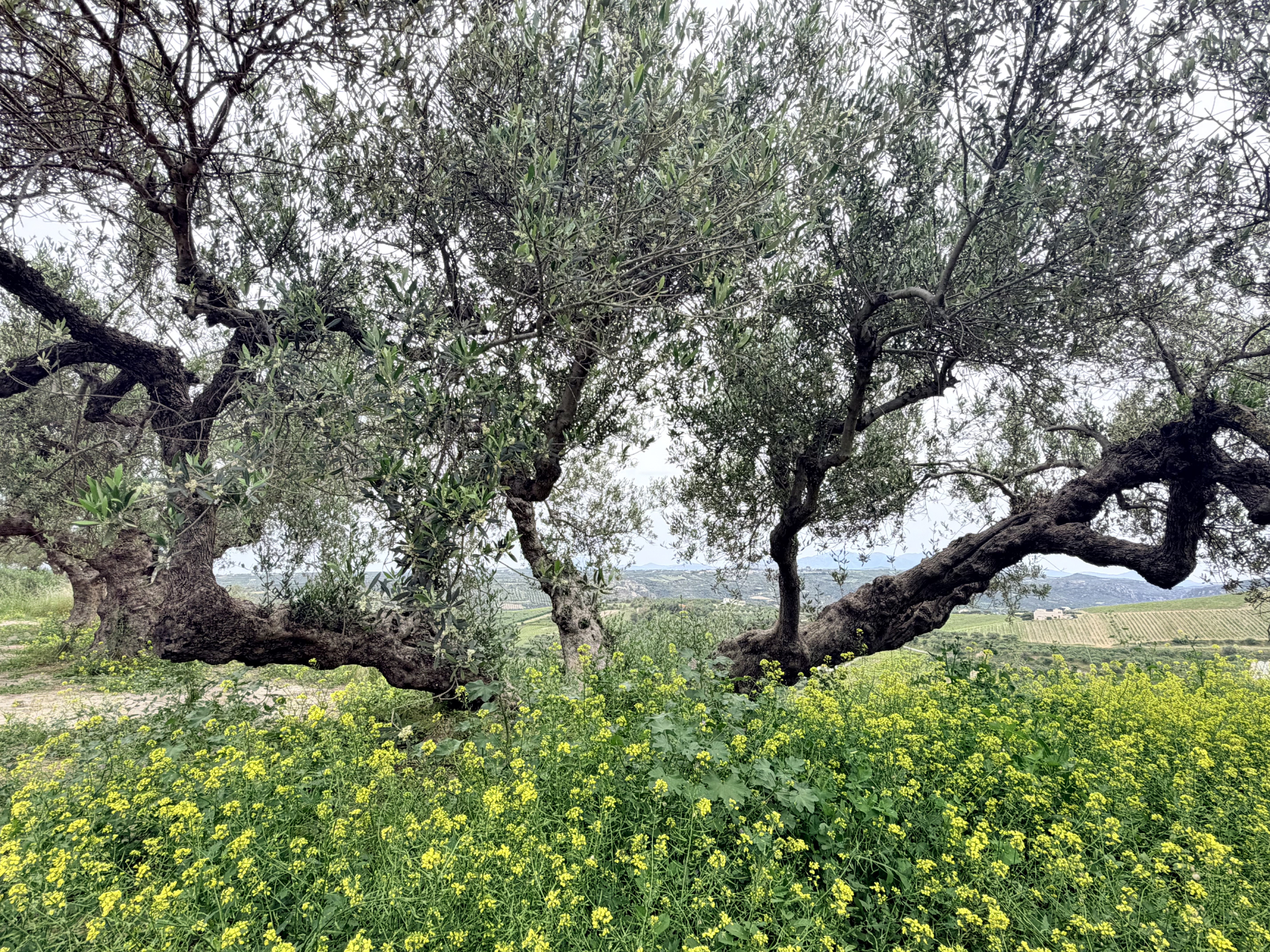
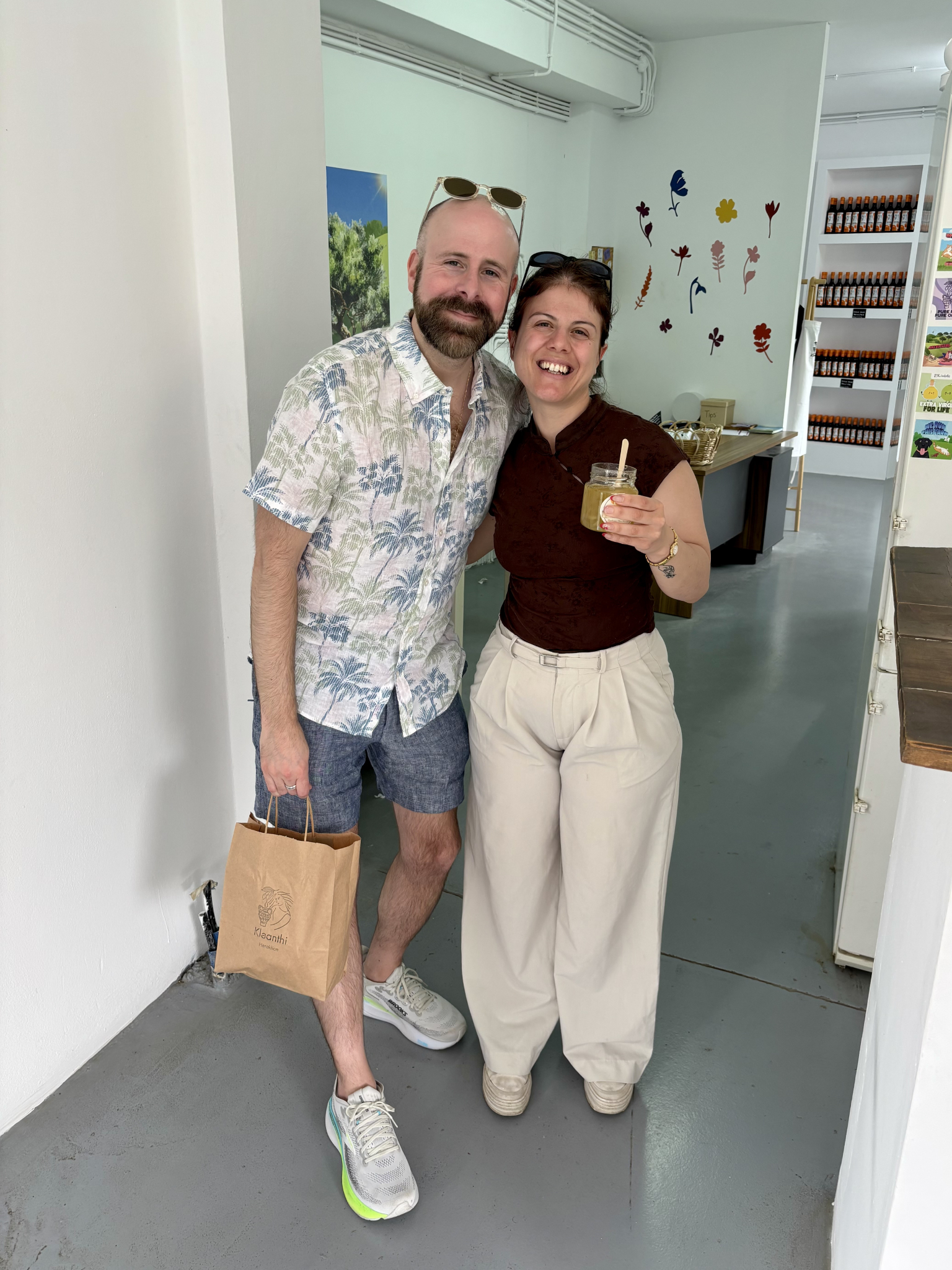
Our journey continued to the Kleanthi Olive Mill, where Mary—a member of the family that owns and operates the press—welcomed us with open arms. Joined by a delightful Belgian family and their toddler, we strolled through an olive grove populated by gnarled, silvery trees standing sentinel for over five hundred years.
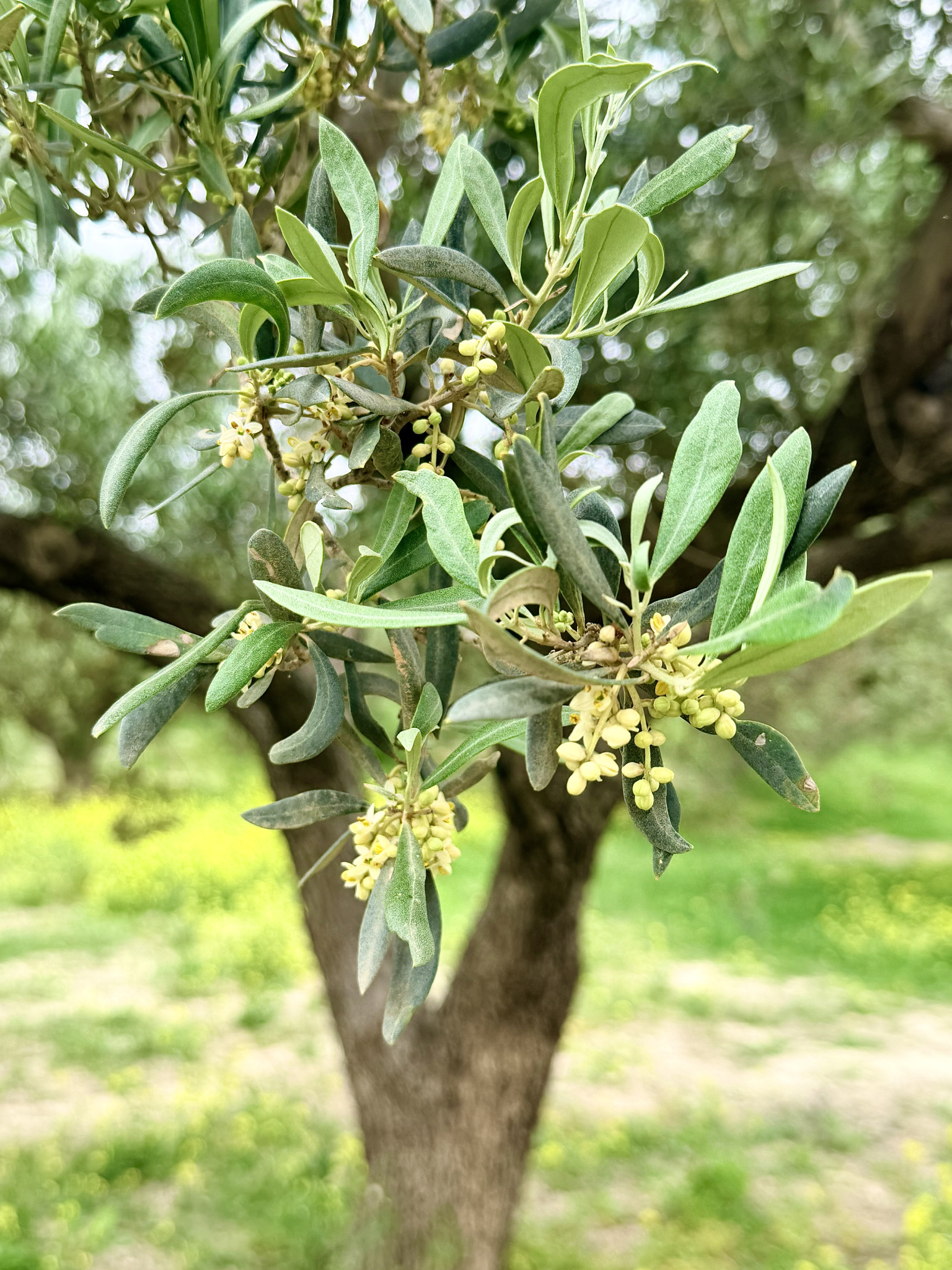
Standing among the clusters of tender buds, I experienced a sudden horticultural epiphany. Back at our home in upstate New York, our property is populated by a shrub known as Autumn Olive—a name I had never quite understood until that exact moment, observing how the Cretan olive buds mirror those of our upstate brush in early spring. It is precisely these small, unexpected connections that remind me why we explore the world.
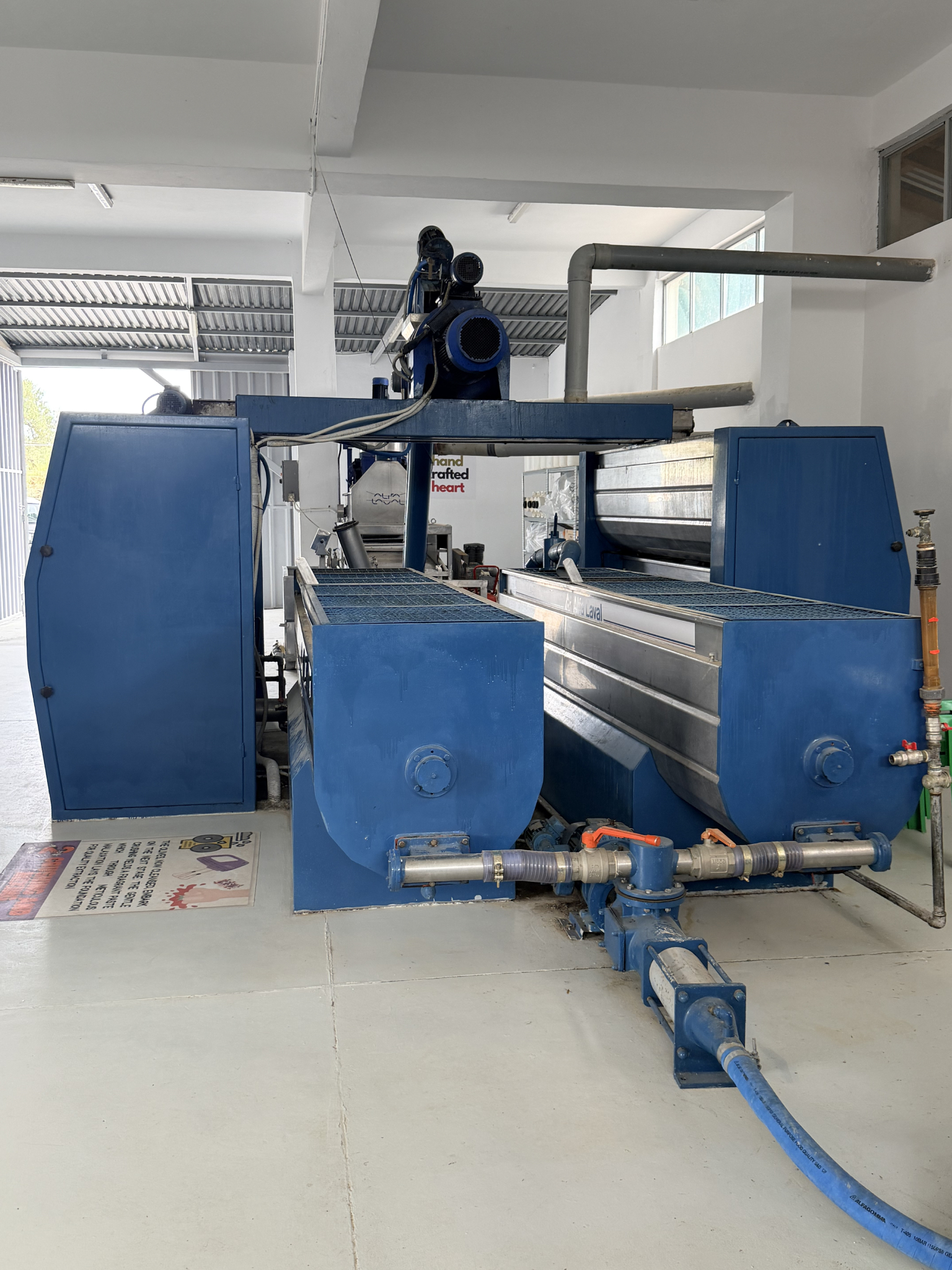
Inside, Mary guided us through the staggering expanse of the modern press facility. She explained the meticulous craft of producing pure extra virgin olive oil, noting that the prized first cold pressing yields the finest extra virgin tier, while subsequent extra presses yield lighter culinary oils. Because operating a dedicated press requires immense overhead, Kleanthi functions on a cooperative model: local growers bring their harvest, and the mill retains a fair ten percent of the yield as payment.
- Highlights: Extra virgin olive oil tasting, graviera cheese, salt-preserved pork, spoon figs
- Souvenirs: Jars of sugar-syrup spoon figs, grape syrup, and, of course, extra virgin olive oil
Out front beneath the shade, Mary arranged an olive oil tasting that redefined our understanding of the craft. We tore into crusty country bread, dragging it—alongside crisp cucumbers, garden-ripe tomatoes, homemade salt-preserved pork, and blocks of graviera, an incredible local Cretan cheese made from sheep and goat milk that boasts the elastic stretch of fresh mozzarella but a deeper, far more savory punch—through velvety, intensely peppery extra virgin oils.
The real revelation, however, was spoon figs: plump, unripened green figs preserved in a delicate sugar syrup. Eaten alongside the rich cheese and olive oil, the pairing was an absolute revelation, prompting us to purchase several jars on the spot. (So inspired was I that I subsequently ordered a fig tree for our garden back in upstate New York). Mary rounded out the feast with traditional shots of raki, the potent local grape pomace brandy that hits the palate like liquid fire before settling warmly.
Navigating the Labyrinth of Knossos
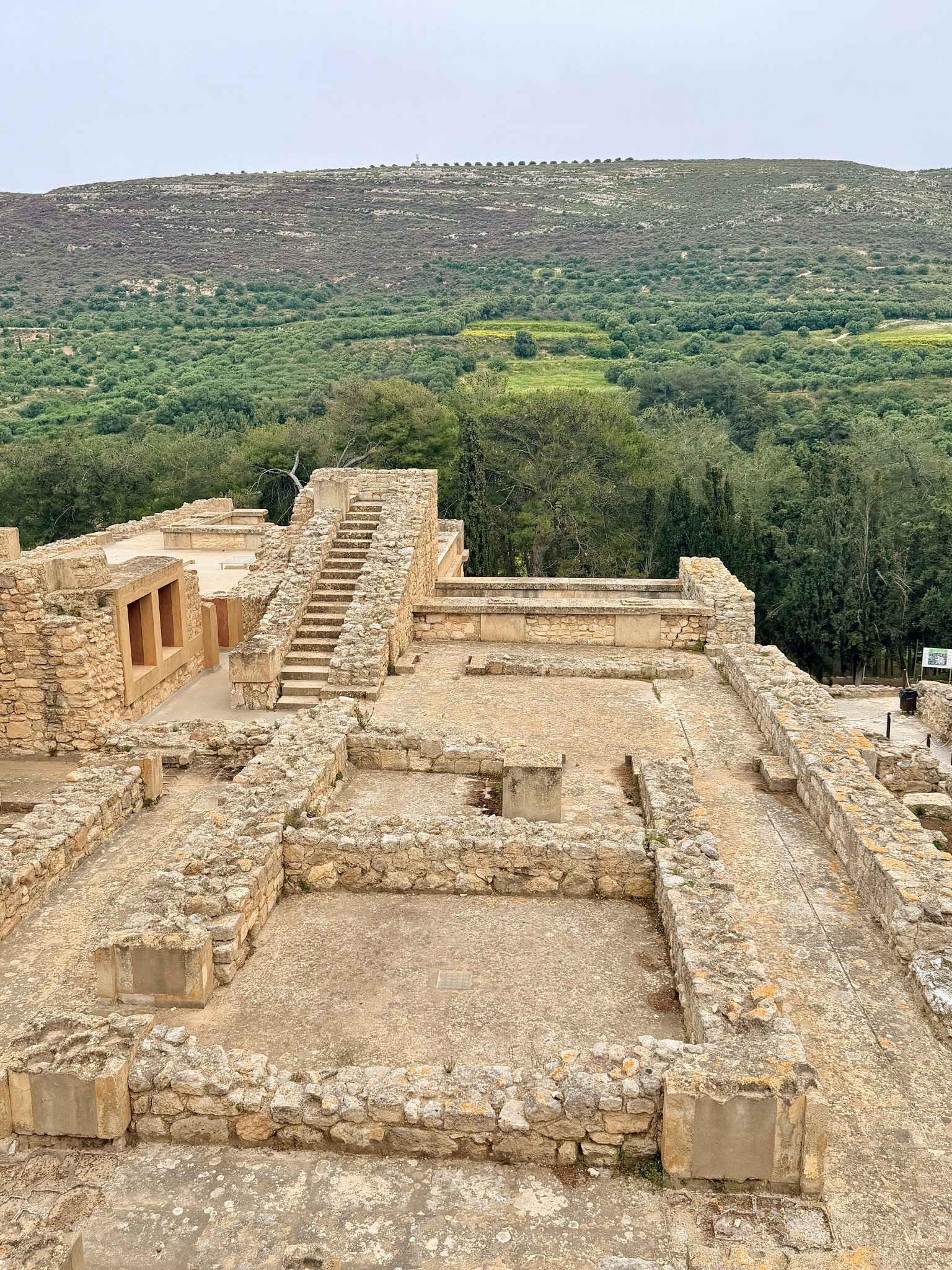
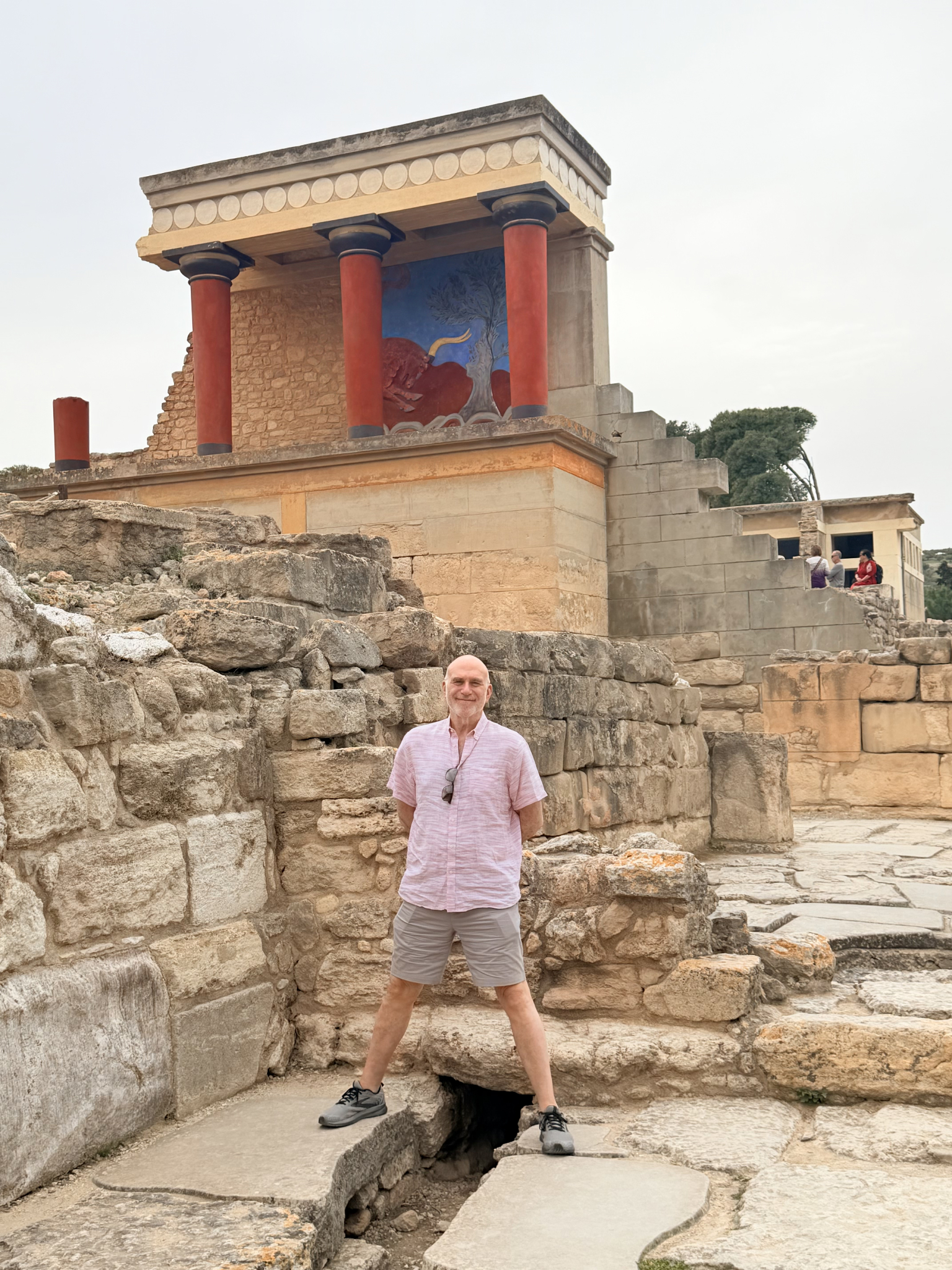
With the midday crowds beginning to thin, we returned to Knossos, rounding out this leg of our Heraklion Crete travel guide by exploring the labyrinthine ruins of the Minoan civilization.
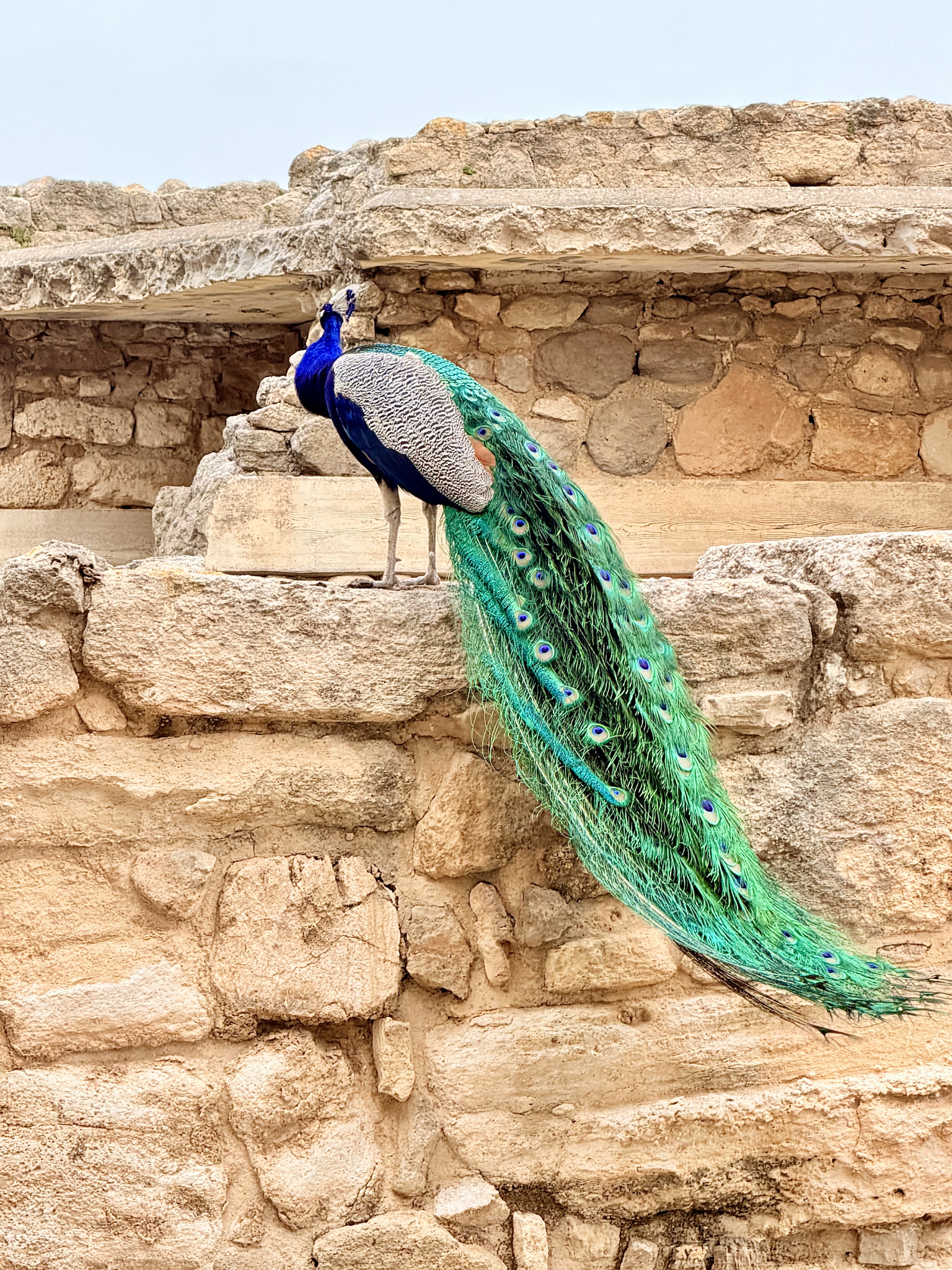
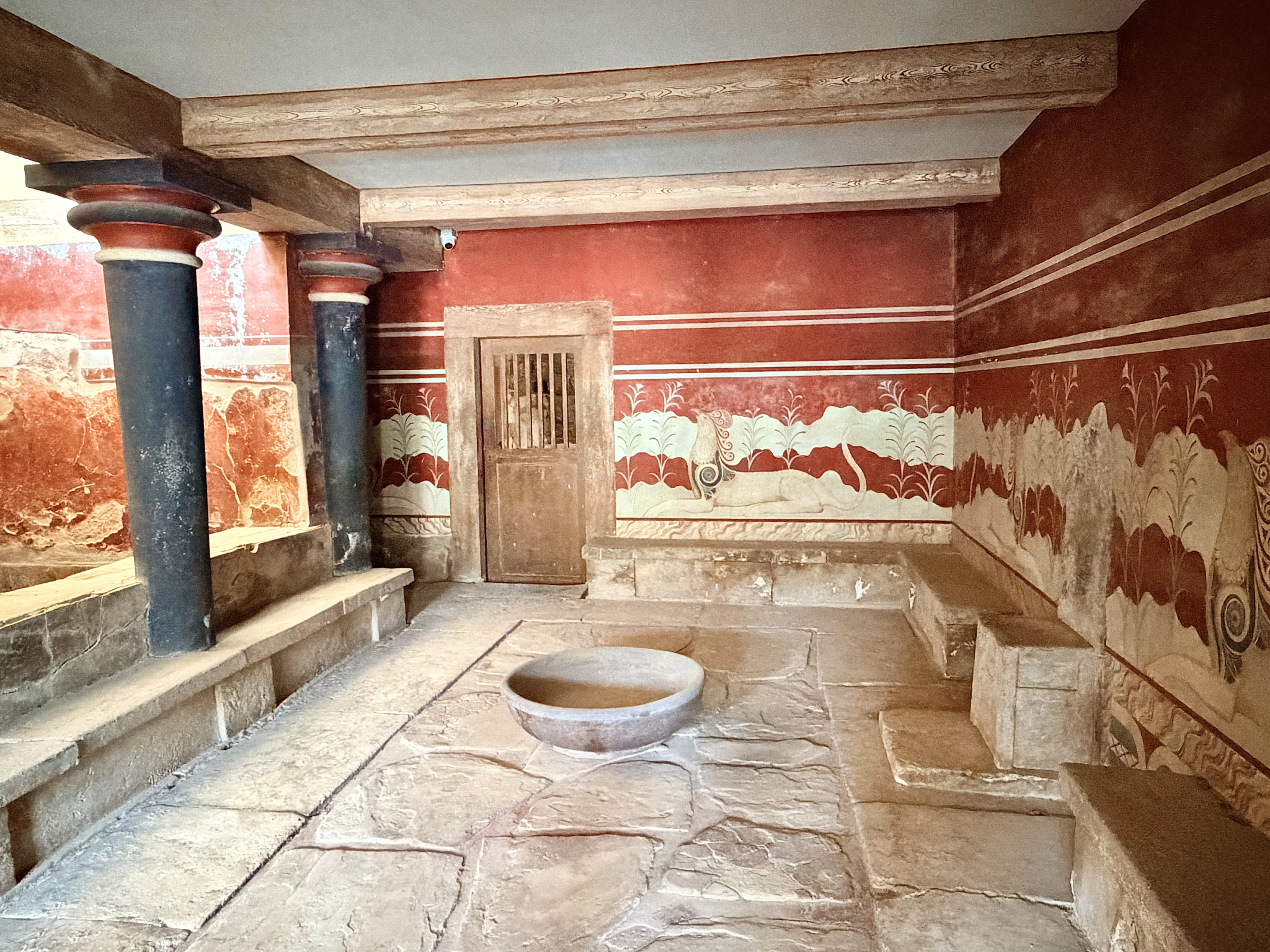
Dating back to the Bronze Age around 2000 BCE, Knossos is famously associated with King Minos, the legendary Labyrinth, and the myth of the Minotaur. Walking through the sprawling stone foundations brought us through the grand Central Court, the evocative Throne Room with its remarkably preserved alabaster seat, and the striking, reconstructed red wooden columns of the Royal Apartments that highlight the sophisticated engineering and vibrant artistic sensibilities of the ancient Minoans.
- Era: Bronze Age (C. 2000 BCE)
- Significance: Political and ceremonial center of the Minoan civilization
- Highlights: Central Court, Throne Room, and the Royal Apartments
As Dimitris escorted us back to the ship, the day unfurled as an effortless blend of serendipitous adjustments and deep cultural immersion—proving that sometimes, the best travel days are the ones that refuse to follow the script.
Last visited in May, 2026